
A Craft Fair Canopy Can Go Airborne When the Weight Is an Afterthought
A 10x10 pop-up canopy behaves like a sail without weight on every leg. What the manual, fire codes and NWS wind guidance actually say about anchoring it.

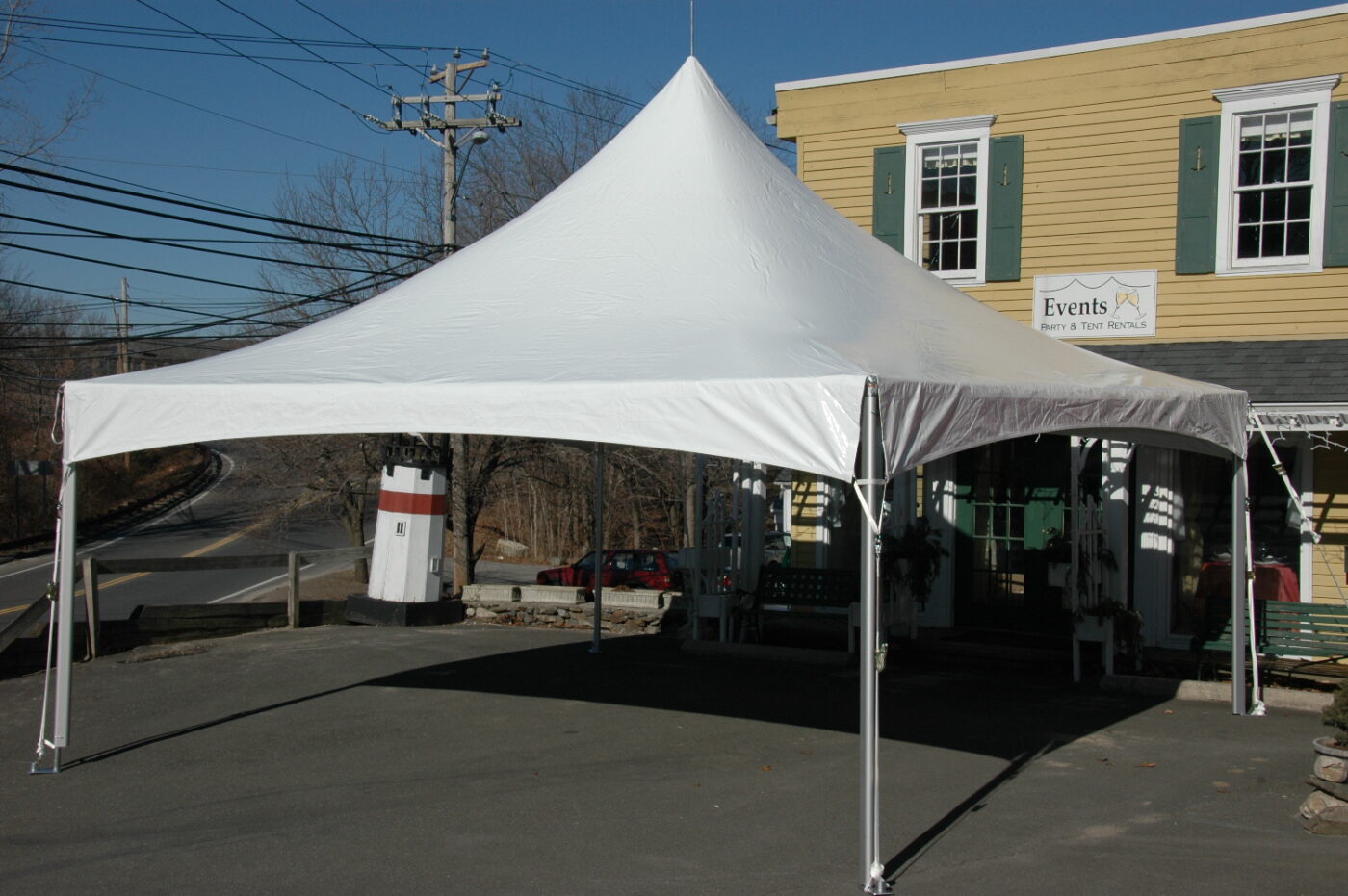
A 10×10 pop-up canopy is mostly flat fabric stretched over a light steel frame, which is another way of saying it is built like a sail. A vendor who staked all four corners and called it done has anchored the frame against being dragged sideways, not against being lifted.
Canopy manufacturers know this well enough to put it in the owner’s manual: low to moderate wind only, properly anchored at all times, because an unanchored canopy can be carried by the wind and hurt someone if it becomes untethered. The instructions are specific about what “anchored” actually requires, and it is more than the stakes in the bag.
Fear Index · Think twice
A frame rated for shade, not for wind
A canopy’s own owner’s manual warns it for low to moderate wind only, and the National Weather Service says isolated wind damage is possible once sustained winds reach 40 to 50 mph.
Why a pop-up canopy behaves like a sail
A straight-leg 10×10 canopy’s own owner’s manual states the wind limit directly under its safety section: low to the moderate wind only, warning that there is a danger of the canopy being carried by the wind and causing personal injury if it becomes untethered, and instructing that the canopy be properly anchored at all times.
The National Weather Service’s wind-safety guidance gives a sense of where “high wind” starts: isolated wind damage becomes possible once sustained winds reach 40 to 50 mph, and widespread significant damage can follow at higher speeds. NWS also notes that straight-line winds inside a strong thunderstorm can exceed 100 mph — well past anything a light steel frame and fabric top is designed to sit through.
The manual’s own wind limit is not boilerplate caution. It is the actual design limit of a frame built to be light enough for one or two people to carry.
Weight on every leg: what stakes alone will not do
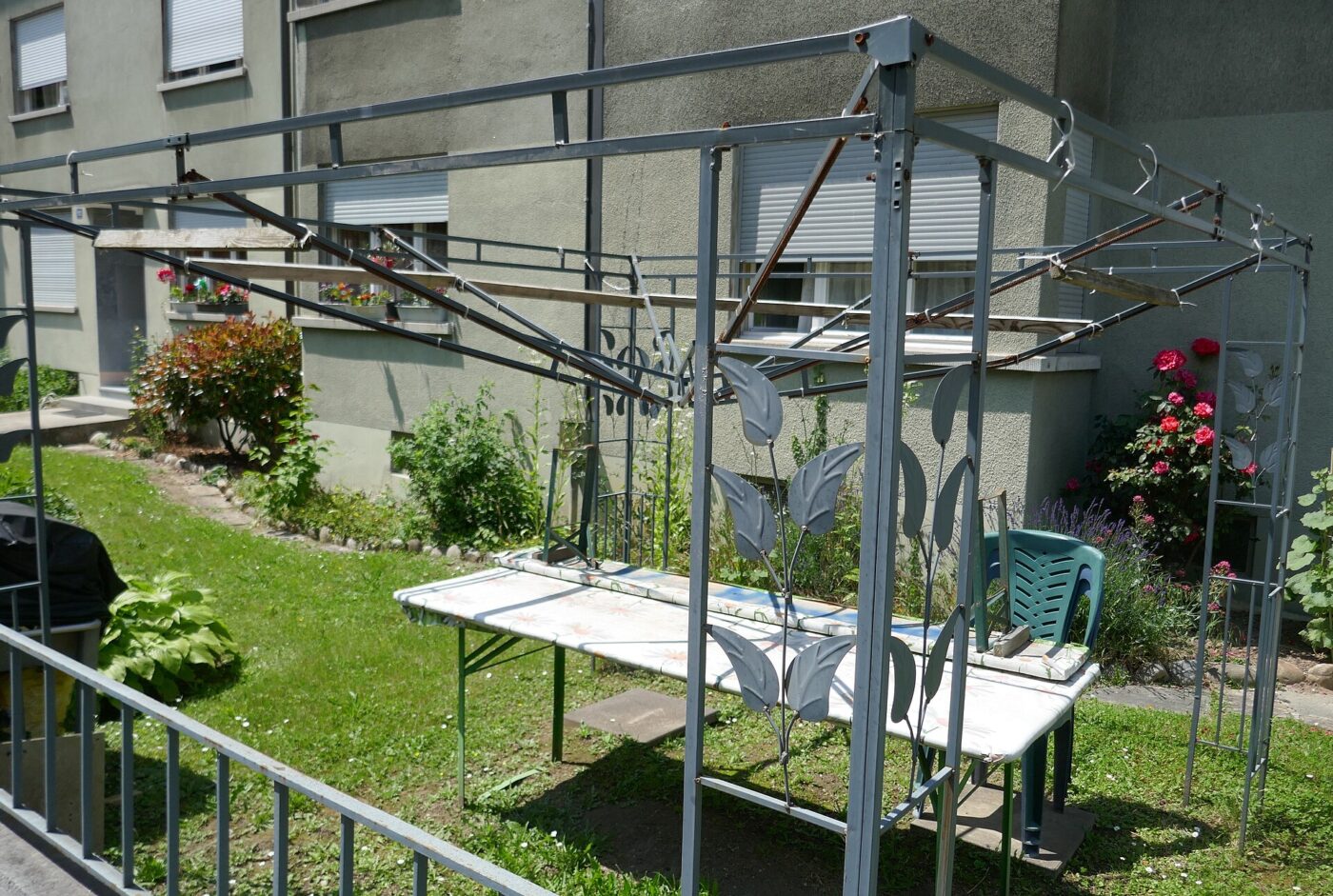
The same manual gives the anchoring method step by step: drive a stake through the hole at the foot of each leg, and use the canopy’s integrated guy ropes at the corners, tied off to their own stakes, to add a second anchor point per corner.
For surfaces where stakes cannot bite — pavement, packed gravel, a parking-lot market space — the manual is explicit that stakes are not the whole answer, calling for additional weights such as sand bags on each foot and stating plainly that stakes alone will not secure a canopy in sand or soft soil. The instruction is written with beach setups in mind, but the same physics apply to any surface a stake cannot properly grip.
A canopy anchored on only two legs, or weighted on the two legs facing the aisle but not the two facing the parking lot, is still an unanchored canopy in a gust from the wrong direction. Every leg needs its own weight and its own stake or guy rope, not just the ones a vendor remembers to reach first.
Weight belongs on every leg, not just the ones facing the crowd. A canopy is only as anchored as its weakest corner.
The flame-resistance tag event organizers check

Fire codes treat tents and canopies at public events as regulated structures once they pass a size threshold, and many cities require both a permit and proof that the fabric is flame-resistant. Seattle’s fire department requires a tent permit for any canopy over 400 square feet, and requires a certificate or tag showing the material meets NFPA 701, the national flame-propagation standard for textiles, or the equivalent California State Fire Marshal standard.
San Francisco’s fire code goes further for outdoor food and street fairs specifically: tents, temporary structures and food booths used for cooking or warming must be inherently flame-resistive or treated with flame retardant, and the owner or agent has to submit proof of that when applying for the event’s fire permit.
Commercial 10×10 canopies sold for vendor and event use commonly carry a flame-resistance tag sewn into a seam, sometimes referencing NFPA 701 directly and sometimes the older industry CPAI-84 flammability test for tent fabric. Either reference is worth keeping legible and on file, since an event’s fire marshal — not the vendor — decides whether it satisfies the local code.
A canopy without a visible flame-resistance tag is a canopy a fire marshal can turn away at the gate, regardless of how well it is weighted.
Wind advisories: when to take the canopy down
The manual’s low-to-moderate-wind instruction is not a one-time setup check; conditions change over the course of a market day. A morning that started calm can carry a wind advisory by afternoon, and NWS’s guidance that isolated damage becomes possible at 40 to 50 mph sustained is a reasonable line for deciding when a canopy stops being safe to leave standing.
Lowering the canopy’s legs to their shortest setting reduces the sail area and the leverage wind has on the frame without fully breaking down the booth, and is worth doing before a forecast gust window rather than after the first leg lifts. A canopy that has already been caught by wind once, even briefly, is also worth inspecting for bent frame joints before it goes back up — the manual’s own maintenance section calls for checking for damaged or worn parts before every use.
A wind advisory is the cue to lower the canopy, not the cue to add one more stake and hope.
The shortlist
Paid links: we earn a commission if you buy through the buttons below, at no extra cost to you. As an Amazon Associate I earn from qualifying purchases.
Compared on staying anchored in wind
| Product type | Best for | Risk estimate | Where to buy |
|---|---|---|---|
| Commercial 10×10 Pop-Up Canopy | A commercial frame with a flame-resistance tag | 25/100 | See listings on AmazonOpens Amazon search results, not one listing: check the model on the product page. |
| Canopy Leg Weight Plates (Set of 4) | Weight on every leg, not just stakes | 15/100 | See listings on AmazonOpens Amazon search results, not one listing: check the model on the product page. |
| Heavy-Duty Canopy Stake and Guy Rope Kit | Backup anchoring for pavement or sand | 12/100 | See listings on AmazonOpens Amazon search results, not one listing: check the model on the product page. |
Risk estimate is our editorial Fear Index for the product type (lower is safer), not a customer rating. How it is scored.
Commercial 10×10 Pop-Up Canopy
A commercial-grade canopy with a legible flame-resistance tag is what an event’s fire marshal is checking for, separate from how well it is weighted.
- Carries the tag many permits require
- One-piece steel frame construction
- Sized for a standard 10x10 vendor spot
- Certificate still needs to be on file
- Heavier to transport than light frames
Canopy Leg Weight Plates (Set of 4)
On pavement or packed ground, the manual is direct: stakes alone will not secure the canopy. A weight plate on every leg is the fix that works anywhere.
- Adds ballast stakes alone cannot give
- Works on pavement where stakes cannot
- Stays put without sand or soft soil
- Extra weight to carry to each event
- Still comes down in high wind
More: Handmade and Gifts analyses and how the Fear Index is scored.
Questions people actually ask
How much weight does a 10×10 canopy need per leg?
The manufacturer’s manual does not give one universal number — it calls for stakes plus added weight such as sand bags on every leg, and says stakes alone will not secure a canopy on pavement or in soft ground. Many event organizers set their own minimum, so check with the venue as well.
Do I need a permit for a vendor tent at a craft fair?
Often, yes, once the tent passes a size threshold — Seattle requires a permit above 400 square feet, for example — and event organizers commonly require proof of flame resistance regardless of size. Check with the specific event or its fire marshal.
What does a CPAI-84 or NFPA 701 tag mean on a canopy?
Both are flame-propagation standards for tent and canopy fabric. NFPA 701 is the standard most current fire codes reference directly; CPAI-84 is the older industry test some commercial canopy tags still cite.
At what wind speed should a canopy come down?
The canopy’s own manual limits it to low to moderate wind. NWS says isolated wind damage becomes possible once sustained winds reach 40 to 50 mph, which is a reasonable point to lower or break down the booth.