
In a Home Pottery Studio, Dry Clay Dust, Not the Kiln, Is the Everyday Hazard
Dry clay dust carries crystalline silica, which NIOSH links to incurable silicosis. What OSHA’s wet-cleaning rules and glaze safety mean for a home studio.

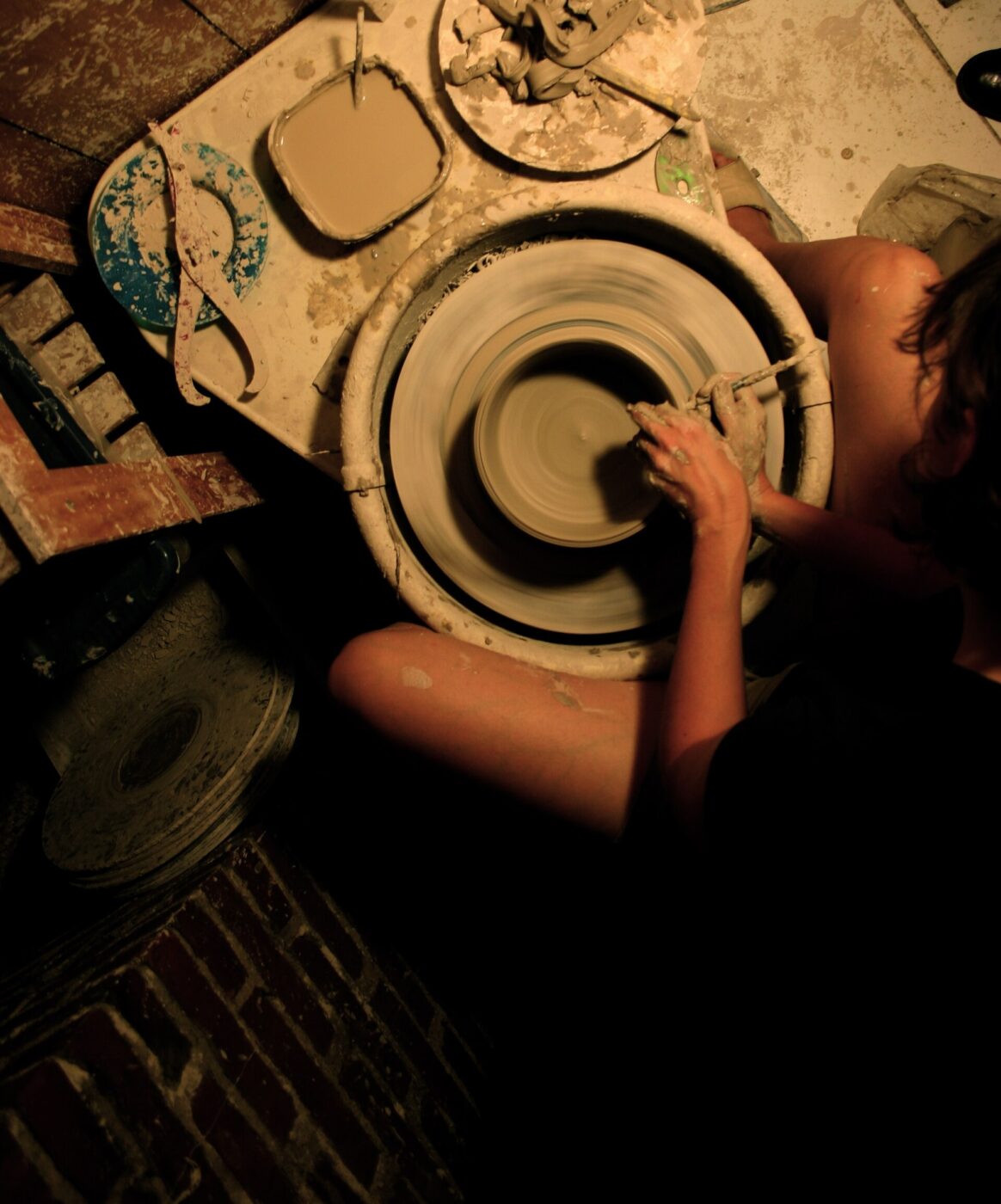
A pottery wheel throws wet clay, and wet clay does not raise dust. The dust comes later — trimming leather-hard pots, sanding bisqueware, mixing dry clay or glaze powder, and sweeping a studio floor after any of it — and clay bodies and many glaze materials contain crystalline silica, the same mineral OSHA regulates on construction sites.
None of it is an emergency the way a kiln burn or a chemical splash would be. It is a slow exposure that NIOSH says causes a lung disease with no cure, which is exactly why the everyday habits — how the floor gets cleaned, what respirator is on hand, whether a glaze is food-safe — matter more in a home studio than the kiln most people worry about first.
Fear Index · High risk
A dust habit, not the kiln, doing the damage
NIOSH says silicosis from breathing respirable crystalline silica is incurable but preventable, and sets a recommended exposure limit of 0.05 milligrams per cubic meter — the kind of air a dry-swept studio floor can put into a room.
Why silica dust is the long-term risk
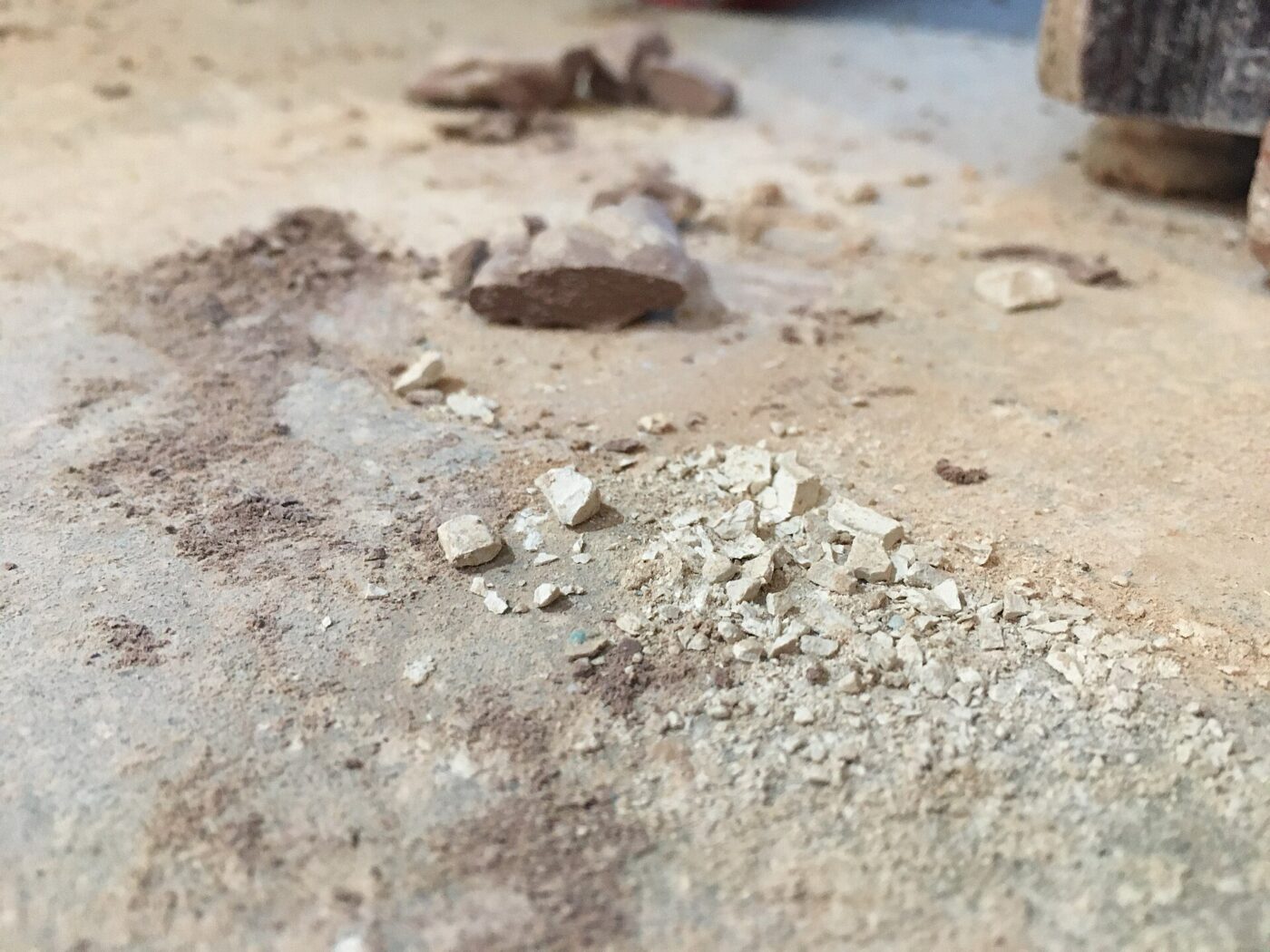
OSHA describes respirable crystalline silica as particles small enough to inhale deep into the lungs, and says it is a hazard for millions of US workers across different industries. NIOSH’s hazard review on the subject is direct about the disease it causes: silicosis is incurable but preventable, and workers exposed to it also carry an increased risk of lung cancer, pulmonary tuberculosis and other airways disease.
NIOSH sets its recommended exposure limit at 0.05 milligrams per cubic meter as a time-weighted average, and in 1997 the International Agency for Research on Cancer concluded there is sufficient evidence in humans for the carcinogenicity of inhaled crystalline silica from occupational sources. Clay bodies and many glaze materials are silica-bearing, so the same dust mechanics apply at hobby scale, just without a factory’s engineering controls.
Silicosis does not announce itself with a bad kiln batch or a burned hand. NIOSH says it develops from ordinary dust breathed in over months or years, and by the time it is diagnosed the lung damage does not reverse.
Wet cleaning, HEPA vacuums and why sweeping is out
OSHA’s silica rules, summarized by the NIOSH-funded Silica Safe program, prohibit dry sweeping or dry brushing where it could contribute to airborne exposure, unless wet sweeping, HEPA-filtered vacuuming or another method that minimizes exposure genuinely is not feasible. Wet sweeping is allowed as long as the dust is still wet when it is swept, and any slurry from wet methods should be cleaned up with a wet vacuum before it dries.
A HEPA-filtered vacuum is the other approved option, and it matters which kind: a standard shop vacuum or household vacuum can push the finest silica particles straight through its filter and back into the air instead of trapping them. Wiping surfaces down wet, rather than dusting them dry, follows the same logic.
A push broom on a dry studio floor is the one habit that undoes every other precaution in the room. Wet sweeping or a HEPA vacuum is the swap, not a better dust mask.
Respirators: NIOSH approval and fit

NIOSH’s own hazard review recommends using appropriate respiratory protection specifically for the moments when source controls, like wet cleaning, cannot keep exposure below its recommended limit — mixing dry clay powder or sanding bisqueware are exactly those moments in a home studio.
A dust mask sold at a hardware store is not the same thing as a respirator. Only equipment carrying a NIOSH approval number has been tested against that standard, and it still has to fit an individual face correctly to seal properly; the approval covers the hardware, not whether a given size fits a given person.
A dust mask keeps big particles off a face. A NIOSH-approved respirator, correctly fitted, is the piece of gear actually rated against the standard NIOSH is describing.
Glazes, food safety and lead testing
FDA says lead in a glaze or decoration can leach into food and drink if the pottery was not manufactured properly — specifically, if it was not fired at the correct temperature and duration for the lead to bind to the glaze surface. The risk is highest for infants, young children and a developing fetus, where chronic low-level exposure has been linked to learning disabilities, developmental delays and lower IQ, and FDA flags handmade, antique, damaged or brightly decorated orange, red or yellow pottery from an unreliable source as the types most likely to be a problem.
FDA is blunt about the limits of a fix: no amount of washing, boiling or other process removes lead from pottery once it is there, so testing matters more than caution after the fact. Consumers can buy lead-test swab kits for that purpose, and the Art and Creative Materials Institute’s AP seal — a product certified by a board-certified toxicologist as non-injurious, recommended for products used by children in sixth grade or younger — is a starting point for choosing safer glaze materials in the first place.
FDA is specific about which pottery worries it: handmade, damaged, from an unreliable source, or decorated in bright orange, red or yellow. A home studio’s own mugs fit that description by default, whatever the glaze bottle says.
Setting up a wheel and kiln at home
A splash pan on the wheel keeps wet trimmings and slip from flinging onto the floor, where they dry into exactly the airborne dust the cleaning habits above are meant to avoid. A dedicated spot with a wipeable, hard floor rather than carpet makes wet cleanup realistic instead of optional, since carpet traps dry silica dust where a mop or a HEPA vacuum cannot reach it.
A kiln introduces a separate hazard entirely — firing fumes, not dust — and needs its own ventilation plan. It does not make the dust habits above optional, and it is not a substitute for them.
None of these habits require a commercial studio’s budget. A splash pan, a wet mop instead of a broom, and a NIOSH-approved respirator for dry work cost less than the wheel itself.
The shortlist
Paid links: we earn a commission if you buy through the buttons below, at no extra cost to you. As an Amazon Associate I earn from qualifying purchases.
Compared on cutting silica exposure at home
| Product type | Best for | Risk estimate | Where to buy |
|---|---|---|---|
| Electric Pottery Wheel with Splash Pan | Keeping trimmings wet before they dry | 20/100 | See listings on AmazonOpens Amazon search results, not one listing: check the model on the product page. |
| NIOSH-Approved Half-Face Respirator with P100 Filters | Respiratory protection for dry work | 15/100 | See listings on AmazonOpens Amazon search results, not one listing: check the model on the product page. |
| Instant Lead Test Swabs | Checking a glaze before it touches food | 10/100 | See listings on AmazonOpens Amazon search results, not one listing: check the model on the product page. |
Risk estimate is our editorial Fear Index for the product type (lower is safer), not a customer rating. How it is scored.
Electric Pottery Wheel with Splash Pan
Trimmings and slip stay wet on the wheel. The dust risk starts once they dry on the floor or a sanding sponge, which a splash pan does not prevent by itself.
- Splash pan catches trimmings before they dry
- Variable speed for trimming and sanding steps
- Wipeable surface instead of open framework
- Still needs wet cleanup after each session
- Does not stop dry-sanding dust on its own
NIOSH-Approved Half-Face Respirator with P100 Filters
NIOSH recommends respiratory protection for the moments source controls alone cannot keep silica exposure below its recommended limit, and only NIOSH-approved gear is tested against that standard.
- P100 filters rated above a dust mask
- Carries a NIOSH approval number
- Reusable half-face design
- Needs a proper fit, not just any size
- Filters need periodic replacement
More: Hobbies and Making analyses and how the Fear Index is scored.
Questions people actually ask
Is clay dust actually dangerous?
Clay and many glaze materials contain crystalline silica. NIOSH says breathing respirable crystalline silica over time causes silicosis, an incurable lung disease, along with a higher risk of lung cancer and other respiratory disease.
Can I just sweep my pottery studio floor?
Not dry. OSHA’s silica rules prohibit dry sweeping or dry brushing where it could raise airborne dust, unless wet sweeping or a HEPA-filtered vacuum genuinely is not feasible.
What respirator should I use for pottery dust?
One that carries a NIOSH approval number and is correctly fitted to your face. A standard hardware-store dust mask is not tested to the same standard NIOSH sets for respirable crystalline silica.
How do I know if a glaze is safe for food use?
Look for the Art and Creative Materials Institute’s AP seal, which means a board-certified toxicologist has evaluated the product as non-injurious. FDA also warns that handmade, damaged or brightly colored pottery from an unreliable source is most likely to leach lead, and recommends a lead-test swab before regular food use.