
PLA Can Be Food-Contact Grade on the Spool and Still Unsafe as a Printed Cup
PLA and PETG resins can meet FDA food-contact rules, but the colorants, nozzle and layer lines in a printed object are a separate question from the spool.

On this page 6 sections
Part of the guide: Tools and DIY Buying Mistakes: What Fails and How to Check Before You Buy
A spool of filament labeled food safe is describing the resin inside it, and the resin is only one ingredient in what comes out of a nozzle. Colorants, additives and the printer’s own hardware all touch the plastic before it becomes a cup, and none of them are covered by the same claim.
FDA has detailed rules for what can touch food. None of those rules were written with a home 3D printer in mind, and the gap between an approved substance and a finished printed object is where a food-safe label starts to mean less than it sounds like.
Fear Index · Think twice
A label that answers a narrower question than it sounds like
FDA authorizes individual food contact substances — a resin, a colorant, an additive — for specific uses; it does not certify a hobbyist’s finished printed object, and most filament listings do not say which of their ingredients actually cleared that review.
What “food safe” certifies on a spool of filament

FDA defines a food contact substance as any substance intended for use as a component of materials that touch food, and says any such substance that migrates into food must be authorized before it is marketed in the US. The agency reviews migration testing and toxicology data through a premarket notification and keeps a public inventory of the specific uses it has cleared.
The federal rules for polymers used in food-contact materials sit in 21 CFR Part 177, covering substances used as basic components of food-contact surfaces and substances for articles intended for repeated use. That regulation authorizes categories of resin chemistry, not any one manufacturer’s spool, and still less a specific object someone prints from it at home.
A filament company’s own “food safe” claim on a listing, without a citation to a specific authorized use, is a marketing description of the resin. It is not evidence that FDA reviewed anything a buyer will actually print or eat off of.
The regulation covers a substance. Nothing in it certifies the mug that comes off a hobbyist’s print bed.
Colorants, additives and what the spool does not declare
FDA counts colorants, adhesives, certain antimicrobials and antioxidants used in food-contact materials as food contact substances in their own right, each needing its own authorization separate from the base polymer.
A spool of PLA or PETG is rarely just PLA or PETG: color pigments, UV stabilizers and processing aids are blended in, and a listing that calls the resin food safe does not typically say which additive package it used or whether that specific colorant has cleared review on its own. Choosing a natural or undyed filament, and asking the manufacturer for a safety data sheet or a specific food-contact declaration for that formulation, is the more direct way to close that gap.
A food-safe resin can still carry a colorant nobody separately checked.
Layer lines and why a printed cup is not injection-molded plastic
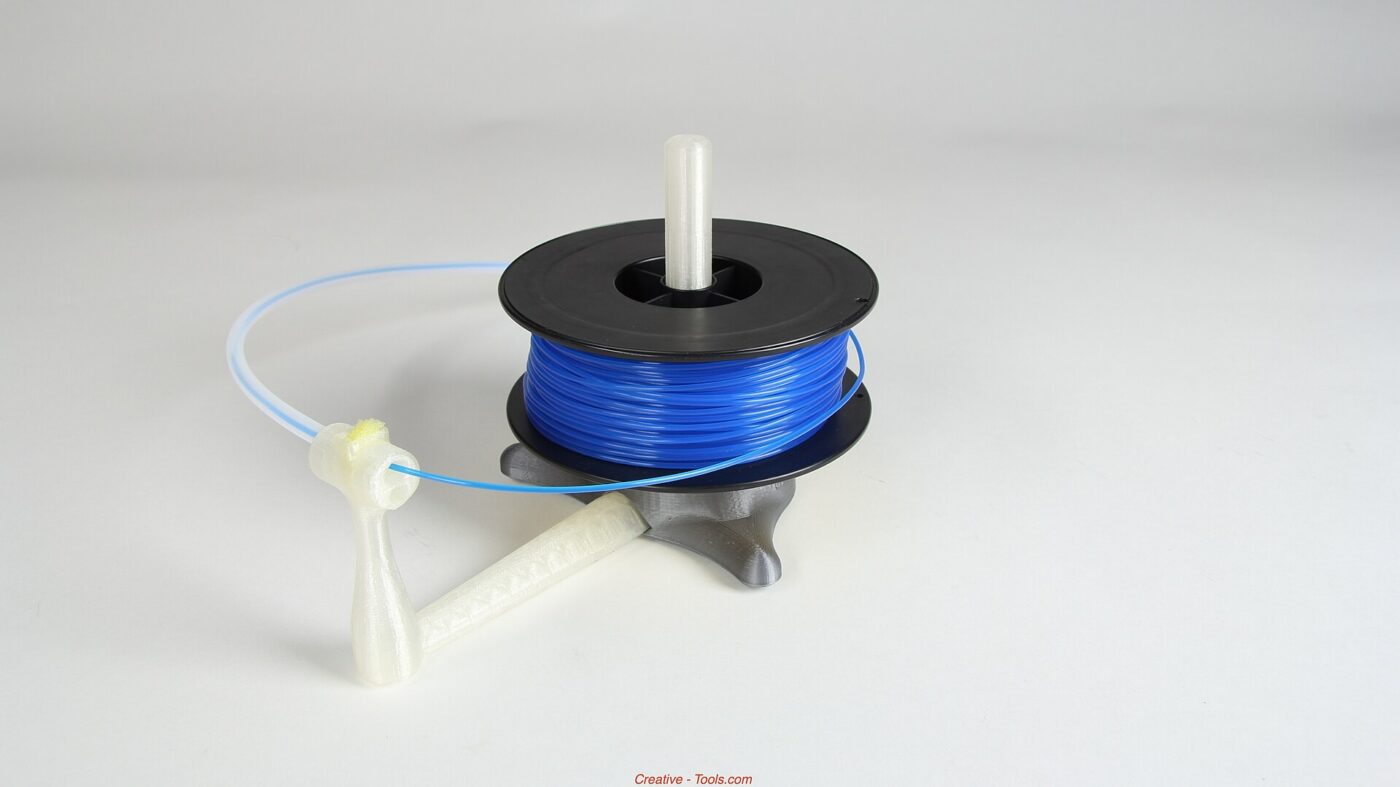
Fused-filament printing builds an object one thin layer at a time, and each pass leaves a visible seam where it bonds to the layer below. That structure is fundamentally different from an injection-molded cup, formed as one continuous piece with no internal seams at all.
Those seams are harder to scrub clean by hand than a smooth molded surface, which is a reasonable basis for treating a printed item differently depending on how it is used: a cookie cutter that briefly touches dry dough is a different case than a cup that holds liquid daily and goes through repeated wash cycles.
Printing with a higher infill and a finer layer height, and orienting the part so its smoothest face meets the food, reduces how much seam is exposed. It does not remove it the way molding does.
A seam a fingernail cannot catch is still not the same as a surface that has none.
Nozzles, hardware and what the FDA process never reviewed
The filament is not the only material a print touches on its way out. Brass is the standard nozzle alloy on most consumer machines, chosen for machinability and heat conduction rather than food contact, and the FDA review described above covers substances submitted for that specific purpose — nozzle hardware has not gone through it. A nozzle sold specifically for food-contact or medical print jobs, most often stainless steel, removes that particular unknown for anything that will be washed and reused.
Heat is a second variable. PLA tolerates heat less well than PETG, and a printed part run through a hot dishwasher cycle repeatedly can warp or soften in ways a purpose-made kitchen container will not. Hand-washing in cool water is the more conservative choice for anything printed.
NIOSH’s own guide to safe 3D printing flags a separate hazard from all of this: the printing process itself releases ultrafine particles and volatile organic compounds, and it recommends running a printer in a ventilated space or enclosure regardless of what is being printed. It is a room-air question rather than a food-contact one, but it applies to every print in this article.
Swapping the nozzle removes one unknown. It does not turn a printed object into certified kitchenware.
Printing a mold for food-grade silicone instead
One way around all of the above is to stop printing the food-contact part at all. A 3D-printed mold, which never touches food itself, can be used to cast a shape in a platinum-cure, food-grade silicone, so the silicone, not the printed plastic, is the only material that ends up touching what is eaten or drunk.
The tradeoff is process, not material risk: casting adds a cure time and a release agent, and the print has to be designed as a mold rather than as the finished part. For a one-off shape, a cutter, or anything that would otherwise be a daily-use cup, it sidesteps the layer-line and hardware questions above rather than trying to solve them all on the printed surface itself. For managing warping and layer adhesion on prints generally, see our guide to bed adhesion; that is a separate question from food contact.
A mold that never touches food sidesteps every question a printed cup raises.
The shortlist
Paid links: we earn a commission if you buy through the buttons below, at no extra cost to you. As an Amazon Associate I earn from qualifying purchases.
Compared on what actually touches the food
| Product type | Best for | Risk estimate | Where to buy |
|---|---|---|---|
| PETG Filament With Food-Contact Documentation | A filament with real food-contact documentation | 28/100 | See listings on AmazonOpens Amazon search results, not one listing: check the model on the product page. |
| Stainless Steel 3D Printer Nozzle Set | Swapping the one hardware unknown a nozzle adds | 15/100 | See listings on AmazonOpens Amazon search results, not one listing: check the model on the product page. |
| Platinum-Cure Food-Grade Silicone Mold Kit | Skipping the printed surface for food-grade silicone | 12/100 | See listings on AmazonOpens Amazon search results, not one listing: check the model on the product page. |
Risk estimate is our editorial Fear Index for the product type (lower is safer), not a customer rating. How it is scored.
Stainless Steel 3D Printer Nozzle Set
Brass is the standard nozzle material for machinability and heat conduction, not for food contact; a nozzle sold for food-contact printing removes that specific unknown.
- Not chosen for food contact by default
- Simple swap on most hot ends
- Sold specifically for food and medical print jobs
- Does not certify the finished object
- Print still has layer lines
Platinum-Cure Food-Grade Silicone Mold Kit
Casting the shape in food-grade silicone from a printed mold avoids the layer-line and colorant questions a directly printed cup raises.
- Silicone is the only part touching food
- No layer lines on the food-contact surface
- Reusable once the mold is made
- Adds a casting and cure step
- Not useful for a one-off dry-food item
More: Hobbies and Making analyses and how the Fear Index is scored.
Sources
- Food Packaging and Other Substances that Come in Contact with Food — Information for Consumers — FDA
- Packaging and Food Contact Substances (FCS) — FDA
- 21 CFR Part 177, Indirect Food Additives: Polymers — Cornell Law School Legal Information Institute
- Approaches to Safe 3D Printing: A Guide for Makerspace Users, Schools, Libraries, and Small Businesses — NIOSH
Questions people actually ask
Is PLA filament food safe?
The base resin in some PLA can meet FDA’s food-contact substance rules, but that authorization covers the resin, not the colorants and additives blended into a specific spool, and not the finished object a home printer produces.
Is PETG safer than PLA for food-contact printing?
Both are regulated the same way, as polymers under 21 CFR Part 177. Neither resin’s approval extends automatically to a printed object’s colorants, layer lines or the hardware that shaped it.
Do brass 3D-printer nozzles matter for food safety?
Brass is the default nozzle material on most consumer printers, chosen for machinability and heat conduction rather than food contact. A nozzle sold specifically for food-contact or medical print jobs, usually stainless steel, is a low-cost way to remove that particular unknown.
Can I put a 3D-printed cup in the dishwasher?
PLA tolerates heat less well than PETG, and repeated hot cycles can warp or soften a printed part. Hand-washing in cool water is the more conservative choice for anything printed.
What is a safer way to make food-contact items with a 3D printer?
Print a mold instead of the finished piece, and cast the food-contact shape in a platinum-cure, food-grade silicone. The silicone touches the food; the printed layer lines never do.