
Leaded Solder’s Main Risk Is on Your Hands; the Smoke You See Is Mostly Flux
Leaded solder flows more easily, but lead exposure at the bench comes mainly from hands and habits, not fumes. What needs ventilation, and what does not.

Part of the guide: Tools and DIY Buying Mistakes: What Fails and How to Check Before You Buy
Tin-lead solder flows into a joint the way hobbyists remember it flowing: low melting point, forgiving, easy to read a good joint by eye. Lead-free alloys need more heat and reward a steadier hand, which is most of why some hobbyists still reach for the leaded spool.
The risk that decision actually carries is not the one most people picture. CDC lists soldering among ordinary hobbies that can expose an adult to lead, and the exposure route is mostly hands and habits, not the smoke curling off the tip — which is a separate problem with a separate fix.
Fear Index · Think twice
A hand habit mistaken for an alloy choice
CDC lists soldering among the hobbies that can expose adults to lead and, through dust carried home on hands and clothing, their families without anyone realizing it.
Tin-lead vs. lead-free alloys: melting point and flow
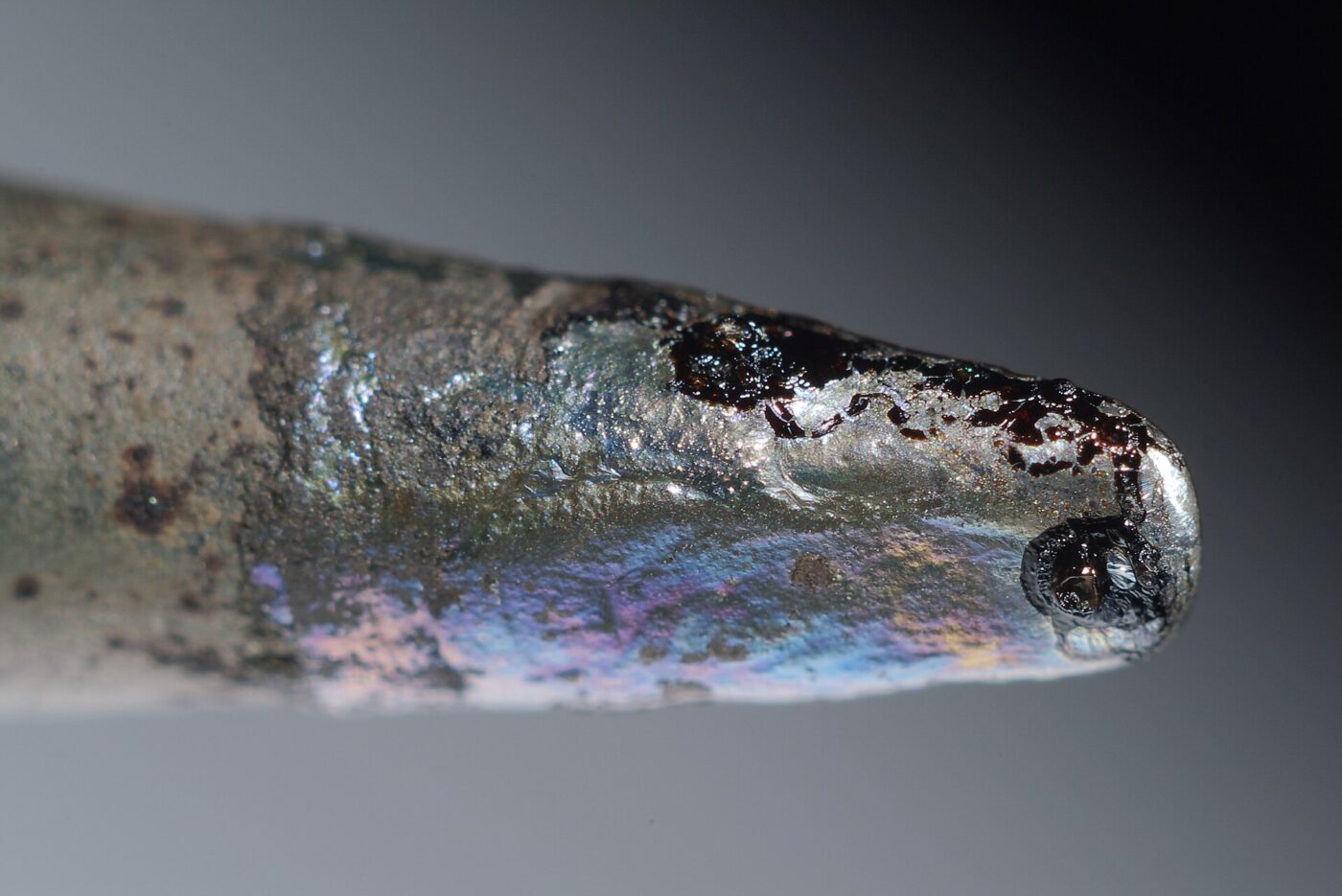
Tin-lead solder melts at a noticeably lower temperature than most lead-free alloys and wets a joint more predictably, which is why it built the reputation it has among hobbyists: a lower-wattage iron can drive it, and a bad joint is easier to spot by its shape.
Lead-free alloys, typically a tin-silver-copper blend, need more heat to reach the same flow, and a joint made without enough heat or time can come out dull or grainy instead of shiny, even when the electrical connection underneath is sound. That makes the iron doing the work, not just the spool loaded into it, the bigger variable in how forgiving a lead-free joint is to get right.
Neither alloy is inherently the safer choice at the bench. The difference that actually changes the risk is what happens to a hobbyist’s hands and habits afterward, which is the same either way.
Lead-free solder is not a drop-in swap. It wants more heat and a steadier hand, not just a different spool.
Where the lead exposure actually happens
CDC’s guidance on hobbies that involve lead names “casting or soldering” directly, alongside stained glass and reloading ammunition, as an activity that can expose the person doing it. EPA is specific about the mechanism: its guidance on reducing lead exposure at home says never to put “leaded materials (such as fishing sinkers, lead came or solder for stained glass, or leaded pottery clay or glaze) in your mouth,” to avoid “handling food or touching your mouth or face while working with lead materials,” and to wash hands “before eating or drinking after activities involving lead.”
That is the whole exposure pathway for most hobby soldering: lead on the hands, transferred to a mouth, a snack or a doorknob. It does not require inhaling anything, which is also why swapping to a lead-free alloy does not make the habit optional.
CDC also flags a second-order risk that has nothing to do with the person at the iron: lead dust on skin and clothing gets “tracked onto carpets, floors, furniture, and other surfaces that a child may touch,” and “these adults may bring lead home with them and expose their families to lead without knowing.” A home workbench is not exempt from that pathway just because there is no employer involved.
The bench habit that matters most is washing hands before eating, not the alloy printed on the spool.
The visible smoke is mostly rosin flux, and it has its own risks

The plume that rises off a hot joint is largely the flux core — usually rosin — vaporizing, not the metal itself. It is real enough to have its own documented effects: a NIOSH health hazard evaluation of a wave-soldering operation found that 12 of 17 exposed workers “reported at least occasional adverse reactions to the soldering fumes,” with eye irritation, headache, nausea, breathing problems and sore throats among the complaints.
That evaluation’s recommendations were straightforward: better ventilation at the workstations, periodic air monitoring, and no smoking, eating or drinking in the soldering area — the same short list that applies at a home bench, just without anyone auditing it.
A fume extractor with an activated carbon filter, run close enough to the joint to actually catch the rising plume, does the job the NIOSH report’s ventilation recommendation was pointing at. A fan blowing the fumes toward an open window works too, as long as it is pulling air away from the face and not just stirring the room.
A hotter alloy needs a better iron
Because lead-free alloys need more heat to flow well, a basic fixed-wattage iron struggles to hold a tip hot enough to wet the joint quickly without lingering there and overheating the component or the board. A temperature-controlled station holds the tip at a set point instead of just dumping full power until unplugged, which matters more with a lead-free spool than a leaded one.
A bench set up for lead-free work usually collects a few other fixtures along the way — helping hands, a brass-wool tip cleaner, and often a multimeter, whose own safety rating matters once the project goes past a single coin-cell circuit.
Kids, food and cleanup at the bench
None of the habits above are specific to a workshop with an employer’s name on the door. EPA’s guidance to wash hands before eating or drinking, and to never handle food while working with lead materials, applies exactly the same to a hobby bench in a spare room.
The take-home pathway CDC describes does too: dust on hands or clothes that ends up on a counter, a couch or a doorknob a child touches later. Keeping solder, clippings and dross away from kitchen surfaces, and washing hands before the next thing touched is a snack or a kid, closes most of the actual risk regardless of which alloy is on the spool.
None of this depends on which spool is on the bench. It depends on whether hands get washed before they touch a doorknob, a snack or a kid.
The shortlist
Paid links: we earn a commission if you buy through the buttons below, at no extra cost to you. As an Amazon Associate I earn from qualifying purchases.
Compared on what actually protects a hobby soldering bench
| Product type | Best for | Risk estimate | Where to buy |
|---|---|---|---|
| Temperature-Controlled Soldering Station | Controlling heat, not just power | 25/100 | See listings on AmazonOpens Amazon search results, not one listing: check the model on the product page. |
| Solder Fume Extractor With Activated Carbon Filter | Keeping flux fumes off your face | 20/100 | See listings on AmazonOpens Amazon search results, not one listing: check the model on the product page. |
| Lead-Free Rosin-Core Solder (SAC305) | Going lead-free at the spool | 18/100 | See listings on AmazonOpens Amazon search results, not one listing: check the model on the product page. |
Risk estimate is our editorial Fear Index for the product type (lower is safer), not a customer rating. How it is scored.
Solder Fume Extractor With Activated Carbon Filter
NIOSH found rosin flux fumes caused eye irritation, headaches and breathing complaints among soldering workers, and recommended ventilation at the workstation itself.
- Pulls fumes away from the face at the joint
- Activated carbon filters rosin particulates
- Needs periodic filter replacement
- Does not replace handwashing habits
Temperature-Controlled Soldering Station
Lead-free alloys need more heat and a steadier tip temperature than tin-lead does, which a fixed-wattage iron cannot hold as precisely.
- Holds tip temperature steady for SAC alloys
- Adjustable dial instead of a fixed wattage
- Costs more than a fixed-wattage iron
- Still needs a stand and a tip cleaner
Lead-Free Rosin-Core Solder (SAC305)
Going lead-free removes the metal from the equation, but the flux fumes and hand-hygiene habits still apply exactly the same as they do with tin-lead.
- No lead in the alloy itself
- Rosin-core flux still needs ventilation
- Needs more heat than tin-lead
- Can look duller without practice
More: Tools & DIY analyses and how the Fear Index is scored.
Questions people actually ask
Is lead-free solder safer than leaded solder?
Not in the way most hobbyists assume. CDC lists soldering among hobbies that can expose adults, and through take-home dust their families, to lead. That risk is about handling and hand hygiene, not fumes, so lead-free removes the metal but not the habits that matter either way.
Is the smoke from soldering dangerous?
The visible plume is mostly rosin flux vaporizing, not lead. A NIOSH evaluation of a wave-soldering operation found most exposed workers reported eye irritation, headaches or breathing symptoms from the flux fumes.
Do I need a fume extractor for hobby soldering?
It is not required at a home bench, but positioning one close to the joint reduces the flux-fume exposure NIOSH linked to irritation and breathing complaints among soldering workers.
How should I keep kids safe if I solder at home?
Wash hands before eating or touching your face, and never handle food while soldering, per EPA guidance. Keep solder and clippings away from kitchen surfaces, since CDC notes lead dust from a hobby can be tracked home on hands and clothing.
Does lead-free solder need a different iron?
It typically needs more heat and steadier temperature control than tin-lead, which is where a temperature-controlled station has an advantage over a fixed-wattage iron.