
N95, P100 and the Part No Label Can Supply: The Seal Decides What a Respirator Does
CDC sets the filter classes, OSHA sets fit testing and NIOSH measured drywall dust at 10 times the limit. Which class each DIY dust job calls for.

Part of the guide: Tools and DIY Buying Mistakes: What Fails and How to Check Before You Buy
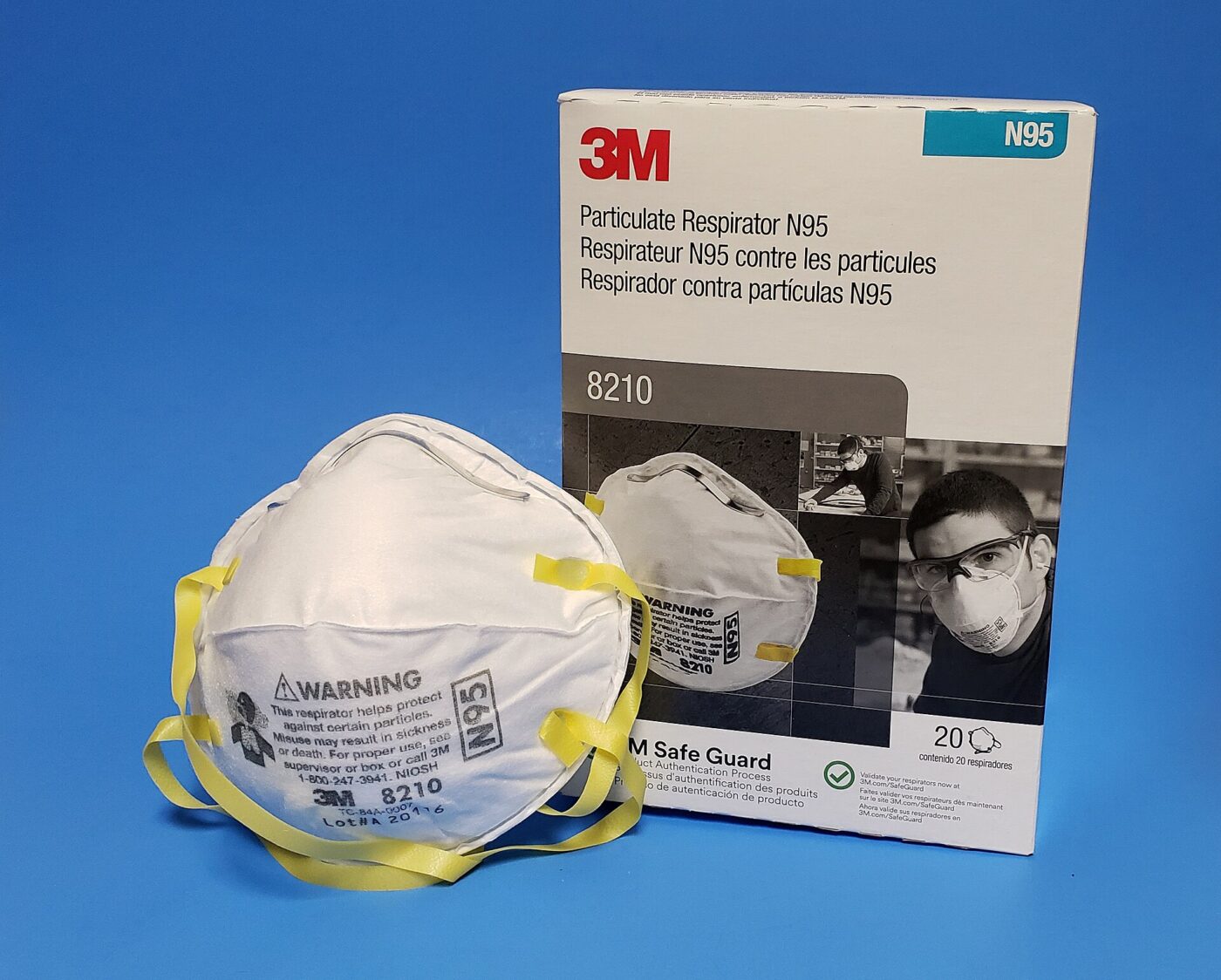
A respirator is rated as two things at once, and only one of them is printed on it. CDC explains the printed half: the letter describes the filter’s resistance to oil and the number describes the share of airborne particles it removes. The unprinted half is the seal, which depends on the face wearing it and on whether anyone checked.
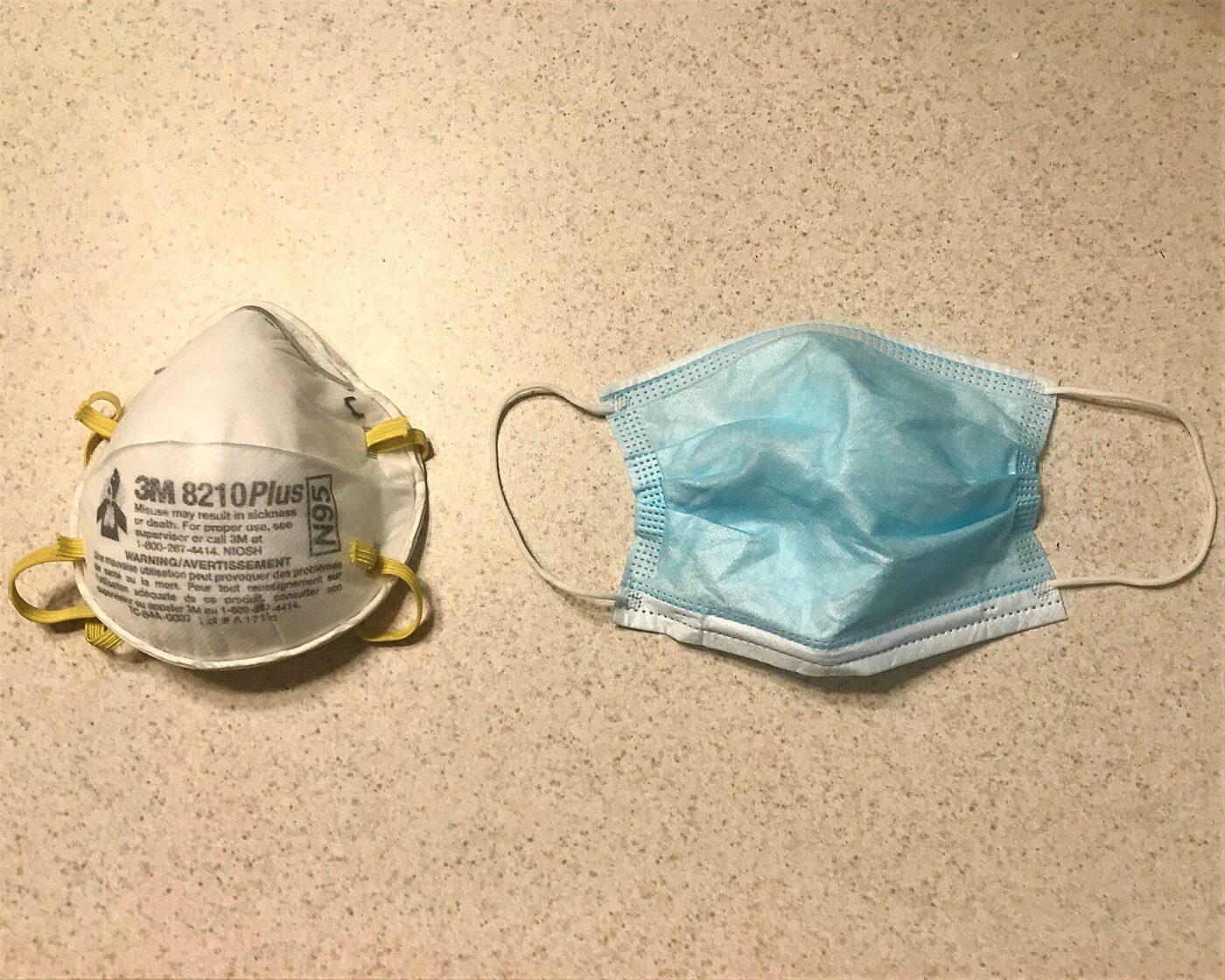
OSHA’s definition of the thing most people call a dust mask is a negative pressure particulate respirator with a filter as an integral part of the facepiece. A loose mask on ear loops with no NIOSH marking is not in that category at all.
Fear Index · High risk
A correct filter class on a face it does not seal against
NIOSH reported that when respiratory protection is worn on drywall sanding work, it is often used incorrectly with little thought to training, proper selection, or fit, and OSHA requires both a fit test and a seal check for tight-fitting facepieces.
What N, R and P and the 95, 99 and 100 numbers mean
CDC describes each class in a line. An N95 filters at least 95 percent of airborne particles and is not resistant to oil; an N99 filters at least 99 percent and an N100 at least 99.97 percent, both also not oil resistant. An R95 filters at least 95 percent and is somewhat resistant to oil; a P95 filters at least 95 percent and a P100 at least 99.97 percent, both strongly resistant to oil. CDC adds that 95 percent is the minimal level of filtration NIOSH will approve, and that of the seven classes it lists, not all have active approvals at a given time.
For home and site dust the oil letter rarely decides anything, since gypsum, wood, concrete and old paint dusts are not oil aerosols. The number is what separates two filters on the same shelf, and other federal rules reach for the top of the range by name: OSHA’s lead in construction standard requires employers to provide HEPA filters for powered and non-powered air-purifying respirators, which is the 99.97 percent level CDC describes.
| Class | Filtration, per CDC | Oil resistance |
|---|---|---|
| N95 | At least 95 percent of airborne particles | Not resistant to oil |
| N99 | At least 99 percent | Not resistant to oil |
| N100 | At least 99.97 percent | Not resistant to oil |
| R95 | At least 95 percent | Somewhat resistant to oil |
| P95 | At least 95 percent | Strongly resistant to oil |
| P100 | At least 99.97 percent | Strongly resistant to oil |
The letter is oil resistance, the number is efficiency, and for household dust the real decision is 95 against 99.97 percent.
A dust mask looped over the ears is not a respirator

OSHA treats the seal as a requirement rather than a preference. Under its respiratory protection standard, an employee using a tight-fitting facepiece respirator must be fit tested prior to initial use, again whenever a different facepiece is used, and at least annually; employers must also ensure that employees perform a user seal check each time they put the respirator on. The standard bars a tight-fitting facepiece where facial hair comes between the sealing surface of the facepiece and the face or interferes with valve function.
Those are employer duties under 29 CFR 1910.134 rather than rules that follow a homeowner into a garage, but they describe what the protection depends on, and the assigned protection factor OSHA defines, the workplace level of respiratory protection a respirator or class of respirators is expected to provide, assumes a program behind it. NIOSH put the gap on record in its bulletin on drywall sanding: when respiratory protection is worn, it is often used incorrectly with little thought to training, proper selection, or fit.
Filter class is a purchase; the seal is a fitting. OSHA requires a fit test before first use and a seal check every time.
Drywall, concrete, old paint: what the published rules say
NIOSH describes joint compound as a mix that can include talc, calcite, mica, gypsum and silica, and reports that a health hazard evaluation found drywall sanders exposed to as much as 10 times the OSHA permissible exposure limit of 15 mg/m3 for total dust, with the 5 mg/m3 respirable dust limit also exceeded. Where silica is present, NIOSH says, workers may face an increased risk of silicosis and lung cancer.
Concrete has its own rule. OSHA’s respirable crystalline silica standard for construction sets a permissible exposure limit of 50 micrograms per cubic meter as an 8-hour average with an action level of 25, and its Table 1 pairs each task with controls: a handheld power saw must use an integrated water delivery system that continuously feeds water to the blade, and indoors the table requires a respirator with an assigned protection factor of at least 10 at any duration. A handheld grinder removing mortar needs a shroud and dust collection plus APF 10 under four hours and APF 25 over. Our analysis of studio silica dust covers the same mineral in a different room.
Old paint raises the bar again. OSHA presumes that manual demolition, manual scraping, manual sanding and heat gun work on lead-containing coatings expose workers above its 50 micrograms per cubic meter lead limit, though not above ten times it, until an exposure assessment shows otherwise, and it requires HEPA filters on air-purifying respirators for that work. Neither standard covers wood dust, so sanding bare lumber has no equivalent task table to read.
The published rules put concrete cutting and lead paint above the 95 percent tier: HEPA filters for lead, and at least APF 10, sometimes 25, with dust controls for silica.
Capture the dust before you filter it
Every one of those rules puts controls ahead of the respirator, and the measured gains are large. NIOSH studied five commercially available vacuum sanding systems at a painters’ apprenticeship training facility in Seattle in 1994 and found they reduced dust exposures by 80 to 97 percent, four of the five by nearly 95 percent. Had engineering controls cut total dust by 90 percent in the case it evaluated, NIOSH said, those workers’ exposures would have stayed below the OSHA limit.
A second NIOSH finding costs nothing: its results suggest exposures might be cut simply by changing from hand-sanding to pole-sanding, which matters more overhead, because the pole increases the space between the worker and the sanding surface. NIOSH also reviewed five joint-compound safety data sheets, four of which told workers to wet-sand whenever possible, and observed that these guidelines are seldom followed in actual work practice. Capture only helps if the vacuum keeps what it collects; our analysis of wet-dry vacuum filters covers which ratings hold fine dust.
A vacuum sander, a water-fed blade or a pole instead of a hand block changes exposure by most of an order of magnitude.
Checking that the respirator is actually NIOSH approved
CDC separates two problems: counterfeit respirators are products designed to look like a genuine NIOSH Approved model, while misrepresented respirators are products that misuse the registered certification marks. For both, CDC says employers and respirator users should use NIOSH’s Certified Equipment List to verify that respirators are approved by NIOSH.
CDC’s signs of a counterfeit filtering facepiece are visual, and most can be checked through the packaging. The model or part number should also match an entry on that list, and CDC asks anyone who finds a suspect product to report it.
- Missing label markings: it does not include all the required label markings on the facepiece.
- NIOSH spelled incorrectly.
- Ear loops without a fastener behind the head, where an approved model would have two head bands.
- Decorative fabric or add-ons such as sequins.
- Claims of approval for children.
The model on the facepiece has to appear on NIOSH’s Certified Equipment List. Decoration, unfastened ear loops and a misspelled NIOSH are CDC’s listed warning signs.
The shortlist
Paid links: we earn a commission if you buy through the buttons below, at no extra cost to you. As an Amazon Associate I earn from qualifying purchases.
Compared on DIY dust jobs
| Product type | Best for | Risk estimate | Where to buy |
|---|---|---|---|
| NIOSH-Approved N95 Filtering Facepiece | Short sanding sessions | 45/100 | See listings on Amazon |
| Half-Mask Respirator with P100 Filters | Lead paint and repeat work | 32/100 | See listings on Amazon |
| Vacuum-Assisted Drywall Pole Sander | Cutting the dust at the source | 22/100 | See listings on Amazon |
Risk estimate is our editorial Fear Index for the product type (lower is safer), not a customer rating. How it is scored. The buttons open Amazon search results rather than one listing, so check the model on the product page.
Half-Mask Respirator with P100 Filters
This is the tier the lead rule points at: CDC puts P100 filtration at 99.97 percent, and OSHA requires HEPA filters on air-purifying respirators for lead work.
- P100 filters at least 99.97 percent, per CDC
- OSHA requires HEPA filters for lead work
- Filters are replaceable on a reusable facepiece
- Tight-fitting, so facial hair breaks the seal
- OSHA wants a full facepiece for irritating lead aerosols
NIOSH-Approved N95 Filtering Facepiece
An N95 is the entry point of the approved range rather than a light option outside it: CDC says 95 percent is the minimal level of filtration NIOSH will approve.
- Filters at least 95 percent of airborne particles
- 95 percent is the lowest level NIOSH approves
- Model can be verified on the Certified Equipment List
- Not resistant to oil aerosols
- Below the HEPA tier OSHA names for lead
Vacuum-Assisted Drywall Pole Sander
NIOSH tested five vacuum sanding systems and measured reductions of 80 to 97 percent. It is the control the published rules ask for before any respirator.
- NIOSH measured 80 to 97 percent dust reduction
- Pole sanding lowers exposure versus hand sanding
- Leaves less dust to clean afterwards
- Needs a vacuum and a filter that holds fine dust
- Does not replace a respirator on lead or silica work
More: Tools and DIY analyses and how the Fear Index is scored.
Sources
- NIOSH-Approved Particulate Filtering Facepiece Respirators — CDC
- Counterfeit and Misrepresented Filtering Facepiece Respirator Examples — CDC
- Control of Drywall Sanding Dust Exposures, DHHS (NIOSH) Publication No. 99-113 — NIOSH
- 29 CFR 1910.134, Respiratory protection — OSHA
- 29 CFR 1926.1153, Respirable crystalline silica — OSHA
- 29 CFR 1926.62, Lead — OSHA
Questions people actually ask
N95 or P100 for sanding drywall?
CDC rates an N95 at 95 percent filtration and a P100 at 99.97 percent, and NIOSH found drywall sanders exposed to as much as 10 times the OSHA total dust limit of 15 mg/m3, noting that joint compound can contain silica. Neither agency assigns a class to a homeowner, and NIOSH’s own answer is to cut the dust with vacuum sanding first.
What do N, R and P mean on a respirator?
They describe oil resistance, per CDC: N is not resistant to oil, R is somewhat resistant and P is strongly resistant. The number is filtration efficiency, with 95 meaning at least 95 percent of airborne particles, 99 at least 99 percent and 100 at least 99.97 percent.
Does a respirator work with a beard?
OSHA bars employers from letting a tight-fitting facepiece be worn where facial hair comes between the sealing surface of the facepiece and the face, or where it interferes with valve function. That is a workplace rule, but the mechanism is the same anywhere: the filter rating depends on the seal.
How do I check whether a respirator is NIOSH approved?
CDC says to use NIOSH’s Certified Equipment List and match the model to its entry. CDC lists missing label markings, a misspelled NIOSH, ear loops that do not fasten behind the head, decorative add-ons and claims of approval for children as signs of a counterfeit.