
A Shop Vac Without the Right Filter Redistributes Dust Into the Room
Standard cartridge filters pass fine dust straight through. Drywall and concrete dust need a much finer filter and often a bag.

Part of the guide: Tools and DIY Buying Mistakes: What Fails and How to Check Before You Buy
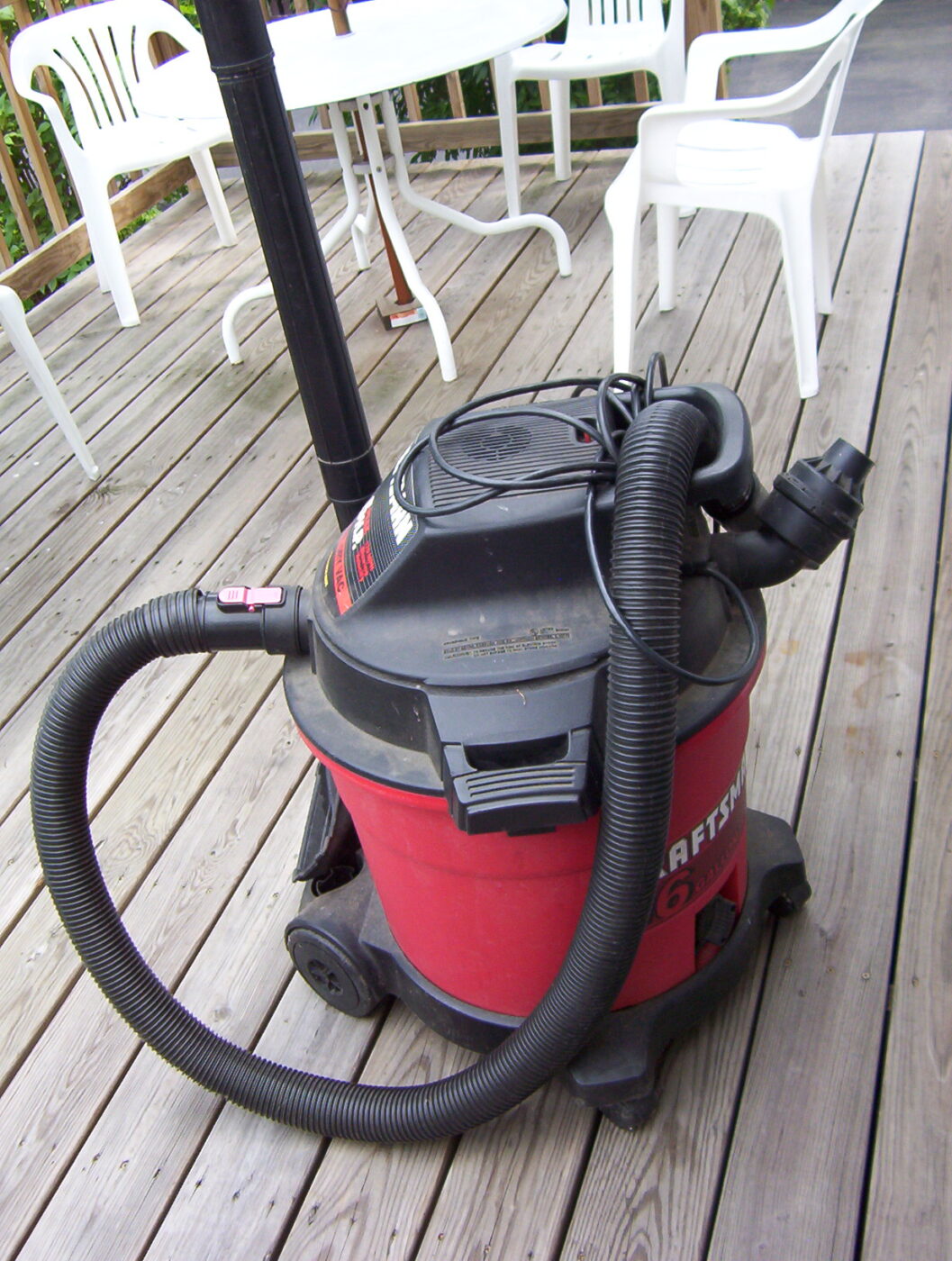
A wet-and-dry vacuum is a high-airflow machine with a simple pleated cartridge filter. That filter is designed for sawdust and debris, and it does that well.
Fine dust is a different problem. Particles small enough to stay airborne pass through a standard cartridge and leave through the exhaust at speed, which distributes them around the room more effectively than a brush would.
Fear Index · Think twice
An exhaust aimed at the room
Respirable crystalline silica from concrete and plaster is a recognized occupational hazard. A vacuum that passes it is actively making the exposure worse.
Filters are rated for particle size
Most machines have a standard filter and a finer optional one, and they are not interchangeable in practice.
| Filter | Captures | Use for |
|---|---|---|
| Standard cartridge | Chips, sawdust, debris | General workshop and garden |
| Fine dust cartridge | Down to a few microns | Sanding dust, general renovation |
| HEPA-rated | 99.97% at 0.3 micron | Plaster, concrete, silica |
| Collection bag | Keeps dust off the filter entirely | Any fine dust work |
A bag inside the drum is the underrated part. It keeps fine dust away from the pleats, so the filter stays permeable and the machine keeps its suction — and emptying does not release a cloud.
Silica is the reason this matters
Cutting, grinding or sanding concrete, mortar, brick, tile and some plasters releases respirable crystalline silica. It is a recognized occupational hazard associated with serious and irreversible lung disease.
In the US, OSHA’s silica rule for construction (29 CFR 1926.1153) requires dust controls, commonly a vacuum with a HEPA-quality filter, for many of these tasks, precisely because an ordinary vacuum passes the particles through.
For any work involving these materials: a HEPA-rated filter, a bag, and a properly fitted respirator. A dust mask hooked over the ears is not a substitute.
Wet pickup changes the rules
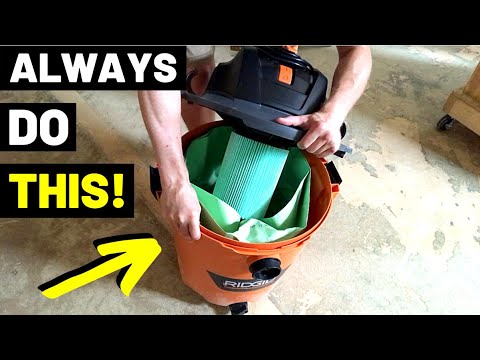
The clue is in the name, and the step most people skip is removing the filter first.
- Remove the collection bag and any dry-only or HEPA cartridge for wet work, and fit the filter the manual specifies for water. Paper pleats not rated for wet use collapse, tear and grow mold.
- Fit the foam sleeve if the machine has one — that is what it is for.
- Empty the drum before storing. Standing water grows bacteria and rusts steel drums.
- Dry filters completely before refitting. A damp filter blinds immediately with the next dust.
Connecting a vacuum to a power tool
Many sanders, routers and circular saws have a dust port sized for a specific hose diameter, commonly 1¼ or 2½ inches, and shop vacuum hoses rarely match both ends. A step-up or step-down adapter, sold cheaply by most vacuum makers, is the fix rather than forcing an ill-fitting connection with tape.
A loose connection is worse than no connection for fine dust: it lets air in around the joint, which drops suction at the tool and can pull dust past the joint into the room instead of into the vacuum.
For tools with no dust port at all, a shop-made shroud or a commercial dust-collection attachment is the only way to capture fine dust at the source. Relying on the room vacuum afterward means breathing whatever stayed airborne in the meantime.
The shortlist
Paid links: we earn a commission if you buy through the buttons below, at no extra cost to you. As an Amazon Associate I earn from qualifying purchases.
Compared on what they capture
| Product type | Best for | Risk estimate | Where to buy |
|---|---|---|---|
| Wet/Dry Workshop Vacuum | General workshop | 26/100 | See listings on AmazonOpens Amazon search results, not one listing: check the model on the product page. |
| HEPA-Rated Vacuum Filter | Plaster and concrete | 18/100 | See listings on AmazonOpens Amazon search results, not one listing: check the model on the product page. |
| Collection Bags (Multipack) | Extending filter life | 12/100 | See listings on AmazonOpens Amazon search results, not one listing: check the model on the product page. |
Risk estimate is our editorial Fear Index for the product type (lower is safer), not a customer rating. How it is scored.
Collection Bags (Multipack)
The single change that makes a workshop vacuum pleasant. A blinded filter is why machines seem to lose power.
- Keeps the filter clear, so suction stays high
- Emptying releases no cloud
- Cheap and quick to change
- Ongoing cost
- Reduces usable drum volume slightly
HEPA-Rated Vacuum Filter
For any concrete, plaster or tile work this is not optional. The alternative is aerosolising silica into your own workspace.
- Captures respirable dust the standard filter passes
- Fits most drums without modification
- Washable versions available
- More expensive
- Reduces airflow slightly
More: Tools & DIY analyses and how the Fear Index is scored.
Questions people actually ask
Can a shop vac pick up drywall dust?
Only with a fine or HEPA-rated filter and ideally a collection bag. A standard cartridge passes the fine particles straight through and blows them back into the room.
Do I need a HEPA filter on a shop vac?
For plaster, concrete, brick and tile, yes. Those materials release respirable crystalline silica, which a standard filter does not capture.
Should you remove the filter for wet vacuuming?
Remove any collection bag and any dry-only or HEPA cartridge. Wet pleated filters not rated for water collapse, tear and grow mold; fit the foam sleeve instead if the machine has one.
Why has my shop vac lost suction?
Usually a blinded filter clogged with fine dust. Using a collection bag keeps dust off the pleats and maintains airflow far longer.