
An Air Purifier Rated for Your Room Is Probably Rated for a Smaller One
AHAM-verified room sizes already assume about five air changes an hour. Many marketplace "coverage" claims assume only one or two — the real gap to check.

Part of the guide: Home and Kitchen Buying Mistakes: What Fails and How to Check Before You Buy
Air purifiers are sold by a room size in square feet, and that number hides an assumption about how thoroughly you want the air cleaned.
When the figure carries the AHAM Verifide seal, the assumption behind it is close to five air changes an hour — enough for allergies. When it does not, the seller has often derived its own “coverage” figure from one or two air changes an hour, which is fine for odor control and far too little for allergens, dust or smoke. The two numbers look identical on the box.
Fear Index · Think twice
A coverage figure at the weakest useful setting
The rating is not false. It describes performance at a level of cleaning that is too low for the reason most people buy one.
Air changes, not square feet
CADR — clean air delivery rate — is measured in cubic feet per minute for smoke, dust and pollen separately. When it carries the AHAM Verifide seal it has been independently tested, and that is the figure to compare.
AHAM Verifide’s suggested room size is not an arbitrary marketing number: the certification requires the machine to deliver about 4.8 air changes per hour in that room, which is close to what allergy and dust control need. The math behind it — sometimes called the 2/3 rule — is to multiply the room’s square footage by two-thirds to get the minimum CADR required.
The trap is elsewhere. Plenty of listings quote a much larger “coverage” figure that is not AHAM-tested and is often built on one or two air changes an hour instead of five — enough for a stale-air smell, not for allergens. To check any purifier yourself: multiply its CADR by 60 to get cubic feet per hour, then divide by your room’s volume (floor area × ceiling height).
| Purpose | Air changes needed |
|---|---|
| General freshening | 1–2 per hour |
| Allergies and dust | 4 per hour |
| Smoke, pets, wildfire | 5+ per hour |
A purifier with the AHAM Verifide seal is already sized for close to five air changes in its stated room. A purifier without the seal, sized only by an unverified “coverage” claim, is the one that quietly runs at a quarter of the cleaning you assumed.
Filters are the running cost

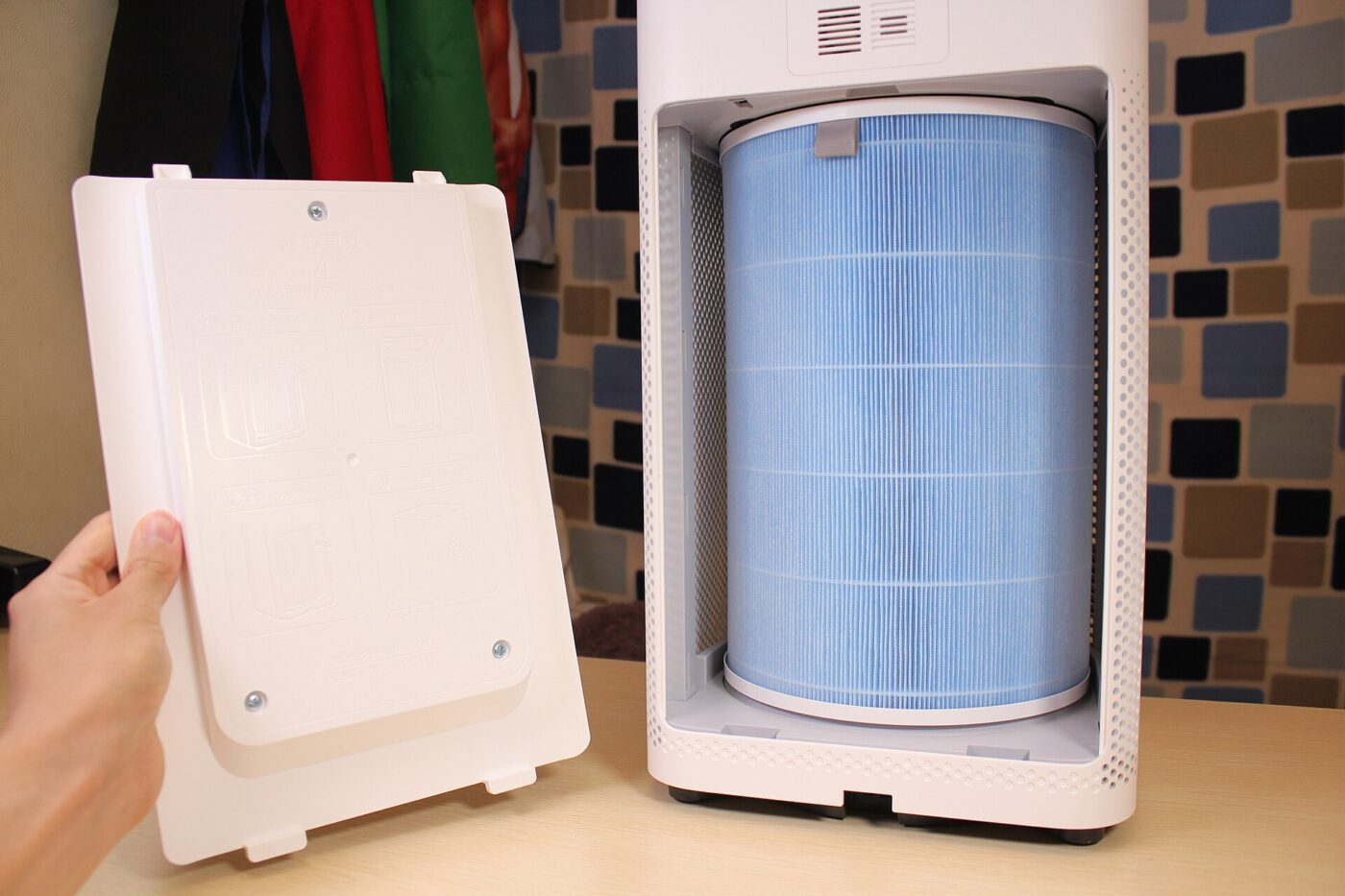
A true HEPA filter meets a defined standard — capturing at least 99.95% or 99.97% of particles at 0.3 microns, depending on the region’s specification. “HEPA-type”, “HEPA-like” and “99% HEPA” are marketing terms with no such requirement.
Filters are consumables. A HEPA filter typically lasts six to twelve months and a carbon pre-filter rather less, and both are priced like printer cartridges.
Price the filters before choosing a machine. A purifier that is cheap and takes $80 of filters a year is the more expensive purchase within eighteen months.
- Washable pre-filters catch hair and large dust and extend the HEPA filter’s life considerably.
- Carbon is for odors and gases, and it saturates. More carbon by weight lasts longer.
- Ionizers and UV are largely unnecessary, and some ionizers generate ozone. EPA says ion generators and ozone-generating cleaners can raise indoor ozone, a lung irritant, above levels considered safe.
- Noise is the reason machines get turned down, and a purifier on its lowest setting delivers a fraction of its rated CADR.
Placement and honest expectations
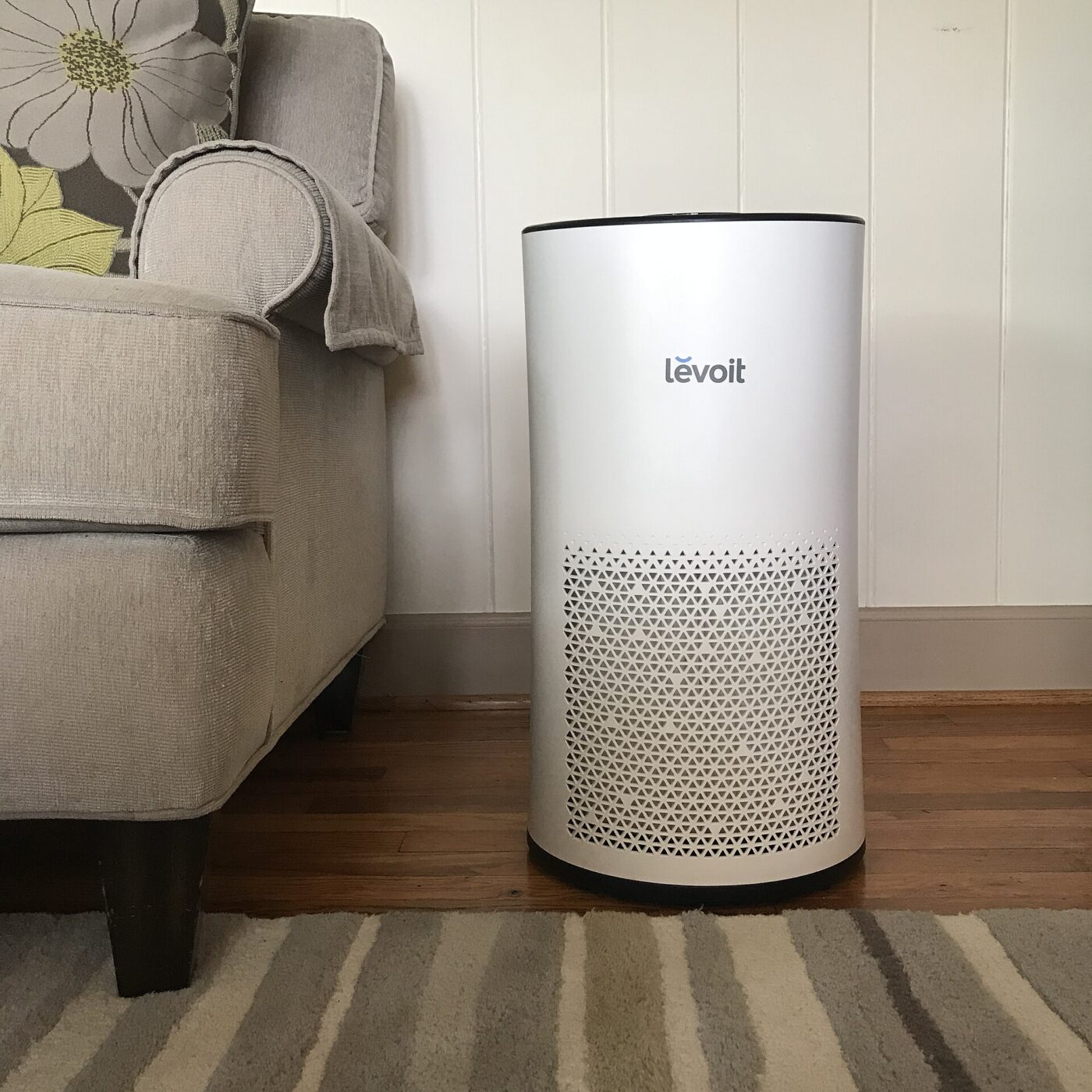
A purifier cleans the air in the room it is in, with the doors closed. It does nothing for the rest of the house, and an open door to a hallway effectively enlarges the room it is trying to treat.
Keep it away from walls and corners so it can draw and discharge freely — most need clearance on the intake side.
And be clear about what it does not do. It removes particles from the air; it does not remove allergens already embedded in carpet and bedding, which is why a purifier alone rarely resolves a dust mite problem.
Checking a specific model
The fastest way to know whether a room-size number is real is to look the model up in the AHAM Verifide directory. A listed model’s stated room size is already the independently tested 4.8-ACH figure, so it can be used directly, no math required. An unlisted model’s “coverage” figure is a self-reported estimate, and the CADR-based calculation above is the only way to check it.
Ceiling height also throws off the square-footage shortcut. A 200 sq ft room at an 8-foot ceiling holds 1,600 cubic feet of air; the same floor space under a vaulted 12-foot ceiling holds 2,400 — half again as much to move for an identical footprint. In practice, two smaller purifiers sized to the room’s real volume, each run on a lower and quieter setting, usually beat one machine maxed out to compensate.
For an open-plan space, size to the combined volume of the connected rooms, not just the one the purifier sits in — an open doorway does not stop particles moving between them.
The shortlist
Paid links: we earn a commission if you buy through the buttons below, at no extra cost to you. As an Amazon Associate I earn from qualifying purchases.
Compared on delivered clean air
| Product type | Best for | Risk estimate | Where to buy |
|---|---|---|---|
| True HEPA Air Purifier (Bedroom) | Bedrooms and allergies | 30/100 | See listings on AmazonOpens Amazon search results, not one listing: check the model on the product page. |
| Large-Room HEPA Purifier | Large open rooms | 38/100 | See listings on AmazonOpens Amazon search results, not one listing: check the model on the product page. |
| Replacement HEPA Filter Set | Ongoing cost | 22/100 | See listings on AmazonOpens Amazon search results, not one listing: check the model on the product page. |
Risk estimate is our editorial Fear Index for the product type (lower is safer), not a customer rating. How it is scored.
True HEPA Air Purifier (Bedroom)
Check the model against the AHAM Verifide directory before trusting a coverage figure. For allergies you want close to four air changes an hour.
- True HEPA to a defined standard
- Quiet enough to run overnight
- Sized realistically for one closed room
- Unlisted models may overstate coverage
- Filters are a recurring cost
Replacement HEPA Filter Set
Work out the annual filter cost before choosing a purifier. It frequently exceeds the difference between two machines.
- Multipacks reduce the per-filter price
- Washable pre-filters extend HEPA life
- Easy to keep a spare
- Proprietary on most machines
- Adds up faster than people expect
More: Health and Sleep analyses and how the Fear Index is scored.
Questions people actually ask
What does CADR mean on an air purifier?
Clean air delivery rate — the volume of filtered air the machine delivers per minute, in cubic feet, tested separately for smoke, dust and pollen. It is the honest comparison figure when it carries the AHAM Verifide seal.
How do I size an air purifier for my room?
Multiply CADR by 60, divide by room volume (floor area × ceiling height). That gives air changes per hour. Aim for four if you have allergies — or look up the model in the AHAM Verifide directory, which already tests to about 4.8.
Is HEPA-type the same as true HEPA?
No. True HEPA meets a defined capture standard at 0.3 microns. HEPA-type, HEPA-like and similar phrases have no such requirement.
Do air purifiers help with dust mites?
Only partly. They remove airborne particles but not allergens embedded in carpet and bedding, which is where most dust mite allergen sits. Washing bedding hot matters more.