
That White Dust on Your Furniture Came Out of the Humidifier
An ultrasonic humidifier atomizes everything in the tank, including dissolved minerals. Evaporative designs leave them behind.

Part of the guide: Home and Kitchen Buying Mistakes: What Fails and How to Check Before You Buy
A fine white film appears on nearby surfaces within days of running an ultrasonic humidifier. It is not dust from the room. It is the dissolved mineral content of your tap water, which the humidifier has turned into an airborne powder.
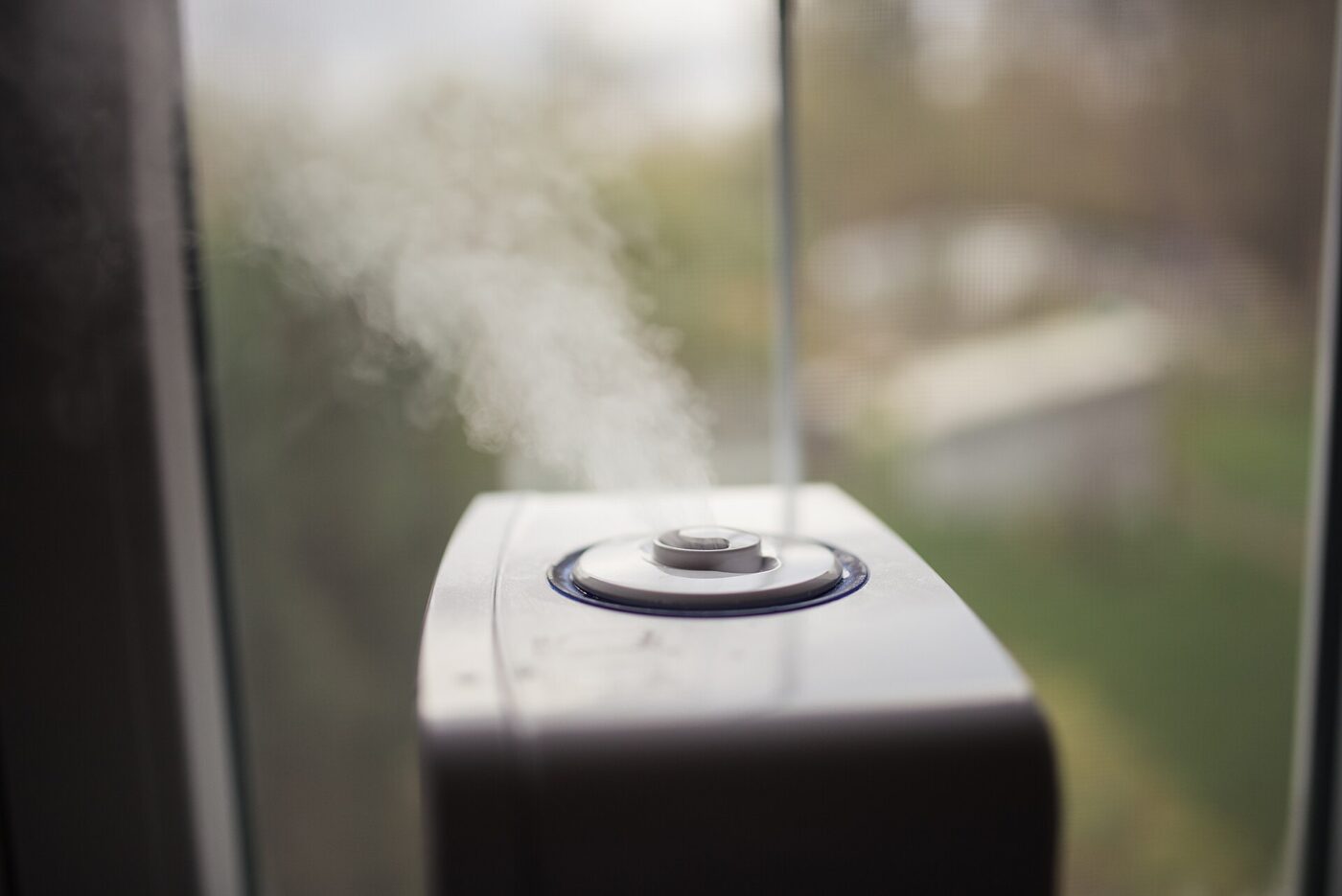
The mechanism explains it entirely: a piezoelectric disc vibrates at ultrasonic frequency and flings water off its surface as a mist of droplets. Whatever is in those droplets goes with them. When the water evaporates, the minerals stay in the air and then settle.
Fear Index · Think twice
It aerosolises whatever is in the tank
Minerals are the visible problem. Bacteria and mold in a neglected tank are the one that matters, and they are dispersed the same way.
Where the dust comes from
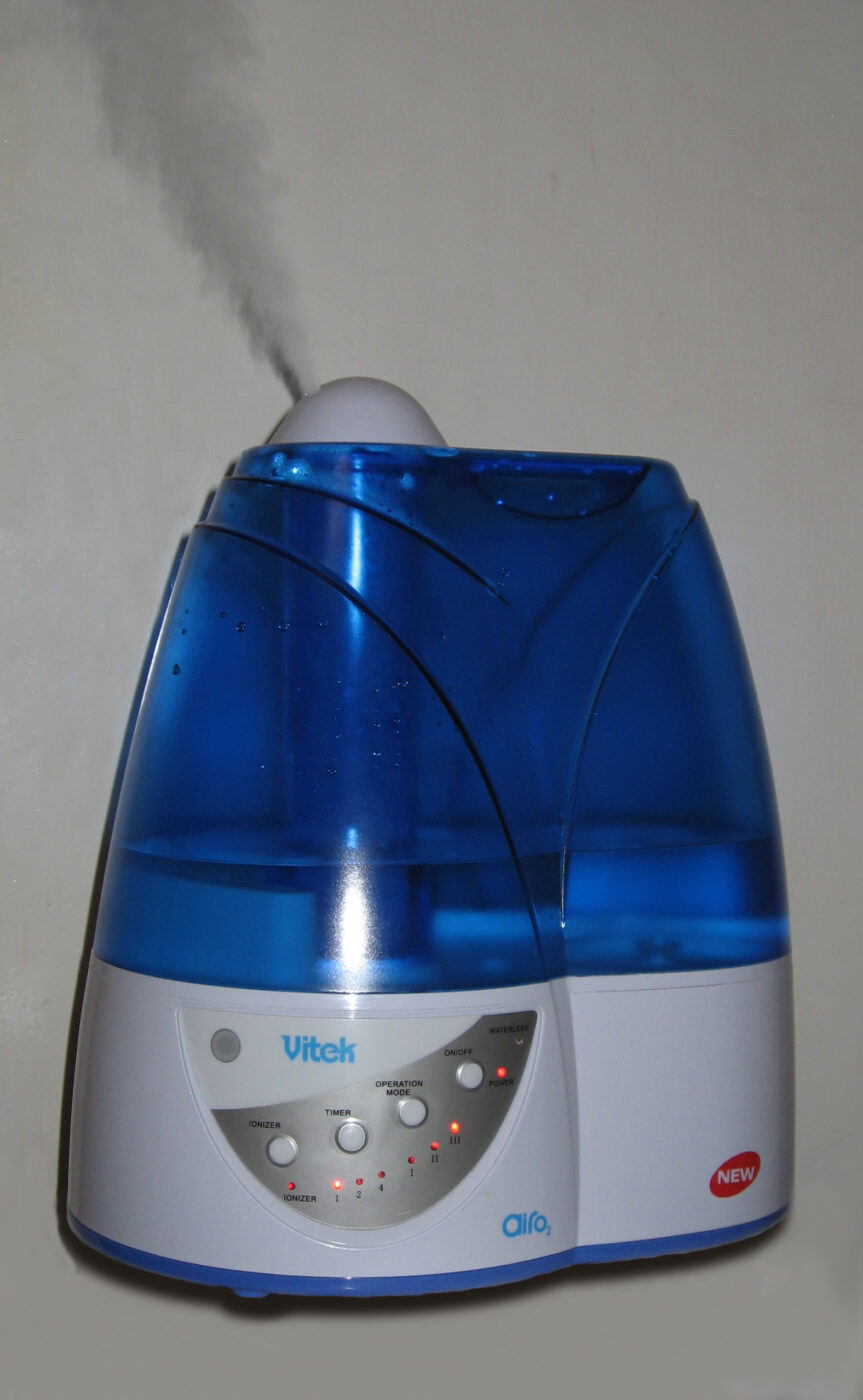
Evaporative humidifiers work differently. A fan draws air through a wet wick, and water leaves the wick as vapor — individual molecules, carrying nothing with them. The minerals stay behind and accumulate in the wick, which is why wicks stiffen and need replacing.
That is the whole difference, and it decides the white dust question completely.
| Type | Mist | White dust | Consumable |
|---|---|---|---|
| Ultrasonic | Visible cool mist | Yes, with tap water | None (but demineralization cartridges) |
| Evaporative | Invisible vapour | No | Wick, every 1–3 months |
| Steam | Invisible, warm | No | None; descaling needed |
If you keep an ultrasonic model, distilled water largely eliminates the dust — EPA notes it still carries some mineral content, just far less than tap water. Filtered tap water does not help; most filters do not remove dissolved minerals.
The hygiene problem is the bigger one
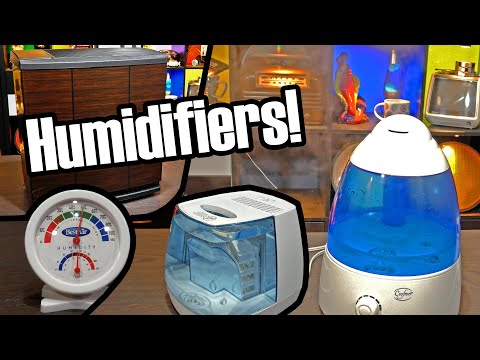
The white dust itself is mostly a cleaning nuisance rather than a proven hazard — EPA says the research on breathing these mineral particles is not conclusive, though it flags that people with asthma or other lung sensitivities may be more affected. The bigger issue with any humidifier is what grows in a warm tank of standing water.
Bacteria and mold establish quickly, and EPA specifically notes that ultrasonic and impeller (“cool mist”) humidifiers disperse both microorganisms and minerals into the air more than other designs. Its guidance on humidifier hygiene exists precisely because of this.
- Empty, wipe dry and refill daily. Do not just top up a tank that already has standing water in it.
- Clean the unit every third day with the manufacturer’s recommended method or a dilute vinegar rinse, per EPA — not just a weekly wipe-down.
- Never run it on old water. Water left standing is a culture medium.
- Replace wicks and filters on schedule. A stiff, scaled wick both stops working and holds growth.
- Do not exceed 50% relative humidity. EPA recommends 30–50% indoors; higher levels encourage mold and dust mites in the room itself.
Which to buy
Evaporative models are self-limiting — as the room reaches equilibrium, evaporation slows — which makes over-humidifying much harder. They are noisier, because they contain a fan.
Steam humidifiers boil the water, which handles the microbial question convincingly. They use more electricity and present a scald risk, so they suit adult bedrooms rather than a child’s room.
Ultrasonic units are quiet and cheap, which is why they dominate. With distilled water and the cleaning schedule above they are fine; without both, they are the worst of the three.
Capacity matters more than most buyers expect. A small tabletop tank can run dry partway through the night, so the practical spec for a bedroom is runtime on a full tank at your unit’s output setting, not just the tank’s stated volume in ounces.
Buying and placing one safely
Two questions matter more than the mineral chemistry. Water and electricity share the same appliance, so keep it off the floor of a walkway, away from anything it could drip into, and never running through an extension cord.
If there are small children in the house, be more cautious with steam vaporizers specifically: a knocked-over unit dispenses near-boiling water, which is one reason cool-mist designs are the more common recommendation for a child’s room despite the mineral trade-off. Keep the unit and its cord well out of reach rather than on a low nightstand.
Cracked tanks and failed shutoff switches are the recurring failure modes behind humidifier recalls. Check a model, especially a secondhand one, against CPSC’s recall database before you plug it in.
The shortlist
Paid links: we earn a commission if you buy through the buttons below, at no extra cost to you. As an Amazon Associate I earn from qualifying purchases.
Compared on what ends up in the air
| Product type | Best for | Risk estimate | Where to buy |
|---|---|---|---|
| Evaporative Wick Humidifier | No white dust | 26/100 | See listings on AmazonOpens Amazon search results, not one listing: check the model on the product page. |
| Ultrasonic Cool Mist Humidifier | Quietest | 54/100 | See listings on AmazonOpens Amazon search results, not one listing: check the model on the product page. |
| Digital Hygrometer | If you keep an ultrasonic | 12/100 | See listings on AmazonOpens Amazon search results, not one listing: check the model on the product page. |
Risk estimate is our editorial Fear Index for the product type (lower is safer), not a customer rating. How it is scored.
Evaporative Wick Humidifier
The design that solves the problem structurally rather than by asking you to buy distilled water forever.
- Minerals stay in the wick, not the air
- Self-limiting, so over-humidifying is hard
- Works with ordinary tap water
- Fan noise
- Wick replacement every one to three months
Digital Hygrometer
Over-humidifying causes mold on walls and windows. Without a hygrometer you are guessing at the one number that matters.
- Shows when to stop
- Costs almost nothing
- Catches damp problems elsewhere in the house
- Cheap ones drift over time
- Another battery
More: Health and Sleep analyses and how the Fear Index is scored.
Questions people actually ask
What is the white dust from my humidifier?
Dissolved minerals from your tap water. An ultrasonic humidifier atomizes the water into droplets that carry everything dissolved in them; when the water evaporates the minerals settle on surfaces.
How do I stop humidifier white dust?
Use distilled water, or switch to an evaporative humidifier where water leaves as vapor and minerals stay in the wick. Ordinary filtered water does not help much.
How often should you clean a humidifier?
EPA recommends emptying, wiping dry and refilling daily, with a fuller clean every third day. Standing water in a warm tank grows bacteria and mold, which an ultrasonic unit then disperses into the air.
What humidity level should a bedroom be?
EPA recommends 30–50% and advises against exceeding 50% indoors. Higher levels encourage mold and dust mites, which is a worse problem than dry air.