
Some Mattresses Meet the Fire Rule With Glass Fiber, and Only the Cover Keeps It In
Some mattresses meet the federal open-flame rule with fiberglass in the cover. How to check labels and listings, and what to do if fibers come loose.

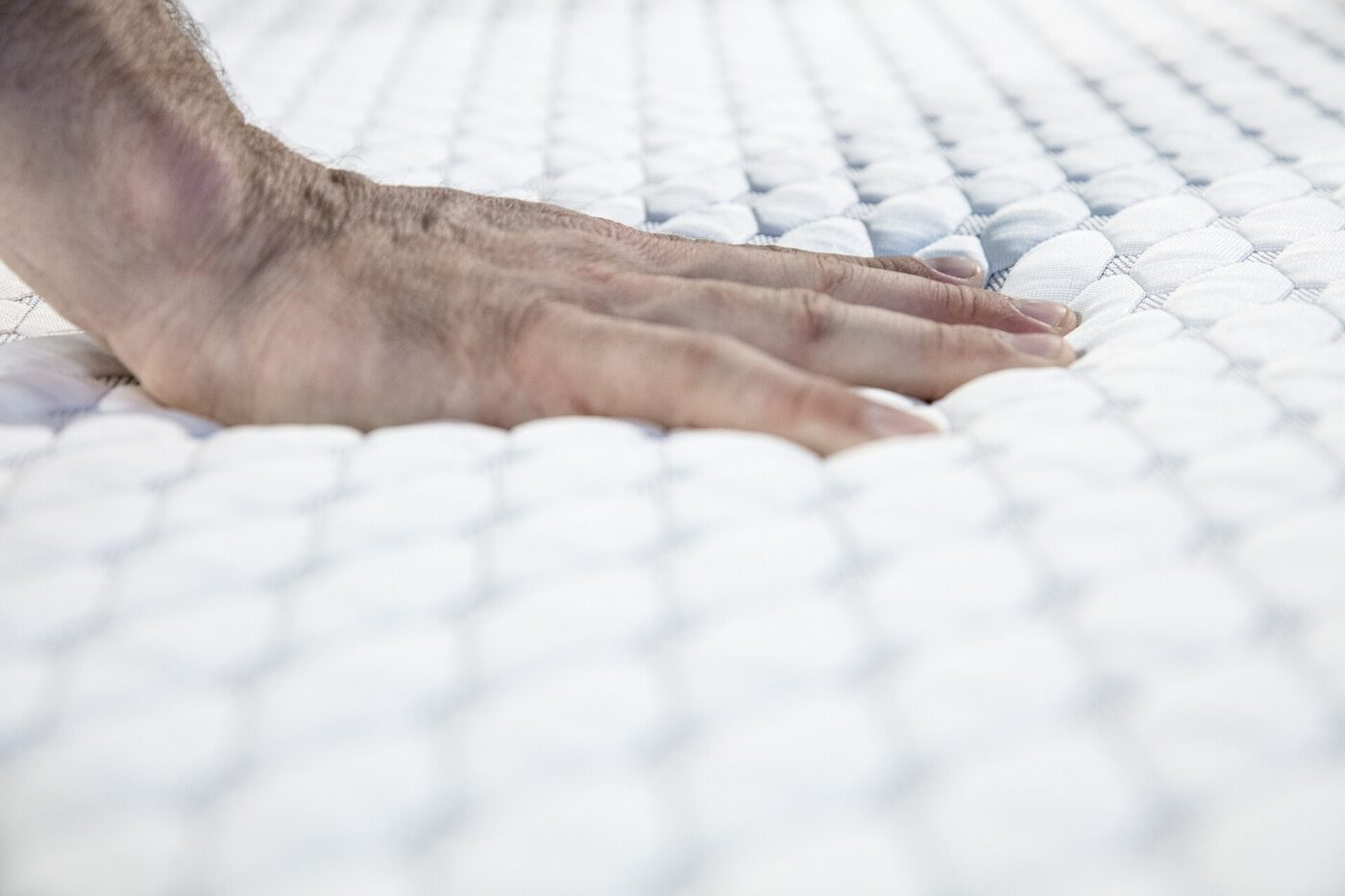
Every mattress and mattress set sold in the United States has to pass a federal open-flame test. Manufacturers choose how they pass it, and one option is fiberglass: glass fibers built into the mattress cover or foam that act as a thermal barrier in a fire.
While that layer stays enclosed, it does the job it was built for. The trouble starts when the cover comes off, whether that is a zipper opened to wash a stain, a curious repair, or a seam that simply tears with age, and glass fibers reach bedding, floors and skin.
Fear Index · Think twice
A barrier that only works while it stays shut
Poison Control says fiberglass exposures can happen when a mattress cover is unzipped or removed, and California’s health department says contact can irritate the eyes and skin, and that a mattress shedding fibers will probably have to go.
The federal flame test every mattress must pass
Every mattress and mattress set sold in the US has to pass an open-flame test under 16 CFR Part 1633, the federal flammability standard CPSC enforces. The rule sets two numeric limits: peak heat release cannot exceed 200 kilowatts at any point in a 30-minute test, and total heat release cannot exceed 15 megajoules in the first 10 minutes.
The standard does not name a material. It is written as a performance test, so any mattress that keeps a flame from building past those two limits passes, no matter what is inside it. That detail matters for shoppers: the rule does not require fiberglass, and it does not forbid it either.
The rule leaves the method to the manufacturer. Its recordkeeping section expects each maker to document any flame retardant treatments or inherently flame-resistant fibers or other materials used in its mattress components, and those records stay with the manufacturer, not on the label.
The open-flame standard is about heat-release numbers, not ingredients. A mattress can pass it with fiberglass, or without it.
Why glass fiber ends up in some mattresses
Because the rule is material-neutral, manufacturers can meet it with flame-retardant chemical treatments, inherently flame-resistant fibers or a barrier layer. Poison Control notes that many mattress makers have used flame-retardant chemicals to comply, and that fiberglass, which acts as a thermal insulation barrier in a fire, can be built into mattress or bedding fibers instead.
California’s Department of Public Health says fiberglass is used in some mattresses in place of chemical fire retardants. When it tested four twin and baby mattresses, it found fiberglass in two, one of them a crib mattress whose label did not list it. California has since banned the sale of mattresses and upholstered furniture that contain fiberglass, starting January 1, 2027; the federal rule has no such ban.
Poison Control’s summary of the risk is short: exposures to fiberglass can occur when mattress covers are unzipped or removed. The problem starts once that enclosure is opened.
What goes wrong when the cover comes off

Many mattress covers zip, which makes them look removable the way a duvet cover is. Poison Control’s advice is to follow the label: if a cover says do not remove, do not unzip it. California’s health department goes further and says never to unzip a mattress cover, because a shopper cannot know for sure whether fiberglass is inside.
A tear does the same thing by accident, with no zipper involved at all. CDPH says glass fibers are stiff and break easily into tiny pieces that settle into dust; contact can irritate the eyes and skin, and breathing the pieces in can irritate the nose, throat and lungs. Its advice for a cover with a tear that cannot be repaired is to get rid of the mattress.
None of this requires a manufacturing defect. A cover that unzips easily and a barrier that is not meant to be opened are two features of the same mattress, and the second one only becomes a problem once the first is used the way it looks like it can be.
If a mattress cover unzips, assume the layer underneath is not meant to come out. Treat the zipper as a warning, not a washing instruction; California’s health department says never to unzip one.
Reading labels and listings before you buy
The federal law label required on every mattress lists the manufacturer’s name and address, the month and year of manufacture, a model identifier, a prototype identification number, a statement that the mattress meets the flammability standard, and whether it is sold with or without a foundation. None of those required items names the fire barrier material.
That federal label will not tell a shopper whether a mattress uses fiberglass. The separate label listing a mattress’s contents may: CDPH says fiberglass can appear there as glass fiber, and Poison Control adds glass wool, but CDPH also found fiberglass in a mattress whose label did not list it. The listing or the manufacturer’s materials page is the next check, and wording matters: fiberglass-free is a specific claim, while eco-friendly or hypoallergenic describe something else, and CDPH notes that a CertiPUR-US seal certifies only the foam.
When a listing does not say either way, asking the manufacturer in writing what the fire barrier is made of is a reasonable step before an online order, and it is Poison Control’s advice for anyone with questions about a mattress’s contents. CDPH also suggests searching SaferProducts.gov for mattress and fiberglass to see which brands have drawn complaints.
- Look for fiberglass, glass fiber or glass wool on the contents label, and for the words fiberglass-free stated directly in the listing.
- Do not treat eco-friendly, hypoallergenic or a CertiPUR-US seal as a fiberglass claim; CertiPUR-US covers only the foam.
- Ask the seller in writing what the fire barrier is made of if the listing does not say.
- Keep the cover zipped; California’s health department says never to unzip a mattress cover.
If fibers are already loose: cleanup and reporting
California’s health department sets out the cleanup. Wear eye goggles, a mask over the nose and mouth, and loose clothing that covers the skin. Clean with a vacuum that has a HEPA filter, and do not sweep, since sweeping spreads glass fibers and pushes them into the air. Then wipe all surfaces with a damp cloth.
Wash sheets, blankets and clothes separately from other laundry, ideally one item at a time, and rinse the washing machine after each load; CDPH says to throw out anything the fibers cannot be washed out of. If fiberglass is coming out of the mattress itself, CDPH says it will probably have to go, covered before it is carried out so the fibers do not spread.
CPSC takes reports on mattresses the same way it takes reports on any other unsafe product, through SaferProducts.gov, where staff review each report and CPSC publishes unsafe product reports in a searchable public database. If the mattress itself needs to go back, check the seller’s return window before it closes.
The shortlist
Paid links: we earn a commission if you buy through the buttons below, at no extra cost to you. As an Amazon Associate I earn from qualifying purchases.
Compared on avoiding and handling fiberglass
| Product type | Best for | Risk estimate | Where to buy |
|---|---|---|---|
| Fiberglass-Free Mattress (Queen) | Skips the fiberglass question | 20/100 | See listings on Amazon |
| Zippered Mattress Encasement (Queen) | Keeps a cover from being opened | 15/100 | See listings on Amazon |
| HEPA Canister Vacuum (Sealed Filtration) | Cleanup if fibers get loose | 22/100 | See listings on Amazon |
Risk estimate is our editorial Fear Index for the product type (lower is safer), not a customer rating. How it is scored. The buttons open Amazon search results rather than one listing, so check the model on the product page.
Fiberglass-Free Mattress (Queen)
Buying fiberglass-free from the start avoids the removal risk altogether. Confirm the claim is stated directly, not implied by other marketing.
- No fiberglass to expose if the claim holds
- Fits California’s 2027 sales rule
- Fits a standard queen frame
- Fiberglass-free is the seller’s claim
- Labels can omit fiberglass, CDPH found
Zippered Mattress Encasement (Queen)
A reasonable option for a mattress that is not being replaced. It only works if the original cover is never unzipped underneath it.
- Goes on over the original cover, unopened
- Gives a washable layer so the cover stays shut
- No need to replace an intact mattress
- Does not remove fibers already loose
- A torn cover means replacing the mattress, per CDPH
More: Health and Sleep analyses and how the Fear Index is scored.
Sources
- 16 CFR Part 1633: Standard for the Flammability (Open Flame) of Mattress Sets — eCFR
- Mattresses Business Guidance — CPSC
- Report an Unsafe Product — SaferProducts.gov (CPSC)
- Factsheet on Fiberglass and Mattresses — California Department of Public Health
- Why do mattresses contain fiberglass? — Poison Control (National Capital Poison Center)
Questions people actually ask
Does every mattress sold in the US contain fiberglass?
No. The federal flammability standard, 16 CFR 1633, sets heat-release limits and does not require or name any specific material. Fiberglass is one way manufacturers meet it, not a requirement.
Can you remove a mattress cover to wash it?
California’s health department says never to unzip a mattress cover, because you cannot know for sure whether fiberglass is inside, and Poison Control says to leave a cover labeled do not remove alone. Exposures happen when covers are unzipped or removed.
How do you know if a mattress has a fiberglass fire barrier?
The federal flammability label does not say. The contents label may list fiberglass, glass fiber or glass wool, but CDPH found fiberglass in a mattress whose label did not list it, so also check the listing for a direct fiberglass-free claim or ask the manufacturer in writing.
What should you do if fiberglass gets out of a mattress?
California’s health department says to wear goggles, a mask and covering clothes, vacuum with a HEPA filter instead of sweeping, wipe surfaces with a damp cloth, wash exposed bedding and clothing separately, and expect to replace the mattress. Report it at SaferProducts.gov.