
Cloudy Glasses Are a Water Problem, Not a Dishwasher Problem
Limescale and etching look similar and have opposite causes. What dishwasher salt actually does, and when tablets are not enough.

Part of the guide: Home and Kitchen Buying Mistakes: What Fails and How to Check Before You Buy
Glasses come out of the dishwasher looking foggy. The instinct is to buy stronger tablets, and when the real cause is etching, that makes it worse.
There are two distinct causes with opposite remedies, and a one-minute test separates them.
Fear Index · Low risk
A fixable problem and an unfixable one that look identical
One washes off with vinegar. The other is permanent glass damage, and continuing the same routine makes it worse.
Two kinds of cloudy
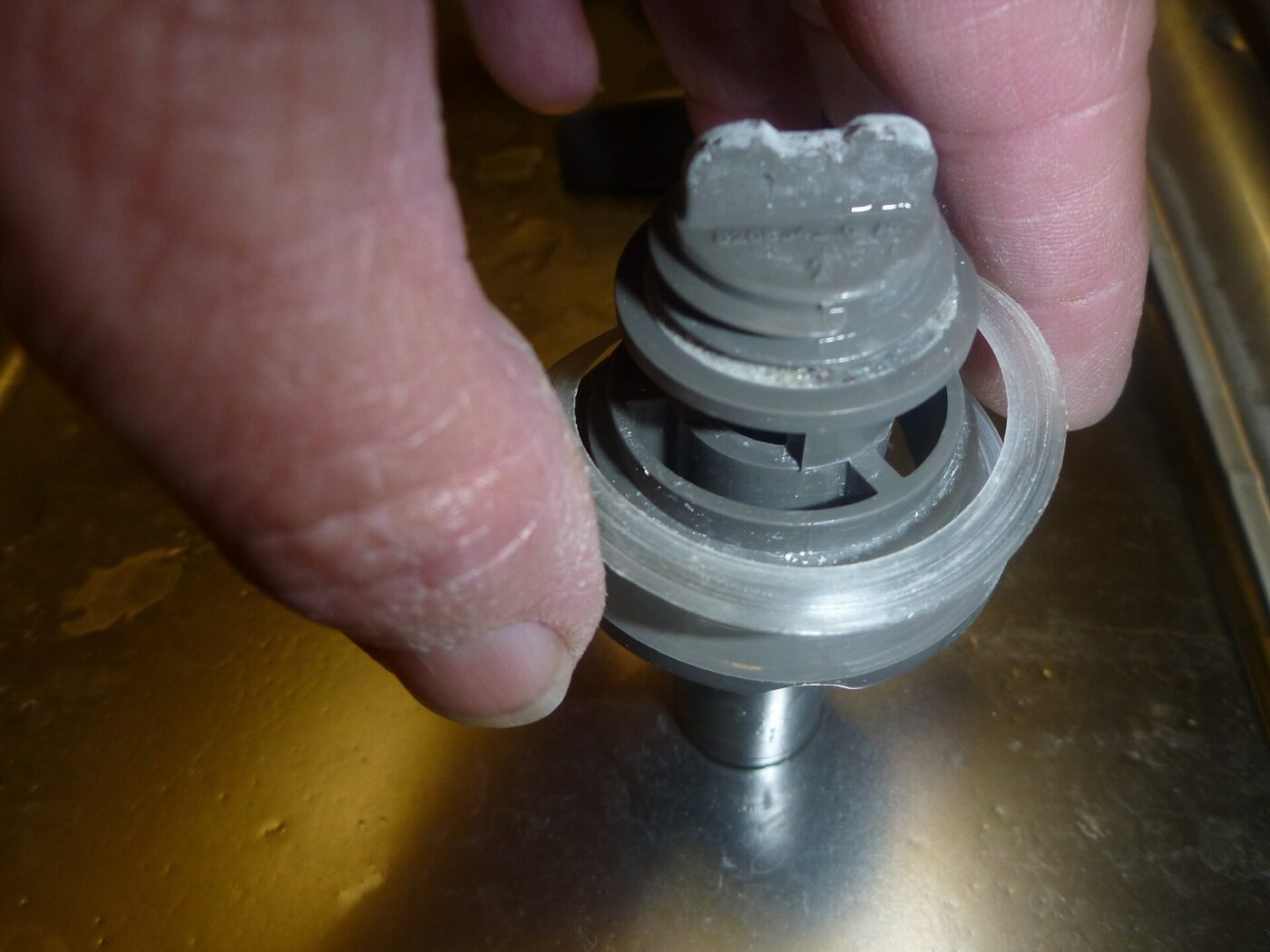
Limescale film is a deposit of calcium and magnesium left when hard water evaporates. It sits on the surface.
Etching is the glass surface itself being chemically attacked and microscopically roughened. It is permanent.
The test: soak the glass in white vinegar for fifteen minutes. If the cloudiness clears, it is limescale and the problem is hard water. If it does not change, it is etching and the problem is too much detergent in soft water.
These have opposite fixes. Adding more detergent to an etched glass accelerates the damage; adding softening to hard water solves the film. Diagnose before treating.
What dishwasher salt actually does

Many European-designed dishwashers — some Bosch, Miele and Asko models among them — contain a small ion-exchange water softener: a resin bed that swaps calcium and magnesium ions for sodium ones. Most US-market dishwashers do not. Check the manual for a salt reservoir, usually a screw cap on the tub floor, before buying salt.
If your machine has one, running it without salt in a hard water area lets the resin exhaust within weeks, and every wash then deposits scale on the dishes and inside the machine.
A machine with a softener also needs to be told how hard your water is, using a hardness setting in the control panel. Almost nobody changes it from the factory default, and in a very hard area that default is far too low.
- Find your water hardness from your local water utility’s website, then set the machine to match if it has a hardness dial.
- If your machine takes salt, use coarse dishwasher salt, not table salt, which contains anti-caking agents that clog the resin.
- Do not skip salt because you use all-in-one tablets, if your machine has a reservoir. Their softening component is adequate in medium hardness and not in high.
- Rinse aid changes water surface tension so it sheets off rather than beading, which is what prevents drying spots — this applies to every machine.
The filter nobody cleans
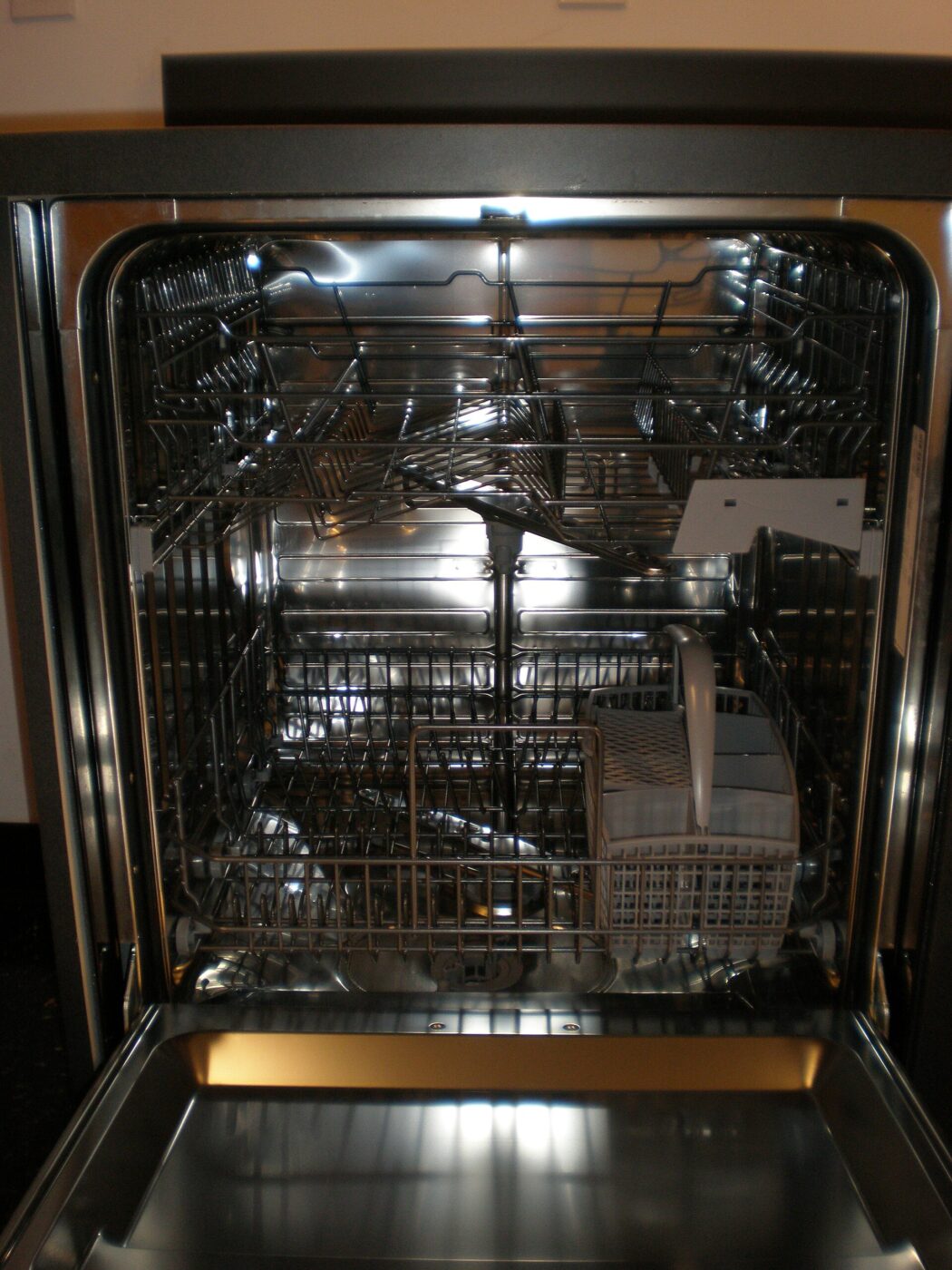
Most newer dishwashers do not grind food waste. They filter it, and that filter is at the bottom of the machine under the lower spray arm. It needs rinsing under the faucet — realistically every couple of weeks.
A blocked filter recirculates dirty water, which produces gritty deposits on dishes that look like a detergent problem. A great many “my dishwasher stopped cleaning” complaints resolve here.
Spray arm holes block too, with limescale and with seeds and fragments. They unclip and clear with a toothpick.
If your machine has no reservoir
Most US dishwashers rely entirely on the detergent’s own water-softening additives and on rinse aid, with no separate ion-exchange system to regenerate. In hard water, that puts more weight on getting those two things right.
Powder and gel detergents vary more in hard-water performance than pods do, because pod formulas are dosed as a fixed unit. If glasses stay cloudy after the vinegar test rules out etching, trying a pod rated for hard water, or topping up rinse aid every cycle rather than every few, is the next lever — not more detergent.
A whole-house water softener changes the water itself rather than compensating machine by machine. It is a bigger purchase, and worth it mainly if hard water is also scaling kettles, showerheads and pipes elsewhere in the house.
Check the manual, or look for a screw cap on the tub floor, before assuming your machine takes salt. If there is no cap, salt has nowhere to go, and buying it is wasted money.
The shortlist
Paid links: we earn a commission if you buy through the buttons below, at no extra cost to you. As an Amazon Associate I earn from qualifying purchases.
Compared on what each solves
| Product type | Best for | Risk estimate | Where to buy |
|---|---|---|---|
| Coarse Dishwasher Salt | Machines with a salt reservoir | 8/100 | See listings on AmazonOpens Amazon search results, not one listing: check the model on the product page. |
| Rinse Aid | Every machine | 10/100 | See listings on AmazonOpens Amazon search results, not one listing: check the model on the product page. |
| Dishwasher Descaler and Cleaner | Removing existing scale | 14/100 | See listings on AmazonOpens Amazon search results, not one listing: check the model on the product page. |
Risk estimate is our editorial Fear Index for the product type (lower is safer), not a customer rating. How it is scored.
Coarse Dishwasher Salt
Only for dishwashers with a salt reservoir — check the manual first. If yours has one, set the hardness level to match your supply and keep the reservoir full.
- Regenerates the built-in softener
- Costs almost nothing per wash
- Protects the heating element too
- Most US dishwashers don’t have one
- Useless if the hardness setting is wrong
Dishwasher Descaler and Cleaner
Scale builds inside the machine before it shows on the dishes. A monthly empty cycle with descaler prevents the slow decline.
- Removes scale from the element and spray arms
- Restores heating efficiency
- Improves results immediately
- Needs an empty cycle
- Monthly in very hard water
More: Home and Kitchen analyses and how the Fear Index is scored.
Questions people actually ask
Why are my glasses cloudy after the dishwasher?
Either limescale film from hard water, which vinegar removes, or permanent etching from too much detergent in soft water, which it does not. Soak one glass in vinegar to tell which.
Do I need dishwasher salt if I use all-in-one tablets?
If your dishwasher has a salt reservoir and your water is hard, yes. Machines without one, which is most US dishwashers, rely on rinse aid and detergent alone.
What does dishwasher salt actually do?
On the machines that have one, mostly European brands, it regenerates the ion-exchange resin in the built-in water softener. It never touches the dishes directly.
How often should I clean a dishwasher filter?
Every couple of weeks. Most newer machines filter food waste rather than grinding it, and a blocked filter recirculates dirty water onto the dishes.