
A Water Filter Does Not Remove Viruses. A Purifier Does.
Filters remove protozoa and bacteria. Viruses are small enough to pass straight through. Which one you need depends entirely on where you are.

Part of the guide: Home and Kitchen Buying Mistakes: What Fails and How to Check Before You Buy
Outdoor shops use “filter” and “purifier” almost interchangeably. The regulatory and practical distinction is specific: a purifier is effective against viruses, and a filter is not.
Whether that distinction matters to you is geographic. It matters enormously in some places and hardly at all in others, and the packaging rarely tells you which is which.
Fear Index · High risk
Two words used interchangeably for different protection
Getting this wrong in the wrong country is a serious illness, and the packaging does not make the distinction obvious.
Pore size decides everything
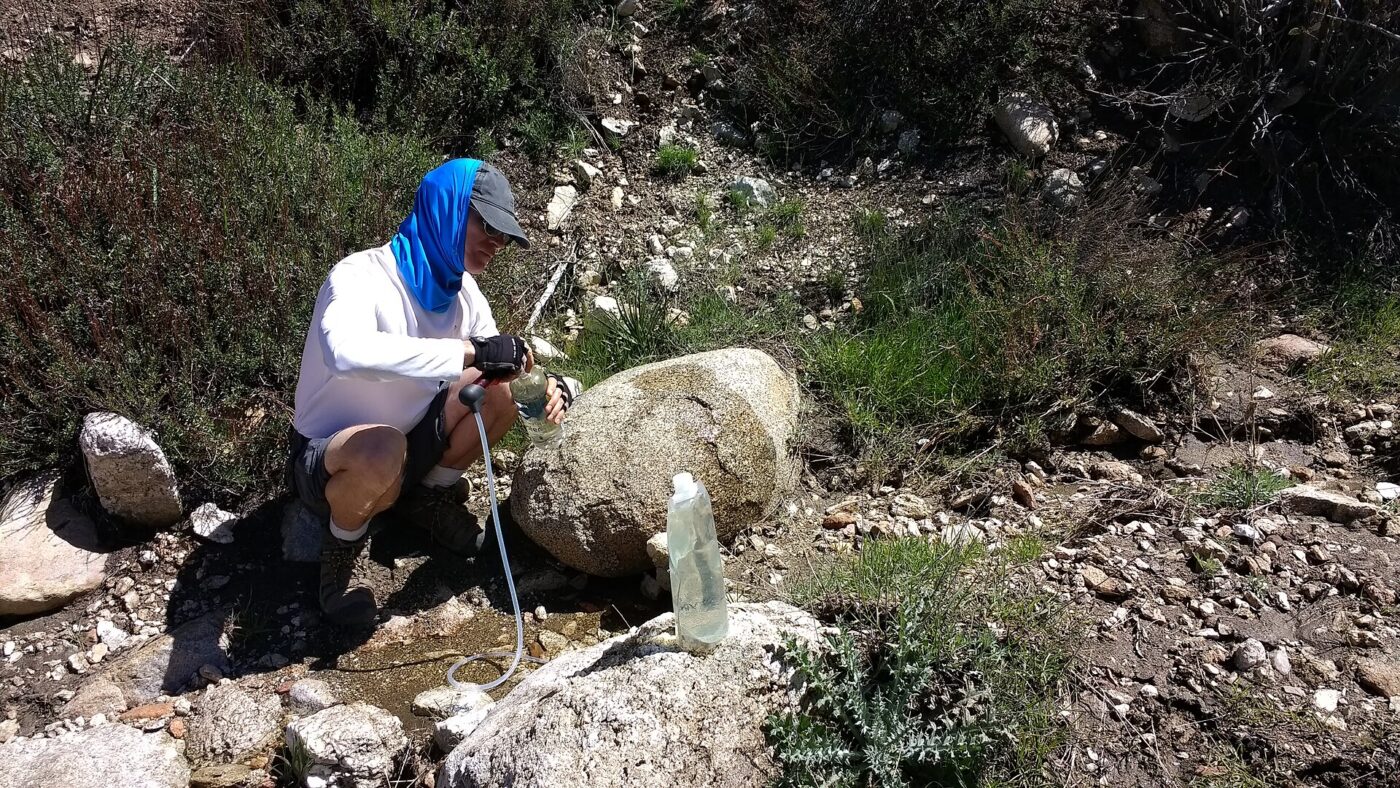
A mechanical filter is a physical sieve. Its pore size sets what it can catch, and the organisms differ by orders of magnitude in size.
| Organism | Typical size | Caught by a 0.2 µm filter |
|---|---|---|
| Protozoa (Giardia, Cryptosporidium) | 1–15 µm | Yes, comfortably |
| Bacteria (E. coli, Salmonella) | 0.2–5 µm | Yes |
| Viruses (norovirus, hepatitis A) | 0.02–0.3 µm | No |
Filters fine enough to stop viruses exist — the MSR Guardian’s hollow-fiber membrane is rated to 0.02 microns and still pumps about 2.5 liters a minute — but they are heavier, pricier and usually slower than a standard filter. That trade-off, not an impossibility, is why most lightweight purifiers use chemistry or UV instead.
Where a filter is enough

Waterborne viruses that infect humans come from human waste, not from wildlife, which is why the geography matters more than the gear. In remote backcountry with low human traffic and good sanitation upstream, the realistic risks are protozoa and bacteria from animals — both of which a filter handles.
That is why hollow-fiber filters are the standard for hiking in North America, Western Europe, New Zealand and similar. It is a judgement about the catchment, not about the technology.
Where sanitation is poor or water may carry human sewage — much of South and Southeast Asia, parts of Africa and Latin America — the virus risk is real and a filter alone is insufficient.
How purifiers deal with viruses
Four approaches, each with a trade-off.
- Chlorine dioxide. Effective against viruses and bacteria, and almost weightless. Takes about 30 minutes, or up to four hours against Cryptosporidium, and leaves a taste.
- Iodine. Effective against viruses and bacteria and even lighter to carry, but the CDC notes it may not reliably kill Cryptosporidium — do not rely on it alone where that parasite is a risk.
- UV. Fast and tasteless, and it needs batteries and clear water — UV cannot penetrate silt, so you must pre-filter.
- Virus-rated filters. Use an electrostatic charge or much finer membranes. Heavier, slower and pricier than a standard filter, but a physical barrier rather than a wait.
- Boiling. Completely effective against viruses, bacteria and protozoa, and needs no equipment beyond fuel. The CDC recommends a rolling boil for 1 minute, or 3 minutes above 6,500 feet elevation; it does not remove chemical contaminants.
Choosing by certification, not marketing copy
“Purifier” is not a protected word on a label the way it is in EPA testing. The number that actually means something is the log-reduction the product is tested to.
- Look for NSF/ANSI P231 or the EPA Guide Standard. These require a 4-log (99.99%) reduction in viruses, 6-log in bacteria and 3-log in protozoan cysts — the bar for calling something a purifier rather than a filter.
- A “filter” with no virus claim on the box has not been tested to that standard, whatever the marketing language nearby implies.
- When in doubt, add a chemical or UV step after any filter you are not certain meets the purifier standard.
The shortlist
Paid links: we earn a commission if you buy through the buttons below, at no extra cost to you. As an Amazon Associate I earn from qualifying purchases.
Compared by what they actually remove
| Product type | Best for | Risk estimate | Where to buy |
|---|---|---|---|
| Hollow-Fiber Water Filter | Backcountry hiking | 30/100 | See listings on AmazonOpens Amazon search results, not one listing: check the model on the product page. |
| Virus-Rated Purifier Bottle | International travel | 40/100 | See listings on AmazonOpens Amazon search results, not one listing: check the model on the product page. |
| Chlorine Dioxide Tablets | Emergency backup | 22/100 | See listings on AmazonOpens Amazon search results, not one listing: check the model on the product page. |
Risk estimate is our editorial Fear Index for the product type (lower is safer), not a customer rating. How it is scored.
Hollow-Fiber Water Filter
The right tool for hiking where the risk is animal-borne. Never let one freeze wet — ice ruptures the fibers invisibly.
- Removes protozoa and bacteria reliably
- Fast flow, no waiting
- Light and cheap
- No protection against viruses
- Destroyed if it freezes with water inside
Chlorine Dioxide Tablets
The backup for when a filter clogs or freezes. A strip of these costs little and weighs nothing.
- Effective against viruses
- Weighs almost nothing
- No moving parts to fail
- Thirty minutes, or four hours for Cryptosporidium
- Noticeable taste
More: Outdoors and Fitness analyses and how the Fear Index is scored.
Questions people actually ask
What is the difference between a water filter and a purifier?
A filter is a physical sieve that removes protozoa and bacteria. Viruses are ten times smaller and pass through. A purifier also inactivates viruses, using chemistry, UV or a virus-rated membrane.
Do I need a water purifier for hiking?
In remote North American, Western European and similar backcountry, a filter is often considered sufficient because the risk is animal-borne. Downstream of heavy human use, or where water may carry human sewage, add a chemical or UV step or use a purifier.
Can a water filter freeze?
Yes, and freezing with water inside ruptures the hollow fibers. The damage is invisible and the filter then passes everything. Sleep with it in winter.
How long do purification tablets take?
Chlorine dioxide takes around 30 minutes for bacteria and viruses, and up to four hours against Cryptosporidium; cold water takes longer. Iodine works on bacteria and viruses on a similar timeline but is not reliable against Cryptosporidium.