
A Compatible Fridge Filter Can Fit Perfectly and Still Filter Almost Nothing
Match a filter’s claimed NSF/ANSI 42, 53 or 401 certification against the certifier’s own public listing before buying, and learn what each standard covers.


Part of the guide: Home and Kitchen Buying Mistakes: What Fails and How to Check Before You Buy
A replacement refrigerator filter has two jobs, and only one is visible. It has to seat in the housing, seal against a pressurized water line and pass water at the right rate. It also has to reduce whatever its box says it reduces. A cartridge molded to fit a brand-name housing can do the first job perfectly and the second barely at all.
The numbers on the box — NSF/ANSI 42, 53, 401 — are the part a shopper can check, because every body that certifies to those standards publishes the result in a public, searchable database. The filtration itself is not checkable at home.
Fear Index · High risk
The one claim that matters is the one a kitchen cannot test
A cartridge that seats and dispenses water tells you nothing about lead, cysts or pharmaceutical reduction, and EPA notes there is no mandatory federal requirement for third-party certification of point-of-use filters under the Safe Drinking Water Act.
What NSF/ANSI 42, 53 and 401 actually cover
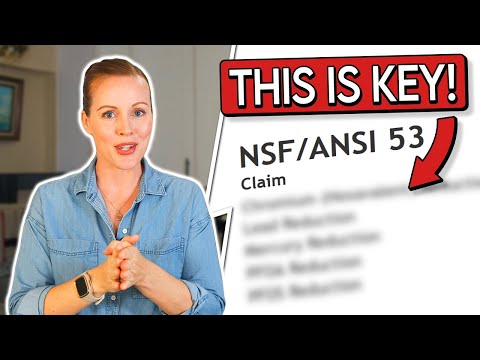
NSF’s public listing of drinking water treatment units groups products by the standard they were certified against. NSF/ANSI 42 covers aesthetic effects: in NSF’s listing of aftermarket refrigerator filters, checked October 14, 2026, the claims recorded under 42 are chlorine reduction and taste and odor reduction, some cartridges adding nominal particulate reduction, Class I. NSF/ANSI 53 is titled Drinking Water Treatment Units — Health Effects, and its claims are named contaminants: cyst, lead, benzene, carbofuran, endrin and mercury on one contract manufacturer’s cartridges, and a longer set on Samsung’s own that adds asbestos, MTBE, PCB, turbidity, VOC, PFOA and PFOS.
NSF/ANSI 401 is the emerging compounds standard, and it is where two identical-looking claims diverge most. Filtered to 401 and to refrigerator filters, NSF’s listing returned 288 products from two manufacturers on October 14, 2026. One manufacturer’s cartridges, sold under a long list of store and aftermarket brands, are listed for six compounds: phenytoin, ibuprofen, naproxen, estrone, bisphenol A and nonylphenol. Samsung’s is listed for sixteen, adding carbamazepine, DEET, metolachlor, microplastics and trimethoprim among others. Both may print 401 on the box.
| Standard | What it covers | Example claims in the NSF listing |
|---|---|---|
| NSF/ANSI 42 | Aesthetic effects | Chlorine reduction, taste and odor reduction, nominal particulate reduction Class I |
| NSF/ANSI 53 | Health effects | Lead, cyst, mercury, asbestos, VOC, PFOA and PFOS reduction |
| NSF/ANSI 401 | Emerging compounds and incidental contaminants | Ibuprofen, naproxen, bisphenol A, estrone, and on some listings microplastics |
A 42-only cartridge is a taste filter. Health claims live in 53, pharmaceutical and bisphenol A claims in 401, and a 401 line does not say which compounds were tested.
Check the claim in the certifier’s own listing
EPA’s consumer guide to point-of-use filters, published in December 2018, states the baseline plainly: there is no mandatory federal requirement for the use of point-of-use drinking water filters, or for testing or third-party certification, under the Safe Drinking Water Act. Its advice is to choose filters tested by an accredited third-party body for lead reduction and particulate reduction, Class I, against NSF/ANSI 42 and 53.
The same guide names five ANSI-accredited certification bodies and prints the address of each one’s listing directory: IAPMO, NSF, WQA, UL and CSA Group. They certify to the same standards, so which body did the work decides where you search. GE’s 2024 parts catalog says GE filters are certified by IAPMO for contaminant reduction and structural performance, so a shopper searching only NSF for a GE cartridge finds nothing. NSF’s own search takes a brand, trade name or model and narrows by standard and product type, with separate entries for aftermarket and integrated refrigerator filters. EPA adds that the mark sits on the filter or its smallest container, with any claims missing there on the data sheet inside the box or in the certifier’s directory.
Search the certifier the box names, not the one you have heard of, and match the exact model code rather than the brand.
What a filter box can claim that no shopper can test
Lead reduction, cyst reduction, mercury, VOCs, PFOA and PFOS, pharmaceuticals, rated capacity in gallons: none of it is observable in a kitchen. Water from a spent cartridge looks and tastes much like water from a working one once the carbon has stopped doing anything but remove chlorine. No home check separates a filter certified for lead at 300 gallons from one that filters lead for a week.
Genuine filters carry the same caution in their own paperwork. GE’s 2024 catalog says certifications vary by model, points readers to the product data sheets, and states that not all filters reduce all contaminants listed. Its own lineup shows why: the GSWF is listed against NSF 42 and 53, the XWFE and RPWFE against 42, 53 and 401, and in GE’s IAPMO reduction table the AFPWF row carries chlorine taste and odor and nothing else. The Association of Home Appliance Manufacturers, the appliance makers’ trade body, says its Filter It Out campaign conducts testing that shows the ineffectiveness of the counterfeits, that they may not filter out lead, asbestos, pesticides and insecticides, and that they are sometimes only distinguishable by differences in weight — which nobody can measure before the box arrives.
Fit is not filtration, and a leak is a separate risk
GE’s support material on counterfeit filters describes two separate failures. On filtration, it says many counterfeits often only filter chlorine, taste and odor and are not certified to reduce harmful contaminants, while genuine replacements are certified to NSF/ANSI drinking water treatment standards. On hardware, it says counterfeits sold online have been known to burst and/or leak — a cartridge sits on the pressurized side of the water line behind a cabinet, which is why structural certification is part of these standards at all.
For the right part, the maker’s documentation is the anchor. GE’s catalog tells owners to see the owner’s manual for the correct filter, and states that GE has not qualified non-GE-branded filters for its refrigerators and that there is no assurance they meet GE’s standards for quality, performance and reliability. Timing comes from the same documents rather than the dispenser light: GE gives several cartridges a rated capacity of 300 gallons or 6 months and says to replace at that capacity, or sooner if a noticeable reduction in flow rate occurs.
Two failures hide behind one cheap cartridge: a claim nobody certified, and a plastic housing on a pressurized line nobody tested.
The lookup, in order
The check takes a few minutes and happens before the order, using the filter part number from the manual and the listing of whichever body the box names.
- Take the part number from the owner’s manual, not from a listing title that recites a dozen brand names.
- Open the directory of the body the box names: NSF, IAPMO, WQA, UL or CSA Group, all five of which EPA links.
- Match the exact model code, then read the claim list the entry records rather than the standard number alone.
- If no entry matches that model, treat the certification line as unverified and buy the part the manual names.
The shortlist
Paid links: we earn a commission if you buy through the buttons below, at no extra cost to you. As an Amazon Associate I earn from qualifying purchases.
Compared on verifying a refrigerator filter claim
| Product type | Best for | Risk estimate | Where to buy |
|---|---|---|---|
| Manufacturer-Branded Filter for Your Part Number | Matching the part number in the manual | 25/100 | See listings on Amazon |
| Aftermarket Cartridge With a Listing You Can Find | An aftermarket cartridge you can look up | 55/100 | See listings on Amazon |
| Refrigerator Filter Bypass Plug | A fridge you would rather run unfiltered | 20/100 | See listings on Amazon |
Risk estimate is our editorial Fear Index for the product type (lower is safer), not a customer rating. How it is scored. The buttons open Amazon search results rather than one listing, so check the model on the product page.
Manufacturer-Branded Filter for Your Part Number
GE’s catalog sends owners to the manual for the correct filter and says non-GE-branded filters have not been qualified for its refrigerators. Even inside that lineup claim sets differ: 42 and 53 on one cartridge, 42, 53 and 401 on another, chlorine taste and odor only on a third.
- GE says its filters are IAPMO certified for reduction and structural performance
- Certification published per model on a data sheet
- Rated capacity stated in gallons and months
- Certifications vary by model, so a branded filter can be 42-only
- Costs more than an unlisted compatible
Aftermarket Cartridge With a Listing You Can Find
Aftermarket is not the same as uncertified. The test is whether the exact model code appears in the directory of the body named on the box, and what that entry records as the claim set.
- Claim list is public and searchable by model code
- NSF listed 288 refrigerator filters under 401
- One contract maker supplies many brand names
- 401 claim sets ran from six compounds to sixteen
- A reduction claim says nothing about fit or seal
More: Home and Kitchen analyses and how the Fear Index is scored.
Sources
- A Consumer Tool for Identifying Point of Use (POU) Drinking Water Filters Certified to Reduce Lead — US EPA
- Certified Drinking Water Treatment Units listing search — NSF
- Listings for Refrigerator Filter, Aftermarket — NSF
- Parts and Accessories 2024 Catalog — GE Appliances
- Refrigerator — Genuine Water Filter vs Counterfeit Filter — GE Appliances
- Is Your Water Filter Counterfeit? — Association of Home Appliance Manufacturers
Questions people actually ask
What is the difference between NSF 42, NSF 53 and NSF 401 on a water filter?
NSF/ANSI 42 covers aesthetic effects: chlorine, taste and odor, particulates. NSF/ANSI 53 is the health-effects standard, listing named contaminants such as lead, cysts, mercury, VOCs, PFOA and PFOS. NSF/ANSI 401 covers emerging compounds, including pharmaceuticals and bisphenol A.
How do I check whether a refrigerator water filter is really certified?
Search the exact model code in the public listing of the body the box names. EPA’s consumer guide names five accredited bodies that publish directories: IAPMO, NSF, WQA, UL and CSA Group.
Can I tell a counterfeit filter by looking at it?
Not reliably. AHAM says counterfeits are sometimes only distinguishable by differences in weight, and that its testing shows they may not filter out lead, asbestos, pesticides and insecticides. GE says counterfeits sold online have been known to burst and/or leak.
How often should a refrigerator filter be replaced?
By rated capacity rather than habit. GE’s parts catalog gives several cartridges a rated capacity of 300 gallons or 6 months, and says to replace at that capacity or sooner if flow drops noticeably.