
Your Coffee Is Limited by the Grinder, Not the Machine
A blade grinder produces dust and boulders in the same batch, and no brewer can fix that. Why grind consistency outranks every other coffee upgrade.

Part of the guide: Home and Kitchen Buying Mistakes: What Fails and How to Check Before You Buy
The usual upgrade path in home coffee runs through brewers. A better dripper, then a scale, then a temperature-controlled kettle, then a machine. Each is a real improvement and each is a smaller one than the upgrade almost nobody starts with.
Coffee extraction is governed by surface area and time. Fine particles and the broken cells on the surface of a grain give up their solubles quickly; the intact interior of a large grain gives them up slowly. That makes grind consistency not one variable among many but the ceiling on all of them.
Fear Index · Think twice
The upgrade path runs in the wrong order
Nothing sold here is bad. The money simply tends to go into the part of the system that was not the limit.
Why consistency beats everything
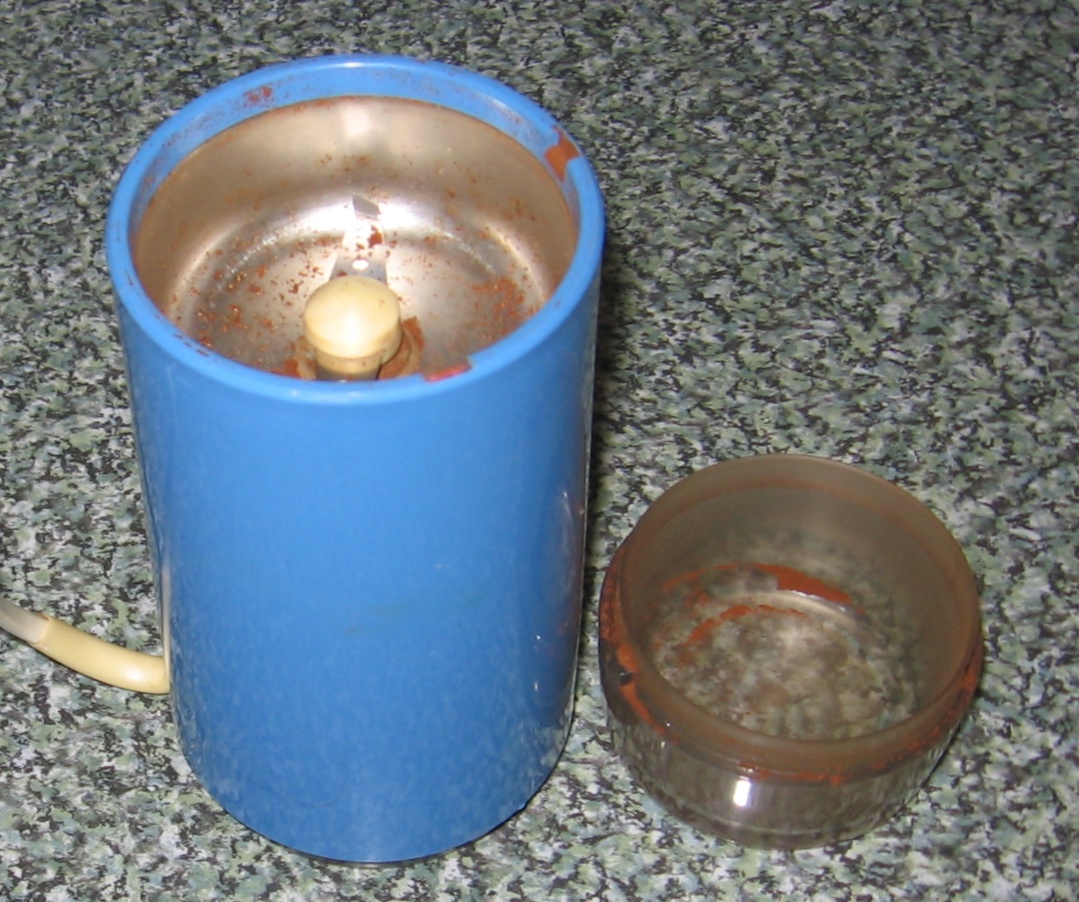
A blade grinder is a small propeller in a chamber. It does not grind; it chops whatever happens to be in its path. Run it longer and the grounds get finer overall, but nothing sorts them by size: the dust it has already made stays in the chamber with the pieces the blade has not yet reached.
The result is a wide spread of particle sizes, with dust and boulders in the same batch, and Breville notes this can mean less consistent extraction than a burr grinder gives. In UC Davis sensory research, sour flavors increased toward lower extraction and bitter ones toward higher extraction. Grounds that mix dust with boulders are extracting fast and slowly at once, so both tendencies can end up in the same cup.
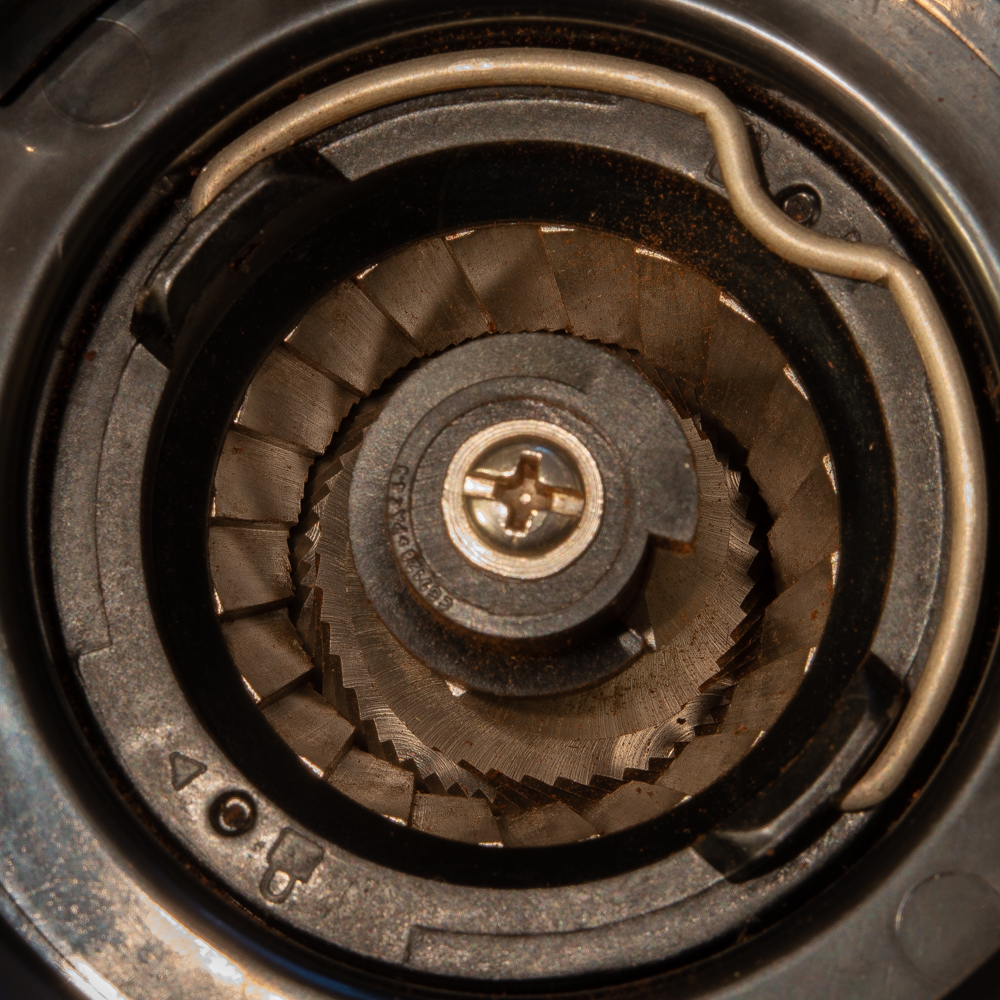
Burrs grind beans between two shaped surfaces set to an adjustable gap, and the setting controls grind size. That produces a narrower spread — not perfect, but narrow enough that the bed extracts more evenly.
No brewer can correct for particle size. An expensive machine fed inconsistent grounds extracts them just as unevenly as a cheap dripper would.
Where the money actually goes
An electric grinder has to pay for a motor, housing and electronics as well as its burrs. A hand grinder pays for burrs, a crank and the shaft that holds the burrs steady. The budget tiers below are editorial judgment, not a price survey.
| Budget | Best buy | Why |
|---|---|---|
| Tightest | Hand burr grinder | No motor to pay for |
| Mid-range | Electric conical burr | Convenience without giving up consistency |
| Top | Stepless or finely stepped | Worth it mainly for espresso |
The catch with hand grinders is honest: grinding for a large brew takes real effort, every time. That is the trade for putting the money into burrs rather than a motor.
Espresso changes the requirement completely

Filter coffee is forgiving: a slightly wrong grind gives a slightly worse cup. Espresso is not. Breville advises changing espresso grind size slowly, because even small changes make notable impacts.
That is why many espresso grinders are described as stepless, and stepped ones built for espresso use very small steps — the adjustment needs to be continuous or close to it, rather than clicking between preset positions. Baratza, for one, sells an Encore ESP pitched on the grind resolution espresso needs, and a stepless Encore ESP Pro with more resolution again in the espresso range. A stepped grinder built for filter may have no setting that lands in the espresso window at all.
Our editorial judgment: if you are buying an espresso machine, budget at least as much for the grinder. It is the more consequential half.
Paid links: we earn a commission if you buy through the buttons below, at no extra cost to you. As an Amazon Associate I earn from qualifying purchases.
Compared by what limits the cup
| Product type | Best for | Risk estimate | Where to buy |
|---|---|---|---|
| Hand Burr Grinder | Burrs on a small budget | 26/100 | See listings on AmazonOpens Amazon search results, not one listing: check the model on the product page. |
| Electric Conical Burr Grinder | Everyday electric grinding | 32/100 | See listings on AmazonOpens Amazon search results, not one listing: check the model on the product page. |
| Stepless Espresso Grinder | Only for espresso | 58/100 | See listings on AmazonOpens Amazon search results, not one listing: check the model on the product page. |
Risk estimate is our editorial Fear Index for the product type (lower is safer), not a customer rating. How it is scored.
Hand Burr Grinder
In our editorial judgment, the cheapest route to an even grind. The effort is real, and it is easiest to live with at one or two cups a day.
- No motor or electronics in the price
- Silent, and travels
- Nothing to burn out
- Hand effort for every brew
- Tedious for more than two cups
Electric Conical Burr Grinder
The point where convenience and consistency meet. For everything except espresso, this is as far as most people need to go.
- Consistent enough for any filter method
- Fast enough for a household
- Adjustment is repeatable
- Can retain grounds between doses
- Filter-sized steps may not reach espresso
Sources
- Burr Grinder vs. Blade Grinder — Breville
- How to Find the Best Grind Size for Espresso — Breville
- Encore ESP Coffee Grinder — Baratza
- Encore ESP Pro — Baratza
- Coffee Extraction Kinetics in a Well Mixed System — Journal of Mathematics in Industry
- Brew Temperature, at Fixed Brew Strength and Extraction, Has Little Impact on the Sensory Profile of Drip Brew Coffee — Scientific Reports
Questions people actually ask
Is a burr grinder really better than a blade grinder?
Yes, and the difference is structural rather than marginal. A blade chops randomly and produces dust and boulders together; burrs crush to a set gap. Dust and boulders extract at different rates, so the bitterness linked to higher extraction and the sourness linked to lower extraction can end up in the same cup.
Is a hand grinder as good as an electric one?
At the same low price, often better in our editorial judgment, since none of the money goes into a motor. The trade is grinding by hand for every brew.
Do I need a special grinder for espresso?
Effectively yes. Espresso needs very fine adjustment — stepless, or with steps small enough for espresso. A grinder built for filter may have no click that lands inside the espresso window.
What should I upgrade first in home coffee?
The grinder. Extraction is governed by particle size, so grind consistency sets the ceiling on everything a brewer can do.