
The 15-Bar Label Sells the Pump; Good Espresso Is Brewed Near 9 Bar
A 15- or 20-bar rating describes a pump at its limit. Espresso is brewed near 9 bar, and the filter basket shapes your shot far more than that number does.

Part of the guide: Home and Kitchen Buying Mistakes: What Fails and How to Check Before You Buy
Entry-level espresso machines are sold on a number: 15 bar, 19 bar, sometimes 20. The implication is that more pressure makes better, stronger espresso, and that a 20-bar machine will outperform a 15-bar one on the same counter.
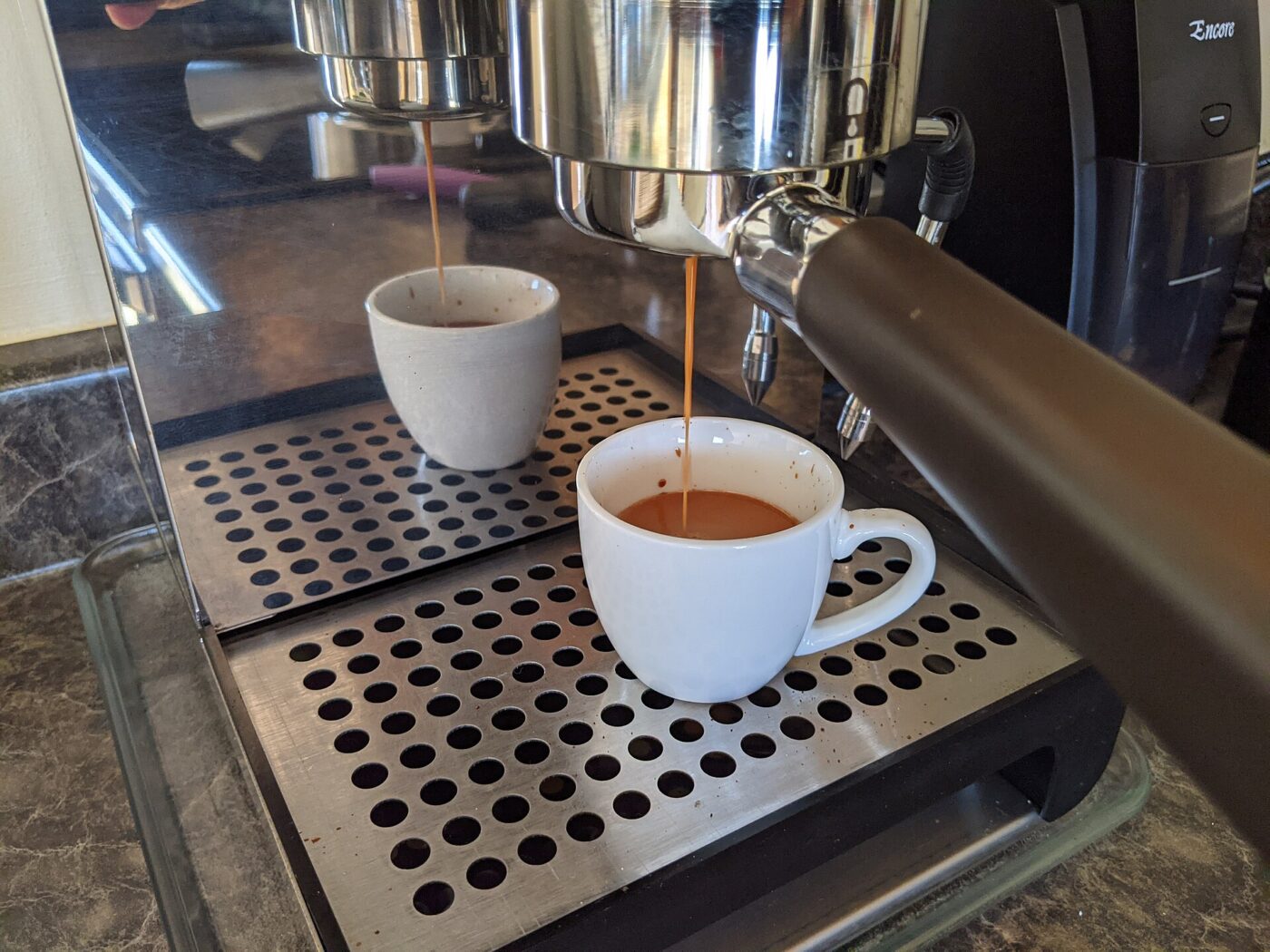
The number describes what the pump can push at its limit. The pressure that actually reaches the coffee during a well-made shot sits much lower, and on many home machines a pressurized filter basket decides what ends up in the cup long before the pump rating does.
Fear Index · Think twice
A bigger number read as better espresso
The regret is paying for a pressure figure that does not change the shot, while the basket, grinder and scale that do change it get overlooked.
What the bar rating measures
One bar is roughly atmospheric pressure at sea level, about 14.5 psi. A pump rated at 15 bar can generate that much when water has almost nowhere to go. During a shot, water is flowing through a bed of coffee, and the pressure that builds depends on the resistance of that bed: how finely it is ground, how much is in the basket and how firmly it is tamped.
The heritage definition of espresso quoted by the Specialty Coffee Association describes water forced through the coffee at 9–10 atmospheres. A Barista Guild of America survey reported in the same SCA article found working baristas extracting at an average of about 8.5 bar, with 9 bar the most common answer. None of that approaches 15 or 20.
Headroom is not useless. A pump with spare capacity can hold a steady pressure as resistance builds, and many machines use an over-pressure valve or similar regulation to bleed off the excess. But the rating is a ceiling, not a setting, and two machines with very different ceilings can brew at the same pressure.
| Number | What it describes | What it tells a buyer |
|---|---|---|
| 15–20 bar pump rating | Maximum pump output with little or no flow | Very little about shot quality |
| About 9 bar | Traditional brewing pressure at the coffee | The target a good setup reaches |
| Gauge in the espresso range | Resistance of this particular puck | Whether grind, dose and tamp match |
| Shot time and weight out | How fast water passed through | The most useful day-to-day check |
Treat any bar figure above about 10 as a pump specification, not a brewing promise. Compare machines on basket options, heat-up time and steam performance instead.
Pressurized and non-pressurized baskets

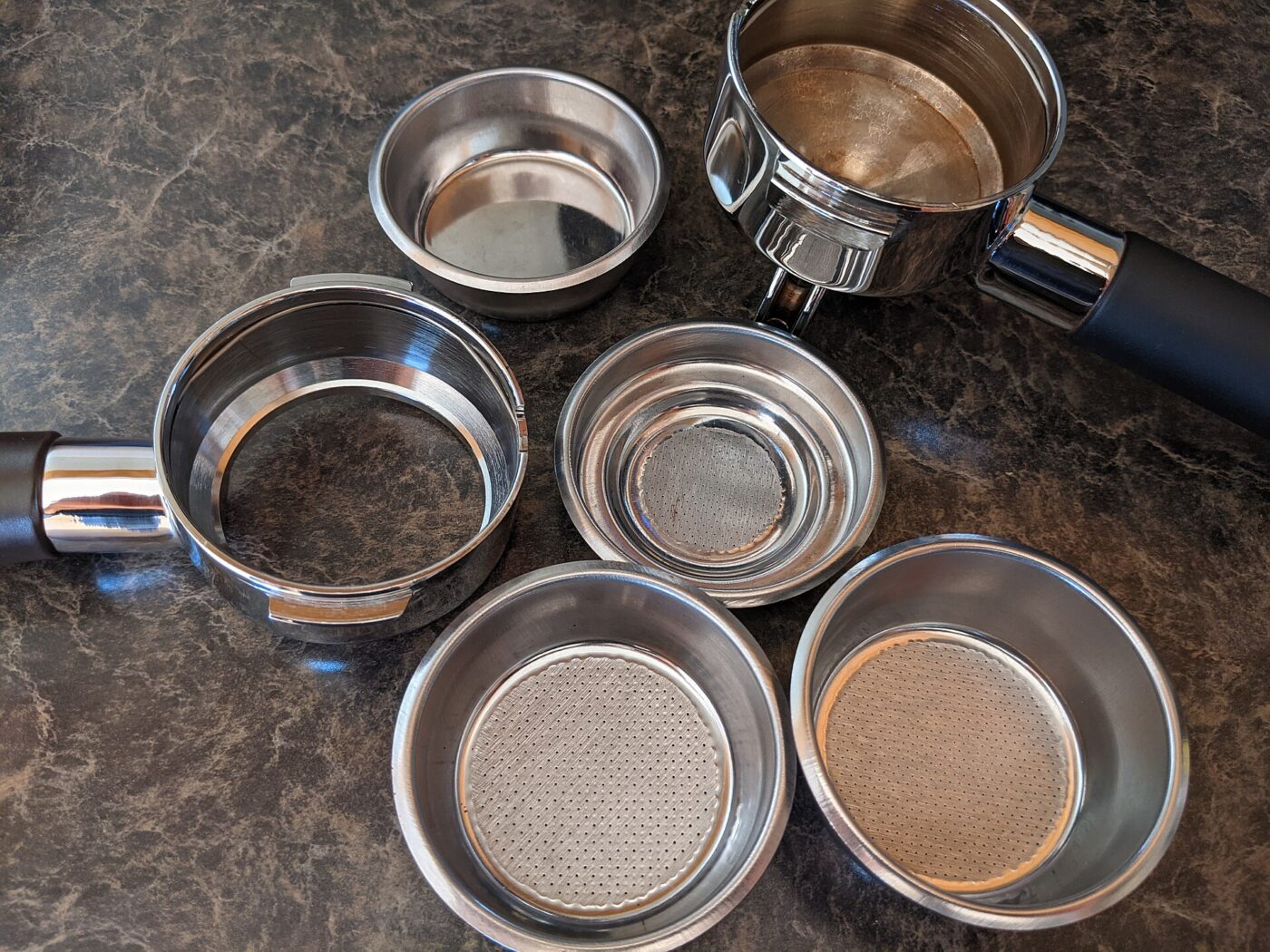
Many home machines ship with two kinds of filter basket. A non-pressurized, or single-wall, basket has many small holes across its floor, so the coffee itself creates the resistance. A pressurized, or dual-wall, basket adds a second floor with a single small exit hole, so the basket creates resistance even when the coffee does not.
Breville’s instruction book for the Barista Express describes the trade-off plainly. Single-wall baskets are for freshly ground whole beans and let you experiment with grind, dose and tamp. Dual-wall baskets are for pre-ground coffee and regulate the pressure to optimize extraction regardless of grind, dose, tamp pressure or freshness. The same manual refers to the machine’s 15 bar pump.
The pressurized design is useful with pre-ground or older coffee. Its weakness is that it masks feedback. Coffee forced through a pinhole can come out foamy and look like crema even when the extraction underneath is thin, and a gauge will read comfortably because the basket, not the puck, is holding the pressure.
Reading a pressure gauge honestly
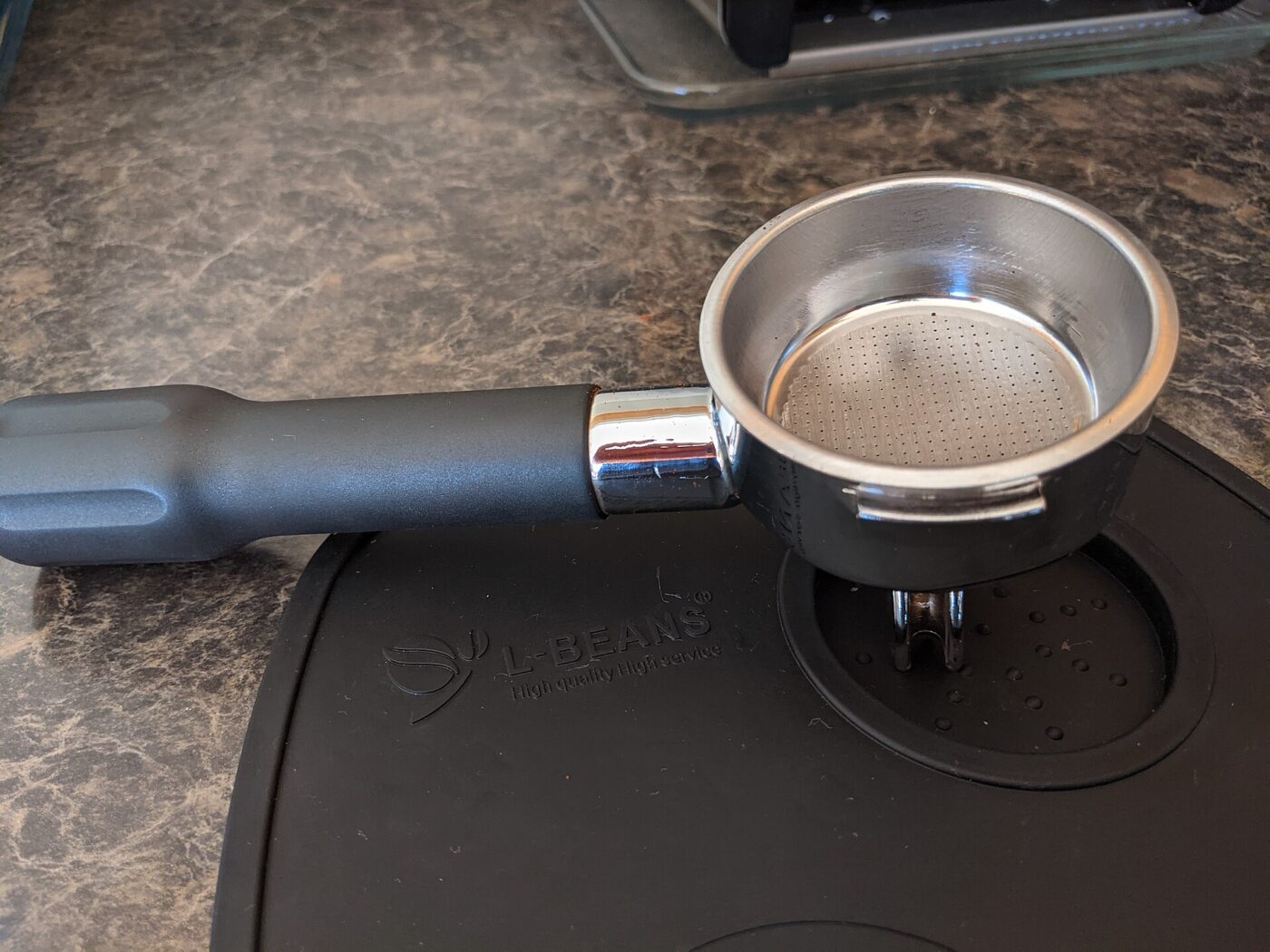
A gauge is worth having, but it tells you the most with a single-wall basket, where the needle reflects the resistance of the coffee. The Breville manual divides its gauge into an under-extracted zone, an ideal zone and an over-extracted zone, and ties each to causes: a grind that is too coarse, too little coffee or under-tamping pushes the needle low; a grind that is too fine, too much coffee or over-tamping pushes it high.
The same manual describes a correct shot as flowing like warm honey and finishing in roughly 25 to 30 seconds. Fast, pale, watery shots signal under-extraction, while shots that drip slowly and taste bitter and burnt signal over-extraction. Those timing and visual cues work on any machine, with or without a gauge.
- Weigh the dose so each change you make is a single variable.
- Weigh the output and time the shot rather than trusting cup markings.
- Change grind first, in small steps, before touching dose or tamp.
- Use the single-wall basket once you grind fresh beans; the dual-wall basket hides mistakes.
- Discount a steady needle on a pressurized basket; it is largely measuring the basket.
Where the money should go
Because the pump is rarely the limiting factor, the upgrades that change the cup are the ones that control resistance and consistency. A burr grinder that can grind fine enough for espresso, in small steps, matters most. A scale with a timer is the cheapest improvement available. A machine that accepts a standard single-wall basket keeps an upgrade path open.
Pre-ground coffee is not a failure; it is a reason to keep using the pressurized basket. The common mistake is buying a single-wall basket without a capable grinder, then blaming the machine when shots gush through in ten seconds.
When comparing machines, look past the bar figure to what the manual says about basket types, whether a gauge or low-pressure pre-infusion is included, how long the machine takes to heat, and how the steam wand performs. Those details describe how the machine brews; the pump rating describes a pump.
If you buy pre-ground coffee, the pressurized basket is the right tool. If you grind fresh, a single-wall basket and a scale matter more than any pressure rating.
The shortlist
Paid links: we earn a commission if you buy through the buttons below, at no extra cost to you. As an Amazon Associate I earn from qualifying purchases.
Compared on control and forgiveness
| Product type | Best for | Risk estimate | Where to buy |
|---|---|---|---|
| Semi-Automatic Espresso Machine with Pressure Gauge | Beginner machine with a gauge | 38/100 | See listings on Amazon |
| Single-Wall (Non-Pressurized) Filter Basket | Upgrading to fresh-ground shots | 30/100 | See listings on Amazon |
| Coffee Scale with Built-In Timer | Dialing in by weight | 10/100 | See listings on Amazon |
Risk estimate is our editorial Fear Index for the product type (lower is safer), not a customer rating. How it is scored. The buttons open Amazon search results rather than one listing, so check the model on the product page.
Coffee Scale with Built-In Timer
Weighing dose and output turns guesswork into one variable at a time, which helps more than any pressure figure.
- Makes dose and output repeatable
- Timer shows extraction speed
- Useful for every brew method
- Adds a step to each shot
- Cheap models can lag
Single-Wall (Non-Pressurized) Filter Basket
Worth it only once you grind fresh. Measure your portafilter diameter before ordering.
- Real feedback from grind and tamp
- Gauge readings become meaningful
- Fuller shots once dialed in
- Needs a capable espresso grinder
- Unforgiving with pre-ground coffee
More: Coffee and Drinks analyses and how the Fear Index is scored.
Questions people actually ask
Is 15 bar or 20 bar better for espresso?
Neither number describes brewing pressure. Both are pump maximums; espresso is traditionally extracted around 9 bar, and the basket, grinder and technique matter far more.
What pressure should espresso be brewed at?
The heritage definition quoted by the Specialty Coffee Association describes 9–10 atmospheres, and a barista survey it reported found 9 bar was the most common answer.
What is the difference between a pressurized and non-pressurized basket?
A pressurized (dual-wall) basket creates resistance through a small exit hole, forgiving grind and freshness. A non-pressurized (single-wall) basket relies on the coffee, so it needs a proper espresso grind.
Why does my espresso pressure gauge stay low?
Usually the grind is too coarse, the dose too small or the tamp too light, so water rushes through. Try a finer grind or more coffee, or use the pressurized basket with pre-ground coffee.