
The Sharpest Knife in the Shop Is the One You Will Chip
Harder steel holds an edge longer and chips more easily. Which side of that trade you want depends entirely on whether you will ever sharpen it.

Part of the guide: Home and Kitchen Buying Mistakes: What Fails and How to Check Before You Buy
Walk into a knife shop and the pitch is sharpness. Paper tests, tomato tests, the arm-hair demonstration. All of it is real, and none of it tells you whether you will still be happy with the knife in two years.
What decides that is a single number stamped on the steel, and a single honest question about your own habits.
Fear Index · Think twice
The sharper knife is the more fragile one
Nothing here is a defect. It is a trade-off that shops describe in one direction only, and buyers discover in the other.
One number explains most of the market
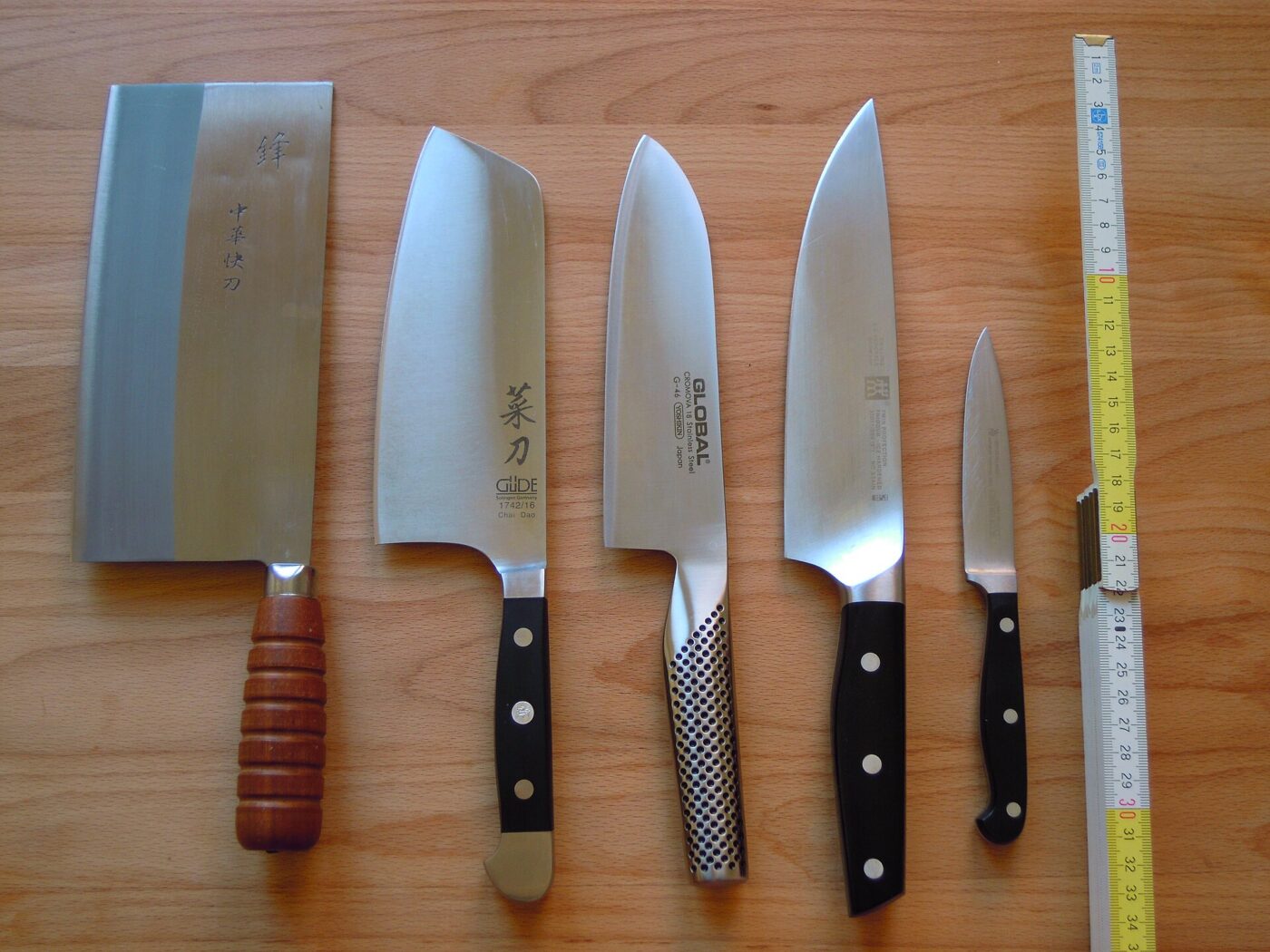
Rockwell hardness — HRC — is the hardness figure knife makers publish for a blade. Higher means harder. Harder steel keeps its edge longer, and it is more brittle, so the edge is more likely to chip: Shun calls micro chipping the downside of very hard stainless steel.
| Hardness | Typical of | Behavior |
|---|---|---|
| 55–58 HRC | German and Western | Tougher, so less prone to chipping; a honing steel realigns the edge |
| 60–62 HRC | Japanese | Stays sharp longer; chips on bone, frozen food or a hard board |
| Up to 66 HRC | Premium powdered steels | Rated for long-lasting sharpness; hand wash only |
Neither end is better. A rolled edge on a softer knife is realigned on a honing steel, which takes no metal off. A chip in a hard blade needs material ground away on a stone, and it is gone for good.
The question that decides it
Will you sharpen it yourself?
If yes, buy Japanese. The harder edge stays sharp longer, and you have the means to restore it when it goes. If no — and many people honestly answer no — buy Western. A softer knife stays serviceable longer without real sharpening, because honing keeps realigning the edge.
A blunt expensive knife is worse than a sharp cheap one, in every way, on every task. The knife is the cheaper half of the purchase; the skill is the rest.
What actually chips a knife
- Glass and stone boards. Hard, with no give. Shun warns that surfaces such as marble, granite and ceramic dull and chip a blade very quickly, and Wüsthof tells owners to avoid glass. Use a board that gives slightly under the blade, such as a softer wood.
- Frozen food. Shun tells owners not to use its knives on frozen foods at all.
- Bones and joints. A thin, hard edge is not a cleaver, whatever the knife is called.
- The dishwasher. Knives get knocked around during the cycle, and Shun notes that corrosive agents in many detergents can pit a blade. Hand wash, dry immediately.
- Scraping with the edge. Turn the knife over and scrape with the spine.
Sharpening is the skill, not the purchase
Pull-through sharpeners grind at a preset angle. They work, in the sense that a blunt knife becomes less blunt, but every sharpening takes steel off the blade, and Wüsthof warns that pressing down too hard in a hand-held sharpener removes excess steel and can compromise the edge.
A 1000/6000 whetstone covers both jobs: Shun describes the 1000-grit side as restoring a dulled edge and the 6000-grit side as refreshing and polishing it. It takes practice to use well. In our editorial judgment it is the single purchase in this category that improves every knife you already own.
Paid links: we earn a commission if you buy through the buttons below, at no extra cost to you. As an Amazon Associate I earn from qualifying purchases.
Compared on what you will actually maintain
| Product type | Best for | Risk estimate | Where to buy |
|---|---|---|---|
| German-Style Chef Knife (8 in) | Most households | 24/100 | See listings on AmazonOpens Amazon search results, not one listing: check the model on the product page. |
| Japanese Gyuto (210 mm) | If you will sharpen | 48/100 | See listings on AmazonOpens Amazon search results, not one listing: check the model on the product page. |
| Whetstone, 1000/6000 Grit | Buy this regardless | 30/100 | See listings on AmazonOpens Amazon search results, not one listing: check the model on the product page. |
Risk estimate is our editorial Fear Index for the product type (lower is safer), not a customer rating. How it is scored.
German-Style Chef Knife (8 in)
The right answer for a kitchen where the knife gets used hard and maintained rarely.
- Tougher steel, less prone to chipping
- A honing steel realigns the edge
- Heavier blade does some of the work
- Needs honing often
- Softer steel dulls sooner
Japanese Gyuto (210 mm)
Buy this only alongside a stone. Without one it becomes an expensive knife that is blunt for most of its life.
- Harder steel stays sharp longer
- Thinner blade glides rather than wedges
- Lighter and more precise
- Chips on bone, frozen food or a hard board
- A chip is permanent without a stone
More: Home and Kitchen analyses.
Questions people actually ask
Are Japanese knives better than German knives?
They are harder, which means an edge that stays sharp longer and a greater tendency to chip. Better depends on whether you will sharpen. For an unmaintained kitchen knife, German steel stays usable longer.
What does HRC mean on a knife?
Rockwell hardness, the figure knife makers publish for blade steel. Higher numbers mean harder steel: better edge retention, more brittleness. Zwilling rates its Professional S chef’s knife at 55–58, Wüsthof its Classic at 58 and Shun its Japanese steels at 60–62, while some powdered-steel blades reach 66.
Do pull-through knife sharpeners ruin knives?
They do not ruin them, but they grind at a preset angle, and every sharpening takes steel off the blade. Wüsthof warns that pressing down too hard removes excess steel. A whetstone used with light pressure gives you more control over how much comes off.
What cutting board is best for knives?
One that gives slightly under the blade. Shun recommends softer woods such as hinoki and warns against metal, tile, ceramic, marble, granite, plastic and acrylic, which it says dull and chip a blade very quickly. Wüsthof also lists glass and hardwoods like bamboo among the surfaces to avoid.