
A Blender’s Drive Coupling Is Built to Fail Before the Motor
The part that ends many blenders is a small plastic coupling between motor and jar. Whether it is replaceable is the buying decision nobody makes.

On this page 3 sections
Part of the guide: Home and Kitchen Buying Mistakes: What Fails and How to Check Before You Buy
A blender dies in a specific and recognizable way. The motor runs, the jar sits in place, and the blades do not turn. Nothing has burned out.
The first part to check is the drive coupling: a small splined component that transmits rotation from the motor shaft to the blade assembly. Vitamix tells owners whose motor no longer turns the blades to inspect it, calls its version the drive socket, a plastic ring around a metal coupling, and says it protects the motor if the blade assembly is blocked from rotating. It is meant to be the weak link.
Fear Index · Think twice
A cheap part decides an expensive appliance
The design is sensible — a sacrificial part protecting an expensive motor. It becomes a problem only when the manufacturer will not sell you the sacrificial part.
The part that actually fails
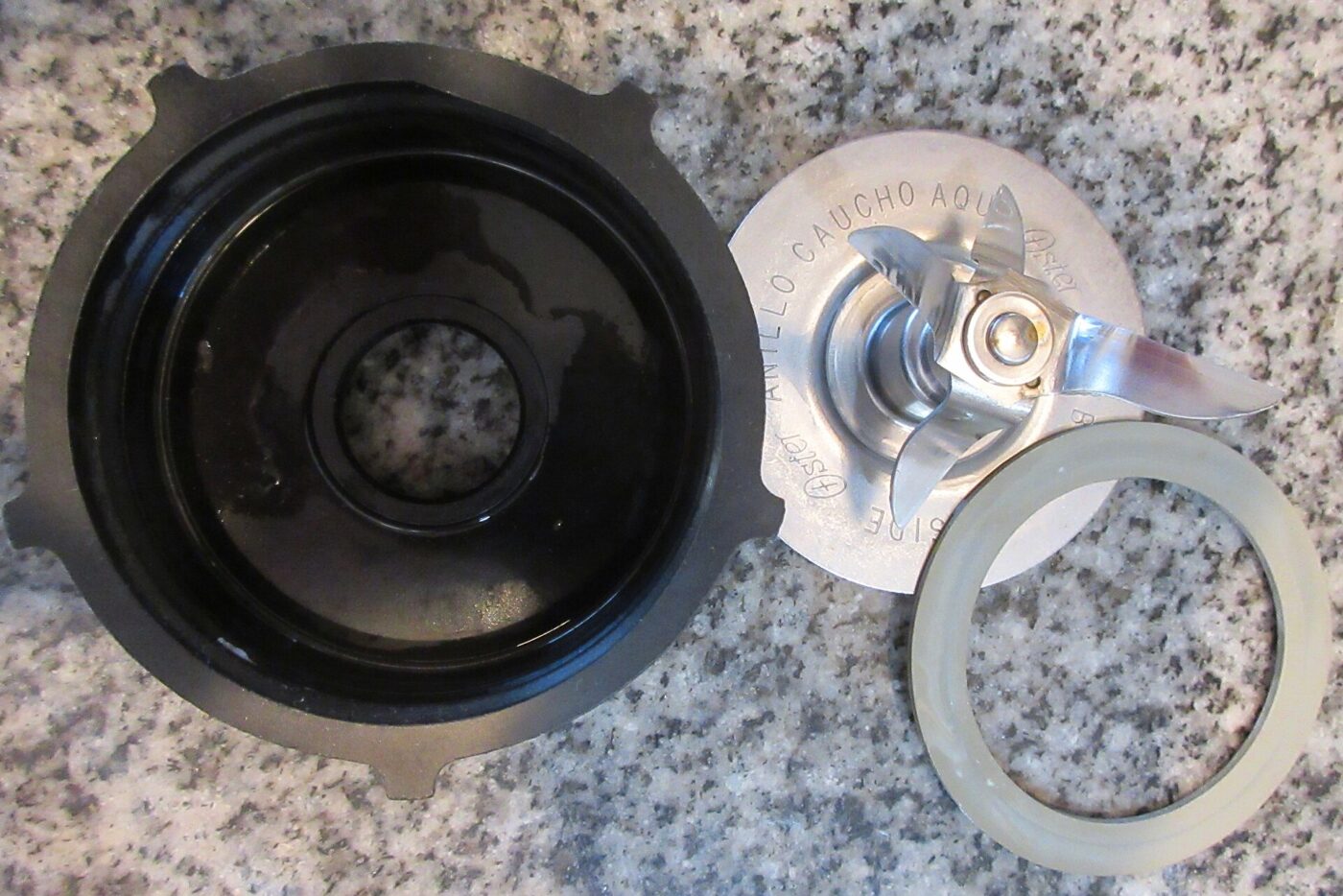
Look under a blender jar and you will see a small toothed or splined fitting. The matching piece sits on the motor base. They mesh, and everything the blender does passes through those teeth.
The teeth wear with use, and the loads people actually apply speed that up. KitchenAid says blending chunky frozen fruit or vegetables straight at high speed wears its coupler, and that pushing down on the lid or lifting the jar off while the blades spin can strip the coupler’s teeth. A blade that jams briefly is exactly the event the coupling exists to absorb.
Some manufacturers sell the part for well under $20, and fitting it is a small repair. If no replacement is sold for your model, a stripped coupling can be the end of the blender.
Before you buy any blender, search its model number plus “drive coupling”, “drive socket” or “coupler”. If a matching spare comes up, the appliance is repairable. If nothing does, you are buying a machine with a built-in expiry date.
What wattage does and does not buy
Wattage is the headline number, and it rates electrical power, not results. No wattage figure stops a very thick or frozen mix from forming an air pocket around the blade, which is the problem Vitamix says its tamper exists to solve.
What actually determines the result:
- Jar shape. Blendtec says its square jars blend better than traditional round ones, and that the narrow fifth side of its WildSide design makes frozen ingredients far less likely to form a cave above the blade.
- Blade design. Blade count is not a quality score: Blendtec builds its jars around a single wingtip blade.
- The tamper. For thick mixes it is the difference between blending and stirring a cavity around a spinning blade.
How to make one last

- Liquid first, always. Blades need something to move. Vitamix’s loading order starts with liquids and ends with frozen ingredients and ice.
- Do not start at full speed. Ramp up. Vitamix tells owners to start on Variable 1 and then increase quickly.
- Pulse frozen material first. KitchenAid advises using the pulse button to break up chunky items before moving to higher speeds.
- Buy a spare coupling with the blender. It costs little next to the blender, and nothing guarantees the part stays on sale for as long as the motor lasts.
Paid links: we earn a commission if you buy through the buttons below, at no extra cost to you. As an Amazon Associate I earn from qualifying purchases.
Compared on whether they can be repaired
| Product type | Best for | Risk estimate | Where to buy |
|---|---|---|---|
| High-Power Countertop Blender | Smoothies and frozen drinks | 44/100 | See listings on AmazonOpens Amazon search results, not one listing: check the model on the product page. |
| Immersion (Stick) Blender | Soups and most household jobs | 27/100 | See listings on AmazonOpens Amazon search results, not one listing: check the model on the product page. |
| Replacement Blender Drive Coupling | Matched to your model number | 18/100 | See listings on AmazonOpens Amazon search results, not one listing: check the model on the product page. |
Risk estimate is our editorial Fear Index for the product type (lower is safer), not a customer rating. How it is scored.
Immersion (Stick) Blender
For soups, sauces and much of what a household blends, this does the job without the frozen loads that wear a countertop blender’s coupling.
- Not meant for ice, so the drive avoids that load
- Blends in the pot, so nothing is decanted hot
- Stores in a drawer
- Will not crush ice
- Not for large frozen batches
High-Power Countertop Blender
Worth it if you blend frozen material regularly. Check the coupling is a purchasable spare before you commit.
- A tamper keeps thick mixes circulating
- Handles ice
- Large batches in one go
- The coupling is a wear part
- Loud enough to wake a house
Questions people actually ask
Why has my blender stopped spinning but the motor still runs?
The drive coupling between motor and jar has most likely worn or stripped, and Vitamix tells owners in exactly this situation to check it first. It is the part that protects the motor when the blades are blocked. Where the maker sells it, it is an inexpensive replacement.
Does blender wattage matter?
Less than the marketing suggests. Wattage rates power, not results; jar shape and a tamper decide whether a thick mix keeps circulating or forms an air pocket around the blade.
How do I stop a blender coupling from stripping?
Put liquid in first, start slow and ramp up, and pulse frozen material before moving to high speed. KitchenAid says chunky frozen items blended straight at high speed wear the coupler.
Is an immersion blender enough?
For soups, sauces, purées and smoothies with soft fruit, yes. It is not meant for ice (Braun, for one, advises against crushing ice with a hand blender shaft), so for crushed ice and thick frozen drinks you need a countertop blender.