
Robot Vacuums Are Not Beaten by Dirt. They Are Beaten by Hair.
Suction numbers are the wrong spec. In a home with hair, brush geometry and bin size decide whether the robot runs itself or needs rescuing daily.

Part of the guide: Home and Kitchen Buying Mistakes: What Fails and How to Check Before You Buy
The specification every robot vacuum leads with is suction, quoted in pascals. It is a real measurement of a real thing, but it is the maker’s own number, and in a home with hair it is not the first thing to check.
Read the makers’ own care schedules and what they guard against is mechanical: hair wound around the brush until it clogs, or a full bin with nowhere to put what the robot picks up.
Fear Index · Think twice
Bought to save labor, returns it weekly
The robot works. The maintenance it demands — cutting hair off a brush with scissors — is exactly the chore it was bought to remove.
Brush geometry is the whole game
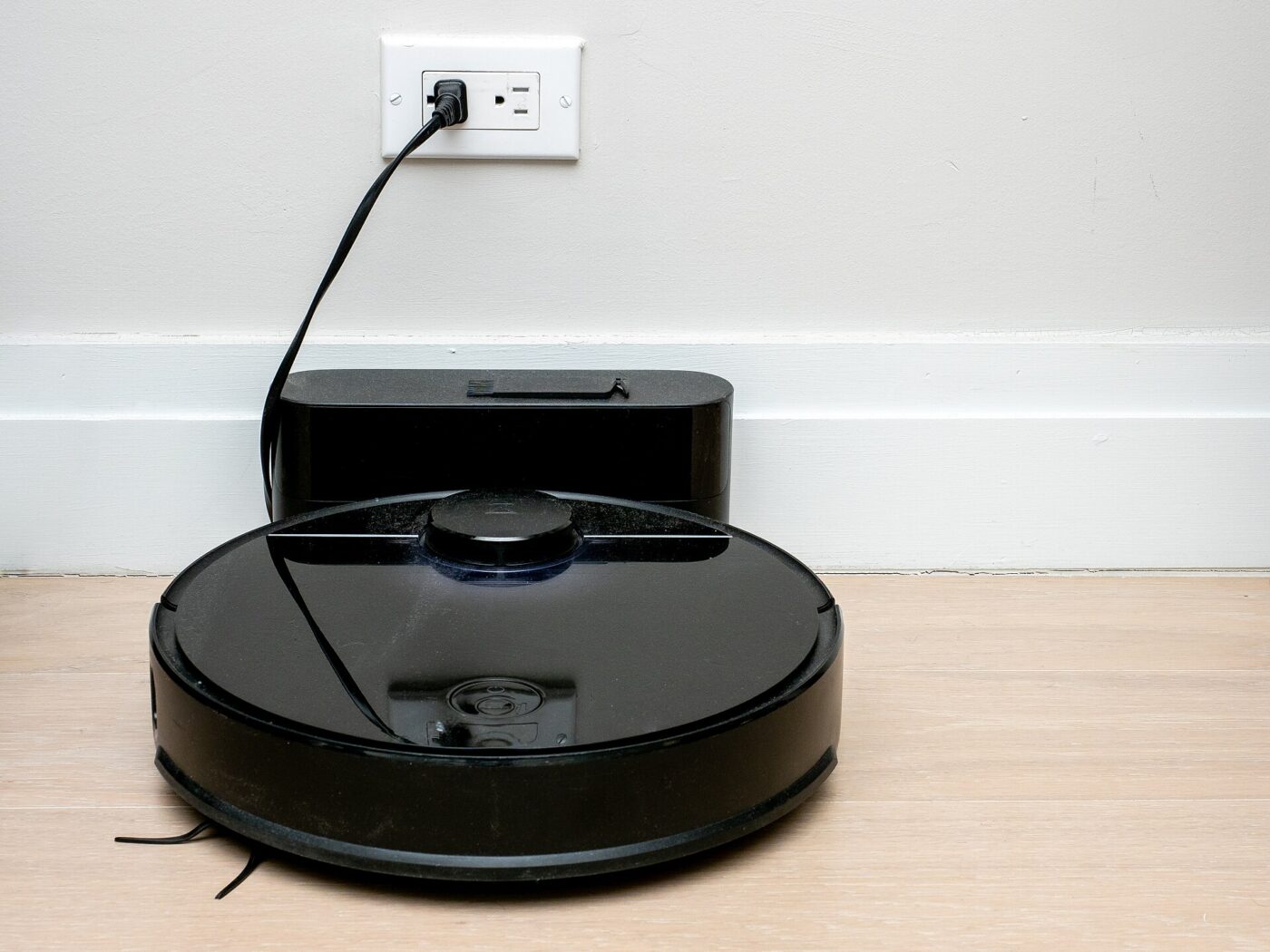
There are two designs, and in a home with hair they behave completely differently.
Bristle brushes are rows of stiff tufts. Hair wraps around the core between the tufts and cannot slide off, because the tufts hold it. Left alone, it compacts into a felted collar that works into the bearings, and iRobot warns that excessive hair build-up can permanently damage the robot. Freeing it takes a cleaning tool or scissors.
Rubber rollers are molded fins with no tufts to snag on. Hair still collects and still has to be cleared (iRobot’s schedule for its rubber-brush models is a brush clean once a week, twice with pets), but nothing pins it against the core. Some makers go further and build in a comb that strips hair off the roller so suction can pull it into the bin.
Some designs use two rubber rollers; iRobot says its dual rubber brushes don’t get tangled with pet hair, which is a maker’s claim rather than an independent result. If anyone in the house has long hair, or you have a shedding animal, this choice matters more than the headline suction figure.
Before comparing anything else, find a photograph of the underside. If the main brush is plain bristle with no built-in comb and you own a dog, stop there.
What suction actually buys
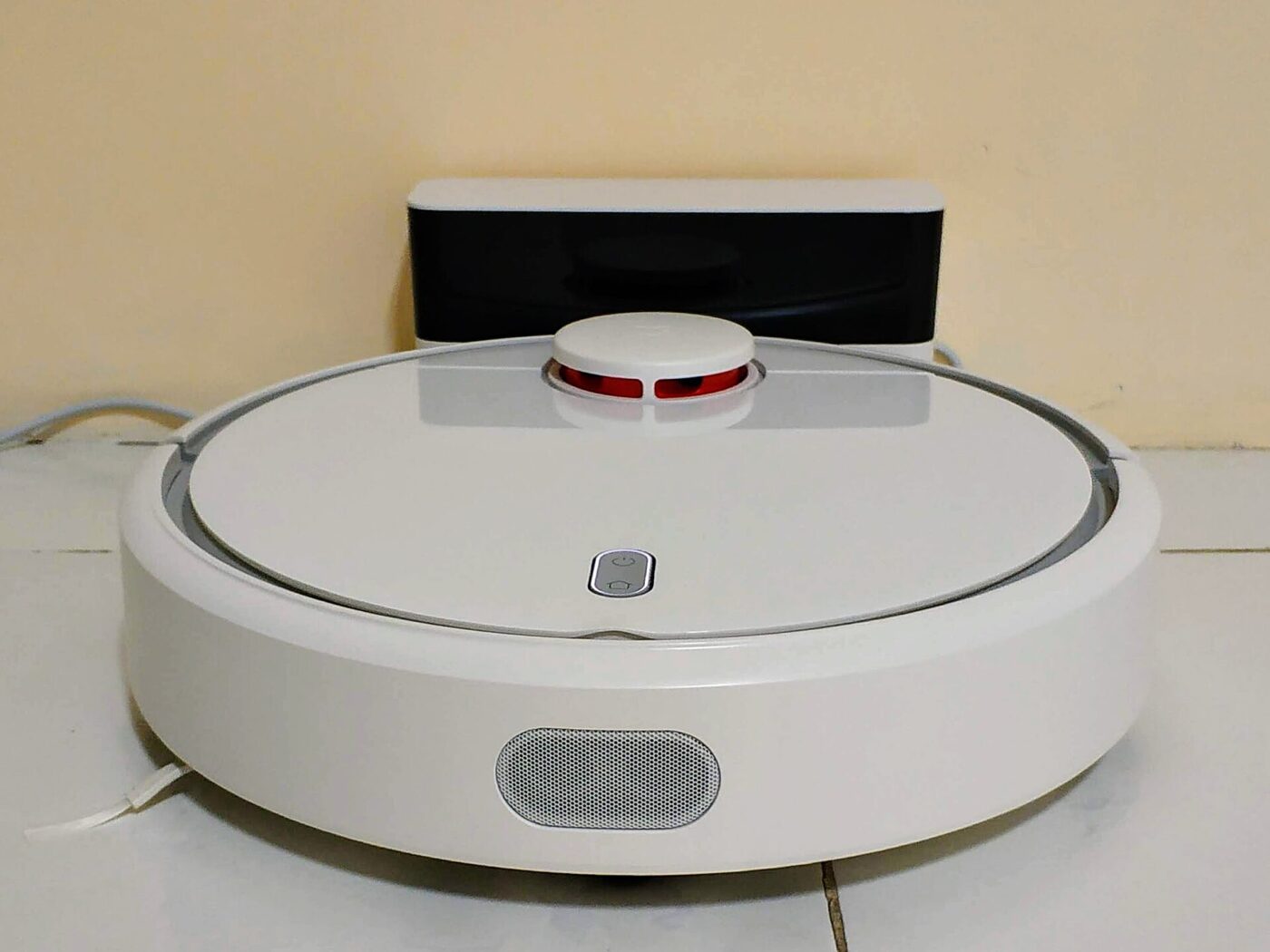
On hard floors, the brush sweeps debris into the mouth and suction only has to carry it away. iRobot, for one, designs for that: its Power Boost setting raises vacuum power on carpet and returns to normal power on hard floors so it does not waste battery.
On carpet, suction matters more, because grit has to be pulled up out of the pile. Even then, high suction costs battery (iRobot notes that runtime increases in its low-power Eco mode), so a robot on maximum power may not finish the floor it was sent to clean.
Treat the pascal figure itself with care. It is a number each maker reports for its own machine. The international test method for robot vacuums, IEC/ASTM 62885-7, instead measures what a robot actually removes: dust and debris from hard floors and carpet, and fiber from carpet.
| Home | What to prioritize |
|---|---|
| Hard floors, no pets | Navigation and bin size. Suction matters least here. |
| Hard floors, long hair or pets | Rubber roller brush, then bin size. |
| Mostly carpet | Suction and brush pressure, then battery. |
| Multi-story home | Multi-map memory, or accept carrying it. |
Self-emptying docks: worth it, with a caveat

A dock that empties the robot into a larger bag removes the most frequent chore: iRobot’s care schedule says to empty the bin after each use. It does not remove the rest. The same schedule still asks for the brushes and filter to be cleaned once a week, or twice a week with pets.
The caveat is that many use proprietary bags. Before buying, check what a pack costs and how many come in it. It is a modest ongoing cost, and it is one nobody mentions at purchase — the same trap as a printer.
Paid links: we earn a commission if you buy through the buttons below, at no extra cost to you. As an Amazon Associate I earn from qualifying purchases.
Compared on what stops them working
| Product type | Best for | Risk estimate | Where to buy |
|---|---|---|---|
| Robot Vacuum with Rubber Anti-Tangle Brush | Homes with hair | 38/100 | See listings on AmazonOpens Amazon search results, not one listing: check the model on the product page. |
| Robot Vacuum with Self-Emptying Dock | Fewer bin trips | 52/100 | See listings on AmazonOpens Amazon search results, not one listing: check the model on the product page. |
| Cordless Stick Vacuum | What the robot cannot do | 30/100 | See listings on AmazonOpens Amazon search results, not one listing: check the model on the product page. |
Risk estimate is our editorial Fear Index for the product type (lower is safer), not a customer rating. How it is scored.
Robot Vacuum with Rubber Anti-Tangle Brush
The specification that matters. In a house with a shedding animal it avoids the felted collar bristle tufts build, though the brushes still need a regular check.
- Rubber roller is built to resist hair wrap
- No bristle tufts to trap hair against the core
- Bin needs emptying after every run
- Brushes still need a weekly clean, twice with pets
Cordless Stick Vacuum
A robot handles maintenance cleaning. It does not handle spills, stairs or corners. Budget for both rather than expecting one to replace the other.
- Does edges, stairs and upholstery
- Handles the mess a robot spreads
- No mapping to go wrong
- You have to push it
- Battery runtime limits a whole-house clean
Sources
- Roomba i Series Care Procedure Frequency — iRobot
- How Do I Clean the Roomba 400 and 500 Series Main Brushes? — iRobot
- Dual Multi-Surface Rubber Brushes — iRobot
- Can the X8 Pro Series Really Prevent Hair Entanglement? — eufy
- Overview of Roomba 900 Series Power Boost — iRobot
- IEC/ASTM 62885-7:2020, Dry-Cleaning Robots for Household or Similar Use: Methods for Measuring the Performance — International Electrotechnical Commission
Questions people actually ask
Which robot vacuum is best for long hair?
One with a rubber roller brush, or a roller with a built-in detangling comb, rather than plain bristles. Bristle tufts trap hair against the core until it felts into a collar; rubber fins give it nothing to grip, though the brushes still need clearing about once a week.
How much suction does a robot vacuum need?
On hard floors, less than the spec sheet implies — the brush does most of the work, and iRobot’s automatic mode runs at normal power there. On carpet more helps, but high power shortens the run before it needs to recharge, and the pascal figure is the maker’s own number.
Are self-emptying robot vacuums worth it?
They remove the most frequent chore, emptying the bin, but the brushes and filter still need cleaning about once a week (twice with pets, on iRobot’s schedule). Check the price and count of the proprietary bags first, because that is a recurring cost.
Can a robot vacuum replace a normal vacuum?
No. It handles maintenance cleaning of open floor. Stairs, edges, upholstery and spills all still need a conventional vacuum.