
Cast Iron Is Not Hard to Season. It Is Hard to Heat Evenly.
Seasoning is the easy part of cast iron. Thermal mass, a flat base and a handle you can actually hold are what decide whether you keep the pan.

Part of the guide: Home and Kitchen Buying Mistakes: What Fails and How to Check Before You Buy
Search for cast iron advice and you will get seasoning. Endless seasoning. What oil, what temperature, how many coats, whether soap is allowed.
Almost nobody abandons a cast iron pan because of seasoning. Seasoning is baked-on oil that builds up with normal cooking, and a stripped pan can be re-seasoned in an afternoon. It is the most recoverable failure in the kitchen.
The pans that end up in the back of a cupboard are there for two much more boring reasons: they are too heavy to use comfortably, and they never sat flat on the stovetop.
Fear Index · Think twice
Recoverable failures, permanent annoyances
Nothing here ruins a pan. But a pan you cannot lift one-handed, or one that rocks on the stovetop, is a pan you stop reaching for.
Weight is the decision, and it is not close
Cast iron works because it is dense. That density is the thermal mass that lets it hold heat when cold food hits it, and it is the entire reason for the sear. You cannot have the benefit without the weight; they are the same property.
| Size | Weight (Lodge listing) | Realistic use |
|---|---|---|
| 8 inch | 3.4 lb | One or two eggs, a single chop. Easy to handle. |
| 10.25 inch | 5.7 lb | Two portions. Most people can still flip food in it. |
| 12 inch | 7.7 lb | Four portions. Two hands, and an oven glove for the handle. |
| 15 inch | 12.3 lb | Genuinely heavy. Fine on a stovetop, awkward everywhere else. |
The honest test is not whether you can lift it. It is whether you can lift it, full of hot food, with one hand, and tip it — because that is what you will be asked to do at the end of cooking, and a pan that fails that test gets used less every month.
If you are buying one pan and you are not sure, buy the 10.25-inch. The 12-inch cooks more at once, but Lodge lists it two pounds heavier.
The base is the part that matters
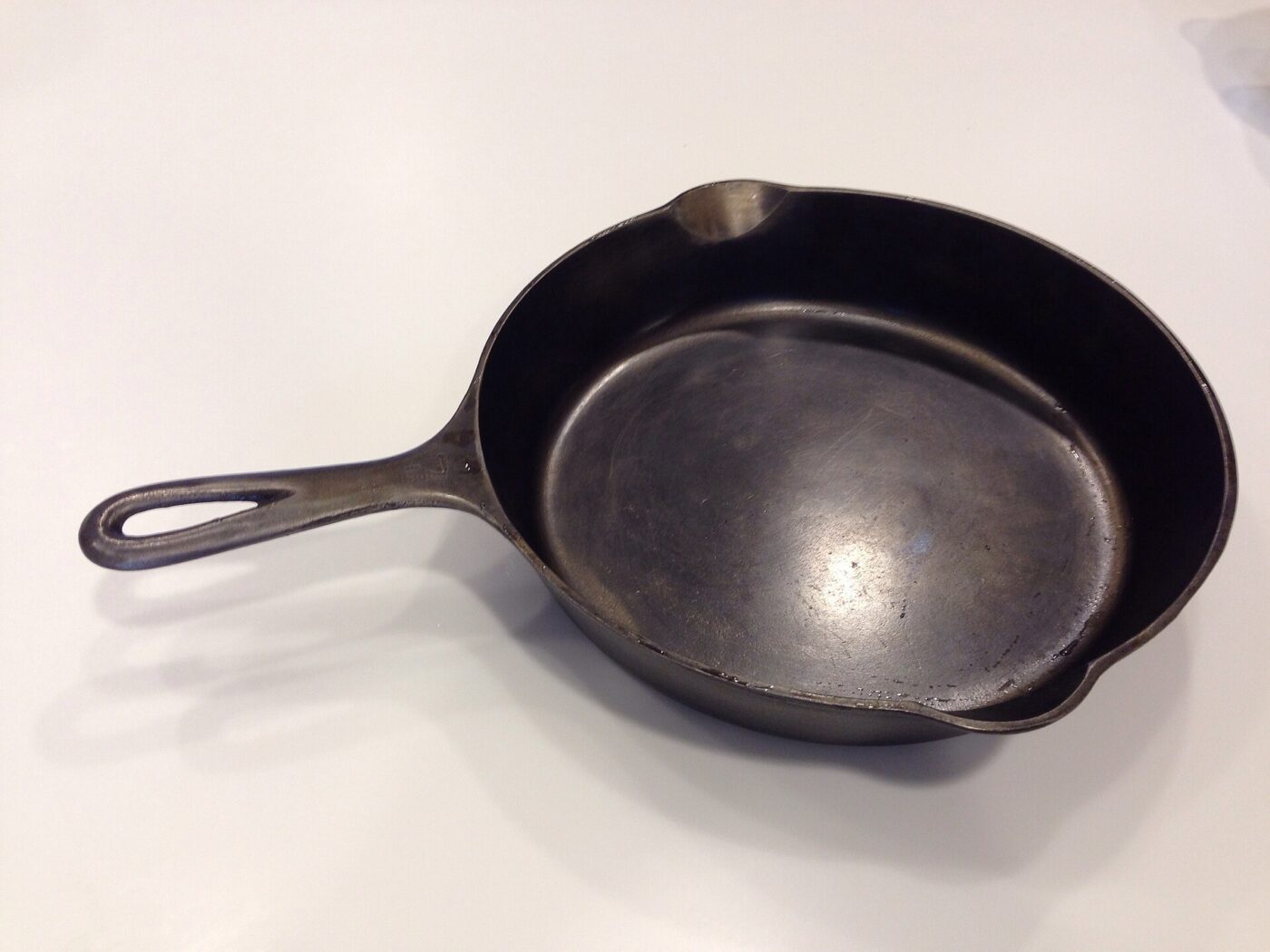
Cast iron is sand-cast and then, on cheaper pans, barely machined. That leaves two things to check, and both are visible in the first thirty seconds of ownership.
Burner size matters too. Lodge warns that larger cookware on smaller burners will create hot spots, and that uneven heat can warp and even crack a pan. Its advice is to match the pan to the burner and preheat for three to five minutes on medium-low, rather than blasting it on high right before cooking — a flat base only gets you good contact with the burner, not even heat across the whole pan.
Flatness. Put the pan on a genuinely flat surface — a countertop, not the stovetop — and press one edge. If it rocks, it cannot sit in full contact with a flat cooktop, and Lodge notes that induction needs direct contact and a level bottom. A rock is a reason to return it.
Surface finish. Modern budget cast iron often has a pebbled texture rather than a glassy one. That rough surface is not a defect and it does season; Lodge says the more you cook, the better the seasoning gets.
Enameled cast iron is a different product
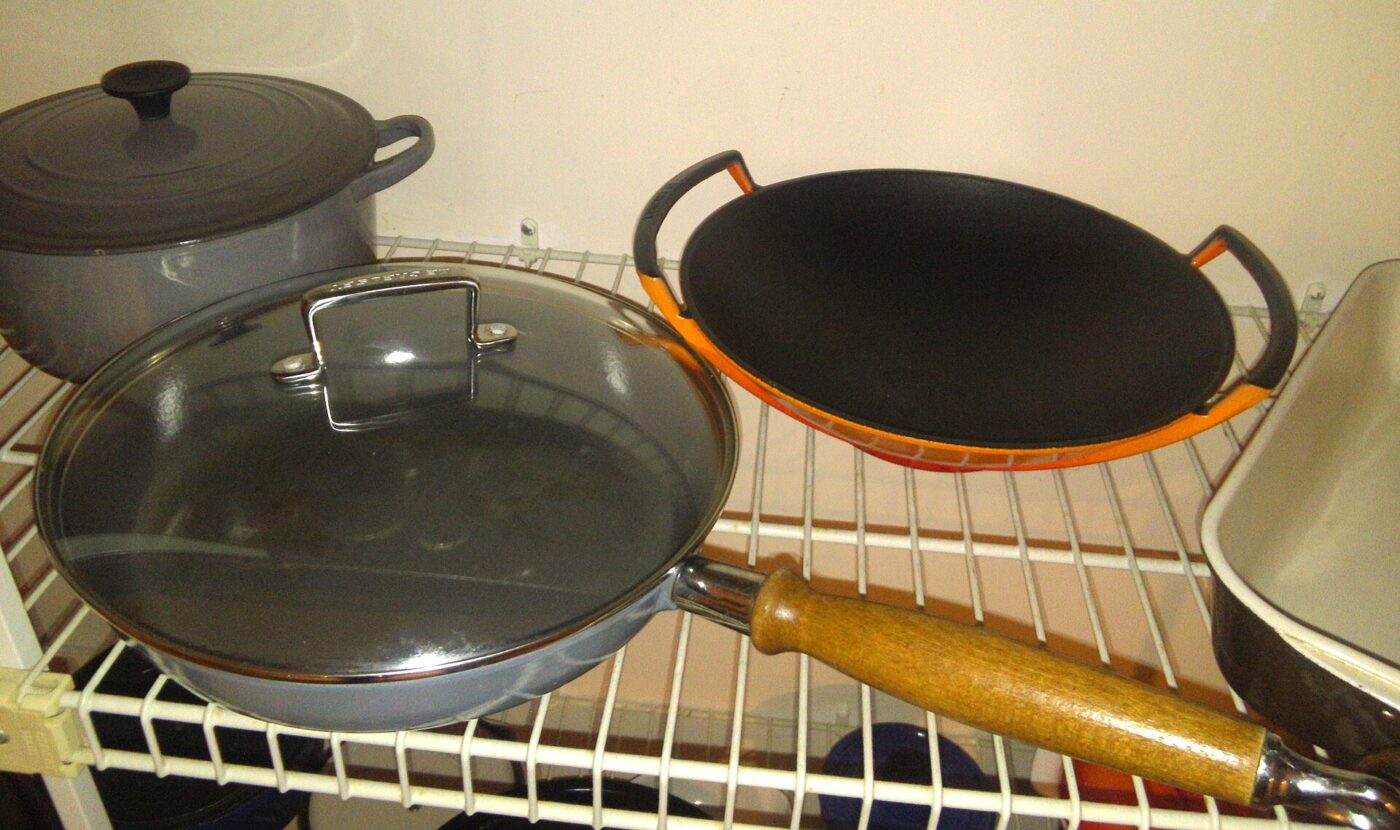
Enameled pans and Dutch ovens share the metal and nothing else. The enamel is a smooth porcelain surface bonded to the iron, and it changes every rule.
- No seasoning, ever. Lodge says none of its enameled pieces require it.
- Acid is fine. Lodge says the enamel can handle acidic and alkaline ingredients, even tomato sauce, and there is no seasoning for them to wear away.
- Thermal shock cracks it. Le Creuset warns that putting a hot pan in cold water may crack the enamel. Bare iron can also warp or crack from uneven heating, so let either cool before washing.
- The finish scratches. Lodge says to cook with wooden, silicone or nylon utensils, because metal can scratch the enamel.
For braising, stews and anything acidic, enameled is clearly better. For searing and for anything that will be scraped with metal, bare iron is. They are complements, not tiers.
Seasoning, briefly, because it is genuinely easy
Thin oil, hot oven, repeat. The one mistake that actually matters is using too much oil: Lodge says a sticky, gummy surface is a sign of excess oil built up on the pan. If the pan comes out tacky, you used too much.
Dish soap is fine on a seasoned pan. Lodge says the soap used for washing dishes today is no longer strong enough to remove seasoning; soaking the pan is what invites rust.
The shortlist
Paid links: we earn a commission if you buy through the buttons below, at no extra cost to you. As an Amazon Associate I earn from qualifying purchases.
Compared on handling, not on seasoning
| Product type | Best for | Risk estimate | Where to buy |
|---|---|---|---|
| Lodge 10.25-inch Cast Iron Skillet | Most people | 20/100 | See listings on AmazonOpens Amazon search results, not one listing: check the model on the product page. |
| Lodge 12-inch Cast Iron Skillet | Cooking for four | 24/100 | See listings on AmazonOpens Amazon search results, not one listing: check the model on the product page. |
| Enameled Cast Iron Dutch Oven (6 qt) | Braising and acidic food | 33/100 | See listings on AmazonOpens Amazon search results, not one listing: check the model on the product page. |
Risk estimate is our editorial Fear Index for the product type (lower is safer), not a customer rating. How it is scored.
Lodge 10.25-inch Cast Iron Skillet
The size people actually keep using. A cast iron pan is only useful if reaching for it is not a decision.
- Light enough to flip food one-handed
- Cheap enough to treat as a tool
- Seasons quickly with normal use
- Feeds two, not four
- Rough cast surface takes time to slick up
Lodge 12-inch Cast Iron Skillet
Buy this one only if you regularly cook for four. Otherwise you are buying two extra pounds to carry for no extra food.
- Genuinely cooks for four
- Excellent heat retention for searing
- Works on any stovetop, oven, grill or campfire
- Around 8 lb — two hands, always
- Handle gets hot enough to need a glove every time
Enameled Cast Iron Dutch Oven (6 qt)
Not an upgrade to a skillet — a different tool. If you braise, it is the more useful purchase of the two.
- Handles acidic and alkaline ingredients
- No seasoning to maintain
- Goes from stovetop to oven to table
- Metal utensils can scratch the enamel
- Thermal shock can crack the enamel
More: Home and Kitchen analyses and how the Fear Index is scored.
Sources
- Classic Cast Iron Skillets — Lodge Cast Iron
- How to Use Cast Iron Over Any Heat Source — Lodge Cast Iron
- How to Clean Cast Iron — Lodge Cast Iron
- How to Fix Common Cast Iron Concerns — Lodge Cast Iron
- Cleaning and Care: Lodge Enameled Cast Iron — Lodge Cast Iron
- How to Care for and Clean Enameled Cast Iron — Le Creuset
Questions people actually ask
Can you use soap on cast iron?
Yes. Lodge says today’s dish soap is no longer strong enough to remove seasoning. What causes real trouble is soaking the pan, putting it in the dishwasher or letting it air dry, all of which Lodge says can lead to rust.
Is expensive cast iron better than cheap cast iron?
Not automatically. A higher price may buy a smoother finish or a different handle, but the checks in this article still decide how the pan cooks: a cheap pan that sits flat is a better buy than an expensive one that rocks.
What size cast iron skillet should I buy?
10.25 inch for one or two people, 12 inch for four. Lodge lists the 12-inch at 7.69 lb against 5.66 lb for the 10.25-inch, and you feel that difference every time you tip the pan one-handed.
Can cast iron go on an induction cooktop?
Yes. Lodge lists its skillets as compatible with any stovetop, including induction, and advises choosing pieces with a level bottom because induction requires direct contact between cooktop and pan. A pan that rocks is a poor match.