
Frying a Turkey Puts a Pot of Hot Oil Over a Flame; Oil-Less Fryers Change the Risk
NFPA says oil-based turkey fryers are not safe. How to measure oil correctly, USDA’s frying numbers, and how oil-less and electric fryers compare.

Part of the guide: Home and Kitchen Buying Mistakes: What Fails and How to Check Before You Buy
A propane turkey fryer puts a large pot of oil, heated to 350°F, over an open flame outdoors, usually on one day of the year. Each part of that sentence is a place where accidents start.
Oil-less and electric fryers remove pieces of that risk, and NFPA, CPSC and the U.S. Fire Administration all publish turkey-fryer warnings because the traditional method, done carelessly, is dangerous rather than just intimidating.
Fear Index · High risk
A pot of hot oil over an open flame, once a year
CPSC began logging turkey-fryer fires and burns in 1998, and NFPA now says outright that turkey fryers using cooking oil are not safe.
Why fryer fires happen: overfill, frozen birds, open flame
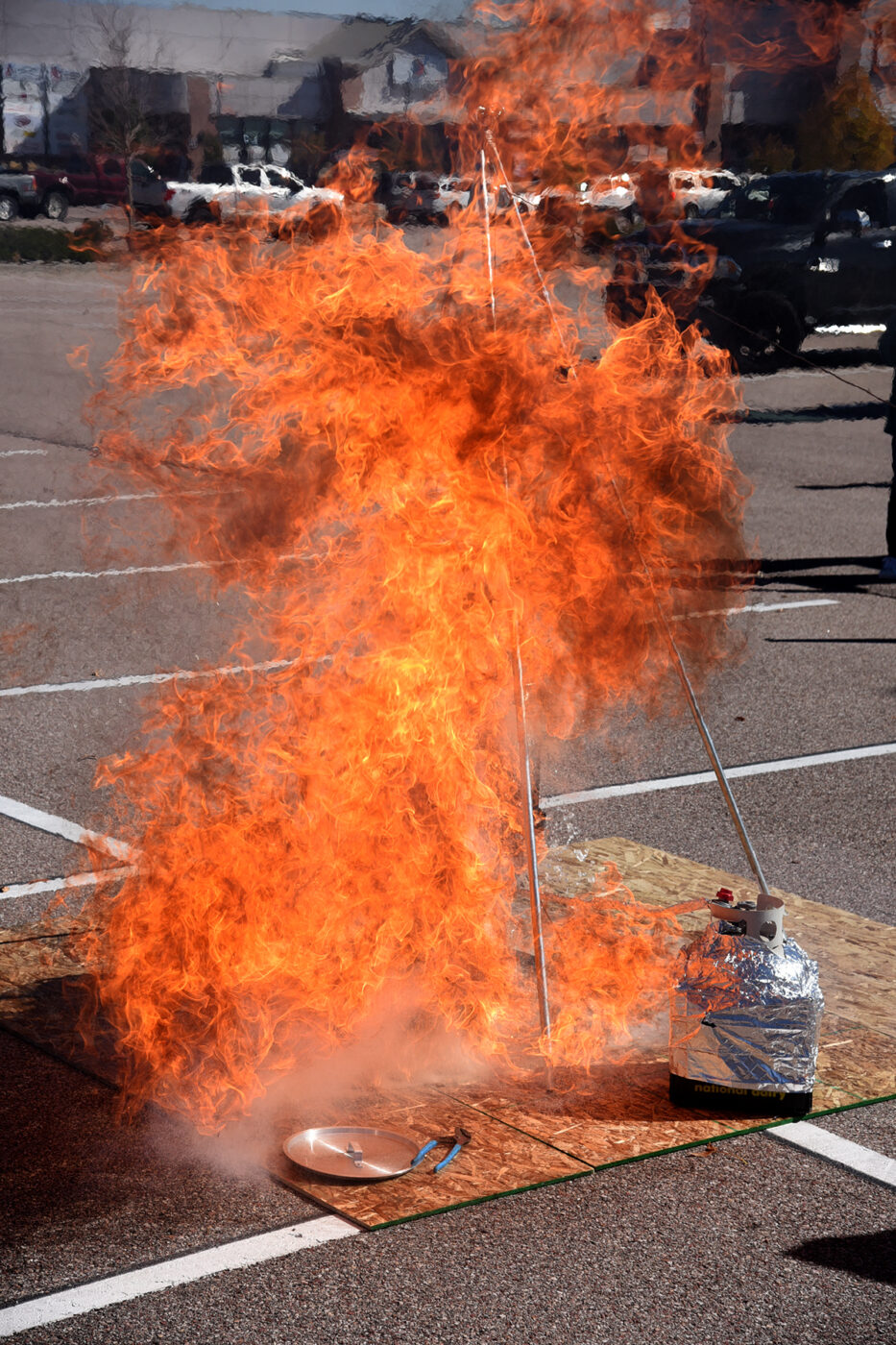
The U.S. Fire Administration lists the ways a fryer starts a fire: an overfilled pot spills oil when the turkey goes in, a partially frozen turkey makes the oil splatter, a fryer on uneven ground can tip and spread hot oil over a large area, and a fryer without thermostat controls can overheat its oil to the point of starting a fire.
CPSC’s early review, released in November 2003, found 75 incidents involving fires, flames or burns tied to turkey fryers since 1998, 28 of them reported in 2002, and most happened while the oil was heating, before the turkey went in. The commission’s fix for the overfill problem is a dry run with water: place the turkey in the pot, add water until it is covered by about half an inch, remove the turkey and mark that water level as the oil fill line.
NFPA’s current position is blunt: turkey fryers that use cooking oil “are not safe,” the organization says, citing large amounts of oil at high temperatures that can cause devastating burns, and it strongly discourages the use of turkey fryers.
A turkey does not have to be frozen solid to cause trouble. CPSC says partially frozen or wet turkeys can produce excessive hot-oil splatter.
Propane oil fryers: setup and setback
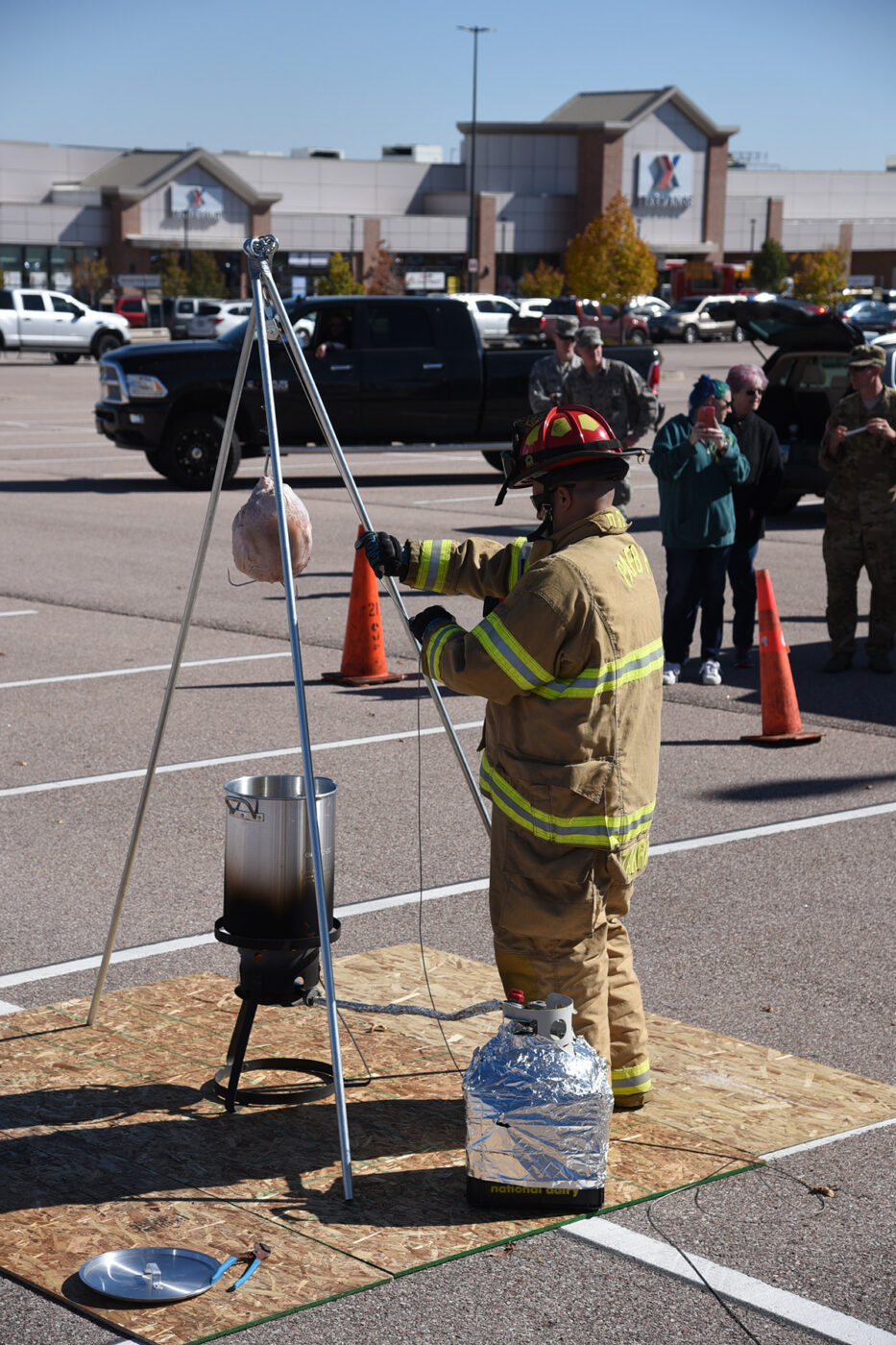
CPSC’s setup guidance keeps the flame away from the fuel: at least 2 feet between the propane tank and the fryer burner, in an open area away from walls, fences and other structures, and never in, on or under a garage, breezeway, carport, porch or any structure. USFA adds a sturdy, level surface at least 10 feet from the home, with children and pets kept at least 3 feet from the fryer. CPSC says to keep the fryer in full view while the burner is on.
USDA guidance, as Penn State Extension summarizes it, adds the food-safety side: heat the oil to 350°F and cook the turkey 3 to 5 minutes per pound. CPSC says to monitor the oil temperature closely and to lower the food slowly, and USFA says to clip a thermometer to the side of the pot if the fryer has no thermostat.
A propane oil fryer bought new should still be measured with the water test every single time, not just the first time, since a different turkey or a different pot changes the fill line.
- Do the water-level test with the actual bird before adding any oil.
- Confirm the turkey is fully thawed and patted dry, with no ice on the skin.
- Keep at least 2 feet between the propane tank and the burner.
- Fry outdoors, on a level surface, at least 10 feet from the house and never on a porch or deck.
- Monitor oil temperature constantly with a thermometer; do not walk away.
- Keep a UL-listed extinguisher rated for Class B fires within reach before lighting the burner.
Indoor electric and oil-less alternatives
An electric turkey fryer with a thermostat removes the open flame and the propane tank from the equation, and USFA’s turkey-fryer tips suggest considering an electric or air fryer. It still holds a pot of hot oil, though, and NFPA’s warning covers any turkey fryer that uses cooking oil, so the overfill and hot-oil burn risks remain.
An oil-less infrared fryer removes the oil itself: the turkey cooks by radiant heat inside a cooking chamber, powered by propane or electricity depending on the model, with no pot of oil to spill, splash or ignite. NFPA names buying a fryer that does not use oil as one option for anyone who still wants a fried turkey, alongside buying one already cooked from a grocery store or restaurant.
The trade-off is the method itself: without oil, the turkey is cooked by radiant heat rather than deep-fried, so it is not the same dish, which is the ordinary reason people keep buying the version NFPA discourages.
Thawing, temperature and the USDA numbers
USDA advises frying only a turkey of 12 pounds or less, never stuffed and fully defrosted, per Penn State Extension’s summary of that guidance. The oil should cover the turkey without overflowing when it goes in, which is what the water test measures; CPSC’s version fills water to about half an inch over the bird.
The finished internal temperature target is the same as for any other cooking method: 165°F in the innermost part of the thigh and wing and the thickest part of the breast, checked with a food thermometer.
A larger bird is not just slower to fry; it needs more oil to submerge, which raises both the overfill risk and the amount of hot oil in play if something does go wrong. Staying at or under the 12-pound guidance is a safety choice as much as a cooking one.
| Step | USDA figure | Why it is set there |
|---|---|---|
| Turkey size | 12 lb or less | Larger birds need more oil to submerge |
| Oil temperature | 350°F | Hot enough to cook fast, monitored throughout |
| Cooking time | 3 to 5 min per lb | Then check the internal temperature |
| Oil level | Covers the bird without overflowing | Measured beforehand with the water test |
| Safe internal temperature | 165°F, thigh/wing/breast | Same food-safety minimum as any cooking method |
If it catches: extinguishers, and why water makes it worse

CPSC’s turkey-fryer guidance is explicit about the one instinct to fight: if a fire occurs, call 911 immediately and do not try to put it out with water.
CPSC also says that if the oil begins to smoke, turn off the gas supply at once, because smoke means the oil is overheating. USFA’s extinguisher guide lists Class B extinguishers for flammable liquids such as grease and oil, and multipurpose A-B-C units for most home fires, and says to look for a UL or ULC listing.
The extinguisher only works if it is already outside, already rated for the job, and already within reach before the burner is lit – not fetched from a garage shelf after the fire has started. The same rule that governs the setback distance from the house applies to the extinguisher: decide where it lives before Thanksgiving morning, not during it.
Water is the one thing not to use on a fryer fire. Call 911; a Class B or A-B-C extinguisher kept close is only for a fire small enough to fight.
The shortlist
Paid links: we earn a commission if you buy through the buttons below, at no extra cost to you. As an Amazon Associate I earn from qualifying purchases.
Compared on method and risk
| Product type | Best for | Risk estimate | Where to buy |
|---|---|---|---|
| Oil-Less Infrared Turkey Fryer | Removes the oil entirely | 35/100 | See listings on Amazon |
| Indoor Electric Turkey Fryer | Removes the open flame | 45/100 | See listings on Amazon |
| Kitchen Fire Extinguisher (ABC-Rated) | For the fire that starts anyway | 12/100 | See listings on Amazon |
Risk estimate is our editorial Fear Index for the product type (lower is safer), not a customer rating. How it is scored. The buttons open Amazon search results rather than one listing, so check the model on the product page.
Oil-Less Infrared Turkey Fryer
Removes the cooking oil NFPA warns about; the result is cooked by radiant heat rather than deep-fried.
- No pot of hot oil to spill or ignite
- One of NFPA’s named alternatives
- No used oil to dispose of
- Roasts rather than deep-fries the bird
- Still a propane or electric appliance to watch
Kitchen Fire Extinguisher (ABC-Rated)
USFA lists Class B, or multipurpose A-B-C, extinguishers for grease fires; for a fryer fire, CPSC still says to call 911 first.
- Class B covers grease and Class C electrical, per USFA
- Look for a UL or ULC listing
- Backs up the never-use-water rule
- No substitute for the setback distance
- Only for a fire caught early
More: Home and Kitchen analyses and how the Fear Index is scored.
Sources
- How to Safely Prepare Your Holiday Turkey — Penn State Extension
- CPSC Issues Safety Tips for Turkey Fryers — CPSC
- Happy Holidays Start with Safety: CPSC Urges Families to Cook, Decorate and Select Toys with Care This Season — CPSC
- Turkey Fryer Fire Safety — U.S. Fire Administration
- Choosing and Using Fire Extinguishers — U.S. Fire Administration
- Thanksgiving Safety Tips — NFPA
Questions people actually ask
How much oil does a turkey fryer need?
Enough to cover the turkey without overflowing when it goes in. CPSC’s method: put the turkey in the pot, add water until it is covered by about half an inch, remove and dry the turkey, mark the water level, then dry the pot and fill with oil to that mark.
Can you fry a frozen or partly frozen turkey?
No. USDA advice is to fry only a fully defrosted turkey, and CPSC says partially frozen or wet turkeys can produce excessive hot-oil splatter; USFA says a partially frozen turkey will make the oil splatter.
What do you do if a turkey fryer catches fire?
Call 911 immediately and do not try to put it out with water, per CPSC. If the oil starts to smoke before any fire, turn off the gas supply at once.
Is an oil-less turkey fryer safer than a traditional oil fryer?
It removes the cooking oil that NFPA says makes turkey fryers unsafe, which is why NFPA names a fryer that does not use oil as an alternative. It still runs on propane or electricity, and it cooks the bird by radiant heat rather than deep-frying it.