
A Fermentation Crock and a Mason Jar Airlock Both Work. Salt and Submersion Decide Safety.
A water-sealed crock and an airlock jar are both safe if the salt ratio and submersion are right. How to weigh salt, spot mold and check old crocks for lead.

Part of the guide: Home and Kitchen Buying Mistakes: What Fails and How to Check Before You Buy
Sauerkraut and brined pickles are not safe because of the container they sit in. They are safe because salt draws water out of the vegetables fast enough for lactic acid bacteria to take over before anything else can, and because the vegetables stay under the brine the whole time. A stone crock with a water-filled moat and a mason jar with a one-way airlock lid do the same job through different hardware.
What actually changes between them is batch size, how often the ferment needs checking, and how a household tells a harmless surface film from a batch that needs to go in the trash. None of that is about which vessel is more “traditional.”
Fear Index · Think twice
A surface film that is not always the enemy
Extension guidance ties sauerkraut’s safety to two checks, not the container: salt at roughly 2 to 2.5 percent of the vegetable’s weight, and the vegetables kept under brine for the whole fermentation.
How salt and submersion make fermentation safe
The National Center for Home Food Preservation’s guidance for sauerkraut calls for keeping shredded cabbage under 1 to 2 inches of brine for the whole fermentation, held down with a plate and weights. Salt does two things at once: it pulls water out of the cabbage to build that brine, and it slows the yeasts, molds and spoilage bacteria that salt-tolerant lactic acid bacteria can outcompete.
Colorado State University Extension gives the ratio as 2 to 2.5 percent salt by weight, which comes out to roughly 3 tablespoons of canning or pickling salt per 5 pounds of shredded cabbage — the same figure the National Center for Home Food Preservation uses in its own recipe. Too little salt and spoilage microbes can outrun the fermentation; too much and the lactic acid bacteria slow along with everything else.
None of this depends on the vessel. A crock, a food-grade plastic bucket or a mason jar all support the same chemistry as long as the salt ratio is close and the vegetables stay submerged.
Crocks vs airlock jars: size, cleaning and cost
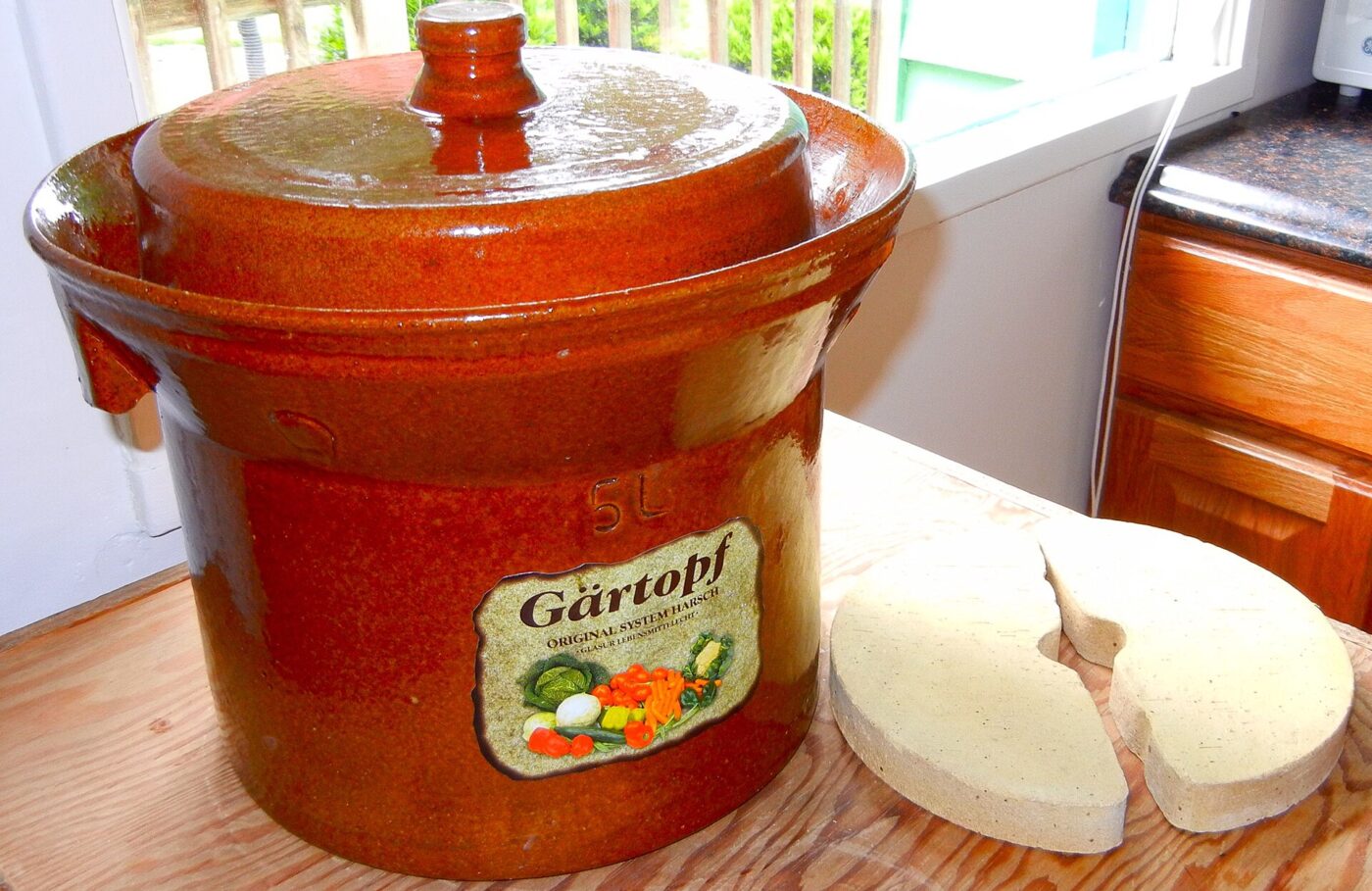
A 5-gallon stone crock is sized for about 25 pounds of cabbage, per the National Center for Home Food Preservation — a full case of vegetables, not a side dish. Some crocks add a water-filled channel around the rim so a lid sits in the moat and seals out air without anyone opening it to check.
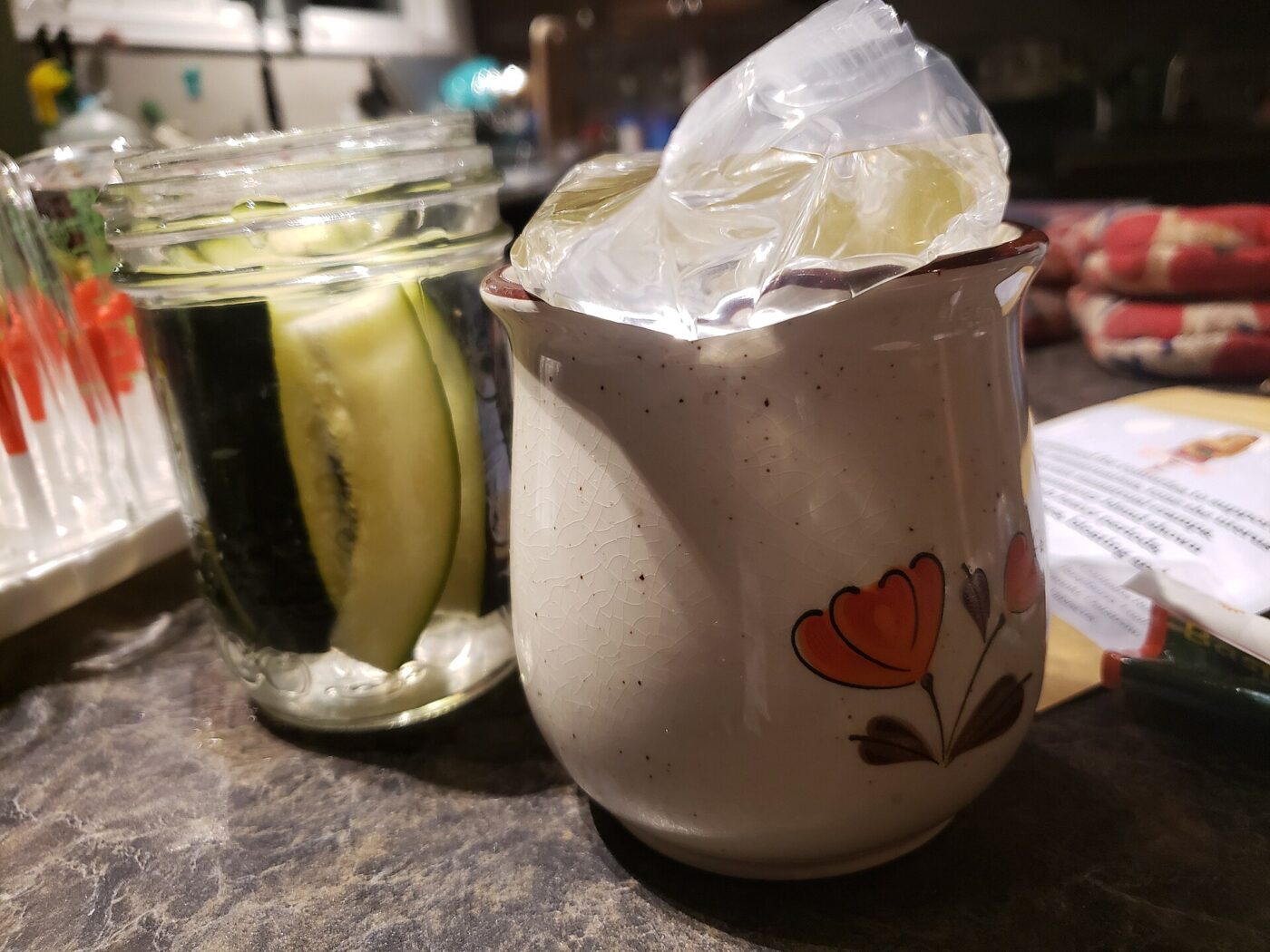
A wide-mouth mason jar scales down to whatever a household actually eats: a quart holds a couple of pounds of shredded cabbage, and several jars can ferment side by side with different vegetables. Penn State Extension’s fermentation guidance lists crocks alongside “commercially available weights and one-way valve covers” as accepted options, which covers the screw-on airlock lids sold for mason jars.
Cleaning scales with size too: a 5-gallon crock is heavy to scrub and dry between batches, while a jar goes through a dishwasher. The real tradeoff is how much kraut a household wants at once, not which method ferments more safely.
| Vessel | Typical batch | Checking needed |
|---|---|---|
| Water-sealed ceramic crock (5 gal) | About 25 lb cabbage | Depends on the weight method used |
| Mason jar with airlock lid | About 2 lb per quart jar | Rarely, once sealed and vented |
| Open crock with plate and jar weights | Any size container | 2 to 3 times a week for scum |
The chemistry does not care which vessel holds it. Batch size and how often someone wants to lift a lid decide the better fit.
Weighing the salt instead of guessing by the spoon
The National Center for Home Food Preservation’s own sauerkraut recipe is written in tablespoons: 3 tablespoons of salt per 5 pounds of cabbage, or 3/4 cup for a full 25-pound batch.
Colorado State University Extension expresses the same guidance as a percentage of the vegetable’s weight instead: 2 to 2.5 percent salt by weight. A tablespoon measurement assumes one particular salt fills the spoon the same way every time; weighing the vegetables and the salt on a kitchen scale hits that percentage directly no matter what is in the container, which is why a scale is worth the small cost next to either a crock or a set of jars.
The same logic applies to jars as to crocks. A quart of shredded cabbage weighed before salting, multiplied by 2 to 2.5 percent, gives the salt amount for that specific jar without needing a separate recipe for every batch size.
Kahm yeast, mold and when to toss a batch

A flat, thin, white film on the surface of a ferment is common, and according to guidance from Oregon State University Extension’s Ask Extension service, it is kahm yeast: a “white bloomy residue growing on top” that is not the same thing as mold. Left alone it can raise the brine’s pH and dull the flavor, so the guidance is to skim it off daily rather than let it sit.
Green, blue or black growth is a different problem. The same guidance is direct about it: “if your fermented or pickled products develop green, blue, or black mold, they must be discarded,” because mold’s roots reach into the food below what is visible on the surface, unlike a surface yeast that skims away cleanly.
The practical rule for a home fermenter with no lab: white, flat and skimmable is worth continuing to watch. Fuzzy, raised or colored beyond white is a batch to throw out, jar and all if it has spread into the glass.
When the surface growth is anything other than a thin white film, the safer assumption is mold, and the batch goes in the trash.
Old crocks, glazes and lead
A family crock with an unmarked, unfamiliar glaze is a different question from a new one bought for fermenting. The FDA warns that some traditional pottery is glazed with lead-containing compounds that can leach into food and drink, and it is direct about what to do with a piece that tests positive: stop using it for cooking, serving or storing food, because “no amount of washing, boiling, or other process can remove lead from pottery.”
The FDA singles out handmade pieces with a crude or irregular appearance, antiques, and pottery bought from flea markets or street vendors as most likely to carry an unsafe glaze, and it notes that consumers can buy lead-testing swab kits from hardware stores or online to check a piece before trusting it with a salty ferment for weeks.
A crock bought new from a manufacturer that states the glaze is food-safe and lead-free does not need this scrutiny. A crock inherited, bought secondhand, or picked up without any maker’s information does.
The shortlist
Paid links: we earn a commission if you buy through the buttons below, at no extra cost to you. As an Amazon Associate I earn from qualifying purchases.
Compared on keeping a ferment safe and mold-free
| Product type | Best for | Risk estimate | Where to buy |
|---|---|---|---|
| Water-Sealed Ceramic Fermentation Crock (5 L) | Larger batches at once | 30/100 | See listings on AmazonOpens Amazon search results, not one listing: check the model on the product page. |
| Mason Jar Fermentation Kit (Airlock Lids, Glass Weights) | Small batches on a counter | 25/100 | See listings on AmazonOpens Amazon search results, not one listing: check the model on the product page. |
| Digital Kitchen Scale (1 g Resolution) | Weighing salt precisely | 10/100 | See listings on AmazonOpens Amazon search results, not one listing: check the model on the product page. |
Risk estimate is our editorial Fear Index for the product type (lower is safer), not a customer rating. How it is scored.
Water-Sealed Ceramic Fermentation Crock (5 L)
A 5-gallon crock matches the size the National Center for Home Food Preservation’s own recipe assumes, sealed by a water channel instead of a separate lid.
- Sized for a full case of cabbage, per NCHFP
- Water channel keeps air out without an airlock
- Heavy to move, scrub and dry
- Unmarked glazes should be lead-tested first
Mason Jar Fermentation Kit (Airlock Lids, Glass Weights)
A wide-mouth quart jar with an airlock lid covers the “one-way valve cover” option Penn State Extension lists alongside crocks, sized for a shelf instead of a case of cabbage.
- One-way valve vents gas without opening the jar
- Several jars can run different batches at once
- A crock-sized batch needs several jars
- Glass weights add a separate cost
More: Homesteading and Food Craft analyses and how the Fear Index is scored.
Sources
- Suitable Containers, Covers, and Weights for Fermenting Food — National Center for Home Food Preservation
- Sauerkraut — National Center for Home Food Preservation
- Let’s Preserve: Fermentation — Sauerkraut and Pickles — Penn State Extension
- Understanding and Making Sauerkraut — Colorado State University Extension
- Questions and Answers on Lead-Glazed Traditional Pottery — FDA
- Pickle/olive brine surface mold spots — Ask Extension (Oregon State University Extension Service)
Questions people actually ask
What salt ratio is safe for sauerkraut?
Extension guidance puts it at about 2 to 2.5 percent of the vegetable’s weight, which Colorado State University Extension notes works out to roughly 3 tablespoons of canning salt per 5 pounds of shredded cabbage.
Is kahm yeast on my ferment dangerous?
No. Extension guidance describes it as a harmless white film that can be skimmed off daily. Green, blue or black growth is mold and means discarding the batch.
Can I ferment vegetables in an old family crock?
Only if the glaze is confirmed lead-free. The FDA advises testing unmarked or handmade pottery with a lead-testing kit before using it for food, since no amount of washing removes lead already in a glaze.
Do I need an airlock lid, or does a plate and weight work?
Either works. Penn State Extension lists one-way valve covers and traditional plate-and-weight setups as both acceptable for keeping vegetables fermenting safely under brine.
Does a mason jar ferment as safely as a crock?
Yes. The chemistry is the same salt ratio and submersion either way; a crock simply holds a larger batch and a jar scales down to what a household will eat.