
A Homebrew Bottle Bomb Is a Hydrometer Reading Someone Skipped
Homebrew bottles over-pressurize when fermentation is not finished or priming sugar is overdosed. The hydrometer check, the sugar math, and the legal limits.

Part of the guide: Home and Kitchen Buying Mistakes: What Fails and How to Check Before You Buy
A bottle of homebrew that explodes on a shelf is not a manufacturing defect. It is a batch that kept fermenting after it was capped, or one that got more priming sugar than the yeast inside it could safely turn into carbonation.
Both causes trace back to the same skipped step. A hydrometer measures the sugar still dissolved in the beer, and that number, not the calendar or the sound coming from the airlock, is what actually says a batch is ready to bottle.
Fear Index · Think twice
A batch that looks finished and is not
The same pressure that carbonates a bottle can rupture it. A peer-reviewed case series of exploding carbonated-beverage bottles found the resulting eye injuries were often severe, with most patients losing significant vision.
Why a bottle over-pressurizes

Priming sugar is added at bottling specifically to restart a small, controlled fermentation inside a sealed bottle, producing the carbon dioxide that carbonates the beer. The American Homebrewers Association’s bottle-conditioning guide is direct about what happens when that process is not controlled: brewers who measure carefully can reach their target carbonation “without fear of creating the dreaded ‘bottle bombs’” — bottles that explode from being over-pressurized.
There are three separate ways to overshoot that target. The beer can still be actively fermenting from the original batch when it is bottled, adding uncontrolled carbonation on top of the priming sugar. The priming sugar itself can be measured by volume instead of weight, or scaled up without adjusting for a bigger batch. Or a wild yeast or bacterial infection can keep fermenting sugars the brewer never intended to prime with at all.
Every cause of a bottle bomb comes down to more fermentable sugar reaching the bottle than the brewer accounted for.
The airlock is not proof; a stable gravity reading is
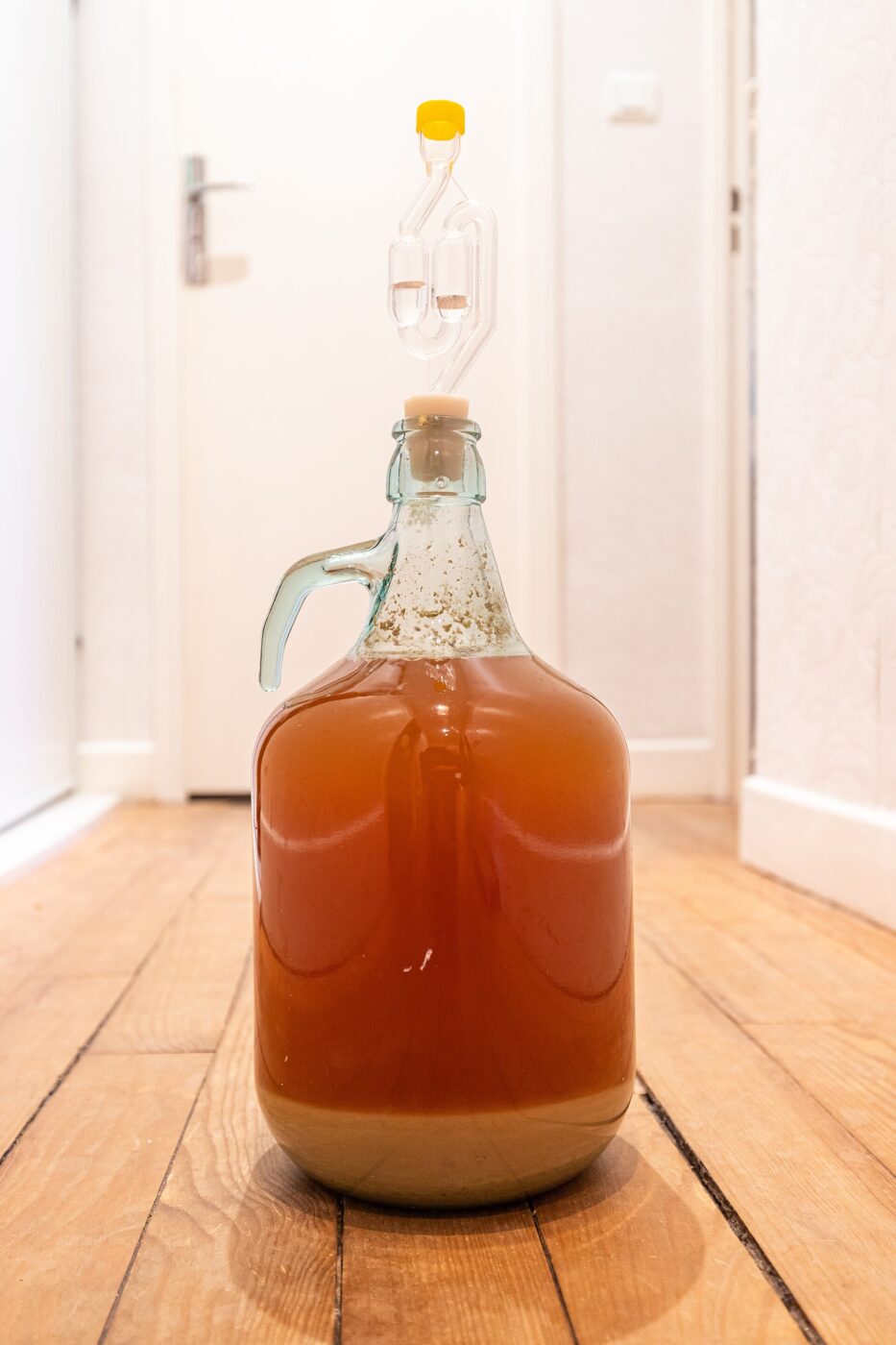
An airlock shows gas leaving the fermenter, not how much fermentable sugar is left in the beer. A batch can slow down for reasons that have nothing to do with being finished, and a batch that looks quiet is not the same thing as a batch with a stable specific gravity.
The American Homebrewers Association’s hydrometer guidance describes the actual test: take a gravity reading once fermentation appears to have finished, then take another reading the following day. If the two readings match, fermentation can safely be assumed complete. Many brewers extend that check to two or three consecutive days for a wider margin before bottling.
A hydrometer reads the density of the liquid, which drops as yeast converts sugar into alcohol and carbon dioxide. A reading that has genuinely stopped falling means there is no more meaningful fermentation left to carbonate a sealed bottle beyond what the priming sugar is measured to add.
Weighing priming sugar instead of guessing
The American Homebrewers Association’s rule of thumb for a standard batch is about 3/4 cup (177 grams) of corn sugar in five gallons of beer, which reaches roughly 2.25 to 2.5 volumes of carbon dioxide. That figure is a starting point, not a fixed answer: the actual amount depends on the carbonation a style calls for and the beer’s temperature at bottling, since colder beer already holds more dissolved CO2 than warm beer does.
A priming calculator or nomograph accounts for both variables by subtracting the CO2 already dissolved in the beer at its bottling temperature from the target carbonation level, then converting the remainder into a weight of sugar for the batch size. Measuring that amount on a kitchen scale, rather than by a cup or a spoon, removes the single most common way a batch ends up over-primed.
A priming sugar amount belongs on a scale, not in a measuring cup eyeballed from a recipe someone half-remembered.
If a batch is already bottled and suspect
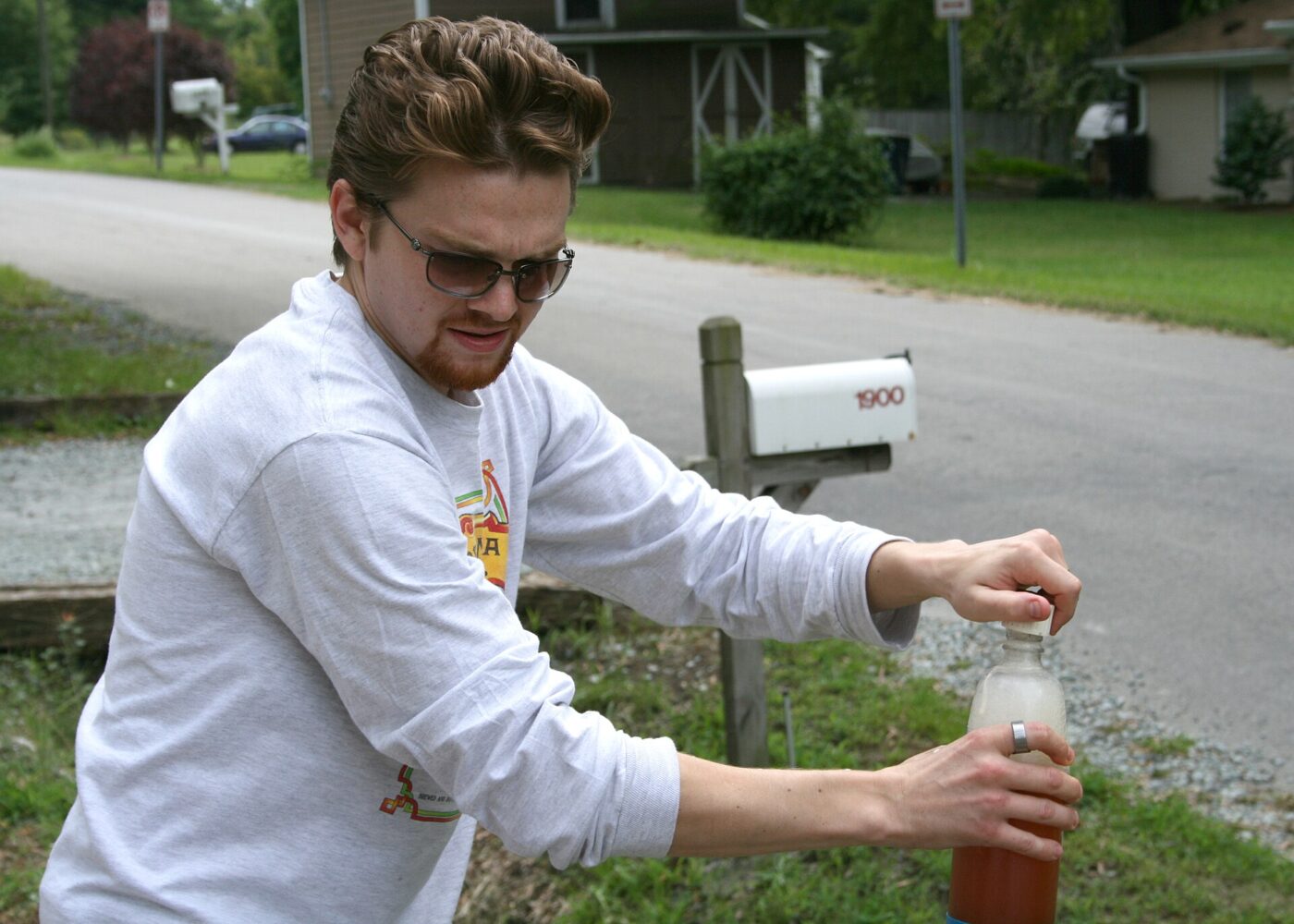
A batch that was bottled without a stable gravity check, or primed from a guess rather than a measured weight, should be treated as a possible bottle bomb until proven otherwise. Craft Beer & Brewing’s safety guidance recommends handling suspect bottles at a distance: put on safety glasses at a minimum, or a face shield, along with gloves and a heavy jacket, and wrap the bottle in a towel or hold it inside a canvas bag before doing anything to it.
Chilling the bottles first lowers the internal pressure before they are handled. The same guidance recommends opening a small sample outside, away from anyone’s face, to check how carbonated the batch actually is before deciding whether the rest of it can be salvaged or needs to be vented and disposed of, also outdoors.
What federal and state law actually allow
Home beer production without a permit or tax payment is legal under federal law, within limits. TTB’s regulations, at 27 CFR 25.205, cap it at 200 gallons per calendar year in a household with two or more adults, or 100 gallons where only one adult lives, and the beer may be used only for personal or family purposes, including competitions and tastings, never for sale.
Federal law does not override state law. The American Homebrewers Association notes that homebrewing has been legal in every state since 2013, when Alabama and Mississippi became the last to permit it, but individual states can still add their own restrictions on quantity, transport or sharing homebrew away from where it was made.
The shortlist
Paid links: we earn a commission if you buy through the buttons below, at no extra cost to you. As an Amazon Associate I earn from qualifying purchases.
Compared on preventing an over-carbonated batch
| Product type | Best for | Risk estimate | Where to buy |
|---|---|---|---|
| Triple-Scale Hydrometer with Test Jar | Confirming fermentation is done | 15/100 | See listings on AmazonOpens Amazon search results, not one listing: check the model on the product page. |
| Bench Bottle Capper with Oxygen-Absorbing Caps | Capping once gravity is stable | 20/100 | See listings on AmazonOpens Amazon search results, not one listing: check the model on the product page. |
| PET Plastic Beer Bottles (16 oz, Pack) | A safer container if it is not | 12/100 | See listings on AmazonOpens Amazon search results, not one listing: check the model on the product page. |
Risk estimate is our editorial Fear Index for the product type (lower is safer), not a customer rating. How it is scored.
Triple-Scale Hydrometer with Test Jar
A hydrometer measures the sugar still dissolved in the beer, the only direct way to confirm fermentation has actually stopped before bottling.
- Reads specific gravity, not just alcohol
- Triple scale covers most recipe calculators
- Reusable for every batch
- Glass tube can chip or break
- Needs a full test jar of sample
PET Plastic Beer Bottles (16 oz, Pack)
A PET bottle bulges under excess pressure rather than fragmenting, which is why some brewers use plastic for anything at risk of over-carbonating.
- Bulges under pressure instead of shattering
- No glass shards if a batch is over-primed
- Lighter to store and transport
- Not rated for years of reuse
- Some brewers prefer glass for taste and feel
More: Homesteading and Food Craft analyses and how the Fear Index is scored.
Sources
- 27 CFR 25.205, Beer for Personal or Family Use — Cornell Law School
- Beer FAQs — Alcohol and Tobacco Tax and Trade Bureau (TTB)
- How to Take an Accurate Hydrometer Reading — American Homebrewers Association
- Mastering the Art of Bottle Conditioning — American Homebrewers Association
- Open Globe Injuries Induced by Glass Bottles Containing Carbonated Drinks — PMC (National Institutes of Health)
- Safety First: Don’t Get (Bottle) Bombed — Craft Beer & Brewing
Questions people actually ask
How do I know if my homebrew is done fermenting before bottling?
Take a hydrometer reading, then take another two or three days later at the same temperature. If the specific gravity has not moved, fermentation is finished and the batch is ready to prime and bottle.
How much priming sugar should I use?
About 3/4 cup (177 g) of corn sugar in a 5-gallon batch reaches roughly 2.25 to 2.5 volumes of CO2, though the precise amount depends on style and bottling temperature. Weigh it on a scale rather than measuring by volume.
What should I do if I suspect a bottle bomb?
Chill the suspect bottles to lower internal pressure, then open them outdoors, away from your face, wearing safety glasses and gloves, and with the bottle wrapped in a towel.
Is homebrewing beer legal in the United States?
Yes. Federal law allows an adult to produce up to 100 gallons of beer per year in a single-adult household, or 200 gallons where two or more adults live, for personal use only, and individual states can add further restrictions.