
A Food Dehydrator Dries Jerky at 145°F. USDA Wants the Meat Heated to 160°F First.
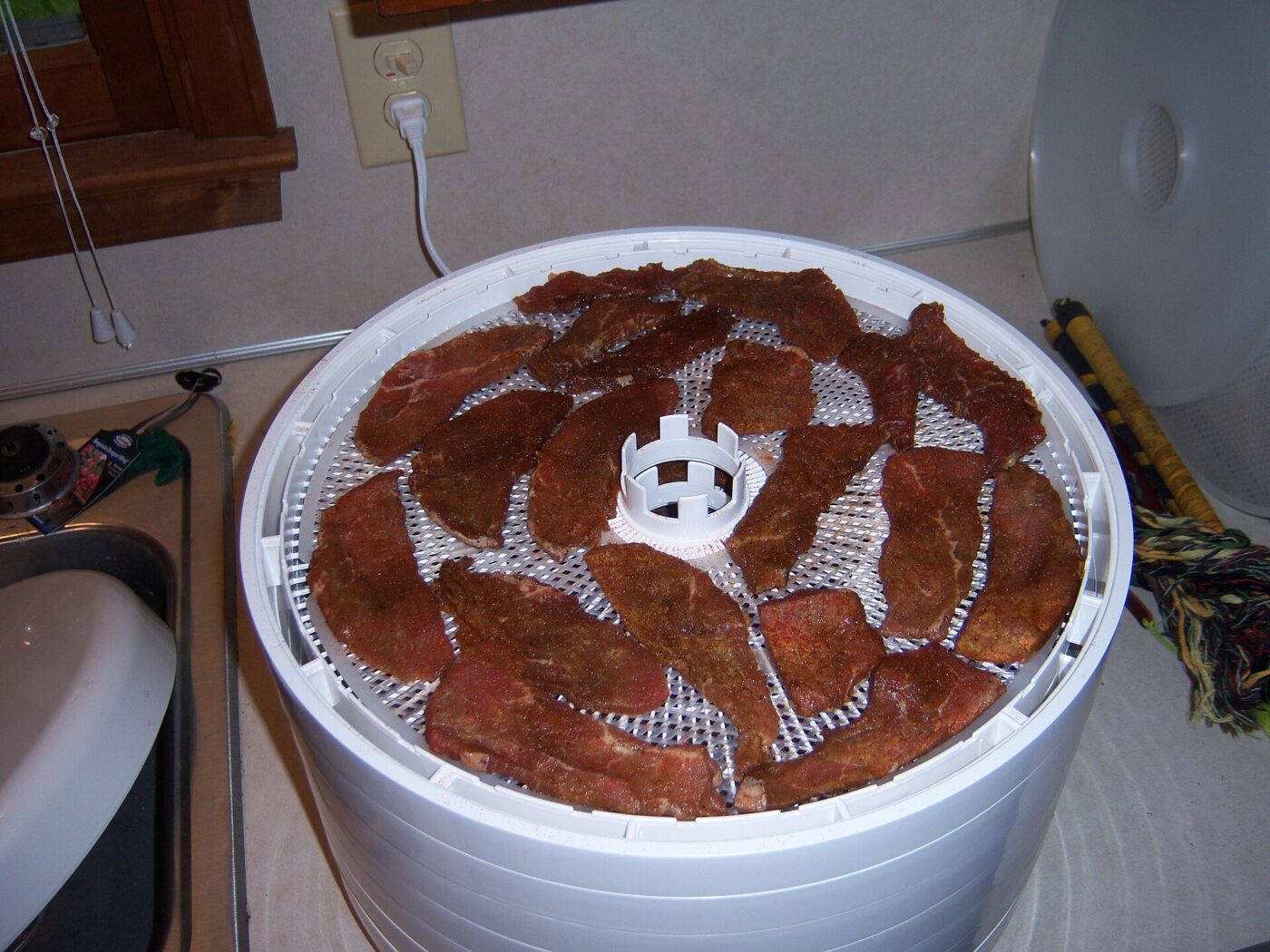
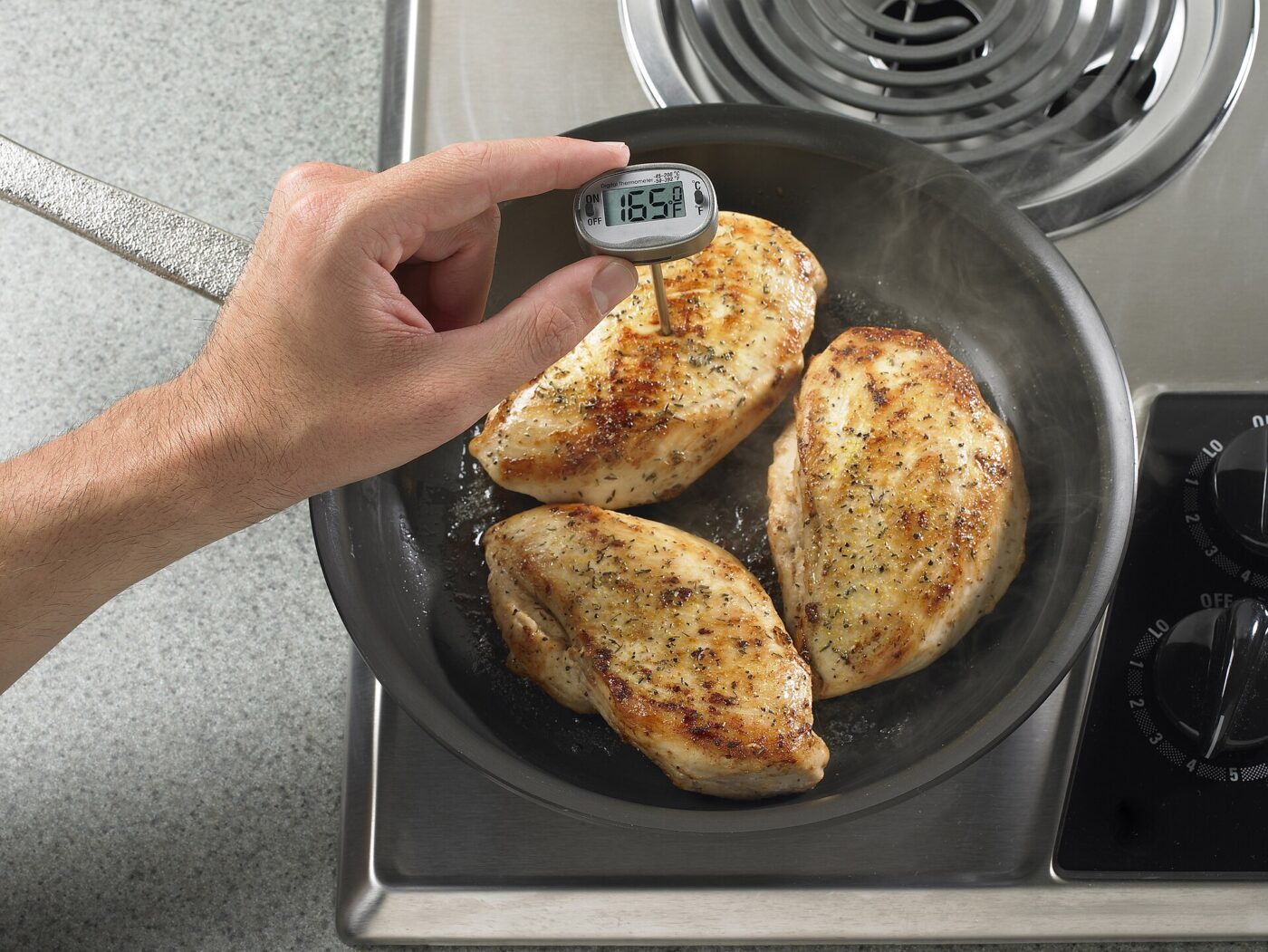
A dehydrator dries jerky around 145°F. USDA says meat needs to reach 160°F, and poultry 165°F, before or after that to reliably kill Salmonella and E. coli.

Part of the guide: Home and Kitchen Buying Mistakes: What Fails and How to Check Before You Buy
A food dehydrator set to a typical 145°F reading feels like it should be cooking the meat as it dries it. It is not. That temperature is enough to pull moisture out of a strip of beef over several hours; it was never tested as a way to reliably kill the bacteria that can be on raw meat going in.
USDA’s guidance closes that gap with a separate step most dehydrator instructions leave out entirely: heat the meat to a specific internal temperature, checked with a thermometer, either before the meat goes into the dehydrator or after it comes out.
Fear Index · High risk
A warm, dry environment bacteria can survive
Kansas State University Extension says meat must reach 160°F to kill harmful bacteria including Salmonella and E. coli O157:H7, and that dehydrating temperatures alone, in the 130°F to 140°F range, are not enough to do it.
Drying is not the same as cooking
Different extension sources put the dehydrator’s safe operating range slightly differently, which is itself worth knowing before shopping for one. Ohio State University Extension’s jerky factsheet says a dehydrator needs to “maintain a temperature of at least 145 degrees Fahrenheit throughout the drying process,” or 145 to 170°F if drying in an oven instead.
Kansas State University Extension describes a lower band for the drying step itself, noting dehydrating typically runs “130-140 degrees Fahrenheit to efficiently remove moisture from the meat” — and that this range is exactly why it cannot be trusted to kill pathogens on its own. Either way, the number on a dehydrator’s dial describes drying speed, not food safety.
A dehydrator’s temperature setting is chosen to dry meat efficiently. It was never chosen to kill Salmonella or E. coli.
USDA’s 160°F and 165°F step, done before or after drying

The National Center for Home Food Preservation’s jerky instructions are direct about why the extra step exists: “An internal temperature of 160ºF is necessary to eliminate disease-causing bacteria” that may be present in raw meat. Its recipe has the meat strips heated in a marinade to that temperature before they ever reach the dehydrator racks.
Kansas State University Extension confirms the same number applies whichever order a maker prefers: “the meat must also reach 160 F to kill harmful bacteria. This temperature can be achieved before or after the dehydration process.” Poultry jerky needs a higher target, 165°F, per Ohio State University Extension’s factsheet, which describes the 160/165°F step as “currently recommended by the USDA Meat and Poultry Hotline as the safest option.”
For anyone who skips pre-heating, NCHFP’s instructions describe the alternative: after drying, “heat 10 minutes in an oven preheated to 275ºF.” Either order works, but skipping the step altogether leaves the dehydrator’s own moderate heat as the only thing standing between raw meat and a finished snack.
Dehydrator specs that matter: a real temperature, not just a dial
A dehydrator worth buying for jerky needs an adjustable thermostat that actually holds a set temperature through hours of drying, not just a high or low switch. Ohio State University Extension’s guidance assumes exactly this kind of equipment when it specifies “a temperature of at least 145 degrees Fahrenheit throughout the drying process.”
A dial and an actual chamber temperature are not always the same thing, especially in a crowded dehydrator or an older unit. A leave-in probe thermometer, checked partway through a run, confirms what is really happening on the trays — and it is the same tool that confirms the 160°F pre-heat or 275°F post-heat step actually reached target before the meat is called done.
Venison and other game meat
Game meat carries the same rule with an added source of contamination earlier in the process. Kansas State University Extension’s hunting food-safety guidance ties this directly to jerky: “dress it out as soon as possible and chill the carcass promptly,” because improperly prepared jerky “can support the growth of Salmonella and E. coli O157:H7” regardless of whether the animal came from a store or a hunt.
None of that changes the target temperature. Venison jerky needs the same 160°F step, before or after dehydrating, that any other raw meat does — the field-dressing and chilling steps reduce how much bacteria reaches the meat in the first place, not how hot it needs to get afterward.
Checking doneness, storage and shelf life
NCHFP’s preparation guidance sets the handling baseline around the heat step: marinate meat in the refrigerator rather than on the counter, keep raw strips at 40ºF or below until they go into the marinade or the heat step, and slice meat no thicker than 1/4 inch so it dries and heats evenly.
Once jerky is dried and heat-treated, packing it away from air and moisture keeps it from picking up mold or spoilage bacteria the drying and heating steps already worked to remove. Sealing finished batches airtight, rather than leaving them in an open bag, protects the work the 160°F step already did.
The safety work happens at 160°F, not at 145°F. Everything after that — slicing, drying, sealing — is about keeping that work intact.
The shortlist
Paid links: we earn a commission if you buy through the buttons below, at no extra cost to you. As an Amazon Associate I earn from qualifying purchases.
Compared on getting jerky safely from raw to shelf-stable
| Product type | Best for | Risk estimate | Where to buy |
|---|---|---|---|
| Food Dehydrator With Adjustable Temperature Dial | Drying with a verified dial | 32/100 | See listings on AmazonOpens Amazon search results, not one listing: check the model on the product page. |
| Leave-In Probe Thermometer With Alarm | Hitting 160°F before drying | 12/100 | See listings on AmazonOpens Amazon search results, not one listing: check the model on the product page. |
| Vacuum Sealer for Jerky Storage | Storing the finished batch | 15/100 | See listings on AmazonOpens Amazon search results, not one listing: check the model on the product page. |
Risk estimate is our editorial Fear Index for the product type (lower is safer), not a customer rating. How it is scored.
Leave-In Probe Thermometer With Alarm
USDA’s 160°F step is only real if it is measured. A probe thermometer is what turns “probably hot enough” into a checked number.
- Confirms internal temperature, not just dial setting
- Works for the pre-heat or the post-dry oven step
- Alarm catches a stall before it matters
- One more tool to remember to use
- Probe placement affects the reading
Food Dehydrator With Adjustable Temperature Dial
Extension guidance assumes a dehydrator that holds a real, sustained temperature through the drying run, not one that drifts with the room.
- Adjustable thermostat, not a single fixed setting
- Meets extension guidance for sustained drying heat
- Horizontal airflow dries trays more evenly
- Higher cost than a basic stackable unit
- Dial reading still needs spot-checking
More: Home and Kitchen analyses and how the Fear Index is scored.
Sources
- Jerky and Food Safety — USDA Food Safety and Inspection Service
- Jerky (recipe and safety instructions) — National Center for Home Food Preservation
- Food Preservation: Making Jerky — Ohioline, Ohio State University Extension
- After the Hunt: Food Safety Begins in the Field — Kansas State University Extension
Questions people actually ask
Does a food dehydrator get hot enough to kill bacteria in meat?
Not reliably on its own. Extension sources put dehydrator drying temperatures around 130 to 145°F, well below the 160°F USDA says is needed to kill bacteria like Salmonella and E. coli.
Do I heat the meat to 160°F before or after dehydrating?
Either order works. Kansas State University Extension says the 160°F step “can be achieved before or after the dehydration process,” and NCHFP’s instructions describe a 275°F, 10-minute oven step as the after-drying option.
Is venison jerky more dangerous than beef jerky?
It carries the same 160°F requirement as any other meat. Field dressing and chilling the carcass promptly reduce how much bacteria reaches the meat, but the heat step itself does not change.
What temperature does poultry jerky need to reach?
Poultry needs a higher internal temperature than red meat: 165°F, per Ohio State University Extension’s jerky factsheet, citing the USDA Meat and Poultry Hotline.
How do I know if my dehydrator is actually holding temperature?
Check with a leave-in probe thermometer partway through a run rather than trusting the dial setting, especially in a full or older dehydrator.