
A Recirculating Range Hood Filters Grease and Returns Everything Else to the Kitchen
HVI says nonducted recirculation hoods provide no actual ventilation. What CFM, capture area, duct size and mounting height decide about a hood.

Part of the guide: Home and Kitchen Buying Mistakes: What Fails and How to Check Before You Buy
A recirculating hood and a ducted hood look the same from the front and do different jobs. Both pull air through a grease filter. The ducted one pushes that air outside the house. The recirculating one pushes it through a charcoal filter and back into the room, trapping grease and some odor and returning the heat, the water vapor and the combustion products to the kitchen.
The Home Ventilating Institute, the trade body whose certified ratings program publishes the airflow and sound figures manufacturers advertise, puts it in one sentence: nonducted, recirculation kitchen range hoods provide no actual ventilation. That leaves two questions for a gas kitchen — how a ducted hood has to be sized and mounted, and what a ductless setup cannot do at any rating.
Fear Index · Think twice
A hood that moves air in a circle removes nothing from the room
HVI states that nonducted, recirculation kitchen range hoods provide no actual ventilation, and ASHRAE 62.2 credits only a vented range hood against its kitchen exhaust rate, so a ductless install can satisfy a remodel and not the standard.
What a recirculating hood sends back into the room
A charcoal filter is an adsorption stage for odor, and it does nothing about mass. Water vapor is the clearest case: in Berkeley Lab’s work on cooking exhaust, the authors note that gas burners and cooking release substantial quantities of water vapor that can contribute to moisture related indoor air quality problems. A hood that returns its airflow to the kitchen returns that moisture and the heat with it.
Combustion products are the second category, and the statement there belongs to the regulator that made it. EPA identifies combustion processes as the primary indoor source of nitrogen dioxide and gives unvented gas stoves as an example, says that in homes with gas stoves indoor levels often exceed outdoor levels, and lists as a step to reduce exposure: install and use an exhaust fan vented to outdoors over gas stoves. That is a ventilation distinction rather than a verdict on gas cooking. A recirculating hood is a grease and odor appliance, and what the cooktop adds to room air stays there.
A ductless hood is a filter, not a vent. Treat the charcoal stage as odor control and assume the moisture and combustion products stay in the kitchen.
What the airflow number does and does not buy
Capture efficiency, not airflow, decides how much of a cooking plume leaves the house. Berkeley Lab researchers measured four exhaust hoods in a chamber with a kitchenette and reported that for pan-frying a hamburger over medium heat on the back burner, capture efficiencies for particles were mostly above 80 percent. Move the same cooking forward and it collapses: for stir-frying in a wok on high heat on a front burner, capture efficiency for burner-produced carbon dioxide was 34 to 38 percent at low fan settings of 51 to 68 liters per second, roughly 110 to 145 cfm, and 54 to 72 percent at high settings of 109 to 138 liters per second, roughly 230 to 290 cfm.
Particles did worse than gases in the same tests: capture efficiencies for particles between 0.3 and 2.0 micrometers during front-burner stir-frying were 3 to 11 percent on low fan settings and 16 to 70 percent on high, and for one hood front-burner particle capture varied between 4 and 39 percent against 70 to 99 percent on the back burner. The authors conclude that hoods are much more effective when cooking occurs on the back burners, because the hood then fully covers the area over which emissions occur. HVI’s own sizing guidance is per linear foot of range: a recommended 100 cfm per linear foot against a wall, 150 for an island, with minimums of 40 and 50.
| Cooking position and setting | Measured capture efficiency | What was measured |
|---|---|---|
| Back burner, pan-frying | Mostly above 80 percent | Particles |
| Front burner, wok, low fan | 34 to 38 percent | Burner carbon dioxide |
| Front burner, wok, high fan | 54 to 72 percent | Burner carbon dioxide |
| Front burner, wok, low fan | 3 to 11 percent | Particles 0.3 to 2.0 micrometers |
| Front burner, wok, high fan | 16 to 70 percent | Particles 0.3 to 2.0 micrometers |
What the ventilation standard counts
ASHRAE 62.2 is the residential ventilation standard building codes lean on, and its demand-controlled local exhaust table is specific about kitchens. As amended by Addendum l to ANSI/ASHRAE Standard 62.2-2022, approved by ANSI on May 9, 2025, the airflow listed for an enclosed kitchen is 100 cfm, or 50 liters per second, for a vented range hood, and 300 cfm, or a capacity of 5 air changes per hour, for other kitchen exhaust fans including downdraft units. The credited device is a vented range hood, so a recirculating unit is no route to compliance however it is rated, and the 100 cfm floor sits below the 300 cfm asked of a fan that is not over the range.
Airflow ratings are themselves a claim to verify. HVI’s range hood guide states that there are no government standards for rating range hood performance, so unless a hood is HVI tested, certified and verified a manufacturer can claim anything in this unregulated market, and that inflated performance ratings are common for hoods that are not HVI certified. Products carrying the label have been independently tested to the stated ratings for airflow, sound and energy, and HVI publishes a certified products directory where range hood sone ratings are listed — though it notes that some certified products are not rated for sound.
Only a vented hood counts toward the ASHRAE 62.2 kitchen rate, and only a certified rating is a tested rating. Look the model up in HVI’s directory rather than reading the carton.
Duct size, duct length and mounting height

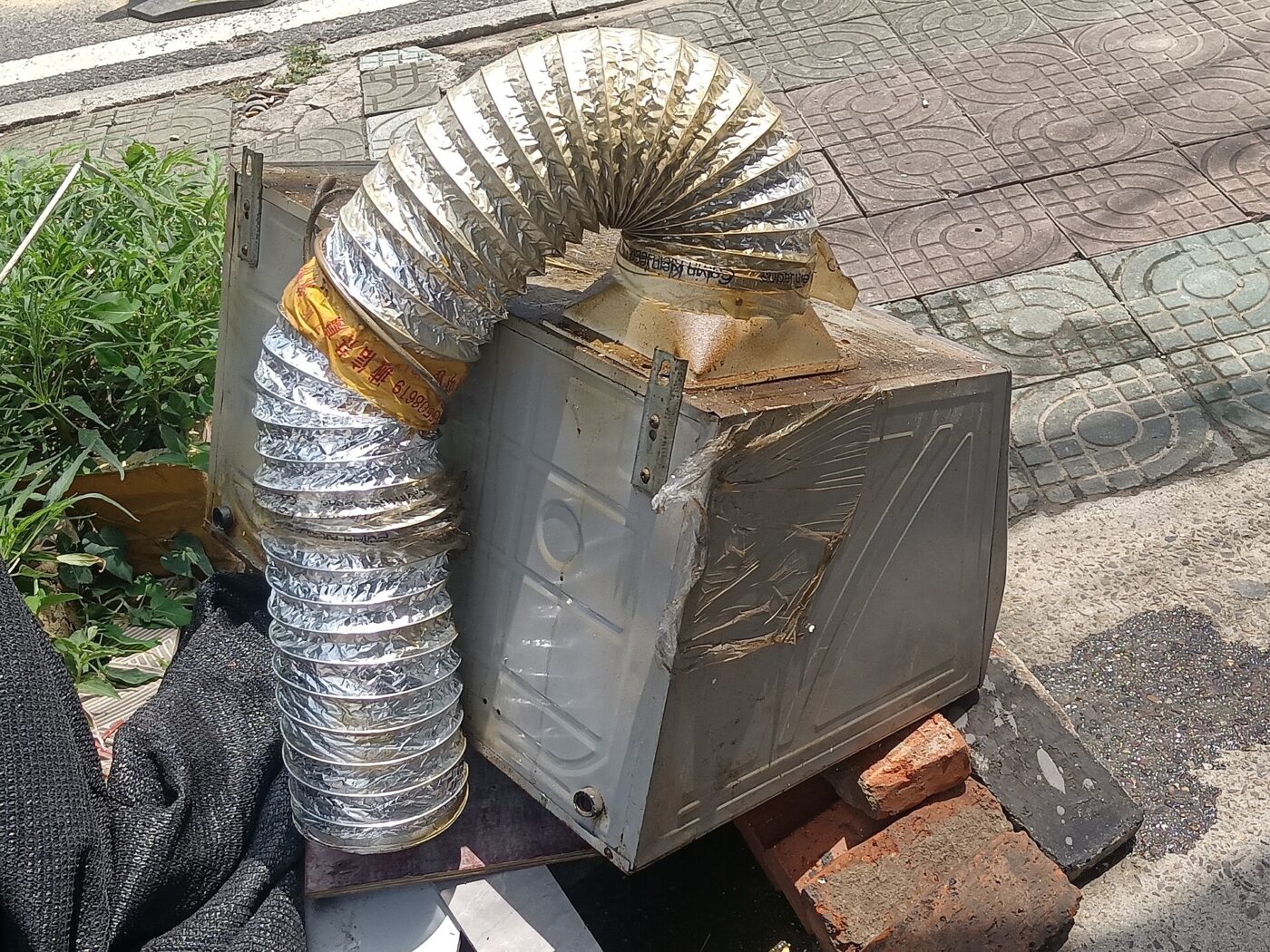
A ducted hood is only as good as the duct bolted to it. HVI’s guidance is to match the duct size to the original size of the fan’s ducting, to use the shortest amount of ducting possible and keep it as straight as possible, and that range hoods must use metal duct, with smooth metal preferred over flexible ridged duct because the ridges reduce airflow. Its range hood guide adds that a duct’s efficiency is affected by its width, number of bends and length, and that the sound a hood makes comes from the airflow into the hood, the fan and the ducting.
Undersizing is the common remodel error: a 6-inch hood outlet necked into a 4-inch run, or a short rigid path replaced by a long flexible one with two elbows. Neither changes the rated cfm on the box; both change what the fan delivers. Mounting height belongs to the manufacturer rather than to a rule of thumb: HVI says a hood should sit at the manufacturer-recommended height above the cooking surface, and notes that its members’ installation instructions show an average range of 20 to 30 inches. Height interacts with capture, since raising a hood widens the area it has to cover.
When a duct is genuinely not available
Plenty of kitchens cannot be ducted: interior walls with no path, rentals, apartment blocks where the facade cannot be penetrated. The compromise is to treat the hood as grease and odor control and get the removal elsewhere.
- Cook on back burners for anything high-heat, which Berkeley Lab found raised capture efficiency substantially for the same hood and setting.
- Use a fan that exhausts outdoors while the gas burners are on, which is the step EPA names for gas stoves.
- If a duct could be run later, size the hood outlet and the wall opening for it during the remodel.
The shortlist
Paid links: we earn a commission if you buy through the buttons below, at no extra cost to you. As an Amazon Associate I earn from qualifying purchases.
Compared on what actually leaves the kitchen
| Product type | Best for | Risk estimate | Where to buy |
|---|---|---|---|
| Ducted Under-Cabinet Range Hood, Matched to Range Width | A kitchen with a path outdoors | 25/100 | See listings on Amazon |
| Rigid Metal Duct and Wall Cap Kit | Keeping the duct short and smooth | 20/100 | See listings on Amazon |
| Charcoal Filter for a Recirculating Hood | A rental with no duct at all | 50/100 | See listings on Amazon |
Risk estimate is our editorial Fear Index for the product type (lower is safer), not a customer rating. How it is scored. The buttons open Amazon search results rather than one listing, so check the model on the product page.
Ducted Under-Cabinet Range Hood, Matched to Range Width
Width matched to the range matters more than a headline airflow figure, because a hood captures only what rises inside its footprint. HVI’s recommended rate for a 36-inch hood against a wall is 300 cfm, with a minimum of 120 cfm.
- The device ASHRAE 62.2 credits at 100 cfm
- Removes moisture and combustion products from the room
- HVI sizing is 100 cfm per linear foot on a wall
- Needs a metal duct path and exterior termination
- Capture drops sharply for front-burner cooking
Charcoal Filter for a Recirculating Hood
This component defines a ductless hood, and it is worth being clear about what it is: an odor stage. EPA’s step for gas cooking is an exhaust fan vented to outdoors, which a recirculating unit by definition is not.
- Installs where no duct path exists
- Adsorbs some cooking odor
- HVI says nonducted recirculation hoods provide no actual ventilation
- Returns moisture and combustion products to the room
- Earns no ASHRAE 62.2 credit
More: Home and Kitchen analyses and how the Fear Index is scored.
Sources
- ANSI/ASHRAE Addendum l to ANSI/ASHRAE Standard 62.2-2022 — ASHRAE
- How Much Ventilation Do I Need? — Home Ventilating Institute
- Frequently Asked Questions — Home Ventilating Institute
- What is a range hood? What does it do? Why do I need one? — Home Ventilating Institute
- Capture Efficiency of Cooking-Related Particles by Residential Exhaust Hoods, LBNL-6664E — Lawrence Berkeley National Laboratory
- Nitrogen Dioxide’s Impact on Indoor Air Quality — US EPA
Questions people actually ask
Is a ductless range hood worth it over a gas stove?
As grease and odor control it does something. As ventilation it does not: HVI states that nonducted, recirculation kitchen range hoods provide no actual ventilation, and EPA’s recommendation for gas stoves is an exhaust fan vented to outdoors.
How many CFM does a range hood need?
HVI recommends 100 cfm per linear foot of range against a wall and 150 for an island, with minimums of 40 and 50. ASHRAE 62.2-2022 as amended lists 100 cfm for a vented range hood, a compliance floor rather than a sizing target.
Why does my range hood not seem to catch anything from the front burner?
Because the plume rises outside the hood footprint. Berkeley Lab measured front-burner stir-fry capture efficiency of 34 to 38 percent at low fan settings and 54 to 72 percent at high, against mostly above 80 percent for back-burner pan-frying.
Does duct size really change performance?
Yes. HVI advises matching the duct size to the fan’s original ducting, using the shortest and straightest run possible, and using metal duct, with smooth metal preferred over ridged flexible duct because the ridges reduce airflow.