
Fumes From an Overheated Nonstick Pan Can Kill a Pet Bird Before the Cook Notices Anything
PTFE fumes from an overheated nonstick pan can kill a pet bird within minutes. Which household products carry the risk, and where a cage is safest.

Part of the guide: Home and Kitchen Buying Mistakes: What Fails and How to Check Before You Buy
A pan left empty on high heat, an iron resting too long on its base, an oven running its self-cleaning cycle — none of these register as an emergency to a person standing in the next room. To a pet bird, any one of them can be fatal within minutes.
The chemistry is well documented in veterinary literature: polytetrafluoroethylene, the coating on most nonstick cookware, is inert at normal cooking temperatures but breaks down at a specific point and releases gas that a bird’s respiratory system cannot tolerate. What is less well known is how many ordinary household items share that same coating, and what else in a kitchen or laundry room deserves the same caution.
Fear Index · High risk
A hazard with no smell and almost no warning
Merck’s veterinary manual says the only clinical sign of PTFE gas poisoning is often acute death, and Cornell’s veterinary college says birds are extremely sensitive to the fumes because of their respiratory physiology.
Why a bird’s airway has no margin for error
Polytetrafluoroethylene, sold under names like Teflon, is stable at normal cooking temperatures. Merck’s veterinary manual says the gas is released once cookware reaches roughly 280°C (536°F), a temperature an empty or nearly empty pan left on high heat can reach within a few minutes. To a person in the room, the result is at most an unpleasant smell. To a bird, it can be lethal before the smell is even noticed.
Cornell University’s College of Veterinary Medicine attributes the gap to respiratory physiology: birds are “extremely sensitive” to airborne toxins, and that sensitivity is “exacerbated when exposure occurs in poorly ventilated areas.” A closed kitchen with the exhaust fan off turns a fume cloud a person might barely register into a concentrated dose a bird’s body cannot clear in time.
Texas A&M’s Veterinary Medical Diagnostic Laboratory describes what that gas does once inhaled: the pyrolysis products are “highly toxic to the epithelium of the deep airways and endothelium of the blood capillaries” — the tissue that would normally move oxygen into the bloodstream. Merck’s manual is blunt about what follows: often, the only clinical sign of PTFE gas poisoning is acute death.
A fume cloud that barely registers to a person in the kitchen can be fatal to a bird before anyone notices anything is wrong.
Which kitchen and household items release PTFE fumes
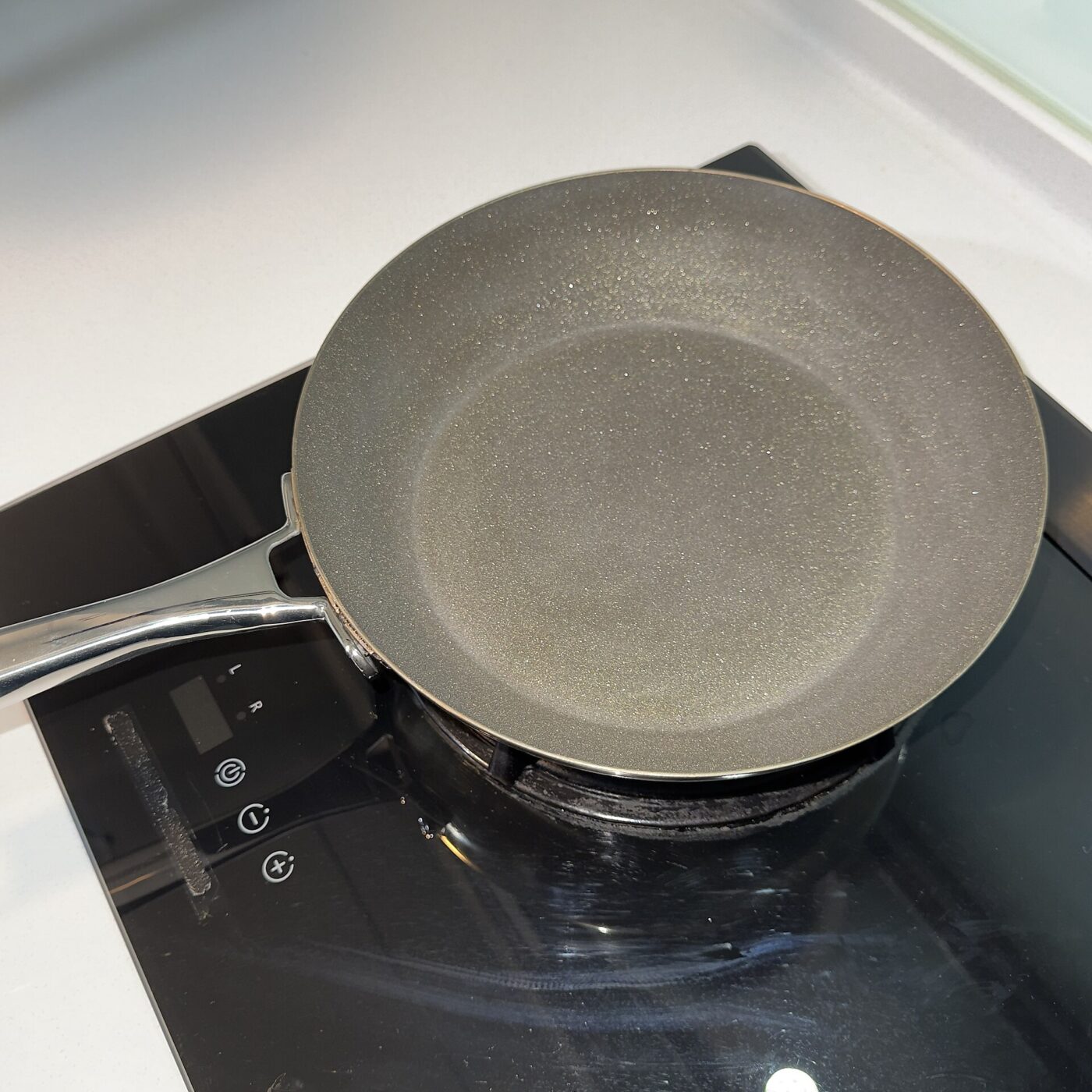
Overheated nonstick cookware is the classic source, and Merck’s manual lists the household items that carry the same risk: irons and ironing board covers, some self-cleaning oven cycles, heating elements in some reverse-cycle heating and cooling units, and some heat lamps. Texas A&M’s diagnostic lab adds light bulbs and ovens generally, since the coating shows up anywhere a manufacturer wanted a slick, heat-tolerant surface.
Our guide to how long a nonstick pan actually lasts covers the wear pattern and the PTFE warning printed on the pan itself. This is a narrower question: which of those same coated surfaces sit in a home with a bird, and how each one gets hot enough to matter.
A pan boiled dry on a back burner is the scenario every source mentions first, because it is the easiest way to blow past 536°F without anyone watching the stove. An iron left face-down on its base, or a self-cleaning oven running its highest-heat cycle with a bird anywhere in the house, can do the same thing with no cooking involved at all.
Beyond Teflon: aerosols, smoke and cleaning products birds can’t escape
PTFE is not the only airborne risk. The ASPCA’s poison-control guidance says to get veterinary advice before using cleaning products around birds, because they are “extremely sensitive to the fumes.” That caution applies to a routine countertop spray as much as to an oven cleaner.
The Oregon Veterinary Medical Association lists specific sources beyond cleaning sprays: aerosol products such as hairspray, perfume and air fresheners, and “tobacco or other forms of smoke.” None of these need to touch a bird to cause harm — airborne exposure in the same room is enough.
Merck’s manual rounds out the list with items easy to overlook because they seem harmless: votive candles, carpet fresheners, perfumes and deodorizers, alongside secondhand tobacco smoke as a cause of chronic respiratory disease in pet birds.
A bird’s vulnerability is not limited to Teflon. Anything aerosolized, burned or breathed as smoke belongs on the same watch list.
Where a bird’s cage is safest in the house
None of the sources above name one universally safe room, but the pattern in what they do say points the same direction. Cornell’s point about poor ventilation, combined with Merck’s list of PTFE sources clustering in the kitchen, laundry area and anywhere a heat lamp runs, argues for keeping a cage out of the kitchen entirely and away from an iron or a self-cleaning oven’s cycle.
Open floor plans complicate this. A cage in an adjoining living room is not automatically clear of kitchen fumes if air moves freely between the two spaces, which is one more reason to run a range hood or open a window whenever a pan goes on high heat, whatever room the cage is in.
Signs of exposure and emergency steps
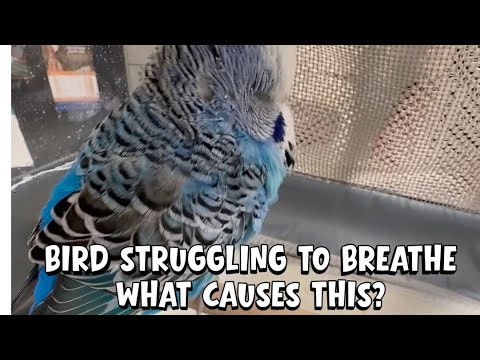
Merck’s manual is direct about the odds: often, the only clinical sign of PTFE gas poisoning is acute death, with no earlier symptoms to catch. When signs do appear, larger birds may show agitation, rapid or labored breathing, wheezing, incoordination, weakness, seizures or coma before collapsing.
Treatment happens in a veterinary hospital, not at home. Merck describes supportive care — a warm, oxygenated incubator, fluids, anti-inflammatory medication, antimicrobials and diuretics — which means the only thing an owner controls in the moment is how fast the bird reaches that care.
If a pan, iron or oven has overheated with a bird in the house, turn off the heat source, open windows, move the bird to fresh air immediately and call an avian veterinarian or emergency animal hospital right away. Given how fast and how quietly this toxicosis can progress, don’t wait for symptoms to confirm the exposure before calling.
PTFE poisoning is treated in a hospital, not at home. The only variable an owner controls is how quickly the bird gets fresh air and gets there.
The shortlist
Paid links: we earn a commission if you buy through the buttons below, at no extra cost to you. As an Amazon Associate I earn from qualifying purchases.
Compared on cooking without a PTFE coating
| Product type | Best for | Risk estimate | Where to buy |
|---|---|---|---|
| Tri-Ply Stainless Steel Skillet | A pan with nothing to overheat | 20/100 | See listings on AmazonOpens Amazon search results, not one listing: check the model on the product page. |
| Air Fryer With a Stainless Steel Basket | An air fryer with no coated basket | 25/100 | See listings on AmazonOpens Amazon search results, not one listing: check the model on the product page. |
| Ceramic-Coated Frying Pan (PTFE-Free) | A ceramic-coated backup pan | 35/100 | See listings on AmazonOpens Amazon search results, not one listing: check the model on the product page. |
Risk estimate is our editorial Fear Index for the product type (lower is safer), not a customer rating. How it is scored.
Tri-Ply Stainless Steel Skillet
A bare stainless pan removes the specific failure mode this article is about: there is no coating left to overheat in the first place.
- Nothing to off-gas past 536°F
- Oven- and broiler-safe
- Lasts past a coating’s wear cycle
- Needs more oil to prevent sticking
- Heavier than a coated pan
Air Fryer With a Stainless Steel Basket
An air fryer’s basket is the part most likely to run hot and unattended, so a steel basket removes the one component with a coating to worry about.
- Stainless basket carries no PTFE coating
- Typically dishwasher-safe
- Same footprint as coated models
- Costs more than a coated basket model
- Sticking needs a light oil coat
More: Pets analyses and how the Fear Index is scored.
Sources
- Toxicoses of Pet Birds — Merck Veterinary Manual
- Polytetrafluoroethylene (PTFE, Teflon) Toxicosis in Ducks — Cornell University College of Veterinary Medicine
- Polytetrafluoroethylene Toxicosis (Teflon Toxicity) — Texas A&M Veterinary Medical Diagnostic Laboratory
- Poisonous Household Products — ASPCA
- Keep Pet Birds Safe from Common Household Toxins — Oregon Veterinary Medical Association
Questions people actually ask
At what temperature does nonstick cookware become dangerous for birds?
Merck’s veterinary manual puts the threshold at roughly 280°C (536°F), a point an empty or nearly empty pan on high heat can reach within minutes.
What are the signs of PTFE poisoning in a bird?
Often there are none before sudden death, per Merck. When signs appear, larger birds may show agitation, rapid or labored breathing, wheezing, incoordination, weakness or seizures.
Can an air fryer hurt a pet bird?
Yes, if its basket or heating element uses a PTFE coating and runs hot enough to degrade it. A stainless-steel basket model removes that specific risk.
Where should a bird’s cage be in the house?
Not in the kitchen, and away from an iron, a self-cleaning oven cycle or a heat lamp. Cornell notes the danger is worse in poorly ventilated rooms, so airflow matters wherever the cage is.
What should I do if my bird may have breathed PTFE fumes?
Turn off the heat source, open windows, move the bird to fresh air immediately and call an avian veterinarian or emergency animal hospital right away rather than waiting for symptoms.