
Indestructible Is a Marketing Word. Ask What Happens When It Fails.
No toy survives a determined chewer forever. The safety question is whether it fails into large pieces or small swallowable ones.

“Indestructible” is not a regulated claim, and no dog toy is. Given time and motivation, a determined chewer gets through everything sold.
That makes durability the wrong thing to shop on. What matters is how the toy behaves in the minutes after it finally gives way, because that is when a toy becomes either rubbish or an obstruction — and the two outcomes look almost identical right up until they do not.
Fear Index · Think twice
The claim is about durability; the risk is about geometry
A toy that lasts three months and then sheds swallowable fragments is more dangerous than one that lasts three weeks and splits in half.
The failure mode, not the failure
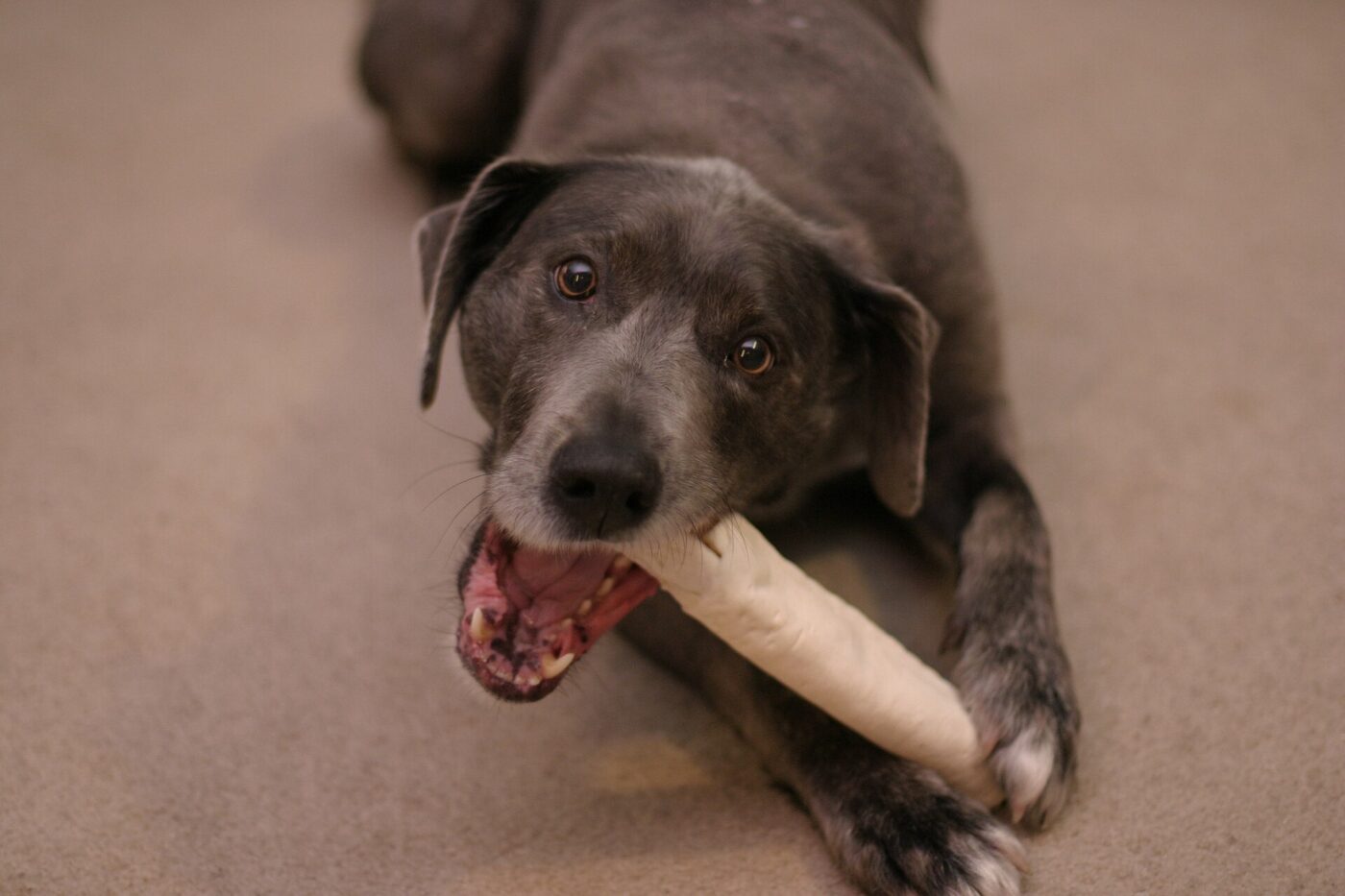
Materials fail in characteristic ways, and those ways matter far more than how long they held out.
| Material | Typical failure | Risk |
|---|---|---|
| Natural rubber | Splits into large pieces | Low — obvious and hard to swallow |
| Rope | Sheds strands | High — strands can cause linear obstruction |
| Hard nylon | Shears small shards | Moderate to high, plus tooth fracture |
| Plush with squeaker | Opens; squeaker and stuffing exposed | High if unsupervised |
| Tennis balls | Abrasive felt wears teeth; can compress and lodge in the throat | Moderate |
Rope toys are the most consistently underestimated hazard here, precisely because they look soft. Swallowed strands can gather in the intestine and cause a linear foreign body, which is a surgical emergency rather than a passing upset.
Sizing is a safety spec

A toy needs to be too large to pass behind the molars and lodge across the back of the mouth or throat. Manufacturers size by weight band, and weight bands are a crude proxy for jaw size — a lean, big-jawed dog and a stocky, small-jawed one at the same weight need different toy sizes.
When in doubt, go one size up. An oversized toy is mildly less fun; an undersized one is the failure mode that actually hurts dogs.
- The thumbnail test for hardness. Press a thumbnail into the surface. If it does not dent at all, it is hard enough to fracture a tooth.
- Replace at the first tear, not once it is fully destroyed.
- Supervise plush and rope, always. They are interactive toys rather than leave-alone ones.
- Wash rubber toys, which grow biofilm in their crevices.
Chewing is a need, not a vice

Destructive chewing is frequently an under-stimulation problem wearing a hardware costume. A dog that has had a proper walk and some work to do chews less, and buying tougher toys treats the symptom rather than the cause behind it.
Food-dispensing toys work on both fronts: they last longer because the dog is working at a puzzle rather than attacking an object, and they occupy the animal mentally, which is the actual need.
The VOHC Seal answers a different question
Chews sold specifically as dental products — for tartar control, not just entertainment — are their own category. The Veterinary Oral Health Council reviews the evidence a manufacturer submits and awards a seal to products shown to reduce plaque or tartar buildup; veterinary dental guidelines point owners toward that seal rather than trusting the packaging claims alone.
The seal says nothing about swallow risk or hardness. A VOHC-accepted chew can still be too hard for the thumbnail test above, or too small for a large dog’s mouth, so it answers “does this help the teeth” without answering “is this safe to chew” — the two questions need separate answers, not one label standing in for both.
Treat the VOHC Seal as a filter on dental-claim marketing, not a substitute for the size and hardness checks above that actually decide whether a given chew is safe for your dog at all.
The shortlist
Paid links: we earn a commission if you buy through the buttons below, at no extra cost to you. As an Amazon Associate I earn from qualifying purchases.
Compared on how they fail
| Product type | Best for | Risk estimate | Where to buy |
|---|---|---|---|
| Natural Rubber Chew Toy (Tough) | Determined chewers | 26/100 | See listings on AmazonOpens Amazon search results, not one listing: check the model on the product page. |
| Treat-Dispensing Puzzle Toy | Puzzle and slow feeding | 22/100 | See listings on AmazonOpens Amazon search results, not one listing: check the model on the product page. |
| Snuffle Mat | Supervised sniffing, not for chewers | 18/100 | See listings on AmazonOpens Amazon search results, not one listing: check the model on the product page. |
Risk estimate is our editorial Fear Index for the product type (lower is safer), not a customer rating. How it is scored.
Natural Rubber Chew Toy (Tough)
The most sensible default for a strong chewer, and a reasonable place to start for most households. When it starts to go, it usually tears into larger pieces that are easier to spot — take it away as soon as chunks come off.
- Splits into large, obvious pieces
- Takes a stuffing of food to extend interest
- Dishwasher-safe in most cases
- Not indestructible, whatever the label says
- Heavy enough to hurt if thrown indoors
Treat-Dispensing Puzzle Toy
Much destructive chewing is boredom. This addresses that directly, and takes the pressure off the toys.
- Mental work rather than destruction
- Slows down fast eaters
- Lasts far longer than a plain chew
- Needs washing
- Can be noisy on hard floors
More: Pets analyses and how the Fear Index is scored.
Questions people actually ask
Are any dog toys really indestructible?
No. The term is unregulated and every toy fails eventually. What matters is whether it fails into large pieces or small swallowable ones.
Are rope toys safe for dogs?
Only under supervision. Swallowed strands can gather into a linear foreign body in the intestine, which usually requires surgery. Discard them at the first sign of shedding, and call your vet right away if you think your dog has swallowed strands or a piece of toy — do not wait to see if it passes.
How hard is too hard for a dog chew?
If you cannot dent the surface with a thumbnail, it is hard enough to fracture a tooth. That rules out many nylon chews and most antlers.
What size chew toy should I buy?
Large enough that it cannot pass behind the back teeth. Size up rather than down — an oversized toy is less fun, an undersized one is a choking risk.