
Steam Mops Clean Tile Well and Damage Wood Floor Finishes Over Time
Wood flooring makers and the NWFA warn against steam on wood floors. Where steam mops work, how they damage finish and core, and what to use on wood instead.

Part of the guide: Home and Kitchen Buying Mistakes: What Fails and How to Check Before You Buy
Steam mops are appealing because they clean with nothing but hot water. On glazed tile they do that job well, and the same mop is often marketed for every hard floor in the house.
Wood and wood-based floors are the exception. Heat and moisture are exactly what their finishes and cores are built to keep out, and the damage appears slowly enough that owners rarely connect it to the mop.
Fear Index · Think twice
Slow damage the care guide warned about
Steam damage builds gradually, so owners keep steaming until hazy finish, swollen seams or raised board edges appear, long after the mop’s return window.
What steam does to a wood floor

Wood absorbs moisture and swells, then shrinks as it dries. A floor finish slows that exchange, but it is a thin film, and the seams between boards are open paths into the wood. A steam mop drives hot water vapor at the surface and into those seams and any fine scratches in the finish, repeatedly, every time the floor is cleaned.
The National Wood Flooring Association’s maintenance guidance is direct: do not use wet mops or steam mops, which will damage the finish and the wood over long periods of time. Hartco, a hardwood flooring brand, puts it as bluntly in its care advice: do not use water or steam on hardwood floors.
Because the damage is cumulative, it can show up months later as a cloudy or hazy finish, dull patches along traffic paths, darkened seams, or board edges that rise as the wood swells.
Identify your floor before steaming anything: a finish that looks fine after a month can still fail later.
Engineered hardwood and laminate are not waterproof
Engineered hardwood has a real wood veneer over a plywood or fiberboard core. Bruce’s guidance says steam cleaning engineered hardwood is not advisable because steam can introduce excess moisture into the wood, causing warping and damage. It also reminds owners that most engineered hardwoods are water-resistant, not waterproof.
Laminate uses a printed image layer over a wood-fiber core. The surface resists spills, but the core swells when water reaches it through the joints, and swollen edges do not shrink back flat. Pergo’s laminate care guidance warns against using too much water when mopping because it could damage the floor. Unless your laminate’s care guide explicitly approves steam, assume it does not.
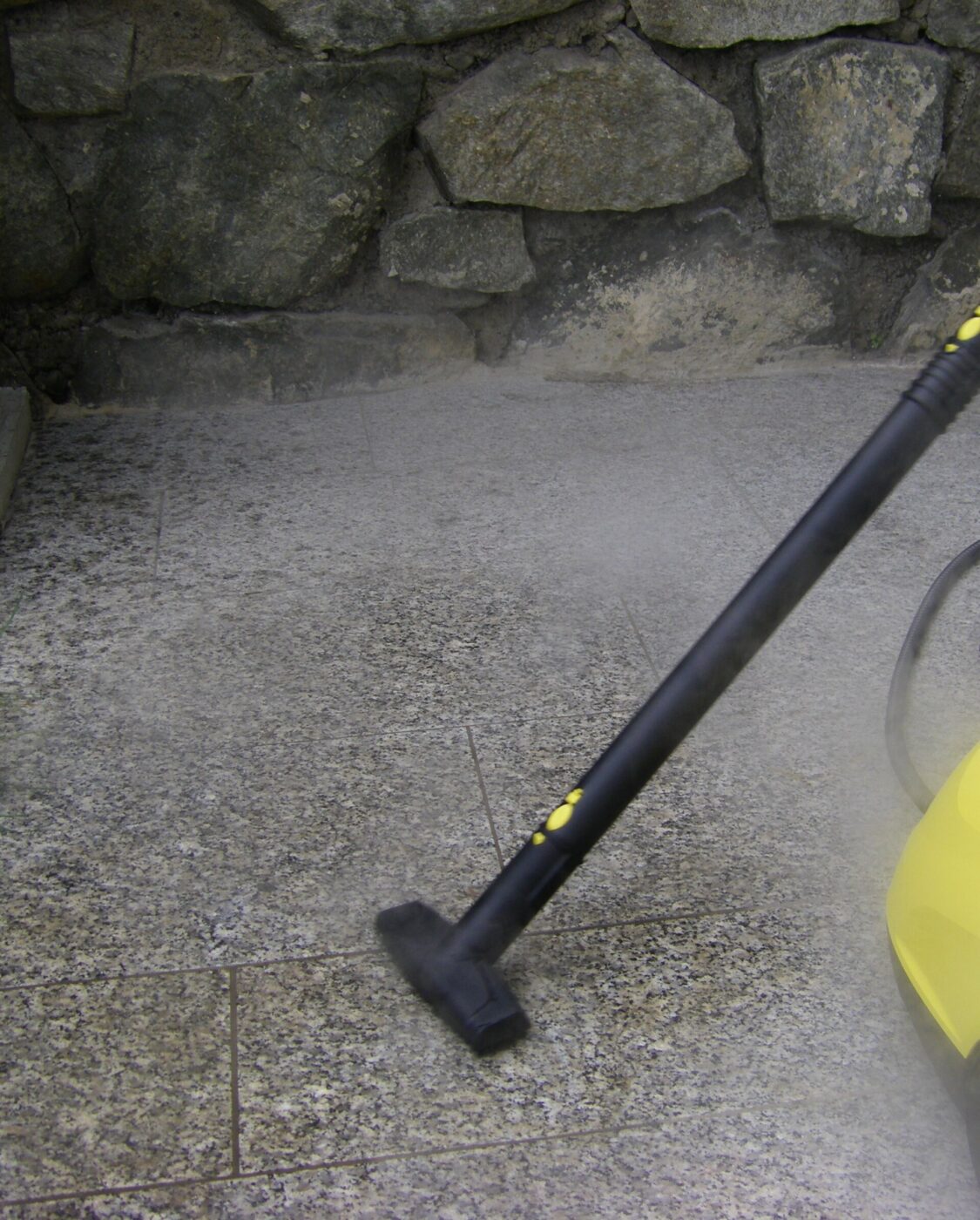
Vinyl and tile guidance varies by product. Glazed ceramic and porcelain tile tolerate steam well, which is where steam mops shine. For luxury vinyl, follow the specific maker’s instructions rather than the mop’s box.
| Floor | Steam risk | Safer routine |
|---|---|---|
| Solid hardwood | High: finish and wood damage over time | Dust mop plus a cleaner made for the finish |
| Engineered hardwood | High: moisture can warp veneer and core | Microfiber mop or soft broom |
| Laminate | High unless the care guide approves steam | Microfiber mop, minimal water |
| Luxury vinyl | Varies by product | Follow the vinyl maker’s guide |
| Glazed ceramic or porcelain tile | Low | Steam mop works well |
Warranty and finish problems
Flooring warranties generally cover manufacturing defects and wear under normal care, not damage caused by maintenance the care guide warns against. When the care instructions say no steam, a claim for a steam-damaged floor starts from a weak position.
Repair options depend on the floor. Solid hardwood can usually be sanded and refinished. Engineered hardwood can be refinished only as far as its veneer allows. Laminate cannot be refinished at all, so swollen planks have to be replaced, which is difficult if the product has been discontinued.
Before buying any mop, identify the floor. Receipts, leftover boxes or the installer can give you the brand and product line, and most makers publish care guides online.
- Find the flooring brand and product line from receipts, spare boxes or the installer.
- Read the care guide for steam, wet mopping and approved cleaners.
- Check the warranty exclusions for maintenance-related damage.
- Test any new cleaner in a closet or other hidden spot first.
- Assume no steam when you cannot identify the floor.
What to use instead
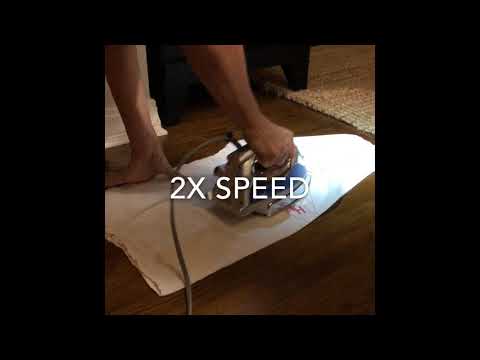
The NWFA recommends routine cleaning by sweeping, dust mopping or vacuuming on the bare floor setting, wiping spills promptly with a dry or slightly damp cloth, and using a cleaner made specifically for the finish on the floor. Bruce names a microfiber mop or soft-bristle broom as the best tools for engineered hardwood.
Be careful with household substitutes. Hartco’s care advice lists ammonia-based or wax-based cleaners, detergents, bleach, polishes, oil soaps, abrasive cleaning soaps and acidic substances such as vinegar among the products to avoid on hardwood.
None of this makes the steam mop useless. Keep it for glazed tile, sealed stone where the maker allows it, and grout lines, and use a separate microfiber spray mop for wood and laminate.
Keep the steam mop for tile, and clean wood and laminate with a microfiber mop and a cleaner made for that floor’s finish.
The shortlist
Paid links: we earn a commission if you buy through the buttons below, at no extra cost to you. As an Amazon Associate I earn from qualifying purchases.
Compared on floor safety
| Product type | Best for | Risk estimate | Where to buy |
|---|---|---|---|
| Microfiber Spray Mop for Wood Floors | Wood and laminate cleaning | 14/100 | See listings on Amazon |
| Steam Mop for Tile | Sealed tile only | 48/100 | See listings on Amazon |
| pH-Neutral Hardwood Floor Cleaner | Finish-safe cleaner | 12/100 | See listings on Amazon |
Risk estimate is our editorial Fear Index for the product type (lower is safer), not a customer rating. How it is scored. The buttons open Amazon search results rather than one listing, so check the model on the product page.
Microfiber Spray Mop for Wood Floors
The routine flooring makers describe. Use a cleaner approved for your floor’s finish.
- Controlled, light moisture
- Washable microfiber pads
- Works with finish-specific cleaners
- Does not sanitize like steam
- Pads need regular washing
Steam Mop for Tile
Excellent on glazed tile. Keep it away from wood and from laminate whose care guide does not approve steam.
- Cleans tile with water alone
- Good on grout lines
- No chemical residue
- Damages wood finishes over time
- Laminate only if the care guide allows