
The Blade Does the Cutting. The Saw Just Turns It.
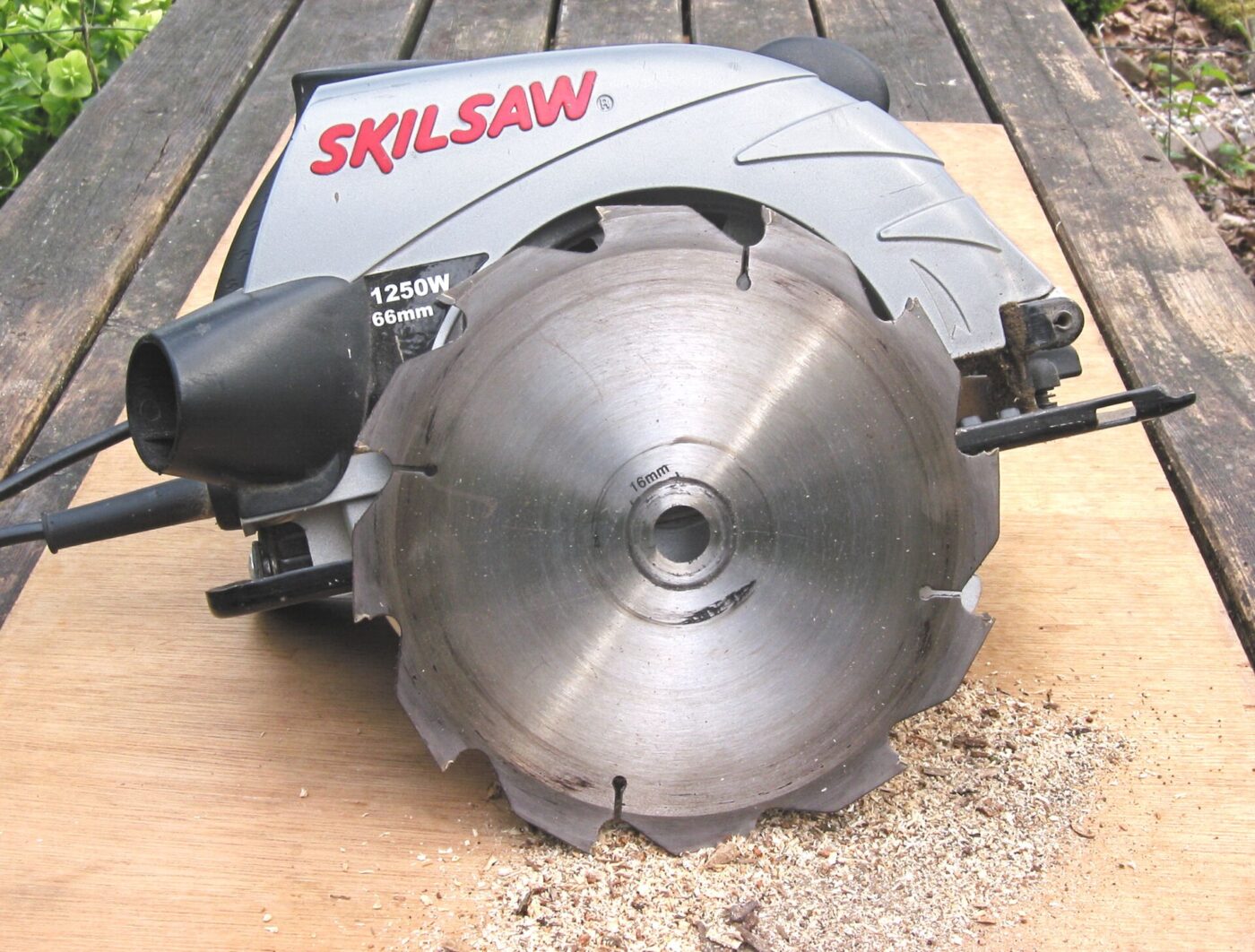
A better blade improves a cut far more than a better saw does. Fewer teeth rip along the grain fast; more teeth crosscut it cleanly.

Part of the guide: Tools and DIY Buying Mistakes: What Fails and How to Check Before You Buy
People upgrade circular saws hoping for better cuts. The motor does affect how the saw handles thick hardwood, and it has very little to do with the quality of the cut edge.
That is the blade — how many teeth, what shape they are ground to, and how sharp they still are.
Fear Index · Think twice
The upgrade goes into the motor, not the cut
A dull or wrong blade is not just a finish problem: a blade fighting the material binds and kicks back more readily.
Tooth count is about grain direction
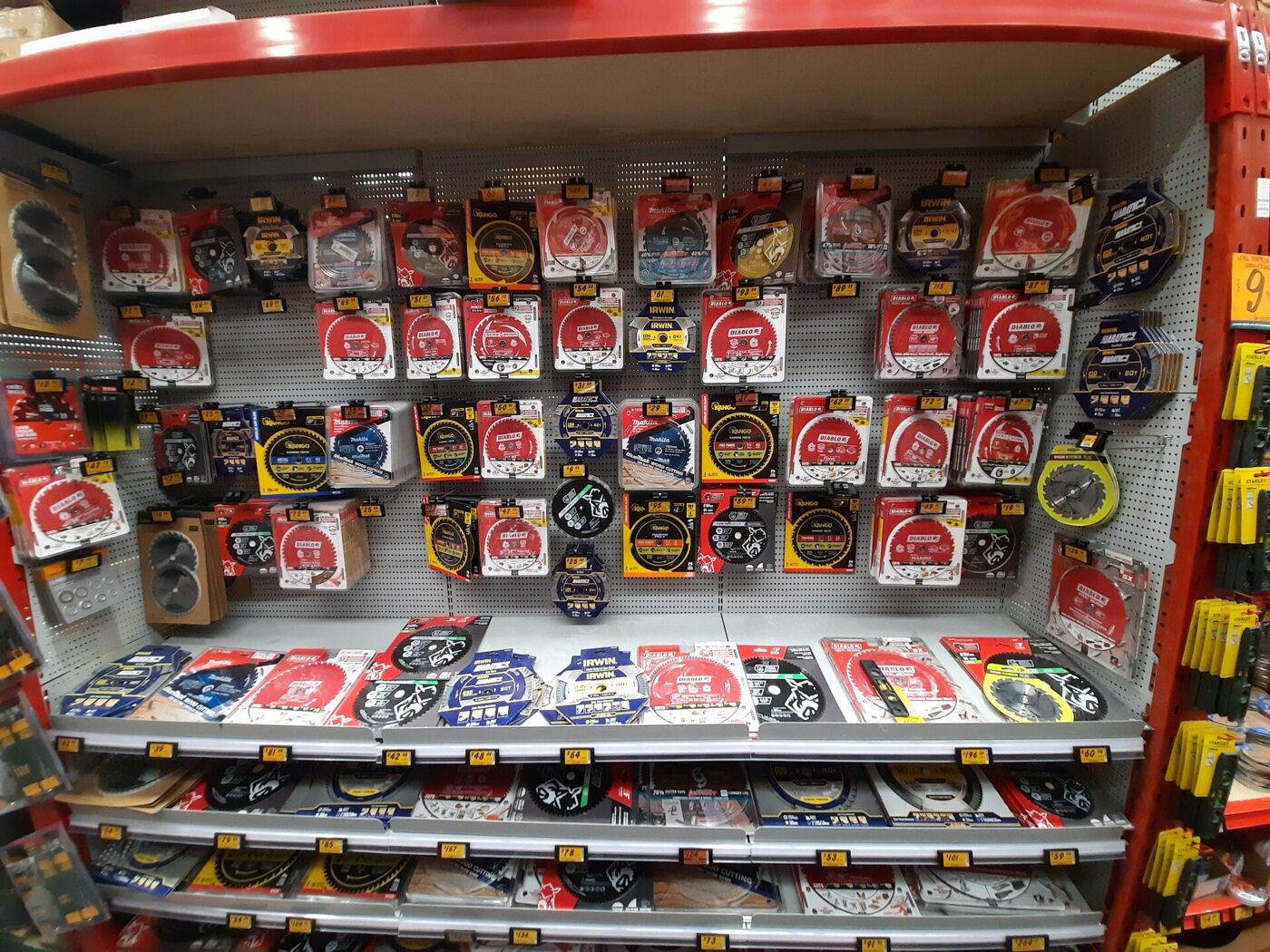
Cutting along the grain — ripping — removes long fibers, and the gullets between teeth need to be large enough to clear that waste. Fewer, bigger teeth with deep gullets do this.
Cutting across the grain severs fibers, and the risk is tearing them out at the exit face. More teeth take smaller bites and support the fibers, which is why crosscut and plywood blades have high counts.
| Teeth (7¼”) | Use | Cut quality |
|---|---|---|
| 16–24 | Ripping, framing | Fast, rough |
| 40 | General purpose | Good compromise |
| 60 | Crosscut, plywood | Clean, slower |
| 80+ | Laminate, melamine | Very clean, slow, prone to burning |
Tooth grind matters as much as count. ATB (alternate top bevel) teeth act like knives and give clean crosscuts; FTG (flat top grind) teeth act like chisels and rip fast.
Kerf, and why thin is not always better

Kerf is the width of material the blade removes. A thin-kerf blade removes less, which means less work for the motor — genuinely useful on a cordless saw where battery life matters.
Thin blades also flex more. In thick hardwood a thin-kerf blade can deflect and wander, producing a cut that is not square. For a corded saw on thick stock, a full-kerf blade tracks straighter.
Match the blade to the saw: thin kerf on cordless and underpowered saws, full kerf on corded saws cutting thick material. Whatever the kerf, the blade’s diameter and arbor hole must match the saw, and its maximum RPM rating must be higher than the saw’s no-load speed.
Getting a clean edge on sheet goods
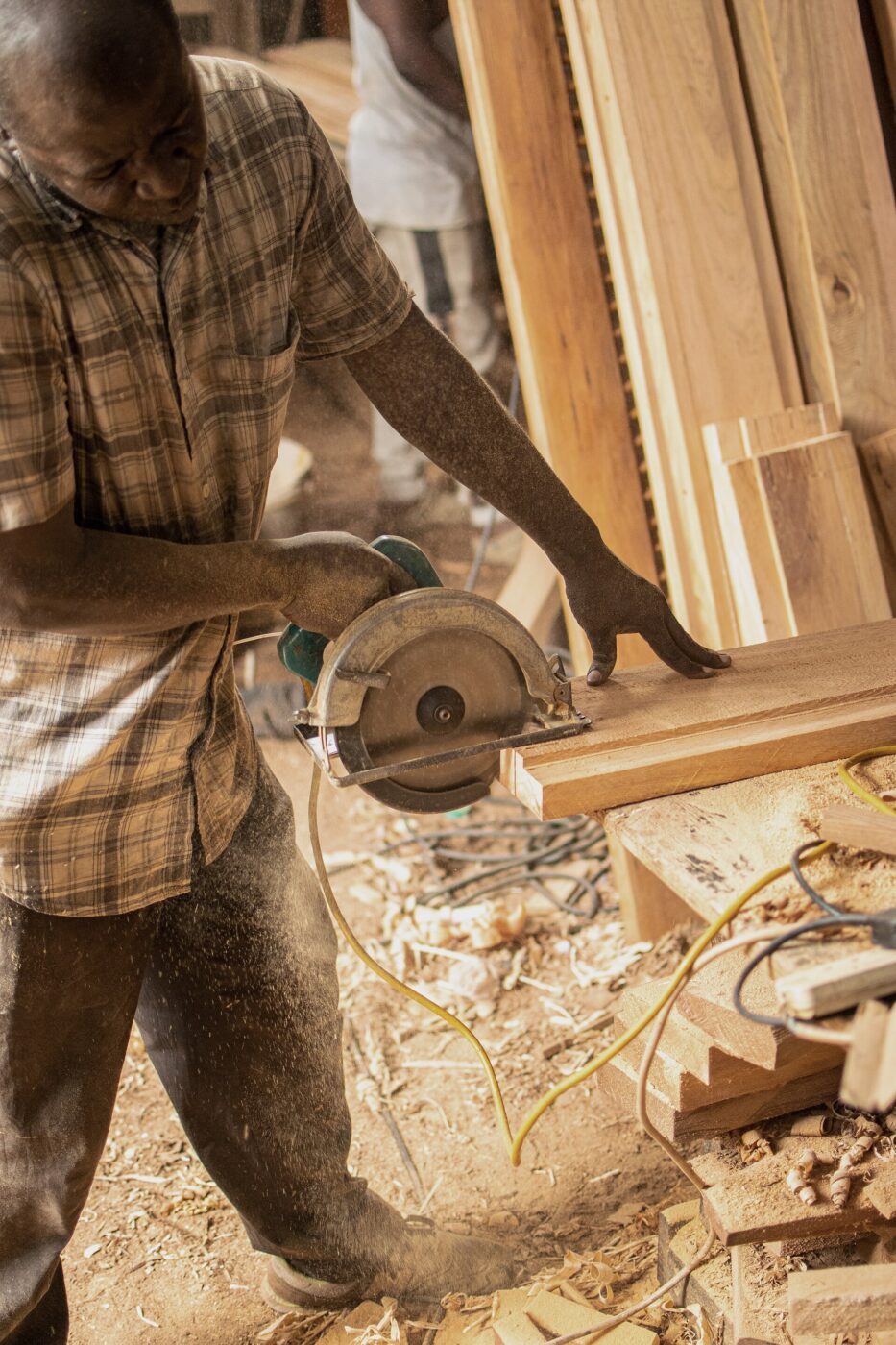
Plywood and melamine tear out on the face where teeth exit, which on a circular saw is the upward-facing side.
- Cut with the good face down. The teeth enter from below.
- Score the line first with a knife, cutting the surface fibers before the blade reaches them.
- Use a guide rail or a clamped straight edge. Freehand cuts wander and burn.
- Set blade depth to about 1/4 inch (5 mm) below the stock. Deeper means more teeth engaged and more tear-out, and it is less safe.
- Support the panel on both sides, close to the cut line, so neither side sags and pinches the blade — support only at the far ends lets the cut close up and bind.
Sharpening, storage and when to replace
Carbide-tipped blades can be professionally sharpened several times before the tips are ground away, and it is usually cheaper than a new blade for anything above entry level. A local saw or tool shop typically turns one around in a few days.
Surface rust on the plate does not affect the cut; pitting or chipping on the teeth does. Wipe blades dry after use and store them separated — hanging or in individual sleeves — so the teeth cannot knock against each other in a drawer.
A blade is worn out when it burns consistently at a feed rate that used to cut clean, or when the tooth edges catch the light as rounded rather than sharp. Both are cheaper problems solved by a new or resharpened blade than by fighting a dull one.
The shortlist
Paid links: we earn a commission if you buy through the buttons below, at no extra cost to you. As an Amazon Associate I earn from qualifying purchases.
Compared on the cut they produce
| Product type | Best for | Risk estimate | Where to buy |
|---|---|---|---|
| 60-Tooth Fine Crosscut Blade | Sheet goods and finish | 16/100 | See listings on AmazonOpens Amazon search results, not one listing: check the model on the product page. |
| 24-Tooth Framing Blade | Fast framing cuts | 14/100 | See listings on AmazonOpens Amazon search results, not one listing: check the model on the product page. |
| Circular Saw Guide Rail | Straight panel cuts | 20/100 | See listings on AmazonOpens Amazon search results, not one listing: check the model on the product page. |
Risk estimate is our editorial Fear Index for the product type (lower is safer), not a customer rating. How it is scored.
60-Tooth Fine Crosscut Blade
If you cut sheet goods, this is the single purchase that changes the result. Keep a 24-tooth blade for rough work.
- Clean edges in plywood and melamine
- ATB grind severs fibers rather than tearing
- Transforms a cheap saw
- Slower than a rip blade
- Burns if fed too slowly in hardwood
Circular Saw Guide Rail
A guide rail plus a good blade gets a handheld saw close to table-saw accuracy on sheet material, for far less money and space.
- Dead straight cuts without a table saw
- Anti-splinter strip on better rails
- Makes long panel cuts repeatable
- Storage length
- Needs the matching baseplate on some saws
More: Tools & DIY analyses and how the Fear Index is scored.
Questions people actually ask
How many teeth should a circular saw blade have?
Around 24 for ripping and framing, 40 for general use, and 60 or more for crosscuts, plywood and laminate. Fewer teeth cut faster and rougher.
What is the difference between rip and crosscut blades?
Rip blades have fewer, larger teeth with deep gullets to clear long fibers cut along the grain. Crosscut blades have more teeth that take smaller bites and sever fibers cleanly across the grain.
How do I stop plywood tearing out?
Cut with the good face down, score the cut line with a knife first, use a guide rail, and set blade depth to about 1/4 inch (5 mm) below the workpiece.
Is a thin-kerf blade better?
On cordless and underpowered saws, yes — less material removed means less work. On a corded saw cutting thick hardwood, thin blades flex and wander.