
A Power Strip Adds Outlets; Only a Listed Surge Protector Blocks a Power Surge
A plain power strip only adds outlets. A surge protector must be listed to UL 1449 to clamp a surge. What joules mean, and why not to chain two together.

Part of the guide: Tools and DIY Buying Mistakes: What Fails and How to Check Before You Buy
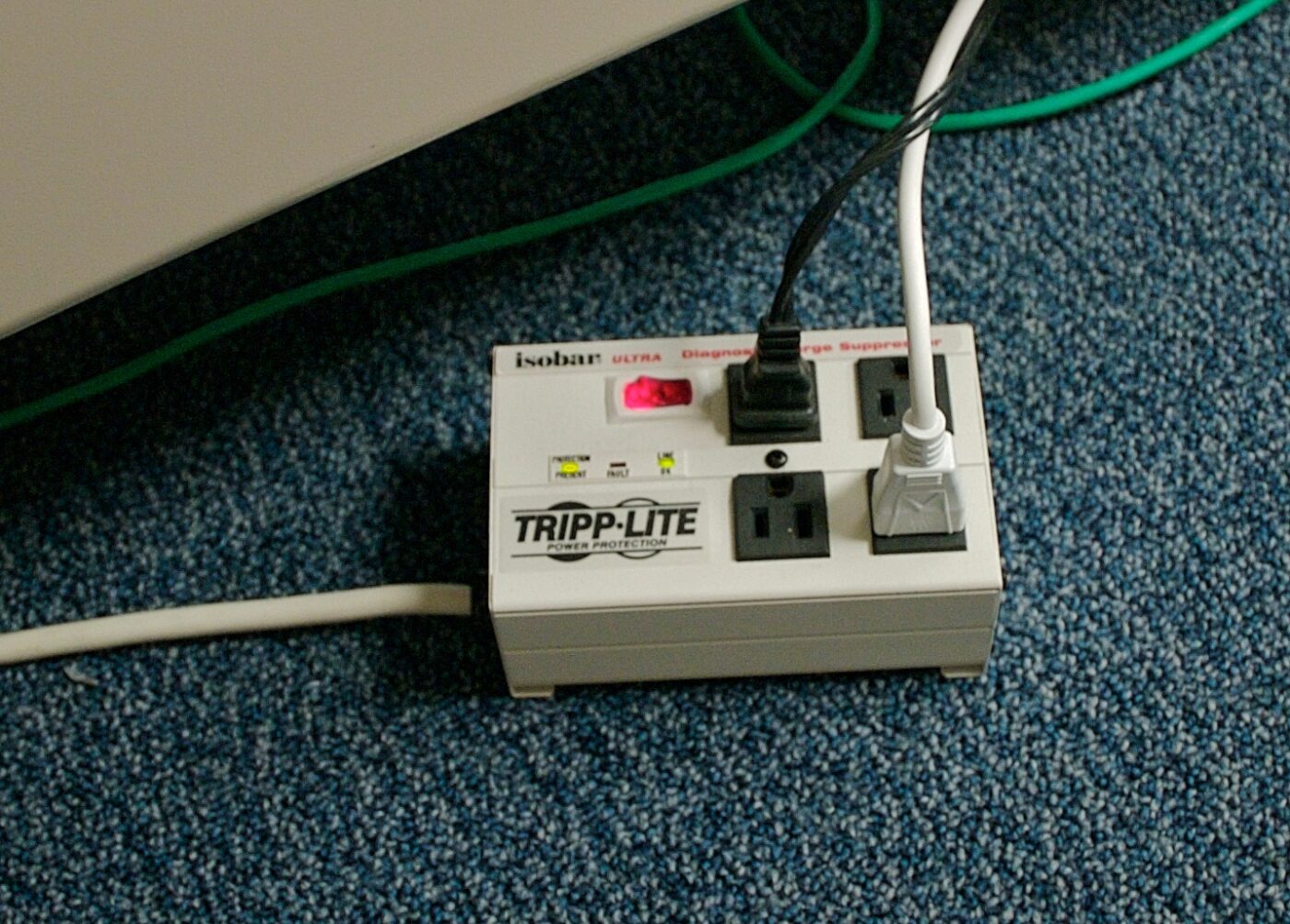
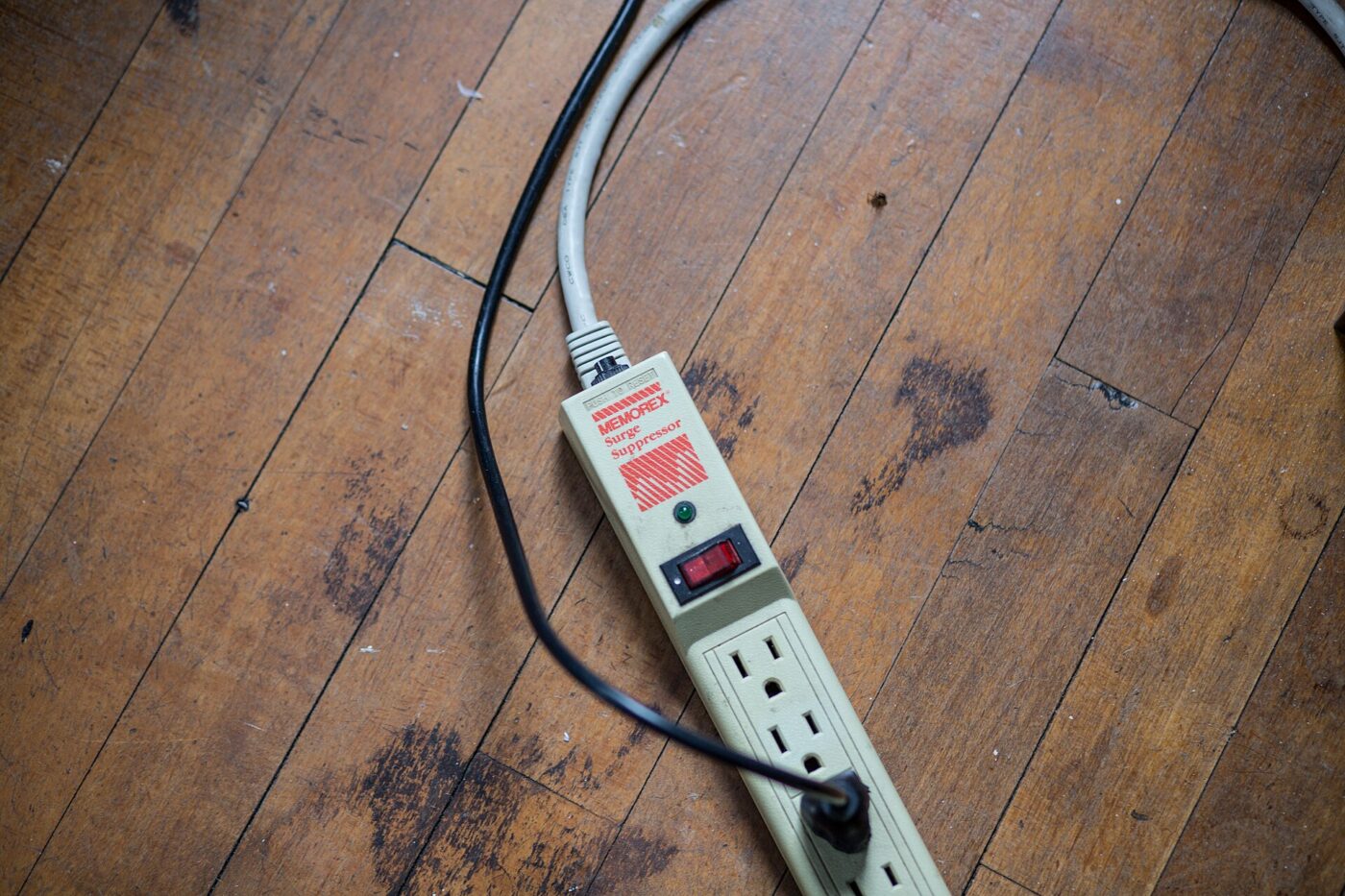
Every power strip looks roughly the same: a plastic body, a row of outlets, a cord to the wall. Some are simply that, an extension of the outlet. Others are built and separately tested to interrupt a voltage spike before it reaches whatever is plugged in. Nothing about the outside tells the difference.
The label does. A surge protective device carries a listing under UL 1449, the standard written for that specific job; a basic power strip usually carries a listing for adding outlets and nothing more. Reading that difference, and a few habits around how any strip gets used, matters more than the joule number printed on the box.
Fear Index · Think twice
Extra outlets mistaken for surge protection
CPSC says electrical fires from wiring and lighting are the third leading cause of residential fires, and that cords and plugs cause many of them. OSHA’s own workplace rule also bans plugging one power strip into another.
A power strip and a surge protector are not the same product

A relocatable power tap, the name UL uses for a power strip, is a multiple-outlet extension of a branch circuit, listed under UL 1363, per OSHA. A plain power tap is not built or tested to absorb a voltage spike. A surge protective device is a separate, more specific product category listed under UL 1449; OSHA notes that surge suppressors built into power strips are dual-listed to UL 1449 and UL 1363.
That distinction is easy to lose in a store, where both products look identical and sit on the same shelf. The reliable way to tell them apart is the listing printed on the packaging or the unit itself: a surge protective device says so and carries a UL 1449 listing, and NEMA’s surge group notes that UL requires certain markings on any listed SPD and points buyers to its Voltage Protection Rating. A plain power strip’s listing will not mention surge protection at all.
Uninterruptible power supplies, or UPS units, add a third category: battery backup that keeps sensitive equipment running through a brief outage, often alongside their own surge protection. A UPS is not a substitute for a wall-mounted surge protector on things that do not need battery backup, such as a lamp, but it is the right layer for a computer or a modem.
Why joule numbers alone do not tell the whole story
A joule rating is, in NIST’s words, a simplified measure of the surge energy a protector can dissipate without damage to itself. NEMA’s surge group agrees that a larger energy rating is better in concept, but the comparison is less reliable than it looks.
NEMA’s Surge Protection Institute puts it directly: comparing SPD energy, or joule, ratings can be misleading, because those ratings can be manipulated, and neither UL nor IEEE recommends comparing joule numbers between products as a way to judge protection quality. The Institute points instead to a device’s Voltage Protection Rating, a value set under the current revision of UL 1449 that reflects how much voltage a device lets through during a standardized surge test.
None of that makes the joule number meaningless, although NEMA’s group notes that more reputable manufacturers no longer publish energy ratings at all. It does mean that confirming the UL 1449 listing itself, not chasing the biggest joule figure on the shelf, is the fact worth checking before checkout.
Daisy-chaining and overloaded strips
Plugging one power strip into another, or a surge protector into a power strip, is common and against the rules those products were listed under. OSHA’s own interpretation letter on relocatable power taps states that a listed power tap is meant to connect directly to a permanent branch-circuit receptacle, not to another relocatable power tap or an extension cord.
The regulation behind that letter, 29 CFR 1910.303(b)(2) for general industry, requires listed electrical equipment to be used according to its own listing instructions; a power strip’s listing does not cover being fed by another power strip. That is a workplace rule. The same OSHA letter adds that power strips are designed for low-powered loads such as computers and audio and video gear, not high loads such as space heaters, refrigerators and microwave ovens, which can easily exceed a strip’s ampere rating; those limits are the same at home.
CPSC’s fire-safety guidance comes at the same problem from another angle. It says most home electrical fires start with installed wiring, but that problems with cords and plugs, including extension cords, also cause many; it advises against using any cord that is stiff, cracked or frayed, and says extension cords should never be a long-term substitute for installing more receptacles. A single surge-protected strip plugged straight into the wall, sized for what is actually plugged into it, stays within both sets of advice.
A damaged cord gets replaced, per CPSC, and a problem outlet is an electrician’s job, not a reason to add a bigger surge protector.
Sizing protection for a TV, console or home office
A single high-value item, such as a living-room TV, is well served by a dedicated surge-protected strip near the outlet it already uses; there is little reason to route it through a second device. A cluster of gear, a TV, a console, a soundbar and a streaming box sharing one entertainment center, is the more common case a wider strip is bought for, and it is also the case where an overloaded strip becomes easy to build without noticing.
A home office setup adds another wrinkle: a desktop computer and monitor benefit from the outage protection a UPS provides, while a printer, a lamp and phone chargers on the same desk do not need battery backup and are better served by a plain surge-protected strip, keeping the UPS’s limited battery capacity for what actually needs it.
Wall-mounted surge protectors with built-in USB or USB-C ports solve a narrower problem: charging phones and small devices without adding a strip to the floor or a shelf, useful in a bedroom or a small home office where a full strip is more than the space needs.
When to replace a surge protector
A surge protector does not last forever. NIST’s consumer guide to surges notes that, like most electronic components, surge protectors age and have a limited life, and that a well-designed unit can reach the end of its life early after an exceptionally high stress, such as a power-system fault that pushes line voltage too high.
The failure is not always visible. NIST explains that when the protective element fails, some designs cut power to the outlets, while others disconnect the failed element and keep the outlets live with no surge protection left, and that the indicator lights meant to show which state a unit is in are not standardized. Read the instructions to learn what the lights mean, and treat an old unit, or one whose light says its protection is spent, as due for a UL 1449-listed replacement rather than trusting it indefinitely.
A surge protector that still powers its outlets is not proof it is still protecting anything. Learn what its indicator light means, and confirm the UL 1449 listing on any replacement.
The shortlist
Paid links: we earn a commission if you buy through the buttons below, at no extra cost to you. As an Amazon Associate I earn from qualifying purchases.
Compared on protection, capacity and backup
| Product type | Best for | Risk estimate | Where to buy |
|---|---|---|---|
| Surge Protector Power Strip (UL 1449 Listed) | A protected power strip | 20/100 | See listings on Amazon |
| Wall-Outlet Surge Protector with USB-C | USB charging at the wall | 18/100 | See listings on Amazon |
| UPS Battery Backup (600 VA+) | Backup power during an outage | 25/100 | See listings on Amazon |
Risk estimate is our editorial Fear Index for the product type (lower is safer), not a customer rating. How it is scored. The buttons open Amazon search results rather than one listing, so check the model on the product page.
Surge Protector Power Strip (UL 1449 Listed)
Check the packaging for a UL 1449 listing before comparing joule numbers between models.
- Listed specifically as a surge protective device
- Multiple outlets for a media cluster
- Voltage Protection Rating to compare
- Joule number alone does not prove quality
- Still needs eventual replacement
UPS Battery Backup (600 VA+)
Reserve UPS capacity for a desktop, modem or router; route lamps and chargers through a plain surge-protected strip instead.
- Keeps a computer running through a brief outage
- Includes its own surge protection
- Sized in VA for the load it carries
- Battery capacity is limited
- Not needed for lamps and chargers
More: Tools and DIY analyses and how the Fear Index is scored.
Questions people actually ask
Does a power strip protect against power surges?
Not unless it is separately listed as a surge protective device under UL 1449. A plain power strip is listed only to add outlets safely.
How many joules does a surge protector need?
NEMA’s Surge Protection Institute cautions that comparing joule ratings between products can be misleading, since UL and IEEE do not recommend the comparison; confirming the UL 1449 listing matters more than the number.
Can you plug a surge protector into another power strip?
No. OSHA’s interpretation of relocatable power tap listings states a power strip is meant to connect directly to a permanent wall outlet, not to another power strip or an extension cord.
When should you replace a surge protector?
When its protection indicator says so, following the instructions, or when it has been in service a long time. NIST notes that some designs keep the outlets live after the protective element fails, so working outlets are not proof of protection.