
A Drill and an Impact Driver Are Not the Same Tool Twice
A drill applies steady torque through a chuck. An impact driver adds rotational hammer blows. They are complementary, not alternatives.

Part of the guide: Tools and DIY Buying Mistakes: What Fails and How to Check Before You Buy
Cordless kits pair a drill and an impact driver, and a lot of owners use the drill for everything because it looks more familiar.
The tools work in genuinely different ways, and each is poor at the other’s job.
Fear Index · Think twice
Two tools that look like variants of one
Using a drill for long screws strips heads and strains wrists; using an impact driver for drilling produces ragged holes and snapped bits.
Two different mechanisms
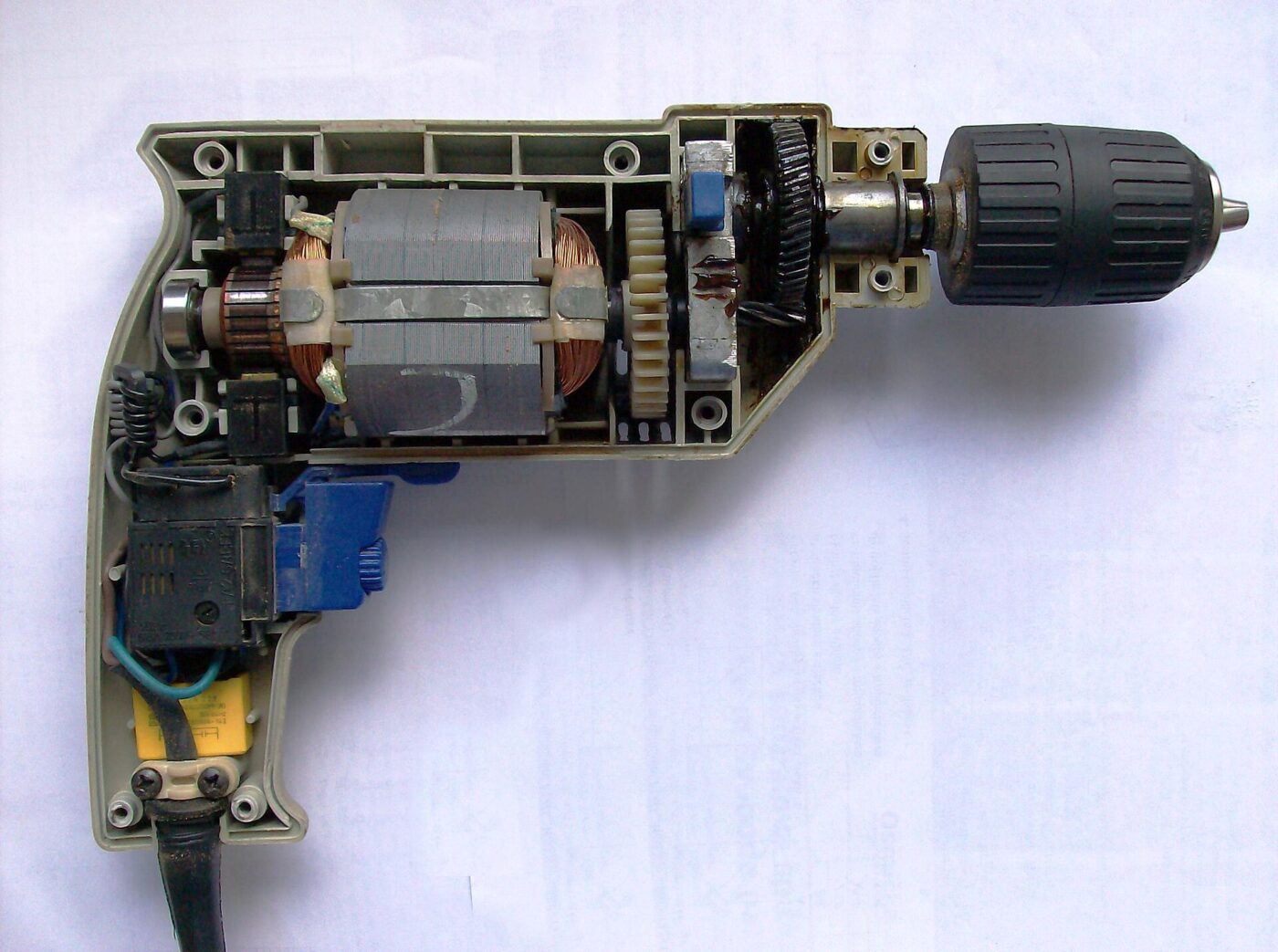
A drill applies smooth continuous rotation through a geared chuck, with an adjustable clutch that slips at a set torque. That smoothness is what a drill bit needs to cut cleanly, and the clutch is what stops you over-driving a screw into soft material.
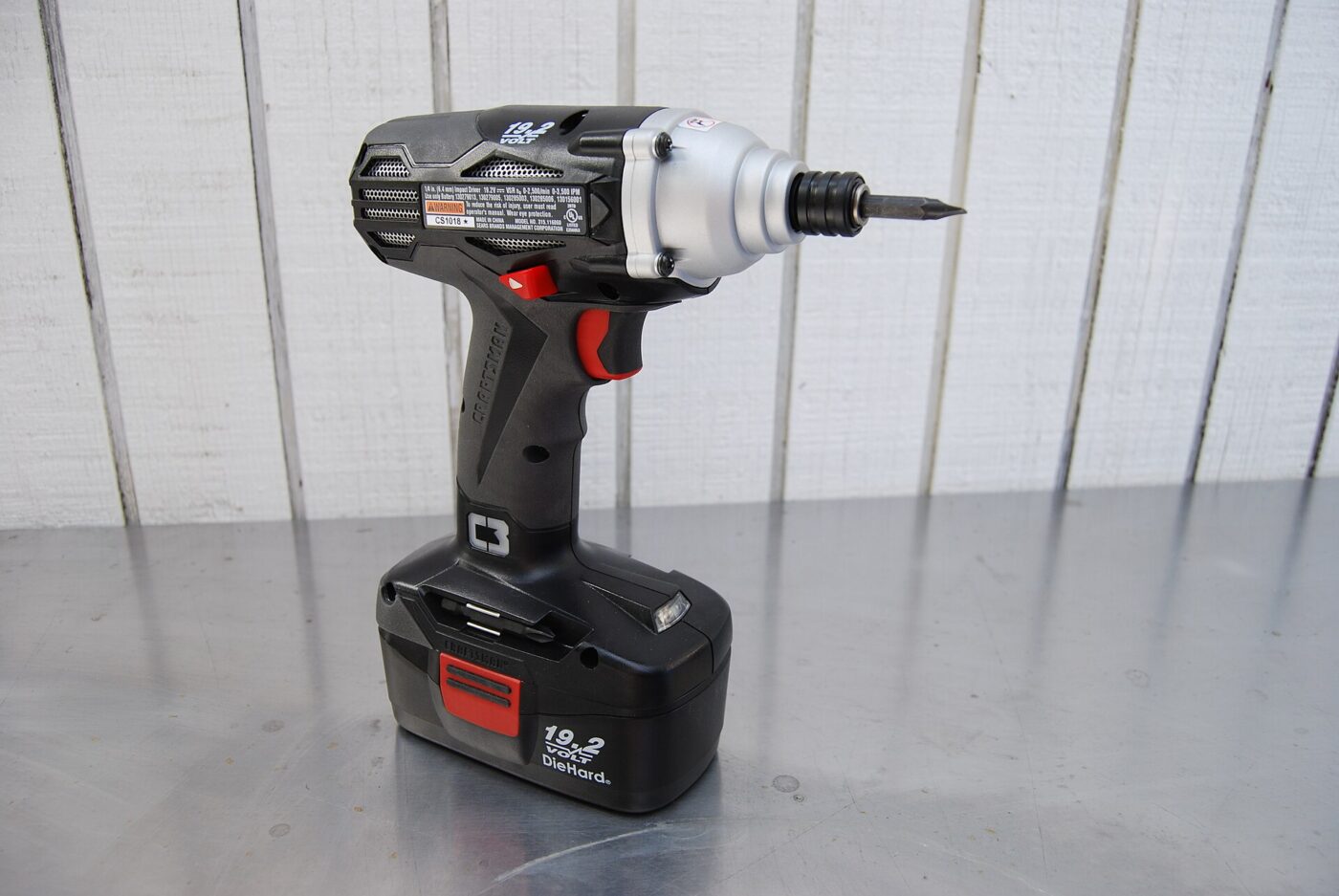
An impact driver adds a rotational hammer. When resistance rises, an internal mass repeatedly strikes the anvil, delivering short bursts of very high torque. Because the force arrives in pulses, almost none of it is transmitted back to your wrist.
That is why a 4-inch screw into a joist goes in effortlessly with an impact driver and fights you with a drill.
The reaction torque difference is the practical one. A drill that binds will try to twist out of your hands; an impact driver barely does.
Bits are not interchangeable

An impact driver has a ¼-inch hex collet, not a chuck. It takes hex-shank bits only, which rules out the round-shank drill bits most people own.
More importantly, standard screwdriver bits shatter in an impact driver. The hammering action fatigues hardened steel quickly, and a shattering bit throws fragments, so wear safety glasses when driving.
Impact-rated bits are made from a tougher alloy with a shock-absorbing shank designed for the hammering action. They cost more and they do not explode.
- Buy impact-rated bits for an impact driver. Non-negotiable.
- Hex-shank drill bits exist and let an impact driver drill in a pinch, though the result is rougher.
- An impact driver has no clutch, so it will happily drive a screw straight through thin material. Control comes from the trigger.
- Do not use an impact driver for machine screws into metal or for anything delicate — it will shear or strip them.
Which to buy if you only buy one
A drill, still. It drills holes, which an impact driver does poorly, and it drives screws adequately with the clutch set sensibly.
The impact driver becomes the more useful tool the moment you are driving many fasteners, long fasteners, or into hardwood and structural timber — decking, framing, fencing, subfloors.
Most people who buy the pair end up using the impact driver more than they expected, and reaching for the drill only for holes.
What the spec sheet numbers mean
Impact drivers are rated in inch-pounds of torque (in-lbs), often alongside an impacts-per-minute figure. A higher torque number mostly buys headroom for tougher fasteners and denser wood, not more control — there is no clutch to dial back, so the trigger and your judgment are what prevent overdriving.
Drills quote a torque figure too, but the number that matters day to day is the clutch range printed on the collar, not the peak. Most days are spent well below maximum, driving small screws into drywall or trim, where a low, precise clutch setting matters more than power held in reserve.
Brushless motors, common on both tool types now, mostly buy runtime and a bit more sustained power under load rather than a different feel at the trigger.
The shortlist
Paid links: we earn a commission if you buy through the buttons below, at no extra cost to you. As an Amazon Associate I earn from qualifying purchases.
Compared on what each is built for
| Product type | Best for | Risk estimate | Where to buy |
|---|---|---|---|
| Cordless Impact Driver | Driving long fasteners | 22/100 | See listings on AmazonOpens Amazon search results, not one listing: check the model on the product page. |
| Cordless Drill/Driver | Drilling and precision | 24/100 | See listings on AmazonOpens Amazon search results, not one listing: check the model on the product page. |
| Impact-Rated Bit Set | Bits that survive | 12/100 | See listings on AmazonOpens Amazon search results, not one listing: check the model on the product page. |
Risk estimate is our editorial Fear Index for the product type (lower is safer), not a customer rating. How it is scored.
Cordless Impact Driver
Once you have used one for decking or framing, the drill stops being the tool you reach for to drive anything.
- Drives long screws with almost no wrist strain
- Much less prone to cam-out and stripped heads
- Compact enough for tight spaces
- No clutch — easy to over-drive
- Loud, and takes hex bits only
Impact-Rated Bit Set
Standard bits are hardened to resist wear and fail brittlely under hammering. This is a safety item as much as a performance one.
- Torsion zone absorbs the hammer shock
- Will not shatter under impact
- Lasts several times longer
- More expensive than standard bits
- Still wear out eventually
More: Tools & DIY analyses and how the Fear Index is scored.
Questions people actually ask
Do I need an impact driver if I have a drill?
For holes and light screws, no. For long screws, hardwood, decking or framing, an impact driver is dramatically easier and will not strip heads or twist your wrist.
Can an impact driver drill holes?
With hex-shank drill bits, roughly. The hammering action produces a less clean hole and it has no clutch, so it is a compromise rather than a substitute.
Why do my bits keep breaking in my impact driver?
You are almost certainly using standard bits. Impact-rated bits use a tougher alloy with a torsion zone that flexes to absorb the hammer shock instead of shattering.
Is an impact driver the same as a hammer drill?
No. A hammer drill hammers along the bit axis to break masonry. An impact driver hammers rotationally to increase turning force on a fastener.