
The Vise Is Fine. It Is the Bench That Moves.
A vise sends every sawing, filing and bending force into the bench. Mass, top thickness, through-bolts and leg bracing decide whether it holds still.

Part of the guide: Tools and DIY Buying Mistakes: What Fails and How to Check Before You Buy
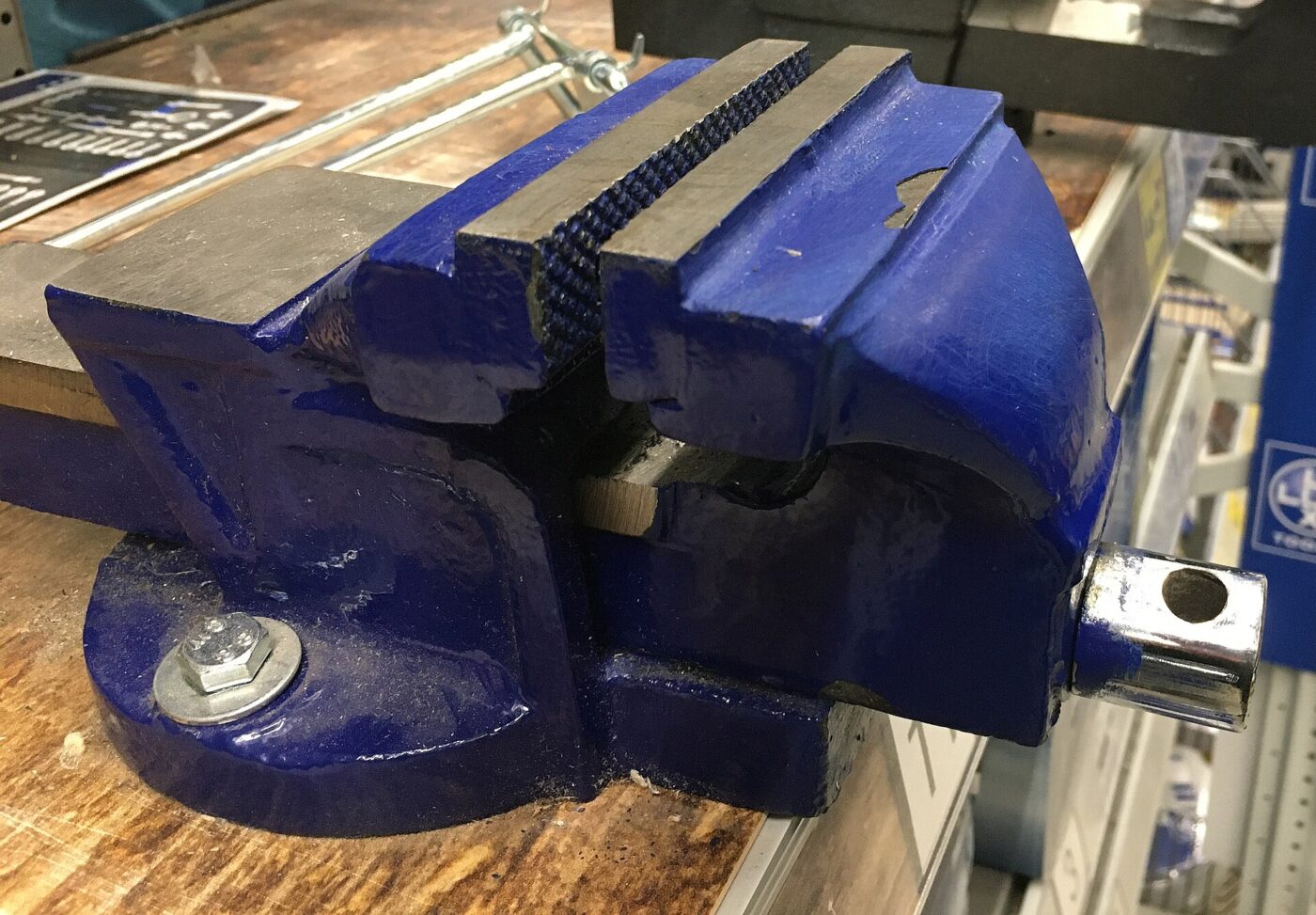
A bench vise is a simple object: a fixed jaw, a moving jaw, a screw. There is not much to go wrong, and most complaints about vises are not about the vise.
Everything you do in a vise — sawing, filing, bending, hammering — is transmitted directly into whatever it is bolted to. If that structure flexes, the work flexes with it.
Fear Index · Think twice
The weak link is the thing you did not buy
A bench that walks under load makes accurate work impossible and can tip with a heavy workpiece clamped.
Everything goes into the bench
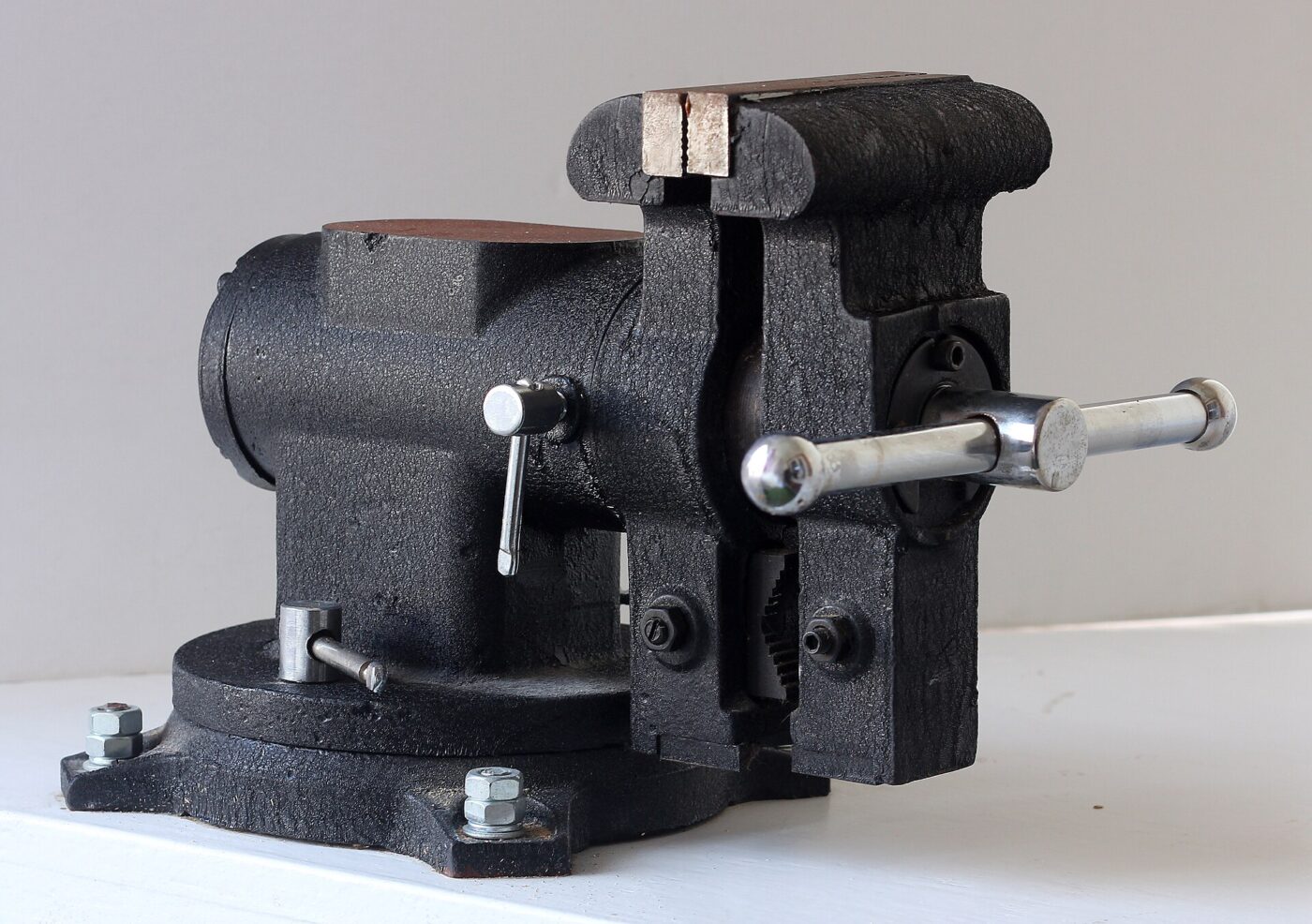
Three properties decide whether a bench can host a vise.
- Mass. The heavier the bench, the less it moves. Traditional woodworking benches are heavy for exactly this reason, not for strength.
- Top thickness. A vise bolted through 3/4 inch (18 mm) of particleboard will crush the top around the bolts within weeks. About 1.5 inches (40 mm) of solid lumber is a sensible minimum for a serious vise.
- Leg geometry. Racking — the parallelogram deformation of a four-legged frame — is what makes benches sway. Diagonal bracing or a solid back panel eliminates it.
Mount the vise directly over a leg. A vise in the middle of an unsupported span turns every force into a bending moment on the top.
Fixings, and the mistake with bolts
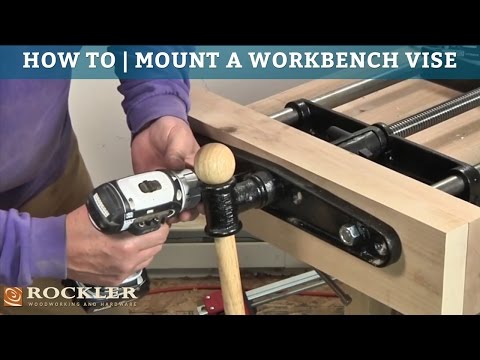
The commonest mounting error is using lag screws into the underside of the top. They hold initially, the timber compresses under cyclic load, and they work loose.
Bolting right through is the correct approach.
- Through bolts with large fender washers underneath, which spread the load across the timber rather than crushing it.
- Nylon-insert lock nuts, because vibration undoes plain nuts.
- Counterbore the top so bolt heads sit flush and do not catch work.
- A hardwood spacer block under the vise lets you set jaw height and spreads load further.
- Jaw top flush with or slightly above the bench, so long work can be supported along the top.
Adding mass cheaply
If the bench is too light, adding weight is easier than rebuilding it.
A shelf between the lower rails holding concrete pavers, sand-filled containers or spare timber lowers the center of gravity and adds tens of pounds for almost nothing. It is the standard fix and it works.
Against a wall, a pair of brackets from the bench top into the wall studs eliminates racking entirely — provided you never need to move the bench.
Using the vise without moving the bench
Clamping technique matters as much as the mounting. Work held close to the jaws, near the screw, transmits far less leverage into the bench than the same piece clamped at the end of the jaws and levered from a foot away.
For long, awkward or heavy pieces, a support stand or a second clamp at the far end keeps the load vertical instead of trying to twist the vise sideways off its mounting.
A vise that has started to shift on a previously solid bench is usually a loosened fixing, not a failing bench. Check the nuts under the top before assuming the structure itself has given up.
The shortlist
Paid links: we earn a commission if you buy through the buttons below, at no extra cost to you. As an Amazon Associate I earn from qualifying purchases.
Compared on mounting requirements
| Product type | Best for | Risk estimate | Where to buy |
|---|---|---|---|
| Cast Iron Bench Vise | Metalwork and general | 22/100 | See listings on AmazonOpens Amazon search results, not one listing: check the model on the product page. |
| Woodworking Front Vise | Woodworking | 28/100 | See listings on AmazonOpens Amazon search results, not one listing: check the model on the product page. |
| Through-Bolt Mounting Kit | A vise that stays tight | 8/100 | See listings on AmazonOpens Amazon search results, not one listing: check the model on the product page. |
Risk estimate is our editorial Fear Index for the product type (lower is safer), not a customer rating. How it is scored.
Cast Iron Bench Vise
Fit soft jaw liners for woodwork and it covers almost everything. Just make sure the bench under it is up to the job.
- Handles metalwork and bending; hammer lightly
- Pipe jaws on many models
- Ductile iron/forged steel resists cracking
- Steel jaws mark wood without soft liners
- Heavy to mount alone
- Cheap gray cast iron can crack if abused
Through-Bolt Mounting Kit
Lag screws into a benchtop are the standard mistake. This is the difference between a vise that holds and one that slowly loosens.
- Through-bolting will not work loose
- Fender washers stop the timber crushing
- Costs almost nothing
- Requires drilling right through the top
- Bolt heads need counterboring
More: Tools & DIY analyses and how the Fear Index is scored.
Questions people actually ask
How do I stop my workbench moving when using a vise?
Add mass with a loaded lower shelf, brace the frame diagonally to stop racking, and mount the vise directly over a leg rather than mid-span.
Should you bolt a vise through the bench?
Yes. Lag screws into the underside compress the timber under cyclic load and work loose. Use through bolts with large fender washers and lock nuts.
How thick should a workbench top be for a vise?
At least about 1.5 inches (40 mm) of solid lumber for a serious vise. Wilton specifies four Grade 5 bolts two inches longer than the benchtop is thick, with nuts and lock and flat washers in every mounting hole. Thin particleboard or MDF crushes around the fixings within weeks.
How high should vise jaws sit?
Flush with or slightly above the bench surface, so long workpieces can rest along the top while clamped.
Is cast iron a good material for a bench vise?
It is the standard choice, but gray cast iron is brittle. Ductile-iron or forged-steel bodies tolerate abuse better, and Wilton’s own manuals tell owners not to hammer the handle or add a cheater bar or pipe extension to tighten a vise.