
A Jack Lifts a Car. It Does Not Hold One Up.
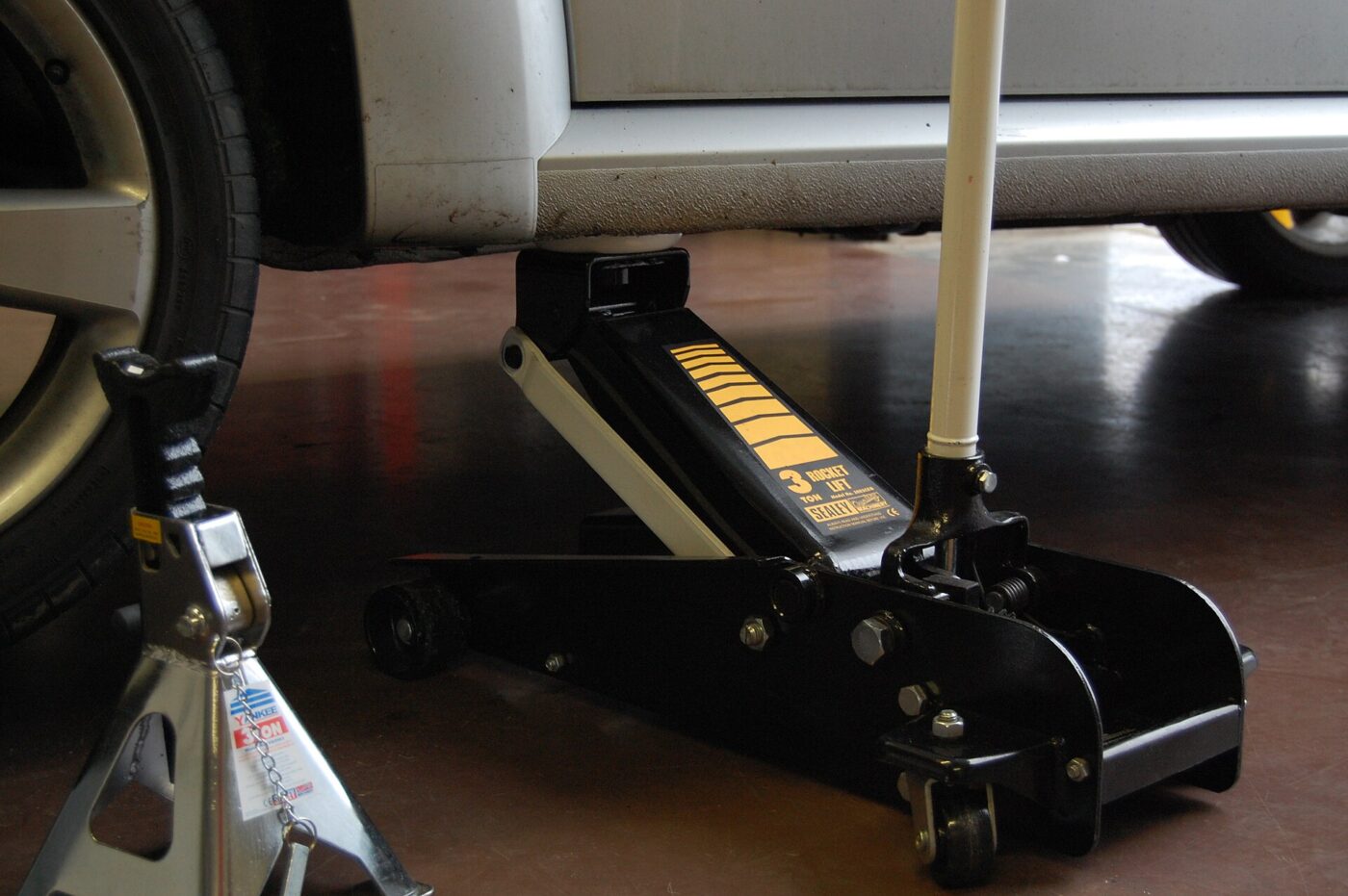
A hydraulic jack can fail by leaking down or tipping. Stands are the load-bearing device, and the rating is per pair, not per stand.

On this page 4 sections
Part of the guide: Tools and DIY Buying Mistakes: What Fails and How to Check Before You Buy
A trolley jack is a lifting device. It raises a load quickly and precisely, and it holds that load using a hydraulic seal and a valve.
Seals are consumables. Valves collect grit. Neither is a scandal — it is how hydraulics work — and it is the reason every jack sold carries a warning against working under a vehicle supported by it alone.
Fear Index · High risk
The one garage mistake that kills people
Vehicles falling from jacks cause fatalities every year. Few other home-garage jobs turn one shortcut into a fatal accident so quickly.
Why a jack is not a support
Four failure modes, all routine.
- The seal leaks down. Often slowly, sometimes not. A jack that held fine yesterday can settle today.
- The valve creeps. A speck of debris on the seat is enough.
- It tips. A jack is tall and narrow. On a slope, a soft surface, or when a wheel is pulled and the car shifts, the lifting pad can slide off the jacking point.
- Casters roll. As a car rises, the jacking point moves in an arc. The jack must roll to follow it, which is exactly why it can also roll when you do not want it to.
The rule is absolute and it costs nothing: the jack lifts, the stands hold, and no part of you goes under the car until the weight is on the stands. Put stands only at the support points your owner’s manual shows, make sure each stand’s pin or ratchet is fully engaged, lower the car onto them slowly, and push firmly on the car before going underneath. Leave the jack raised just under the jacking point as a backup, and never use bricks, blocks or wood as supports.
Ratings are per pair

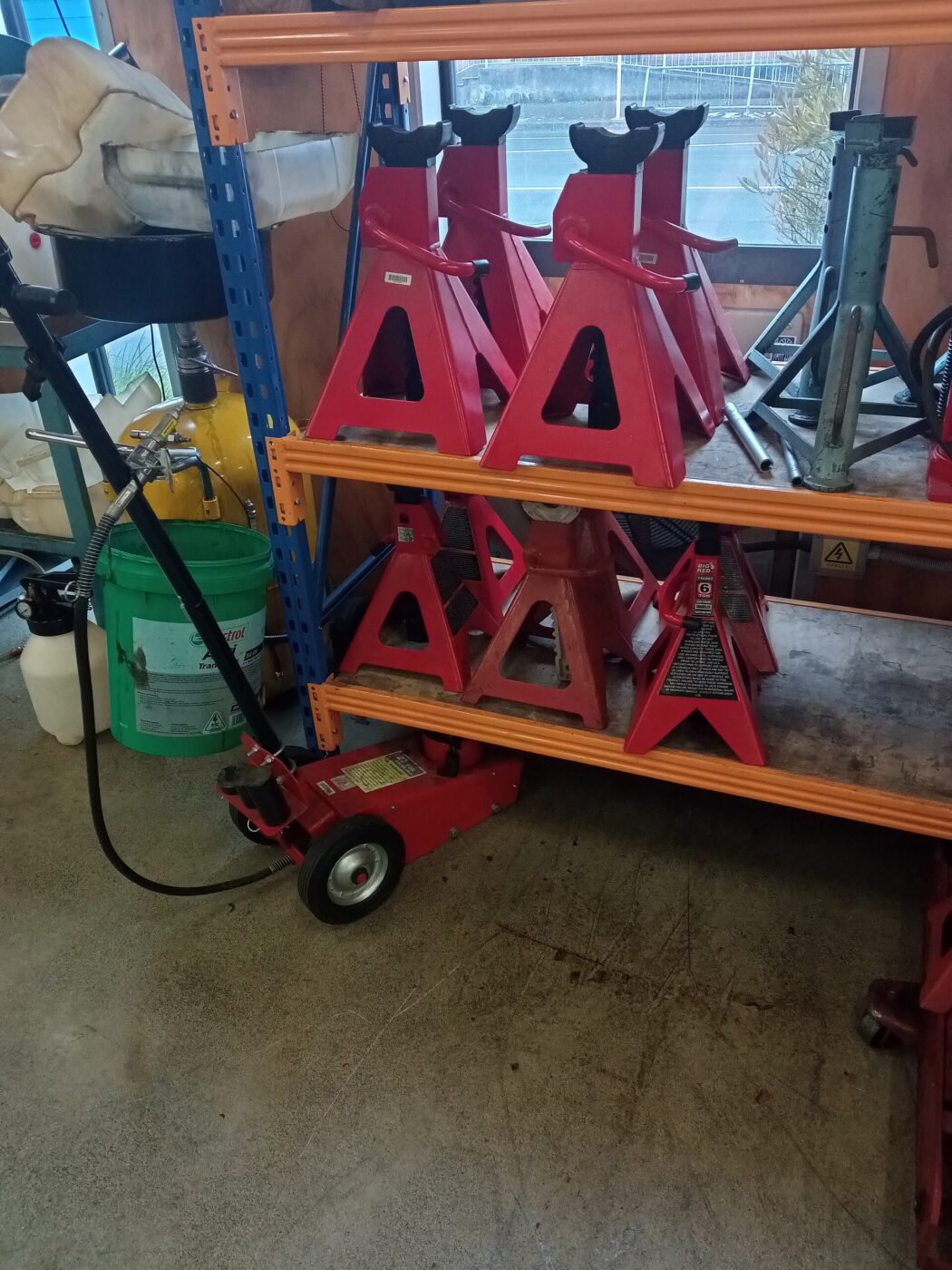
Jack stands are sold and rated in pairs. A pair rated 3 tons (6,000 lb) supports 6,000 lb between two stands — 3,000 lb each.
Since you generally lift one end of a car, each stand takes roughly a quarter of the vehicle’s weight, so a 3-ton pair is comfortable for most cars. The mistake is reading the rating as per stand and buying too light for a van or a pickup.
Buy stands rated well above the calculated need. The margin costs a few dollars and the failure mode has no margin at all.
Jacking points and surface
Modern unibody cars have reinforced jacking points, usually marked with a notch or an arrow on the rocker panel. Lifting anywhere else can crush the rocker panel or puncture the floor.
A pinch weld adapter — a slotted rubber pad — protects the seam and stops the jack sliding. It costs very little and prevents the most common cosmetic damage.
Surface matters as much as equipment. Asphalt softens in heat and a jack foot sinks into it. Work on concrete, level, and chock the wheels remaining on the ground on both sides.
The shortlist
Paid links: we earn a commission if you buy through the buttons below, at no extra cost to you. As an Amazon Associate I earn from qualifying purchases.
Compared on load and stability
| Product type | Best for | Risk estimate | Where to buy |
|---|---|---|---|
| Low-Profile Trolley Jack, 2 Ton | Lifting the car | 34/100 | See listings on AmazonOpens Amazon search results, not one listing: check the model on the product page. |
| Axle Stands, 3 Ton Pair | Holding it up | 20/100 | See listings on AmazonOpens Amazon search results, not one listing: check the model on the product page. |
| Rubber Wheel Chocks (Pair) | Stopping it moving | 14/100 | See listings on AmazonOpens Amazon search results, not one listing: check the model on the product page. |
Risk estimate is our editorial Fear Index for the product type (lower is safer), not a customer rating. How it is scored.
Axle Stands, 3 Ton Pair
The only device in this article designed to hold a car up. Buy a pair rated well above what you calculate you need.
- Mechanical locking, not hydraulic
- Wide base resists tipping
- Cheap relative to the consequence
- Rating is per pair, which is easy to misread
- Ratchet types need the pin engaged
Rubber Wheel Chocks (Pair)
Chock in front of and behind a wheel that stays on the ground. A parking brake acts on one axle only.
- Stops the car rolling off the stands
- Works on slopes and in the wet
- Costs almost nothing
- Only useful if actually placed
- Bulky to store
More: Auto & Garage analyses and how the Fear Index is scored.
Questions people actually ask
Can you work under a car on a jack?
No. A hydraulic jack holds load with a seal and a valve, both of which can leak or creep, and the jack can tip or roll. Jack stands are the load-bearing device.
Are jack stands rated per stand or per pair?
Per pair. A pair rated 3 tons supports 6,000 lb across two stands — 3,000 lb each. Buy a rating comfortably above what you need.
Where are the jacking points on a car?
On most unibody cars, reinforced points on the rocker panel marked with a notch or arrow. Lifting elsewhere risks crushing the rocker panel or damaging the floor.
Do I need wheel chocks if the parking brake is on?
Yes. A parking brake usually acts on one axle only, and once that axle is lifted it holds nothing. Chock both sides of a wheel that stays on the ground.