
A Tire With Full Tread Can Still Be Too Old to Drive On
Rubber degrades whether or not the tire is used. How to read the four-digit DOT code and why a new-looking old tire is a bad buy.

On this page 4 sections
A tire inspection usually means tread depth and a look for damage. Both matter. Neither tells you how old the rubber is.
Tire compounds contain antioxidants and antiozonants that migrate to the surface over time and are gradually used up. Once they are depleted, the rubber hardens, loses grip and becomes prone to cracking — a process driven by time, heat and UV rather than mileage.
Fear Index · High risk
The check everyone does misses the thing that matters
Tread is visible and age is not. A tire failing at speed is one of the few component failures that is immediately dangerous.
Reading the four digits
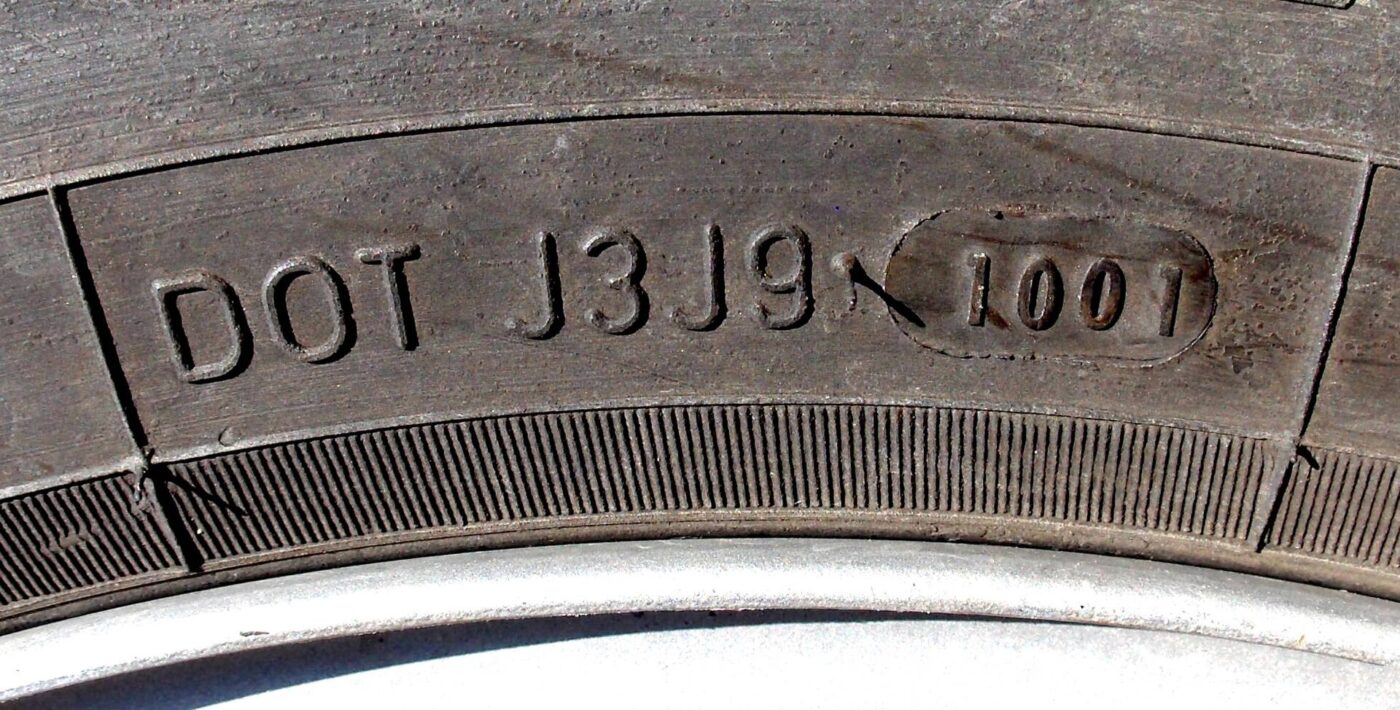
Every tire sold carries a DOT code on the sidewall. The important part is the last four digits.
The first two are the week, the second two the year. 3219 means the 32nd week of 2019. Some tires show the full code on one side only, so check both.
Tires made before 2000 use a three-digit code and should be treated as scrap regardless.
When buying tires, ask for the date code before fitting. Retailers hold stock for years, and a “new” tire three years old has already spent a third of a conservative service life on a shelf.
Why old rubber fails

Hardened rubber has less grip, particularly in the wet and in the cold, and the loss is gradual enough that drivers adapt without noticing.
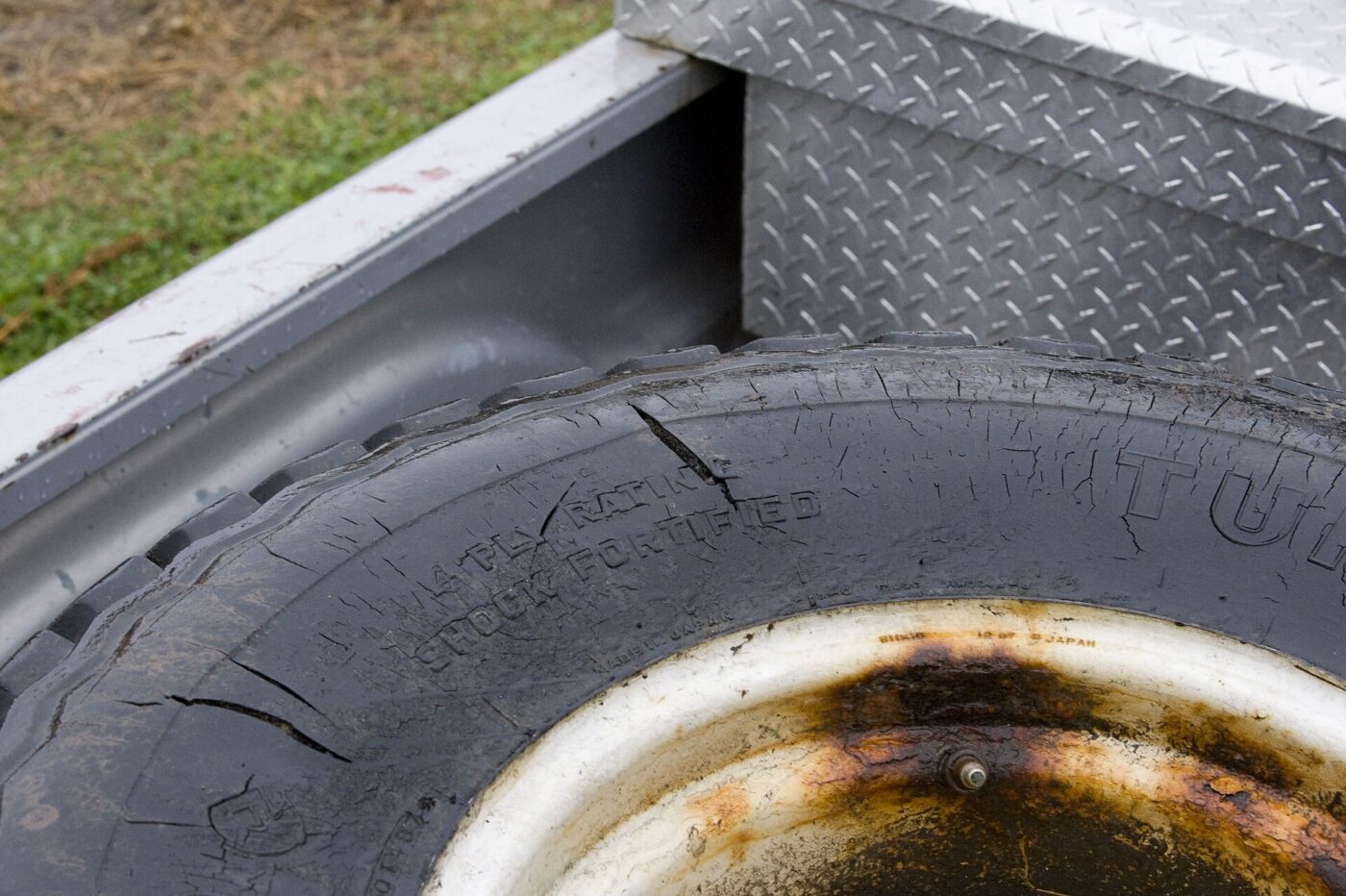
The more serious failure is structural. Aging rubber develops fine cracks — visible in the tread grooves and on the sidewall — and those can propagate to the belt package. A belt separation at highway speed is sudden and difficult to control.
Heat accelerates everything. Tires on a car parked in sun, or in a hot garage, age faster than the same tires in a cool one.
- Check the spare. It is often the original, and often ten years old.
- RVs and trailers are the worst case — low mileage, long static periods, heavy loads.
- Look in the grooves, where fine cracking shows first.
- A tire stored under load develops flat spots that do not fully recover.
What the age limit actually is
There is no federal legal age limit for tires on passenger cars. Some vehicle manufacturers advise replacing tires at six years and several tire manufacturers set ten years as the limit, with yearly inspection from five; NHTSA defers to those recommendations rather than setting its own age cutoff.
That range is wide because storage conditions matter so much. A tire kept cool and out of sunlight genuinely lasts longer than one baked on a driveway.
The practical rule: have tires inspected yearly from five years, plan on replacement from six, and treat ten as an outside limit, and bring both forward if the tire lives in the sun.
The shortlist
Paid links: we earn a commission if you buy through the buttons below, at no extra cost to you. As an Amazon Associate I earn from qualifying purchases.
Compared on what you should check
| Product type | Best for | Risk estimate | Where to buy |
|---|---|---|---|
| Tire Tread Depth Gauge | Everyday driving | 12/100 | See listings on AmazonOpens Amazon search results, not one listing: check the model on the product page. |
| Digital Tire Pressure Gauge | Monthly pressure checks | 16/100 | See listings on AmazonOpens Amazon search results, not one listing: check the model on the product page. |
| Portable Tire Inflator | Topping up at home | 24/100 | See listings on AmazonOpens Amazon search results, not one listing: check the model on the product page. |
Risk estimate is our editorial Fear Index for the product type (lower is safer), not a customer rating. How it is scored.
Digital Tire Pressure Gauge
Correct pressure slows the aging process and improves grip and economy at the same time. Check monthly, cold.
- Under-inflation causes heat, which accelerates aging
- Accurate enough to matter
- Fits a glovebox
- Needs a battery
- Only useful if actually used
Portable Tire Inflator
People check pressures when it is easy. Having an inflator at home is what turns a good intention into a monthly habit.
- Top up on the driveway instead of at a garage
- Useful for trailers and bikes
- Most have a built-in gauge
- Slow on a large tire
- Cheap ones overheat
More: Auto & Garage analyses and how the Fear Index is scored.
Questions people actually ask
How do I tell how old a tire is?
The last four digits of the DOT code on the sidewall give the week and year of manufacture. 3219 means week 32 of 2019.
Do tires expire if they are not used?
Yes. The antioxidants in the rubber deplete over time regardless of mileage, so an unused tire hardens and can crack. Heat and sunlight accelerate it.
When should tires be replaced by age?
NHTSA defers to manufacturers, and guidance generally suggests annual inspection after five years and replacement somewhere between six and ten, regardless of remaining tread.
Should I check the date on new tires?
Yes. Retailers hold stock for years, and a tire manufactured three years ago has already used part of its service life before it is fitted.