
A 20-Watt Diode Laser Engraver Is a Class 4 Laser, and the Glasses in the Box May Not Match It
Many hobby diode engravers emit enough power to be an FDA Class 4 laser, and the included eyewear only protects if it is rated for the exact wavelength.

Part of the guide: Tools and DIY Buying Mistakes: What Fails and How to Check Before You Buy
A diode engraver sold for garage and Etsy work looks like a hobby tool: a small metal frame, a fan, a control board, a beam that traces a design onto wood or leather. FDA’s own laser hazard classes do not grade it as a hobby tool. Measured by how much optical energy can reach a person during operation, most open-frame machines above a few watts land in Class 4, the agency’s highest hazard class.
None of that shows up on the box art. What does show up is a pair of tinted glasses in the accessory bag, and those glasses are only protective if their rating actually matches the laser inside the machine — a detail the packaging rarely spells out and a buyer rarely checks before the first cut.
Fear Index · High risk
A hobby tool wearing an industrial hazard class
FDA classifies a laser by how much energy can reach a person during operation, and its own laser-product guidance says a Class 4 device carries “immediate skin hazard and eye hazard from exposure to either the direct or reflected beam; may also present a fire hazard.”
What FDA laser classes mean for a hobby engraver
FDA classifies laser products from Class I up through Class IV, and says plainly that “the higher the class, the more powerful the laser is and the greater the potential to pose serious injury if used improperly.” Class IV sits at the top: “immediate skin hazard and eye hazard from exposure to either the direct or reflected beam; may also present a fire hazard.”
The classification is not about marketing copy or intended use. FDA’s performance standard defines it by “the highest accessible emission level(s) of laser radiation to which human access is possible during operation.” A diode engraver with no housing between the beam and the operator’s hands is judged on exactly that.
That is the gap that catches hobbyists. A 10- or 20-watt diode module marketed alongside consumer 3D printers and CNC routers carries the same hazard class as industrial cutting and welding lasers, because classification tracks accessible power, not the price point or the aisle it is sold in.
FDA classifies a laser by the energy a person can actually reach, not by how the machine is marketed. An open beam above a few watts is a Class 4 hazard whether the box says so or not.
Reading eyewear: wavelength and optical density
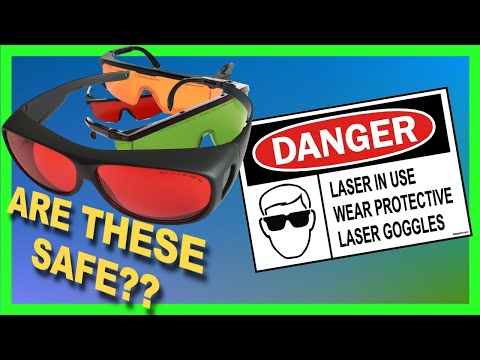
OSHA’s own construction standard for laser eye protection ties the requirement to two specific numbers: goggles must “protect for the specific wavelength of the laser and be of optical density (O.D.) adequate for the energy involved,” with the regulation’s own table noting that “output levels falling between lines in this table shall require the higher optical density.”
ANSI Z136.1, the standard laser-safety programs are built around, works the same way: it “requires laser protective eyewear to be labeled with the wavelength and OD it is intended for,” because an optical filter is tuned to block specific wavelengths. Glasses built to block a red 650-nanometer beam can pass almost all of the light from a blue 445-nanometer diode straight through, even though both pairs look like ordinary tinted glasses.
The only reliable check is printed on the frame: a wavelength range and an OD number that actually cover the diode inside the machine, most commonly the 445–450 nanometer blue range on hobby engravers. A pair with no printed rating, or one rated for a different band, is not doing the job regardless of how dark the lenses look.
Glasses rated for the wrong wavelength can look identical to the right pair and block almost nothing. The wavelength and OD number printed on the frame are what actually matter.
Open-frame vs enclosed machines with interlocks
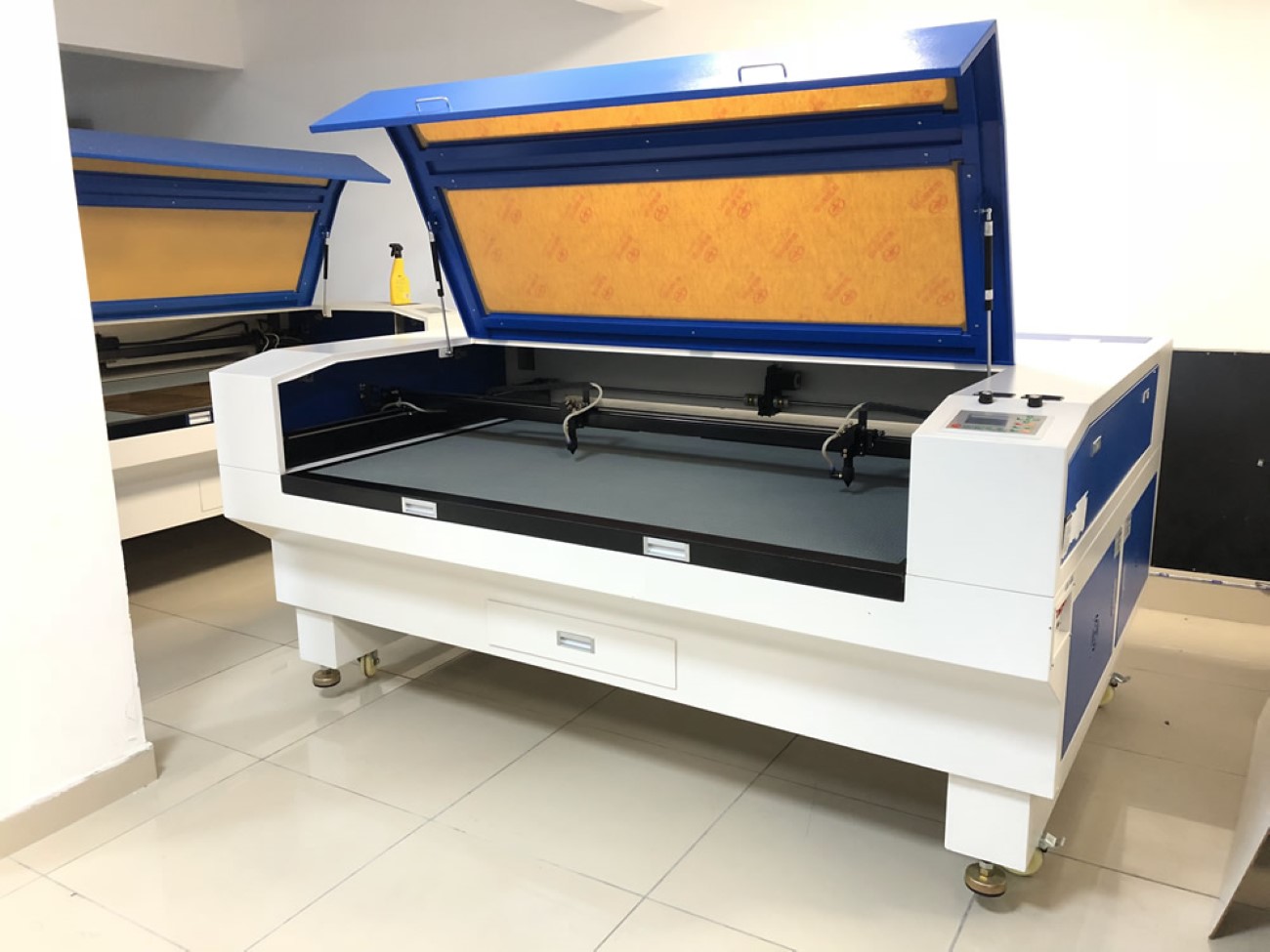
FDA’s performance standard requires that a protective housing prevent human access, during normal operation, to emission above Class I limits wherever that access is not needed for the product to work — and separately requires “at least one safety interlock for each portion of the protective housing which is designed to be removed or displaced during operation or maintenance.”
Because classification tracks accessible emission, an enclosed machine with a working lid interlock can keep what a person is actually exposed to down near Class I, even though the diode inside is still a Class 4 emitter. An open-frame machine, or an enclosed one with the interlock taped down, exposes that full beam the moment the lid or a hand is in the wrong place.
A listing that shows a lid is not the same claim as one stating the enclosure is interlocked and that opening it cuts power to the diode. The second claim is what actually changes the hazard a buyer is exposed to.
A cover that does not cut the beam is a lid, not an enclosure. FDA’s own standard ties a lower accessible hazard to a working interlock, not to the presence of a box.
Materials that release toxic fumes or catch fire
A NIOSH study of air contaminants from laser cutting of fabrics and polymers identified hazardous byproducts across the materials tested, including hydrochloric acid, benzene, vinyl chloride, acrylonitrile, styrene and phenol, with particle counts “generated during the laser cutting exceeded background particle levels by a factor of ten or more.” The study also found properly designed local exhaust ventilation kept those contaminants from escaping the enclosure — ordinary room ventilation was not the variable that worked; routed, exhausted ventilation was.
PVC and similar chlorinated plastics, sometimes sold as vinyl sheet or faux-leather backing, are a specific problem in that list: heating chlorinated plastic with a laser is how hydrochloric acid ends up in the fumes. Confirming a material’s plastic type before it goes under the beam is not optional caution, and the same enclosed-and-exhausted principle governs hobby resin 3D printer fumes.
Routed, exhausted ventilation solved the contamination problem in NIOSH’s own testing. A fan aimed at an open window is not that.
Ventilation, fire watch and the room setup
A laser engraver is also an ignition source sitting above combustible material for the length of a job, which makes an unattended machine a fire risk independent of the eye and fume hazards above. Running a job with nobody in the room to watch for a flare-up removes the only safeguard that catches it early.
A workable setup keeps exhaust ducted outside rather than filtered back into the room, keeps a fire extinguisher within reach, and keeps other flammable material — sawdust, paper stock, solvent rags — away from the work area rather than stacked next to it.
The interlock protects the eyes and the ventilation protects the lungs. Neither one watches the machine while it is cutting, which is still a person’s job.
The shortlist
Paid links: we earn a commission if you buy through the buttons below, at no extra cost to you. As an Amazon Associate I earn from qualifying purchases.
Compared on cutting the real hazards
| Product type | Best for | Risk estimate | Where to buy |
|---|---|---|---|
| Enclosed Diode Laser Engraver With Lid Interlock | Cutting the open-beam exposure | 30/100 | See listings on AmazonOpens Amazon search results, not one listing: check the model on the product page. |
| Laser Engraver Enclosure With Exhaust Fan | Clearing fumes from the room | 40/100 | See listings on AmazonOpens Amazon search results, not one listing: check the model on the product page. |
| Laser Safety Glasses OD5+ for 445nm | Matching eyewear to the diode | 20/100 | See listings on AmazonOpens Amazon search results, not one listing: check the model on the product page. |
Risk estimate is our editorial Fear Index for the product type (lower is safer), not a customer rating. How it is scored.
Enclosed Diode Laser Engraver With Lid Interlock
FDA’s own performance standard ties a lower accessible hazard to a working interlock, not to a cover that just looks closed.
- Interlock stops emission at the lid
- Keeps accessible hazard near Class 1
- Contains sparks and debris
- Costs more than an open-frame unit
- Still Class 4 inside when closed
Laser Safety Glasses OD5+ for 445nm
Eyewear only protects at the wavelength and OD printed on the frame — glasses rated for a different color laser can block almost nothing.
- Printed wavelength and OD on the frame
- Rated at OD5 or higher for blue diodes
- Cheap enough to buy a spare pair
- Useless if the diode is a different color
- Does not replace an enclosure or interlock
More: Tools and DIY analyses and how the Fear Index is scored.
Sources
- Laser Products and Instruments — FDA
- 21 CFR 1040.10, Laser Products Performance Standard — Cornell Law School
- 29 CFR 1926.102, Eye and Face Protection (laser eyewear table) — Cornell Law School
- ANSI Z136.1, Safe Use of Lasers — The Laser Institute
- Laser-Generated Air Contaminants Released During Laser Cutting of Fabrics and Polymer — NIOSH/CDC
Questions people actually ask
Is a diode laser engraver really a Class 4 laser?
Often, yes. FDA classifies a laser by how much energy a person can access during operation, and most open-frame diode engravers above a few watts of output land in Class 4, its highest hazard class.
Do the safety glasses that come with the machine actually work?
Only if their printed wavelength matches the diode and their optical density is high enough for its power. Glasses rated for the wrong wavelength provide close to no protection, per OSHA’s own eyewear rule for laser work.
Does an enclosure make the laser safer?
Only if it has a working interlock. FDA’s laser performance standard requires an interlock on every removable part of the housing, and a lower accessible hazard depends on that interlock actually cutting the beam.
Can I laser engrave PVC or vinyl?
No. Heating PVC and similar chlorinated plastics is how hydrochloric acid and other corrosive, toxic compounds end up in the fumes, per NIOSH testing of laser-cutting emissions.