
On a Mini Wood Lathe, Speed Control Matters More Than the Motor, Because Blanks Can Fly Off
A mini wood lathe’s speed range and tool rest matter more than horsepower. What OSHA, the AAW and NIOSH say about safe speeds, face shields and wood dust.

Part of the guide: Tools and DIY Buying Mistakes: What Fails and How to Check Before You Buy
A bowl blank clamped to a faceplate is not round yet, and an out-of-round blank spinning at the wrong speed is not just a beginner’s learning curve. It is the setup the American Association of Woodturners keeps warning about: a piece that comes off the lathe travels through the “red zone” directly in front of and behind the workpiece, which is exactly where a turner’s hands and face already are.
None of that makes a mini lathe unsafe to own. It makes the spec sheet worth reading past the motor’s horsepower number, toward the parts that actually control what happens while a blank is still unbalanced: the speed range, the tool rest, and what is standing between a turner’s face and that red zone.
Fear Index · High risk
A motor spec that hides the real risk
OSHA’s woodworking guidance says a lathe’s rotating stock can catch a hand, hair or loose clothing and pull the operator in, and a piece that leaves the lathe travels through the space right in front of and behind it — exactly where the turner is standing.
Why speed and balance cause most serious lathe accidents
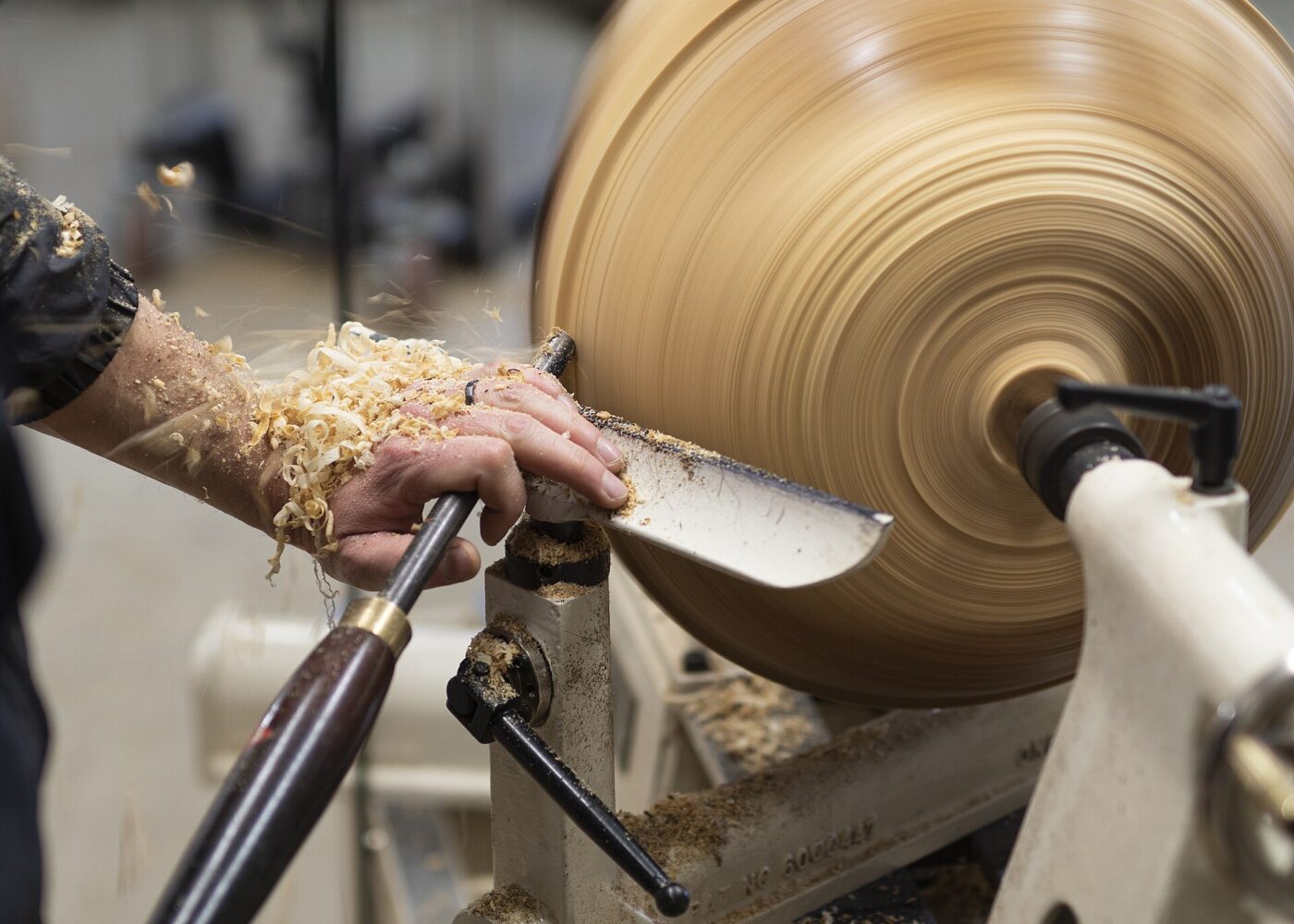
OSHA’s woodworking guidance describes the lathe’s core hazard plainly: a operator’s hands, clothing or jewelry can be caught on the rotating parts and pulled into the machine, with hand-fed lathes the greater danger because the operator works close to the rotating stock and cutting tool. Flying chips are a separate hazard on top of that, and rotating stock projecting from the chuck can catch hair or clothing and draw the operator in, which OSHA says can seriously mangle or crush them.
The American Association of Woodturners frames the same risk around an unbalanced workpiece specifically: it tells turners to be aware of the “red zone” or “firing zone,” the area directly behind and in front of the workpiece, since that is the area most likely for a piece to travel if it comes off the lathe — and its baseline instruction is to always start a piece at a slower speed until it is balanced.
A lathe does not need to malfunction to hurt someone. A round, balanced piece running at speed and an unbalanced blank running at the same speed are two different situations, and the guard against the second one is starting slow, not a faster motor.
Variable-speed vs belt-change lathes
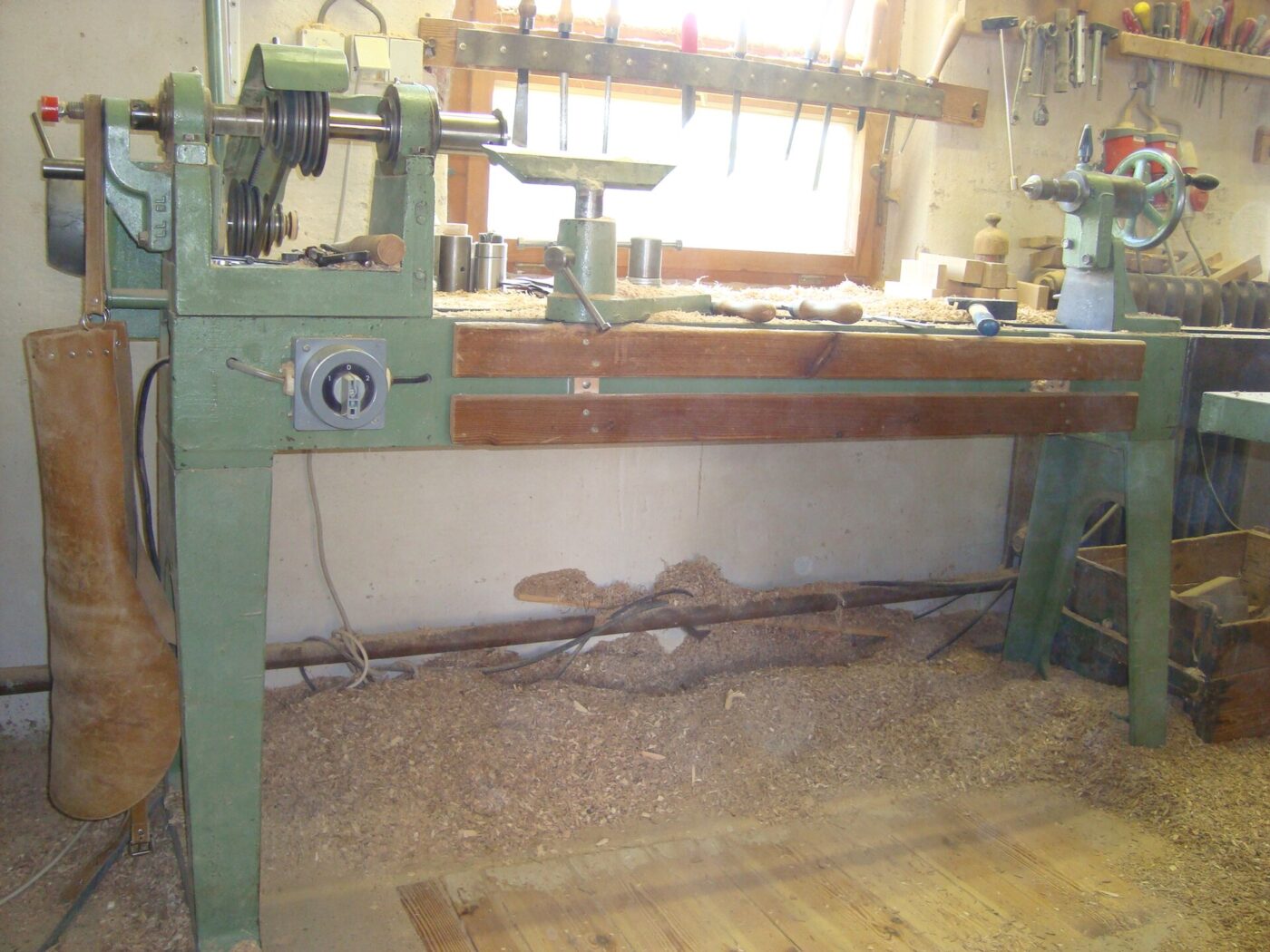
A variable-speed lathe lets a turner dial the speed down for a rough, unbalanced blank and bring it back up once the piece is round, without stopping the machine. A belt-change lathe does the same job mechanically, but changing range means stopping the lathe, opening the headstock cover and moving the belt to a different pulley step — friction that makes it more likely a beginner just leaves the lathe at whatever speed the belt is already set to, which is precisely the moment AAW’s guidance says to slow down.
Swing capacity, the widest diameter the bed can turn, matters for whether a given bowl blank fits at all, and a solid, easily repositioned tool rest keeps the cutting edge close to the work, which limits how much leverage a catch can put into a turner’s hands. Both are worth checking on a mini lathe’s spec sheet before its horsepower rating.
Face shields and impact ratings

OSHA’s eye and face protection rule, 29 CFR 1910.133, requires protective eye and face equipment to meet the ANSI/ISEA Z87.1-2010 standard or one of two earlier versions of it, and requires side protection whenever there is a hazard from flying objects — the exact hazard a lathe’s flying chips and stock present.
AAW’s own safety guidelines are specific about how the two pieces of gear work together: as a minimum, always wear safety goggles or safety glasses that include side protectors, and add a full face shield for bowl, vessel or any turning involving chucks or faceplates. The shield goes over the glasses for that work, not instead of them.
A face shield marked to the Z87.1 standard is rated for the same flying-object hazard as safety glasses. AAW’s own guidance is to wear both together on chuck and faceplate work, not to swap one for the other.
Carbide vs high-speed steel tools for beginners
A catch happens when a cutting edge digs into the wood and the lathe’s own rotation yanks the tool instead of letting it cut cleanly. Carbide-tipped tools with a rounded cutter tend to scrape rather than slice, which tends to be more forgiving of the small positioning errors a beginner makes, at the cost of a rougher surface that still needs sanding afterward.
High-speed steel tools cut more cleanly and need less sanding, but the edge dulls faster and has to be reground on a bench grinder — a second tool and a second skill most beginners have not learned yet. Neither tool removes the need to start slow on an unbalanced blank; they just change what happens at the cutting edge once the piece is already round.
Neither tool type is the safety feature. Starting slow on an unbalanced blank and keeping the tool rest close to the work are what keep a catch from becoming a kickback, whichever edge is doing the cutting.
Wood dust exposure and collection
NIOSH’s hazard-control research on wood dust found that workers exposed to it have experienced eye and skin irritation, reduced lung function and nasal cancer among other effects, and that a local exhaust hood installed on a table saw reduced wood dust emissions by more than 90 percent compared with no collection at all. A lathe’s sanding step generates the same kind of fine dust, even though the machine is different.
A face shield does not address any of this. OSHA’s eye and face protection hazards are flying particles, chemicals and light radiation — not airborne dust — so a shop vacuum or dust collector positioned near the lathe during sanding, plus a separate respirator rated for fine particulate, is a second and different piece of gear from the shield.
A dust collector at the lathe does the same job NIOSH found for a saw’s exhaust hood: it catches the fine dust before a turner breathes it, instead of relying on the shop’s air to clear on its own.
The shortlist
Paid links: we earn a commission if you buy through the buttons below, at no extra cost to you. As an Amazon Associate I earn from qualifying purchases.
Compared on starting slow and staying protected
| Product type | Best for | Risk estimate | Where to buy |
|---|---|---|---|
| Variable-Speed Mini Wood Lathe (12 x 18 in Class) | Dialing speed down for unbalanced blanks | 30/100 | See listings on AmazonOpens Amazon search results, not one listing: check the model on the product page. |
| Full Face Shield (ANSI Z87.1+ Impact Rated) | Face and eye protection for chuck work | 12/100 | See listings on AmazonOpens Amazon search results, not one listing: check the model on the product page. |
| Carbide-Tipped Woodturning Tool Set | A more forgiving edge for beginners | 28/100 | See listings on AmazonOpens Amazon search results, not one listing: check the model on the product page. |
Risk estimate is our editorial Fear Index for the product type (lower is safer), not a customer rating. How it is scored.
Variable-Speed Mini Wood Lathe (12 x 18 in Class)
AAW’s guidance is to start every new piece at a slower speed until it is balanced. A variable-speed lathe turns that into a dial, not a belt change.
- Dial down for unbalanced blanks
- No belt to move between speeds
- Swing size fits typical bowl blanks
- Costs more than a fixed-speed lathe
- Still needs a slow start on rough stock
Full Face Shield (ANSI Z87.1+ Impact Rated)
OSHA’s eye and face protection rule accepts gear built to the ANSI Z87.1 standard, and AAW says to wear a full shield over safety glasses for chuck and faceplate work.
- Marked to the ANSI Z87.1 standard
- Worn over safety glasses, not instead
- Covers chuck and faceplate work
- Does not filter fine sanding dust
- Fogs without a vented visor
More: Tools and DIY analyses and how the Fear Index is scored.
Questions people actually ask
Why do woodturning guides recommend a full face shield instead of just safety glasses?
AAW says to wear safety goggles or glasses with side protectors as a minimum, and add a full face shield for bowl, vessel or any turning involving chucks or faceplates — the shield goes over the glasses, not instead of them.
What does the ANSI Z87.1 mark on safety glasses or a face shield mean?
OSHA’s eye and face protection rule, 1910.133, requires eye and face protective equipment to meet the ANSI/ISEA Z87.1 consensus standard, which covers protection from flying particles and other impact hazards.
Why does lathe speed matter more than motor power for a beginner?
OSHA’s woodworking guidance says rotating stock can catch hands, hair or clothing and pull an operator in, and AAW says to start every new piece at a slower speed until it is balanced, since an unbalanced blank can travel into the “red zone” directly in front of and behind it.
Is wood dust from a lathe actually a health risk?
NIOSH has linked wood dust exposure to nasal cancer and respiratory irritation, and found that capturing dust at the source cut emissions by more than 90 percent on a table saw compared with no collection.