
Hard Water Coats Every Kettle Element, but Some Designs Are Easier to Descale
Limescale forms in any kettle used with hard water. How to descale safely with a descaler or vinegar, and why a concealed element is easier to keep clean.

Part of the guide: Home and Kitchen Buying Mistakes: What Fails and How to Check Before You Buy
Look inside a kettle that has been used for a few months in a hard-water area and there is usually a pale crust on the base, a chalky line where the water normally sits, and sometimes white flakes floating in the tea.
That scale is the mineral content of the water, left behind as it heats. No kettle prevents it, but the design of the heating element and the way you remove the deposits decide whether it stays a two-minute chore or becomes a recurring irritation.
Fear Index · Think twice
Scale that builds where nobody looks
Limescale rarely ruins a kettle outright, but flakes in the cup, slower boils and a careless descaling session that soaks the power base are all avoidable.
Where limescale comes from
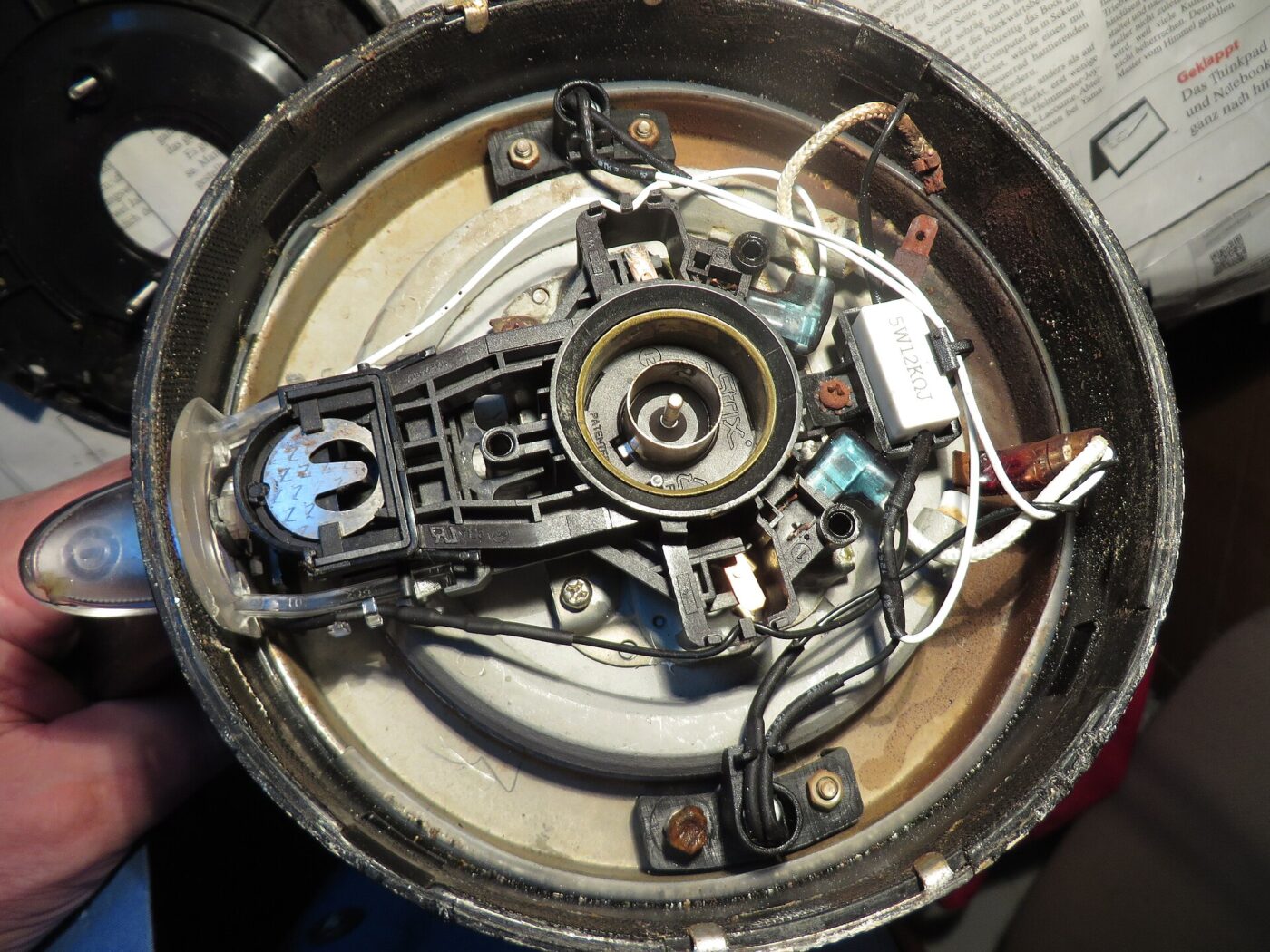
Water picks up minerals as it moves through rock and soil. The Water Quality Association notes that dissolved calcium and magnesium salts are primarily responsible for most scaling in pipes and water heaters, and the same chemistry plays out on a smaller scale every time a kettle boils.
The EPA’s WaterSense program says hard water is most common in the Southwest and Midwest and in areas that rely primarily on groundwater, and that while it is not a health concern, it can lead to build-up on plumbing and appliances. Hardness is reported in milligrams per liter or grains per gallon; the WQA notes that NSF/ANSI standards define soft water as under 17.1 mg/L, and WaterSense uses 180 mg/L as an example of substantial hardness.
A local water utility’s water quality report often lists hardness, and inexpensive test strips give a rough reading for well water. Knowing the number tells you whether descaling every month or two is realistic or whether you will be doing it far more often.
Scale builds in proportion to how much hard water you heat, so boiling only what you need slows it. No kettle design prevents it.
Concealed and exposed elements
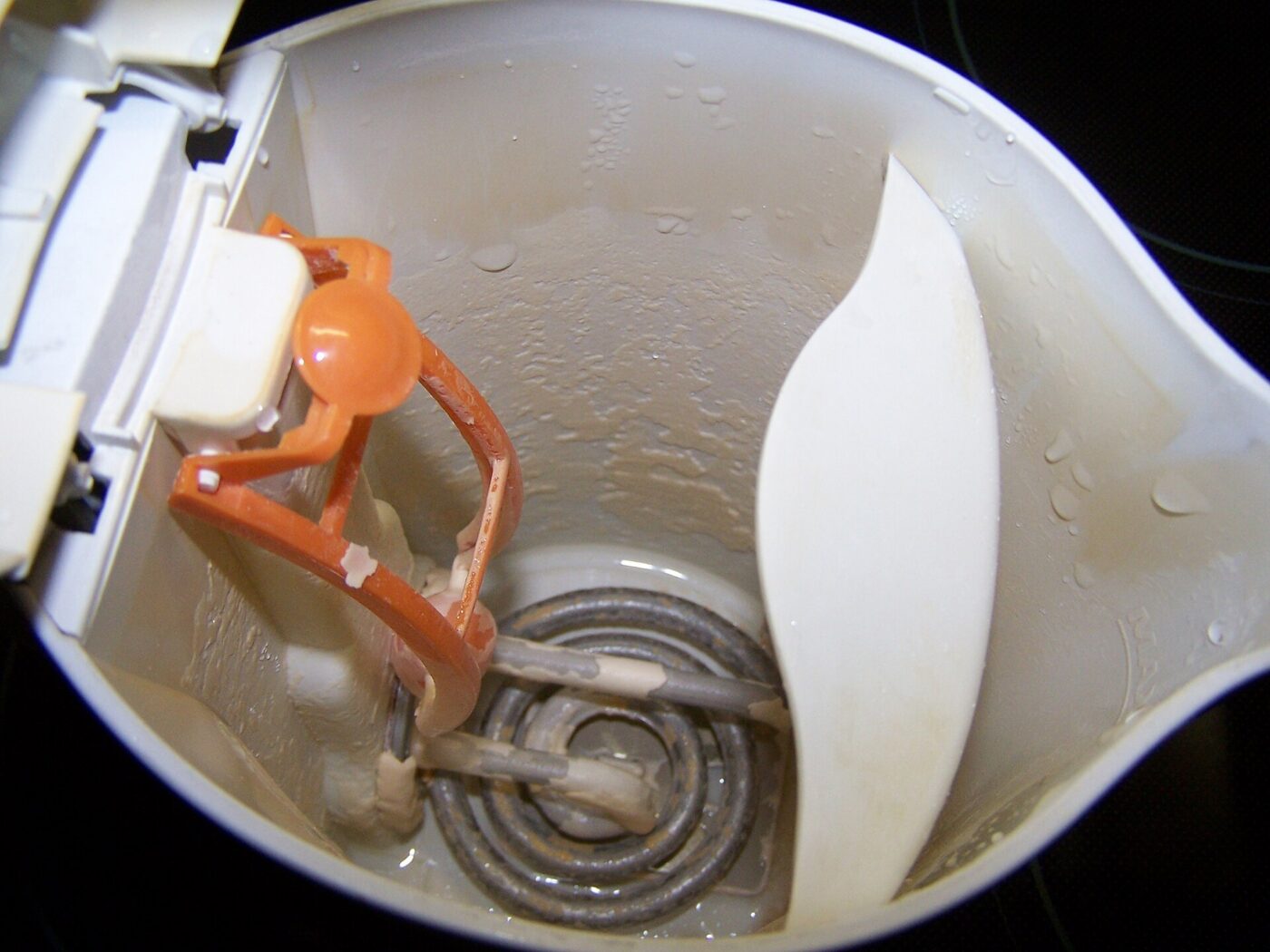
Older and some budget kettles heat water with an exposed coil sitting in the bottom of the jug. Scale forms on and between the turns of the coil, where it is hard to see and harder to reach. Most modern kettles use a concealed element instead: the heater sits under a flat stainless steel plate that forms the floor of the jug.
A concealed element still scales, because the plate is the hottest surface the water touches. The difference is access. A flat plate can be wiped after descaling and shows at a glance when it needs attention, while a coil traps flakes that keep appearing in drinks. A lid that opens wide enough for a hand or a soft cloth makes either design easier to live with.
Many kettles also have a removable mesh filter in the spout. Cuisinart’s instruction booklet for its PerfecTemp programmable kettle describes a scale filter that pulls out and can be run under hot water and rubbed with a clean cloth or brush. It catches flakes; it does not stop scale forming.
| Design | Where scale collects | Upkeep |
|---|---|---|
| Concealed flat element | On the stainless base plate | Descale and wipe; easy to inspect |
| Exposed coil element | On and between the coil turns | Harder to reach; flakes linger |
| Glass body | Base plate and a visible waterline | Easy to see when to descale |
| Narrow-lid gooseneck | Base plate, mostly out of sight | Relies on soaking and rinsing |
Descaling without damaging the kettle

The manufacturer’s instructions come first, because materials and finishes tolerate acids differently. Cuisinart, for example, suggests a kettle descaler used according to the package directions. As an alternative, it describes adding enough white vinegar to cover the bottom by about half an inch, heating it to a boil, repeating with cooled vinegar until the deposits are gone, then emptying the kettle and rinsing it several times with clean water.
The same booklet says to unplug the kettle and let it cool before cleaning, to keep the electric socket dry, and never to immerse the kettle or its power base in water. Those rules matter more than the choice of acid: water in the base connector is an electrical hazard, not a cleaning problem.
- Unplug and cool first, and keep the power base and connector dry.
- Use a kettle descaler or white vinegar in the way your manual allows.
- Do not overfill; acid fizzes as it reacts with scale, and spills belong nowhere near the base.
- Skip bleach and abrasive pads on the element plate and interior.
- Rinse, then boil and discard a fresh fill to clear any taste of descaler.
- Clean the spout filter separately under running water.
Choosing and maintaining a kettle for hard water
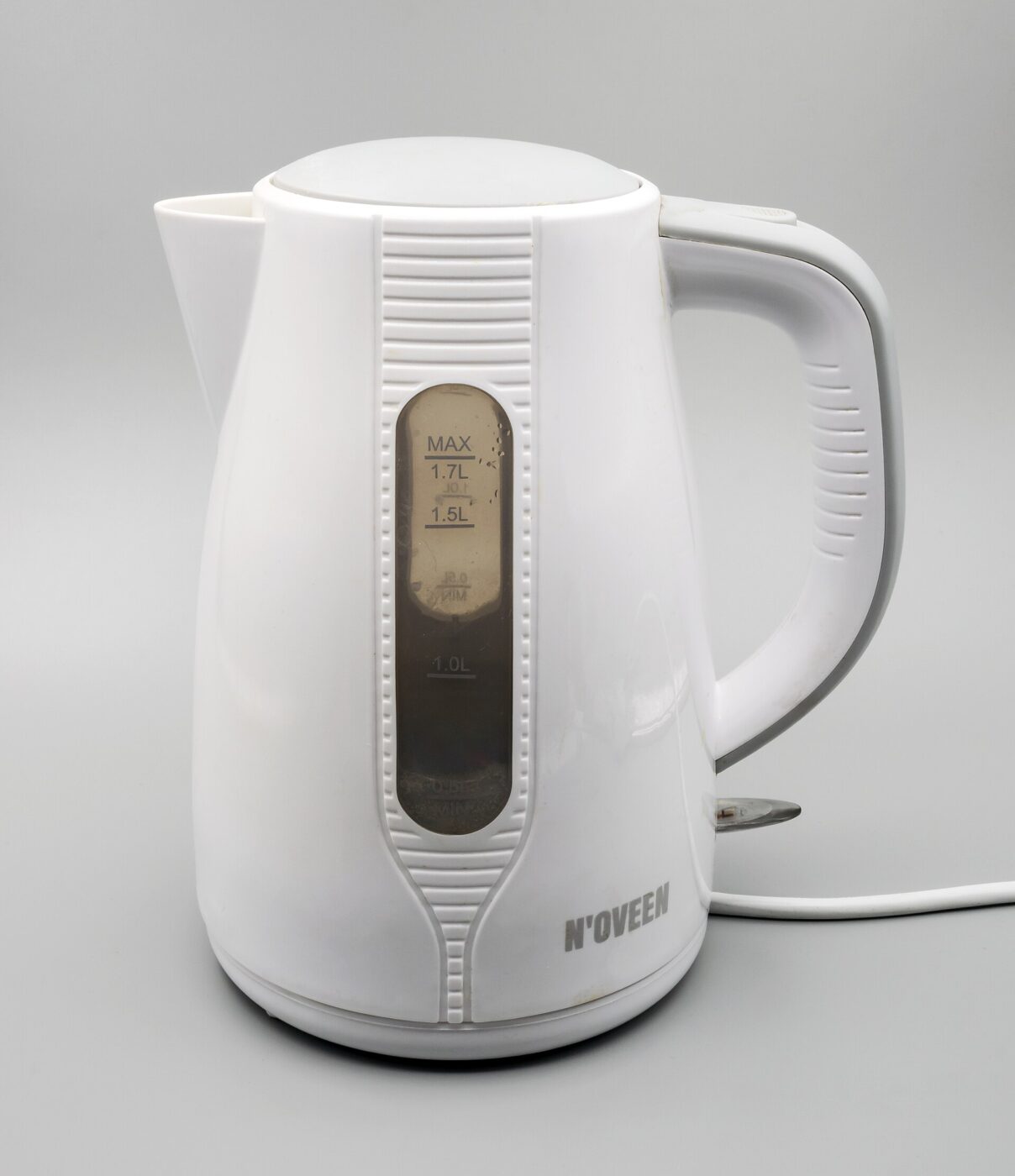
If your water is hard, favor a concealed element, a lid that opens wide enough to see and wipe the base, and a removable spout filter. Stainless or glass interiors make scale easy to spot. Temperature-control models are convenient for tea and pour-over, but they scale exactly like basic kettles.
Frequency is a matter of observation rather than the calendar. Cuisinart says it depends on the hardness of your tap water and how often you use the kettle. When the base loses its shine or flakes appear, descale; waiting until a thick crust forms only means more soaking and more repeats.
Filtered water from a pitcher filter can reduce scale for some households, though not every filter targets hardness, so check what yours is certified to reduce. A whole-house softener is a much bigger decision, and WaterSense suggests installing one only where hardness is substantial or local authorities recommend it.
A light film that wipes away after descaling is normal. Scale that returns within days points to very hard water, where filtered water may be worth the cost.
The shortlist
Paid links: we earn a commission if you buy through the buttons below, at no extra cost to you. As an Amazon Associate I earn from qualifying purchases.
Compared on scale and upkeep
| Product type | Best for | Risk estimate | Where to buy |
|---|---|---|---|
| Electric Kettle with Concealed Element | Easiest to keep clean | 20/100 | See listings on Amazon |
| Kettle Descaler (Citric Acid) | Routine descaling | 12/100 | See listings on Amazon |
| Water Hardness Test Strips | Knowing your water | 15/100 | See listings on Amazon |
Risk estimate is our editorial Fear Index for the product type (lower is safer), not a customer rating. How it is scored. The buttons open Amazon search results rather than one listing, so check the model on the product page.
Electric Kettle with Concealed Element
Hard water will scale it too, but a concealed element with a wide opening keeps the job quick.
- Flat plate shows scale early
- Wipes clean after descaling
- No coil to trap flakes
- Still needs regular descaling
- Narrow lids limit access on some models
Kettle Descaler (Citric Acid)
Follow the package directions and your kettle manual, then boil and discard a fresh fill before use.
- Dissolves mineral deposits
- No vinegar smell
- Pre-measured doses
- Must be rinsed out thoroughly
- Not every manufacturer approves it
More: Coffee and Drinks analyses and how the Fear Index is scored.
Questions people actually ask
How do you descale an electric kettle?
Unplug it, then use a kettle descaler as directed or, where the manual allows, white vinegar brought to a boil. Rinse several times and boil and discard fresh water before use.
How often should I descale my kettle?
It depends on your water hardness and how much you boil. Descale when the base loses its shine or flakes appear; in very hard water that can mean every few weeks.
Is limescale in a kettle harmful?
The EPA says hard water is not a health concern. Scale mainly affects taste, appearance and how cleanly the kettle works, so descaling is routine upkeep.
Is a concealed element kettle better?
It still scales, but the flat plate is easier to see and wipe than an exposed coil, which traps flakes between its turns.