
A Torque Wrench Left on Setting Goes Out of Calibration in a Drawer
A click wrench stores its setting as spring tension. Left wound up, the spring takes a set and the readings drift — silently.

Part of the guide: Tools and DIY Buying Mistakes: What Fails and How to Check Before You Buy
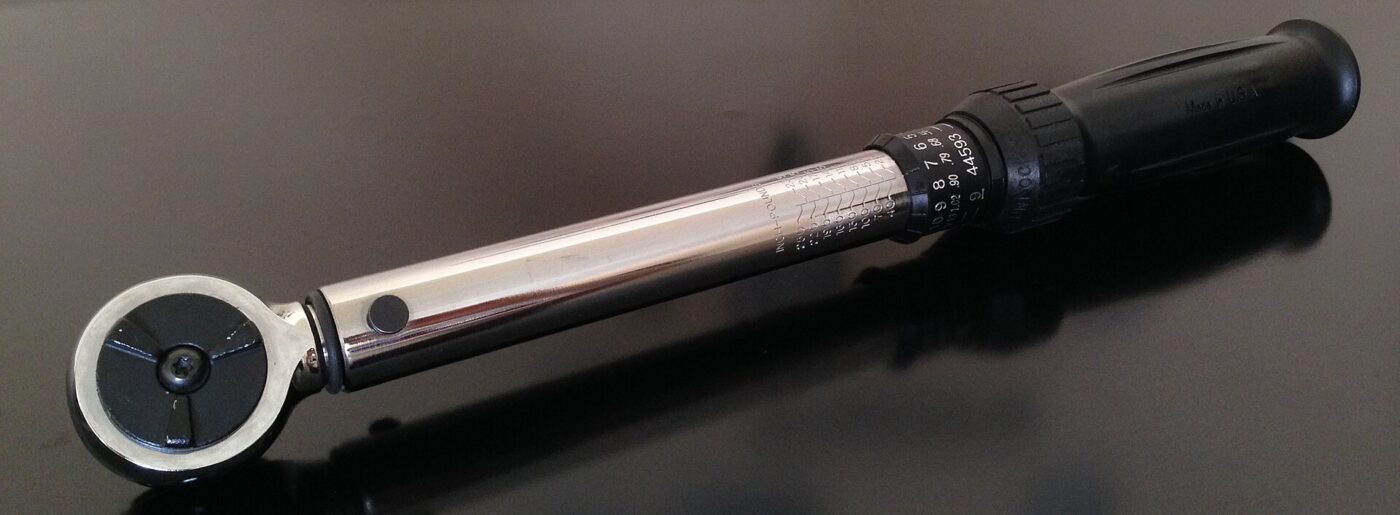
A torque wrench is not a plain wrench with a number on it. It is a measuring instrument, and like any instrument it has a calibration that can be lost.
The commonest way to lose it is not abuse or age. It is leaving the wrench set to the torque you last used, in a toolbox, for months.
Fear Index · Think twice
A measuring instrument treated as a plain wrench
The consequence of drift is either a stripped thread or a fastener that comes loose — on a wheel, a cylinder head or a carbon handlebar.
The spring takes a set
Inside a click wrench is a coil spring held under compression by the adjustment handle. Turning the handle changes the compression, and that compression is what determines the force at which the mechanism releases.
Springs left compressed for long periods gradually relax — they take a set. The wrench still clicks, crisply and convincingly, at a lower torque than the scale says. Nothing feels wrong, which is exactly the problem.
The fix costs nothing and takes seconds: wind the wrench back to the bottom of its range after every use, before it goes back in the toolbox. Not to zero — most manufacturers advise the lowest marked setting rather than fully unwound, because fully unwound can unseat the mechanism.
A relaxed spring releases early, so a wrench that has been stored wound up under-tightens: it clicks before the fastener reaches the torque printed on the scale. On wheel nuts, brake caliper bolts or a stem clamp, an under-torqued fastener can work loose over time rather than immediately.
Beam wrenches never drift

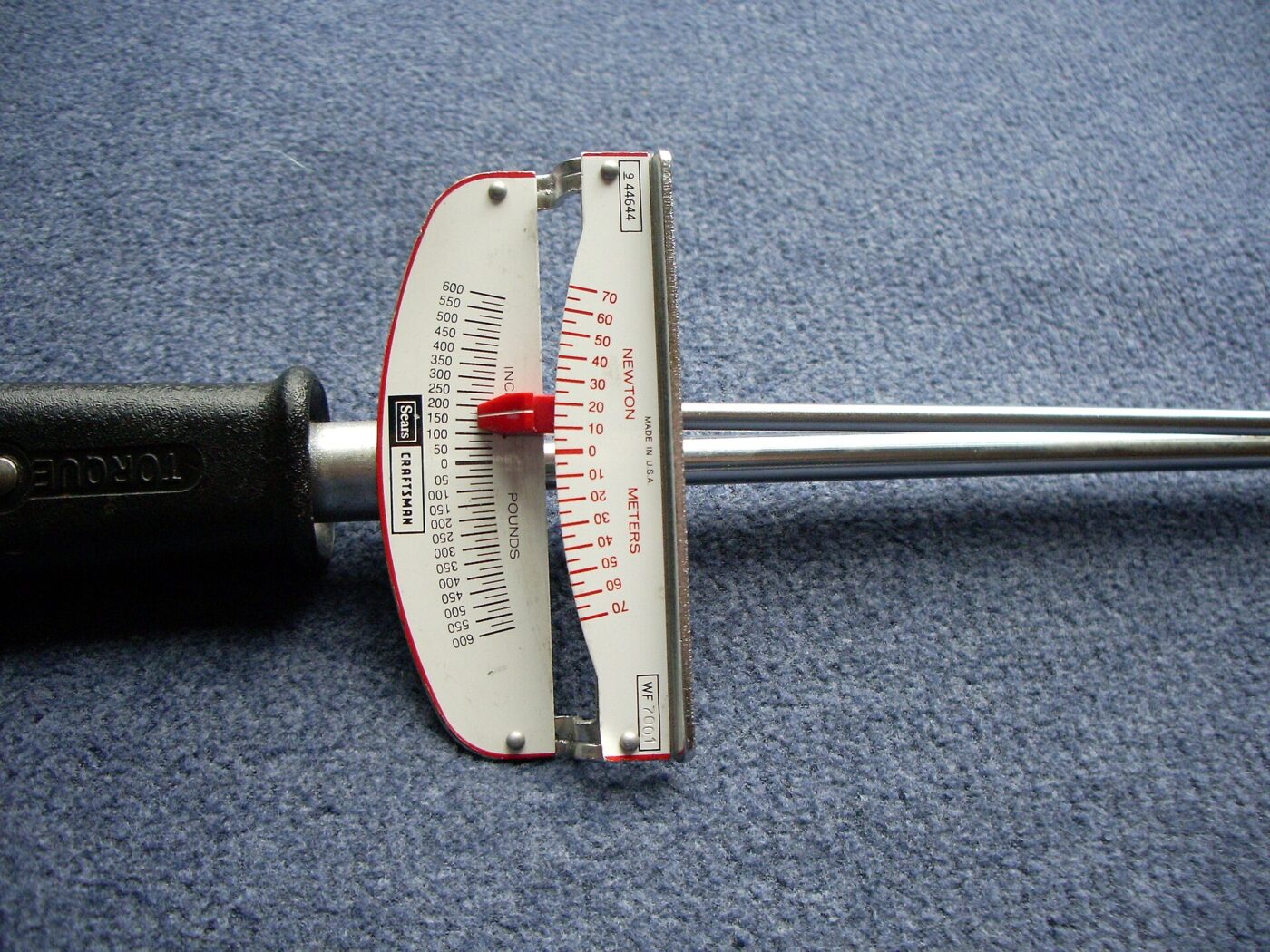
A beam wrench is a flat bar with a pointer. Torque bends the bar and the pointer moves along a scale. There is no spring to relax and little to drift — check that the pointer rests on zero before each use, and that covers most of its calibration.
They are less pleasant to use: you must watch the scale as you pull, which is awkward in a wheel arch. They are also a third of the price and they will read accurately in twenty years.
Many people are best served by owning both — a click wrench for routine, repeated work and a beam wrench as the honest reference that tells you when the click wrench has drifted.
Using one correctly
Accuracy claims — typically ±4% — apply from 20% to 100% of the scale under ASME B107.300 and ISO 6789, and only when the wrench is used properly.
- Stay above 20% of the range. Below that, accuracy is not specified and is often poor.
- Pull smoothly, and stop at the click. Continuing past it applies unknown extra torque.
- Never use it to loosen anything. Breaking a seized bolt loose with a torque wrench is how mechanisms are destroyed.
- No extension bars on the handle. They change the effective lever and the reading.
- Have it checked every year or so if the work matters, or compare it against a beam wrench.
A cheap way to check calibration at home
A shop calibration costs more than most of these wrenches, and most owners never get one done. A rough home check will not replace a certified calibration for critical work, but it catches the failure that actually matters: a wrench that has quietly drifted.
Torque is force times distance. Measure from the center of the square drive to the point on the handle where you pull, in feet. Set the wrench to a known torque, hook a luggage or fish scale onto that point, and pull straight until it clicks — the scale reading in pounds, multiplied by that distance in feet, should land within a few percent of the number you set. A reading that is consistently off in the same direction across two or three settings is drift, not measurement noise.
This is a five-minute check with a bathroom scale, not a substitute for a certified calibration on work where a fastener failure would be dangerous.
The shortlist
Paid links: we earn a commission if you buy through the buttons below, at no extra cost to you. As an Amazon Associate I earn from qualifying purchases.
Compared on whether they hold calibration
| Product type | Best for | Risk estimate | Where to buy |
|---|---|---|---|
| Click Torque Wrench, 1/2 inch | Car and general work | 34/100 | See listings on AmazonOpens Amazon search results, not one listing: check the model on the product page. |
| Small Torque Wrench, 2–20 Nm | Bikes and small fasteners | 30/100 | See listings on AmazonOpens Amazon search results, not one listing: check the model on the product page. |
| Beam Torque Wrench | A reference that rarely drifts | 16/100 | See listings on AmazonOpens Amazon search results, not one listing: check the model on the product page. |
Risk estimate is our editorial Fear Index for the product type (lower is safer), not a customer rating. How it is scored.
Beam Torque Wrench
The tool that tells you whether your click wrench is still honest. Worth owning purely for that.
- No spring to relax
- Cheap enough to own as a reference
- Works for decades with a zero-check
- You must watch the scale while pulling
- Awkward in confined spaces
Click Torque Wrench, 1/2 inch
Comfortable and quick, on the condition that you wind it down every time. Treat that as part of using it.
- Audible click means you can look elsewhere
- Fast for repeated fasteners
- Wide range for car work
- Drifts if stored under tension
- Accuracy poor at the ends of the range
More: Tools & DIY analyses and how the Fear Index is scored.
Questions people actually ask
Should you store a torque wrench at zero?
At the lowest marked setting rather than fully unwound. That releases the spring tension without unseating the mechanism.
How often does a torque wrench need calibrating?
Roughly annually for work that matters, or sooner after a drop. Comparing it against a beam wrench is a cheap way to spot drift between services.
Can you use a torque wrench to loosen bolts?
No. Breaking a seized fastener loose applies far more force than the mechanism is designed for and can destroy the calibration or the wrench.
Why does my torque wrench click early?
A spring left compressed in storage can relax over time, so the wrench clicks at a lower torque than the scale reads. You apply less than intended, which is the dangerous direction on wheel nuts and brake bolts, so have it checked.