
A Print on Dye Ink and Cheap Paper Can Fade Within Years. Pigment Lasts Far Longer.
Pigment inks generally outlast dye inks, but paper acidity, UV-filtering glass and where you hang a print decide how long its color lasts.

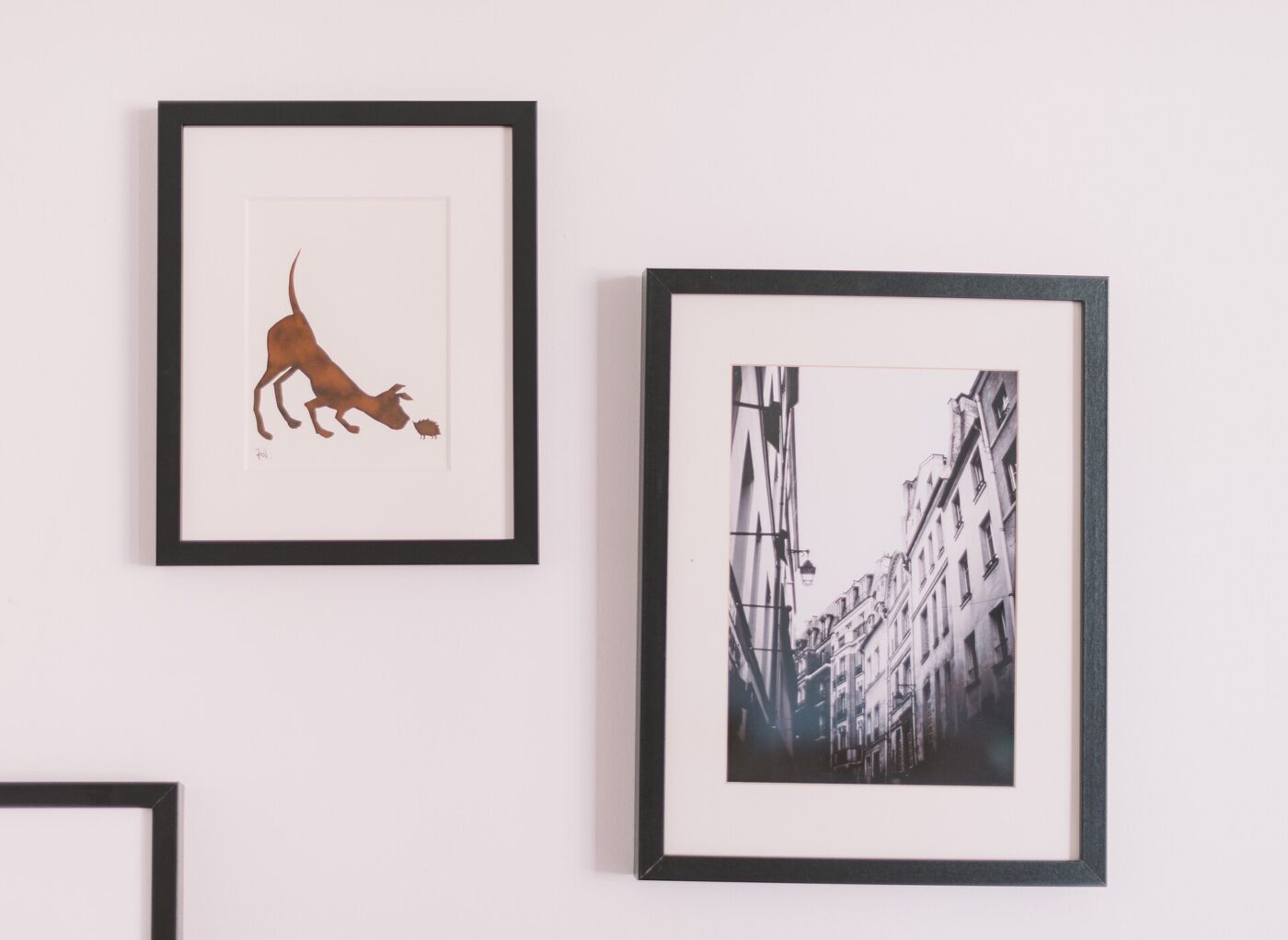
Two art prints, identical to the eye. One is still vivid in twenty years and one is noticeably washed out in five.
The difference is set before the print leaves the studio, in the ink chemistry and the paper — and then compounded by what you hang it behind.
Fear Index · Think twice
Identical on arrival, different in five years
Fading is gradual enough that owners rarely notice until they move the frame and see the unfaded rectangle behind it.
Two ink chemistries
Dye inks dissolve colorants in liquid. They soak into the paper, produce extremely vivid color and smooth gradients, and are chemically vulnerable — UV light breaks down the dye molecules directly. Some current dye ink sets are rated by their manufacturers for decades of display life behind glass, but that rating depends on the exact ink and paper combination, not on the word “dye” alone.
Pigment inks suspend solid particles in a carrier. The particles sit on the surface encapsulated in resin, which shields them. Manufacturer light-fastness ratings for pigment sets commonly run to many decades under standard display conditions, and that margin over dye is the main reason galleries and print shops default to pigment.
“Giclée” originally meant a fine-art inkjet print, and it has no regulated definition. A giclée print on dye ink and cheap paper fades as fast as any other print made the same way.
Ask the seller two questions: what ink, and what paper. A maker doing this properly will answer immediately and specifically. A vague answer is itself an answer.
Paper matters more than people expect
Ordinary paper contains acidic residues from manufacturing. Over years those acids attack the cellulose, and the paper yellows and becomes brittle — a process entirely separate from ink fading.
Archival papers are acid-free and usually buffered with an alkaline reserve to neutralize acids absorbed from the air. Cotton rag papers contain no wood pulp lignin at all and are the most stable.
The giveaway on cheap prints is a paper that has already yellowed slightly at the edges within a year or two.
The frame does half the work

Even a pigment print on cotton rag fades faster in direct sun than a dye print in a hallway. Display conditions are the largest single variable.
- UV-filtering glazing blocks the wavelengths that do most of the damage. It costs more than standard glass and is the most effective single upgrade.
- Never hang facing a window. Direct sun will fade anything.
- Acid-free mount board, because a cheap mount will burn a brown line into the print where it touches.
- Keep the print off the glass, which a mount does naturally — condensation against glazing causes sticking and mold.
- Avoid bathrooms and above radiators. Humidity cycling causes cockling.
Checking a print you already own
You do not need to unframe anything to get an early warning. Fading is gradual enough that eyes adjust to it day by day, so a direct comparison catches what memory misses.
- Cover a small corner with a coin or an opaque sticker for a few months, then remove it and compare the covered patch to the rest of the print. A visible difference means fading is already underway.
- Check the back of the mount or a signed edition label for an ink or paper specification; reputable print shops and publishers often record it there.
- Move anything currently in direct sun before checking further — it is the single biggest accelerant, and moving it stops further damage immediately regardless of what ink it turns out to be. A spot that gets an hour or two of direct afternoon sun does more damage over a year than a wall that never sees the sun at all, even under otherwise identical glazing.
The shortlist
Paid links: we earn a commission if you buy through the buttons below, at no extra cost to you. As an Amazon Associate I earn from qualifying purchases.
Compared on how long the color lasts
| Product type | Best for | Risk estimate | Where to buy |
|---|---|---|---|
| Archival Pigment Art Print | Archival quality | 24/100 | See listings on AmazonOpens Amazon search results, not one listing: check the model on the product page. |
| Picture Frame with UV-Filtering Glazing | Any print you already own | 20/100 | See listings on AmazonOpens Amazon search results, not one listing: check the model on the product page. |
| Acid-Free Mount Board | Protects any print | 12/100 | See listings on AmazonOpens Amazon search results, not one listing: check the model on the product page. |
Risk estimate is our editorial Fear Index for the product type (lower is safer), not a customer rating. How it is scored.
Picture Frame with UV-Filtering Glazing
The upgrade that helps regardless of what the print is made of. If you buy one thing here, buy this.
- Blocks the wavelengths that do most fading
- Works on prints you already own
- Check that the included mat is acid-free
- Costs more than standard glass
- Heavier in large sizes
Archival Pigment Art Print
Ask what ink and what paper. The answer, and how readily it comes, tells you most of what you need to know.
- Pigment ink rated for decades
- Cotton rag paper resists yellowing
- Sellers who specify are usually the careful ones
- Costs more than a poster print
- “Giclée” alone guarantees nothing
More: Handmade & Gifts analyses and how the Fear Index is scored.
Questions people actually ask
Why do art prints fade?
UV light breaks down dye-based colorants directly, and acidic paper yellows independently. Pigment inks on acid-free paper resist both for decades.
What does giclée actually mean?
Originally a fine-art inkjet print, and it has no regulated definition. A giclée print on dye ink and cheap paper fades as fast as any other print made the same way.
Is pigment ink better than dye ink?
For longevity, considerably. Pigment particles sit encapsulated on the surface and are rated for decades; dye inks are more vivid initially, and many fade within years in bright light unless framed behind UV-filtering glass.
Does UV glass really stop prints fading?
It blocks the wavelengths responsible for most fading, which slows the process substantially. It is the most effective single thing you can do for a print you already own.