
How to Tell a Real Etsy Maker From a Reseller in a Few Minutes
Many Etsy listings are mass-produced goods with a maker story attached. Five checks that help separate real makers from resellers in a few minutes.

On this page 8 sections
Handmade marketplaces have a structural problem, and it is not one that careful browsing solves on its own.
The platform earns a fee on every transaction. Policing whether an item is genuinely made by the seller is expensive, adversarial and reduces listings. A reseller who buys wholesale, photographs it well and writes a studio story is very difficult to distinguish from a real maker using the same tools, and enforcement relies largely on what sellers disclose about themselves.
Fear Index · High risk
You are buying a story as much as an object
The object usually arrives and is usually fine. What frequently is not real is the thing you paid a premium for: that a person made it.
Etsy’s rules allow sellers to work with outside production partners, as long as the partner is disclosed and the seller designed the item. That is a reasonable rule which a great many legitimate makers rely on. It is also the gap through which straightforward resale operates, because the disclosure is self-reported.
Etsy’s Creativity Standards require items to be made or designed by the seller, or to be vintage or craft supplies, and require any production partner to be disclosed — disclosure the seller supplies themselves.
The five checks

1. Reverse image search the main photo
This is the highest-yield check by a wide margin and it takes fifteen seconds. Save the listing’s primary image and run it through an image search.
If the same photograph appears across several unrelated shops or on a wholesale catalog site, look at who had it first. Resellers use supplier photos, but they also copy real makers’ photos, so treat a duplicate as a lead rather than a verdict: the shop whose own social accounts show the piece being made, with process shots and variation between posts, is usually the original.
2. Check the production time against reality
A listing that claims made-to-order and ships the same day is describing something that did not happen. Making things takes time.
- Same-day or one-day dispatch on a bespoke item. It was in a box already.
- Three to ten business days. Consistent with a real small operation batching work.
- Two to six weeks, stated confidently. Consistent with one-off production, but also with goods shipped from an overseas supplier — check shipping origin in the reviews before reading anything into it.
This check has a failure mode worth knowing: established makers do hold stock of their most popular designs, so fast dispatch is not proof of anything on its own. It is a signal, weighed with the others.
3. Look at what personalization costs
Adding a name to an object requires setup — a machine file, a jig, a test piece, and a rejected piece when something goes wrong. Real makers price that in, typically a few dollars or more.
Free personalization on a cheap item is a weak signal, not proof: it often means the personalization is a print-on-demand step at a fulfillment center, or a digital overlay applied to a stock photograph while the physical object stays generic. Both are legitimate businesses, and some small makers do build engraving or monogramming into the base price. Weigh it with the other checks rather than treating it as a verdict on its own.
Every real constraint on a small maker — time, setup cost, batch size — shows up somewhere in the listing. A listing with no constraints visible anywhere is describing a warehouse.
4. Read the reviews for shipping origin
Sort reviews to recent and read twenty. You are looking for one specific thing: buyers mentioning where the parcel came from. A shop listing a domestic location whose reviews repeatedly mention international shipping, customs delays or foreign-language paperwork is not making anything domestically.
Also worth noting: photographs in reviews. Real makers’ review photos show variation between units, because handmade things vary. Identical review photos across dozens of reviews indicate identical units.
5. Check the shop’s range for coherence
A person who makes things has a craft, and a craft has limits. A silversmith sells silver. A woodworker sells wood.
A shop selling hand-poured candles, engraved tumblers, embroidered hats, resin jewelry and printed tote bags is not one person with five workshops. It is a storefront in front of several fulfillment services. Again — a legal business, and not a handmade one.
Where buying from a real maker genuinely wins
Having filtered, the question becomes where independent production actually beats the mass-market alternative on merit rather than sentiment. In our assessment, three categories stand out.
Paid links: we earn a commission if you buy through the buttons below, at no extra cost to you. As an Amazon Associate I earn from qualifying purchases.
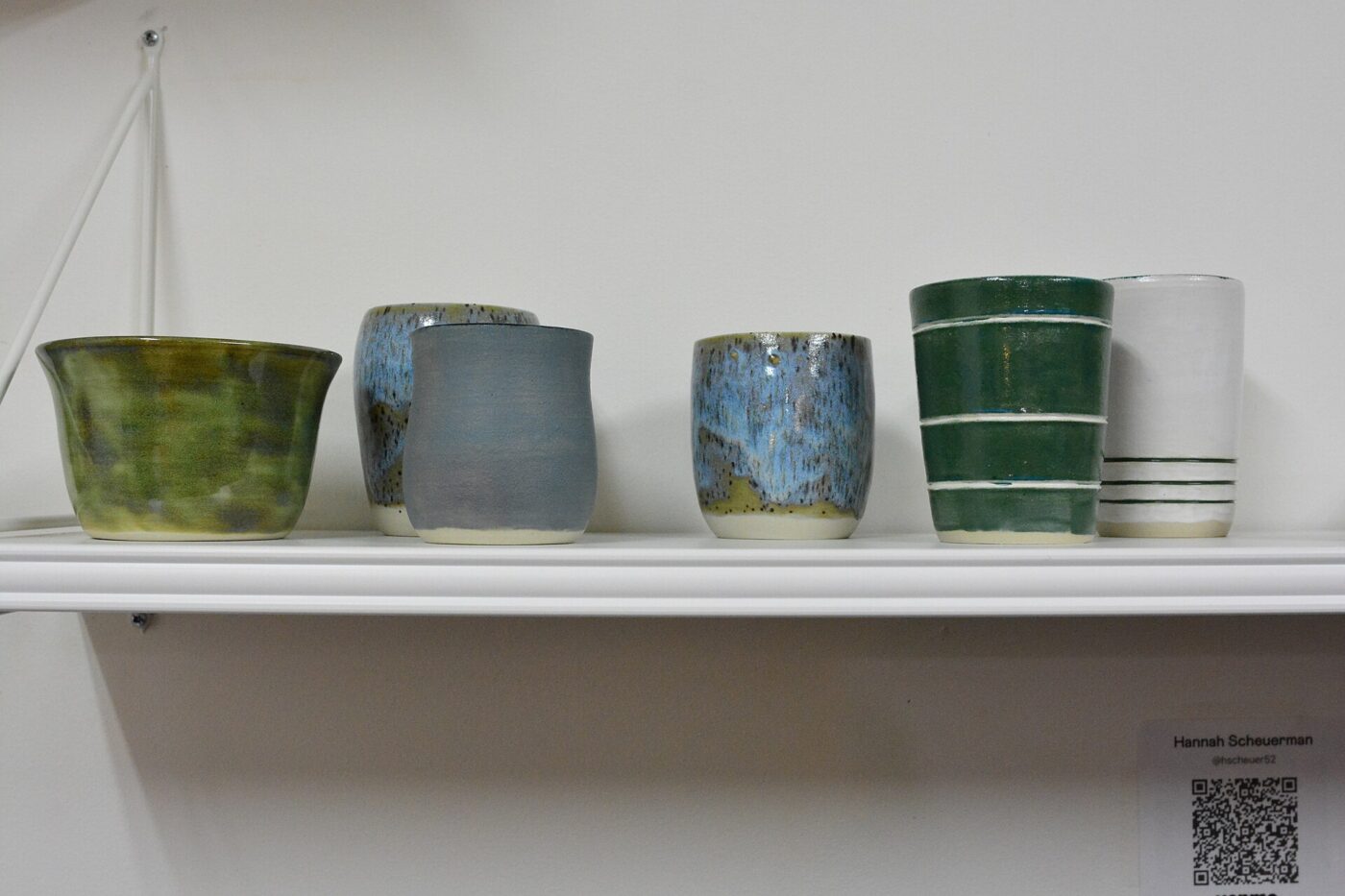
Studio ceramics and pottery
Studio ceramics are the clearest case. The difference between a thrown mug and a slip-cast one is obvious in the hand, and the price gap is far smaller than people expect.
- Mass-produced ceramics are thin and uniform; studio pieces are neither
- Glaze variation is visible and genuinely unrepeatable
- Prices often comparable to mid-market retail
- Ask whether the glaze is food-safe, and whether it is dishwasher and microwave safe
- Replacing a broken one is impossible
Handmade jewelry from independent makers
Worth the filtering effort, because the material difference is real — solid silver or gold rather than plated base metal. Apply all five checks here.
- You can buy solid metal rather than plated base metal
- Direct contact with the maker about sizing and repair
- Repairable in a way mass-market jewelry is not
- The category with the heaviest reseller presence
- Requires every check above
Personalized gifts made to order
The category where the gap between expectation and delivery is widest. If personalization is free and dispatch is same-day, you may be buying a print-on-demand item at a handmade price.
- Genuine one-off personalization does exist
- A real maker will send a proof before cutting
- Most saturated category for print-on-demand
- Free personalization is a weak signal, not a guarantee
The honest position on resellers
There is nothing wrong with buying a mass-produced item. There is something wrong with paying a handmade premium for one while believing a person made it.
If a product is good and the price is fair, who made it may not matter to you — and that is a perfectly reasonable position. The checks above exist so that it is a decision rather than something that happened to you.
More: Handmade and Gifts analyses and how this site earns.
Questions people actually ask
Is everything on Etsy handmade?
No. Etsy’s Creativity Standards permit sellers to use production partners provided they are disclosed and the seller designed the item, and that disclosure is self-reported. Straightforward resale also occurs and is not always caught.
What is the fastest way to spot an Etsy reseller?
Reverse image search the listing photo, then check who had it first. Resellers use supplier photos, but they sometimes copy a real maker’s photos too, so a duplicate is a lead to follow, not proof on its own.
Is free personalization a bad sign?
It can be. Personalizing a physical object costs the maker setup time and occasional wasted material, though some makers simply build that into the base price. Weigh it with the other checks rather than deciding on it alone.
Does buying handmade actually get you a better product?
In some categories clearly yes — studio ceramics and solid-metal jewelry are meaningfully different from mass-market equivalents. In others you are mainly paying for provenance, which is a fair thing to want as long as it is what you are getting.