
Backpack Straps Hurt Because the Pack Fits Your Height, Not Your Torso
Shoulder pain from a backpack is usually a fit problem: wrong back length, a hip belt in the wrong place, or heavy items far from your spine. How to fix it.


Most backpack pain gets blamed on weight. Weight matters, but the same load can feel manageable in one pack and punishing in another.
The difference is usually fit. A pack whose back length does not match yours puts the hip belt on your stomach or your backside, the shoulder straps take the load, and the ache arrives in the neck and upper back.
Fear Index · Think twice
Carrying the load on your shoulders
A well-reviewed pack can still dig into the shoulders and neck after an hour, because its back length or hip belt never matched the wearer.
Height is the wrong measurement
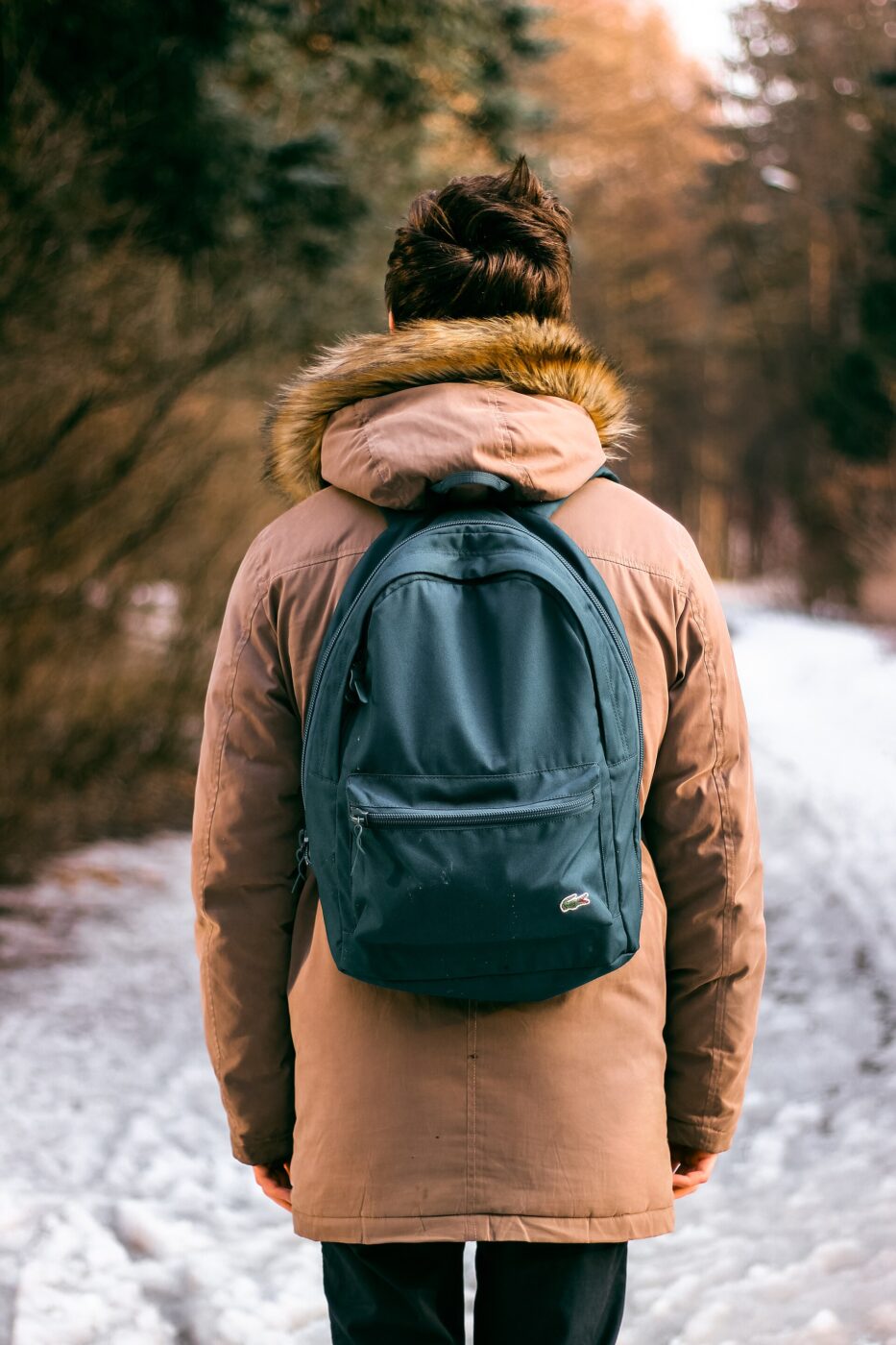
Packs with a frame or hip belt are sized by torso length, also called back length. The pack maker Deuter defines it as the distance between the seventh cervical vertebra, the prominent bump at the base of the neck, and the upper edge of the iliac crest, the top of the hip bones.
Height is only a loose guide. Deuter publishes approximate back lengths for its fits alongside body heights, and adds that people of almost the same height can have different back lengths. Long legs and a short torso, or the reverse, change the size you need.
Measuring takes a flexible tape and a helper. Tilt your head forward to find the neck bump, put your hands on your hips with thumbs pointing back to find the top of the hip bones, and measure along the spine between the two points.
Measure your back length before comparing packs. It is the number that decides where the hip belt lands.
Where the weight should go
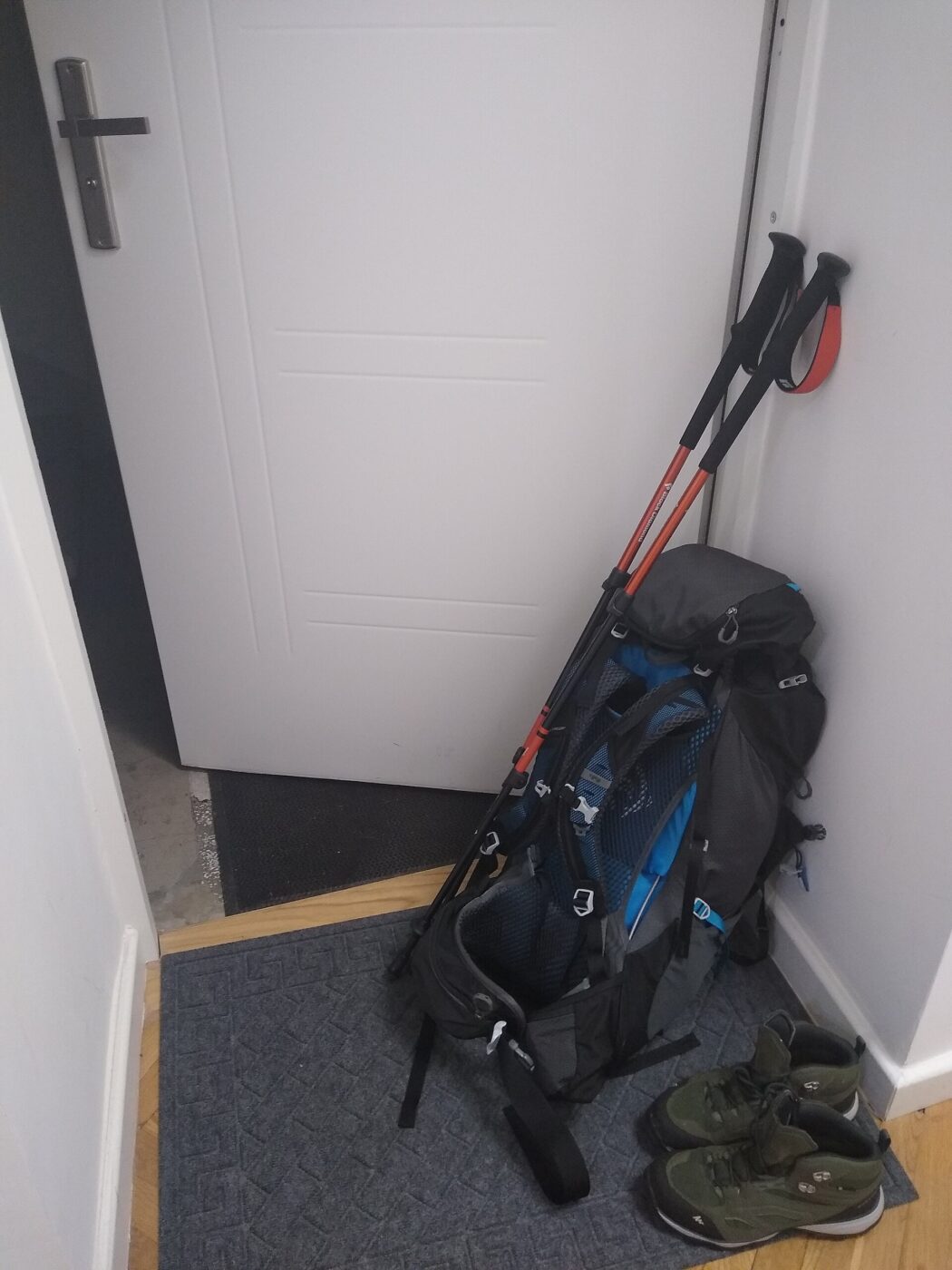
Hips are better built for load than shoulders. Gregory, a pack maker, notes in its fit guide that the hips are better suited to carry heavier loads and reduce strain on the shoulders, and it positions the hip belt padding about an inch above the iliac crest so the belt wraps the top of the hip bones.
Packing affects this as much as straps do. The American Academy of Orthopaedic Surgeons advises organizing a backpack so heavier items are low and toward the center, tightening the straps to keep the load close to the back, and using both shoulder straps every time. A laptop or water bottle hanging at the outer edge of the pack acts like a lever pulling you backward.
Load matters too. The Academy recommends packing light and removing items if a backpack is too heavy, and suggests a waist strap when heavy loads are carried.
- Heaviest items against the back panel, centered rather than at the top or outside.
- Both shoulder straps, always; one strap loads one side of the body.
- Hip belt on the hip bones, not the waist, snug enough to take weight.
- Compression straps tightened so contents do not shift as you walk.
- Leave behind what you do not need; every item adds to the load.
Adjusting straps in the right order
Loosen everything, load the pack with what you will actually carry, and put it on. Fasten and tighten the hip belt first, then snug the shoulder straps. Gregory describes shoulder straps that follow your natural shape and rest fully against your shoulders.
Load lifters, the small straps from the top of the shoulder straps to the pack, draw the load toward your center of gravity, and Gregory says they help shift weight from the upper body to the hips. The sternum strap comes last; it should not distort the shoulder straps or restrict breathing.
If the hip belt cannot sit on the hip bones while the shoulder straps wrap properly, the back length is wrong. Many packs have an adjustable harness to fix this; fixed packs need a different size.
| Problem | Likely cause | Fix |
|---|---|---|
| Shoulders ache, hips feel nothing | Belt too loose or too low | Raise and tighten the hip belt |
| Gap between straps and shoulders | Back length too long | Shorter harness setting or size |
| Straps pull down on top of shoulders | Back length too short | Longer harness setting or size |
| Pack pulls you backward | Heavy items far from the spine | Repack closer and tighten compression |
Commuter and travel packs follow the same rules
Most laptop and school backpacks come in one size with no hip belt, so all weight rides on the shoulders. That is tolerable for light loads and short walks. If you regularly carry a laptop, charger, lunch and water across a city, a pack with a sternum strap and at least a basic hip belt spreads the load better.
Travel backpacks that open like a suitcase are often packed heavier than hiking packs and carried through airports for long periods. Treat them like hiking packs: check whether the harness adjusts, put dense items such as shoes and toiletries against the back panel, and wear the hip belt rather than tucking it away.
A one-size commuter pack cannot move weight to your hips. If you carry heavy loads daily, choose a pack with a real hip belt.
The shortlist
Paid links: we earn a commission if you buy through the buttons below, at no extra cost to you. As an Amazon Associate I earn from qualifying purchases.
Compared on fit and carry
| Product type | Best for | Risk estimate | Where to buy |
|---|---|---|---|
| Adjustable Torso Hiking Backpack | Heavy or long carries | 20/100 | See listings on Amazon |
| Travel Backpack with Hip Belt | Travel with a hip belt | 28/100 | See listings on Amazon |
| Laptop Backpack with Sternum Strap | Daily laptop commute | 34/100 | See listings on Amazon |
Risk estimate is our editorial Fear Index for the product type (lower is safer), not a customer rating. How it is scored. The buttons open Amazon search results rather than one listing, so check the model on the product page.
Adjustable Torso Hiking Backpack
The adjustable harness solves the most common fit failure. Set it with the pack loaded.
- Harness adjusts to back length
- Padded hip belt takes the load
- Load lifters for fine tuning
- Heavier than simple packs
- Needs time to set up correctly
Travel Backpack with Hip Belt
Worth the belt for long airport walks. Check the back length suits you before buying.
- Hip belt spreads heavy loads
- Opens like a suitcase
- Carry-on friendly sizes
- Often one fixed back length
- Hip belt adds bulk when stowed
More: Fashion and Footwear analyses and how the Fear Index is scored.
Questions people actually ask
How do I measure my torso length for a backpack?
Measure along the spine from the bony bump at the base of your neck to the top of your hip bones. A helper and a flexible tape make it accurate.
Why do my shoulders hurt when wearing a backpack?
Usually because the shoulders are carrying weight the hips should take: the back length is wrong, the hip belt is loose or misplaced, or heavy items sit far from the back.
Where should a backpack hip belt sit?
On the top of the hip bones, not around the waist. It should be snug enough to carry most of the load.
How should you pack a backpack to reduce strain?
Put heavier items close to your back and toward the center, tighten straps so the load stays close, use both shoulder straps and carry only what you need.