
Dark Sunglasses Without UV Protection Can Be Worse Than No Sunglasses
Tint darkness says nothing about UV blocking, and polarization only cuts glare. How to read UV400, 100% UV and polarized labels before you buy sunglasses.

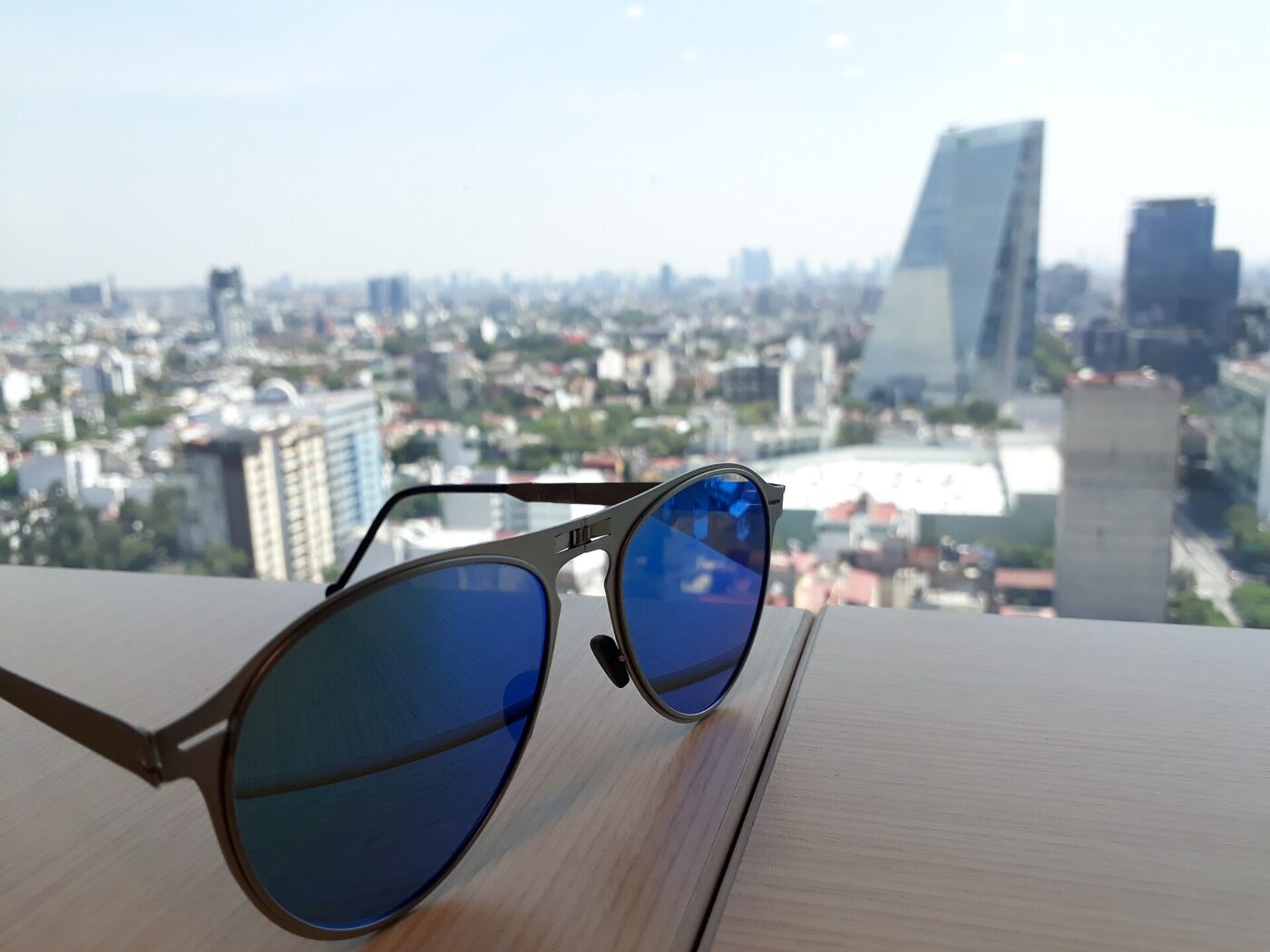
Sunglasses are sold on looks, lens color and the word polarized. The feature that matters most for eye health, ultraviolet blocking, is usually a small sticker that nobody reads.
The three properties are independent. A lens can be very dark and block little UV, clear and block nearly all of it, or polarized with or without a UV filter. Knowing which label means what is most of the buying decision.
Fear Index · Think twice
Paying for darkness instead of UV blocking
The risk is invisible: a dark lens that feels protective but lets ultraviolet through, worn for hours in exactly the conditions where protection matters.
Tint, UV and polarization are three different things
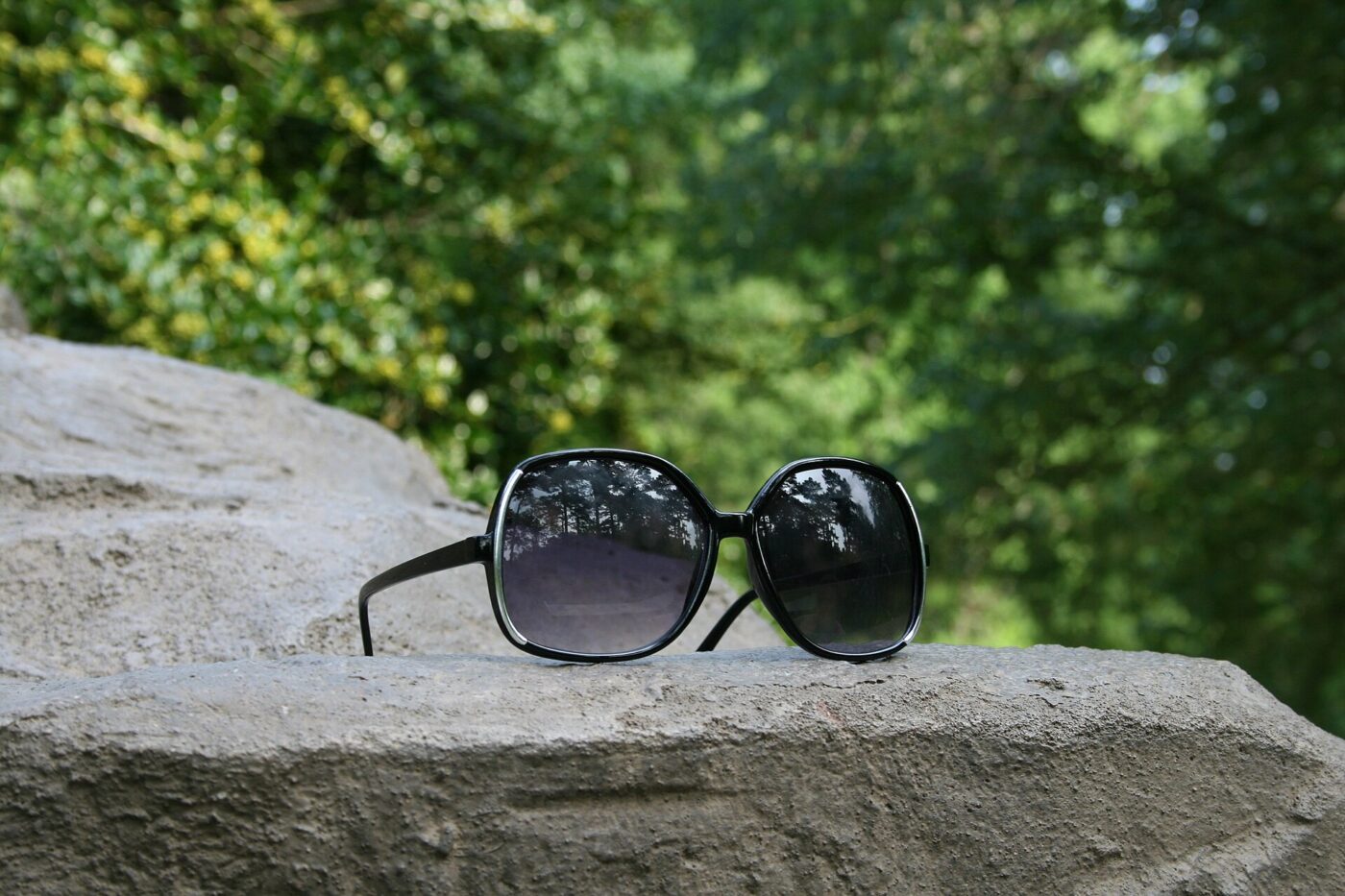
Tint reduces visible light, which is why dark lenses feel comfortable. UV is invisible, so comfort gives no clue about it. The American Academy of Ophthalmology states that the color and degree of darkness do not tell you anything about a lens’s ability to block UV light.
UV blocking comes from the lens material or a coating that absorbs ultraviolet wavelengths. It can be present in a completely clear lens: the Academy notes that UV coatings on clear prescription lenses are as effective as those on sunglasses, and that it is not the dark tint that is important.
Polarization is a filter that blocks light reflected horizontally off flat surfaces such as water, wet roads and car hoods. It improves comfort and clarity in glare, but the Academy is explicit that polarization itself does not provide UV protection.
| Label or feature | What it does | What it does not tell you |
|---|---|---|
| 100% UV or UV400 | Blocks UV up to 400 nm | How dark the lens is |
| Dark or gray tint | Reduces visible brightness | Anything about UV |
| Polarized | Cuts reflected glare | Whether UV is blocked |
| Mirror coating | Reflects some visible light | Full UV protection |
| Wraparound frame | Blocks light from the sides | Lens UV rating |
Why a dark lens without UV blocking is the worst case
The eye responds to brightness, not ultraviolet. Behind a dark lens the pupil stays more open than it would in bare sunlight. The American Academy of Ophthalmology warns that dark glasses that do not filter UV may actually put your eyes at greater risk, because larger pupils let more unfiltered UV rays in.
That is why the cheapest option is not the risky one. The Academy says drugstore sunglasses labeled as 100% UV-blocking are a better choice than designer sunglasses with no protection. Price, brand and lens darkness do not predict UV performance; the label does.
In the US, nonprescription sunglasses are regulated by the FDA as Class I medical devices. FDA guidance requires impact-resistant lenses and allows sunglasses that meet the UV requirements of the ANSI Z80.3 standard to say so on the label. A listing that makes no specific UV claim should be treated as having none.
Buy the UV label first and the tint second. A light lens with 100% UV protection beats a dark one with no claim.
When polarized lenses get in the way

Polarized lenses are excellent for fishing, boating and long drives into low sun. They have trade-offs that often surface only after purchase. The Academy notes they can make LCD screens hard to read, including car dashboard displays, ATMs, phones and some watches.
The same glare they remove can be useful information. The Academy points out that polarized lenses can make it harder to see icy patches while driving or skiing, and it lists night driving among the situations where they may not be ideal.
- Check the UV label on polarized pairs, since polarization and UV blocking are separate features.
- Test with your phone in the store or on arrival; some screens black out at certain angles.
- Check your car first if you drive a lot; dashboard and navigation displays are the screens most often affected.
- Skiers may prefer non-polarized lenses for reading icy surfaces.
- Choose wraparound or larger frames if you spend long hours outdoors; light also enters from the sides.
Reading a listing before you buy
Look for the words 100% UV protection, UV400 or UV absorption up to 400nm. The Academy treats UV absorption up to 400nm as acceptable and equivalent to 100 percent UV absorption. Vague phrases such as UV-coated, UV-resistant or sun protection lens say less.
Frame fit matters more than most buyers expect. Wraparound shapes keep light from shining around the frames, which the Academy says offers even more protection. If you wear prescription glasses, fit-over sunglasses or prescription sunglasses avoid stacking gaps.
Choose tint color for comfort and contrast rather than protection. Gray keeps colors natural, brown and amber raise contrast, and none of them blocks more UV simply because of its color.
If a product page will not state a specific UV rating, assume there is no rating and move on.
The shortlist
Paid links: we earn a commission if you buy through the buttons below, at no extra cost to you. As an Amazon Associate I earn from qualifying purchases.
Compared on protection and use
| Product type | Best for | Risk estimate | Where to buy |
|---|---|---|---|
| Polarized Sunglasses with UV400 | Driving and water | 22/100 | See listings on Amazon |
| Wraparound Sunglasses with UV400 | Side protection | 18/100 | See listings on Amazon |
| Fit-Over Sunglasses with UV400 | Over prescription glasses | 26/100 | See listings on Amazon |
Risk estimate is our editorial Fear Index for the product type (lower is safer), not a customer rating. How it is scored. The buttons open Amazon search results rather than one listing, so check the model on the product page.
Wraparound Sunglasses with UV400
A UV400 lens in a wraparound frame covers both routes light takes to the eye. Choose polarized or not by activity.
- Explicit UV400 rating
- Reduces light entering from the sides
- Works in non-polarized versions
- Sporty look does not suit everyone
- Can fog in humid conditions
Polarized Sunglasses with UV400
Ideal for driving and water, provided the UV rating is stated as well as the polarization.
- Cuts glare off water and roads
- Sharper view in bright reflections
- UV400 stated separately
- LCD screens may black out
- Can hide icy patches
More: Fashion and Footwear analyses and how the Fear Index is scored.
Sources
- How to Choose the Best Sunglasses to Avoid Sun Damage — American Academy of Ophthalmology
- What Are Polarized Lenses? — American Academy of Ophthalmology
- Is the UV Coating on Prescription Lenses Enough Protection? — American Academy of Ophthalmology
- Guidance Document for Nonprescription Sunglasses — U.S. Food and Drug Administration
Questions people actually ask
Do polarized sunglasses block UV?
Not because of the polarization. Polarization cuts glare; UV blocking is a separate property, so check for a 100% UV or UV400 label.
What does UV400 mean on sunglasses?
It means the lens absorbs ultraviolet light up to 400 nanometers, which the American Academy of Ophthalmology treats as equivalent to 100% UV protection.
Are darker sunglasses better for your eyes?
No. Darkness does not indicate UV protection, and dark lenses without a UV filter can let the pupils stay larger and admit more UV.
Are cheap sunglasses safe?
They can be. Inexpensive sunglasses labeled 100% UV-blocking are a better choice than expensive pairs with no UV protection.