
An 800 Fill Down Jacket Can Be Colder Than a 600 Fill One
Fill power measures how much space down fills, not how much down a jacket holds. Why fill weight, baffles and moisture decide warmth, and what RDS covers.

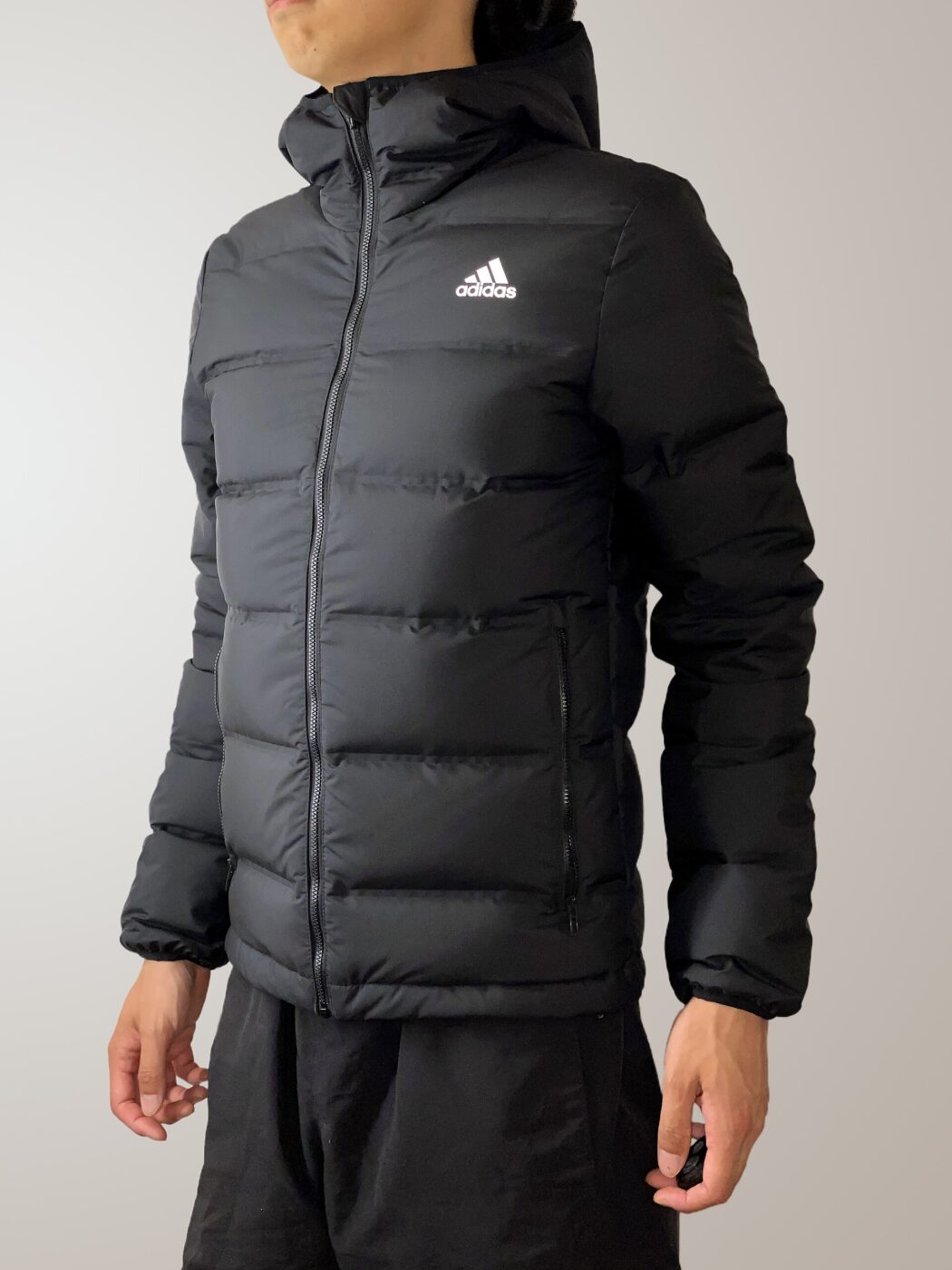
Down jackets are marketed by fill power: 600, 700, 800, 900. The bigger number carries a higher price, and it sounds like a warmth rating.
It is not. Fill power is a lab measurement of how much space a fixed amount of down fills. A jacket is warm because of how much of that down it holds, how it is stitched in, and whether it stays dry, and those facts are often missing from the label.
Fear Index · Think twice
Buying warmth by a single number
A premium high-fill jacket can still feel thin in real cold if it holds little down, or go flat the first time it gets wet.
Quality versus quantity
IDFL, a laboratory that tests down and feather products, describes fill power as a volumetric measurement used to estimate the insulation value of down, with common results from 300 to 900 cubic inches per 30 grams, roughly an ounce. Higher numbers mean each gram traps more air, so the same warmth can be reached with less weight and a smaller packed size.
Fill weight is the total amount of down in the garment. A jacket with a small amount of very high fill power down can loft less in total than one with more of a moderate fill. As a simple illustration, 3 ounces of 650 fill occupies more total volume than 2 ounces of 900 fill.
Allied Feather and Down, a down supplier, says it will not assign a warmth value to any fill power on its own, because actual thermal performance also depends on fill weights, stitching lines and the fabrics.
High fill power buys lightness and packability. Warmth comes from total loft, which needs fill weight too.
Why labels are hard to compare
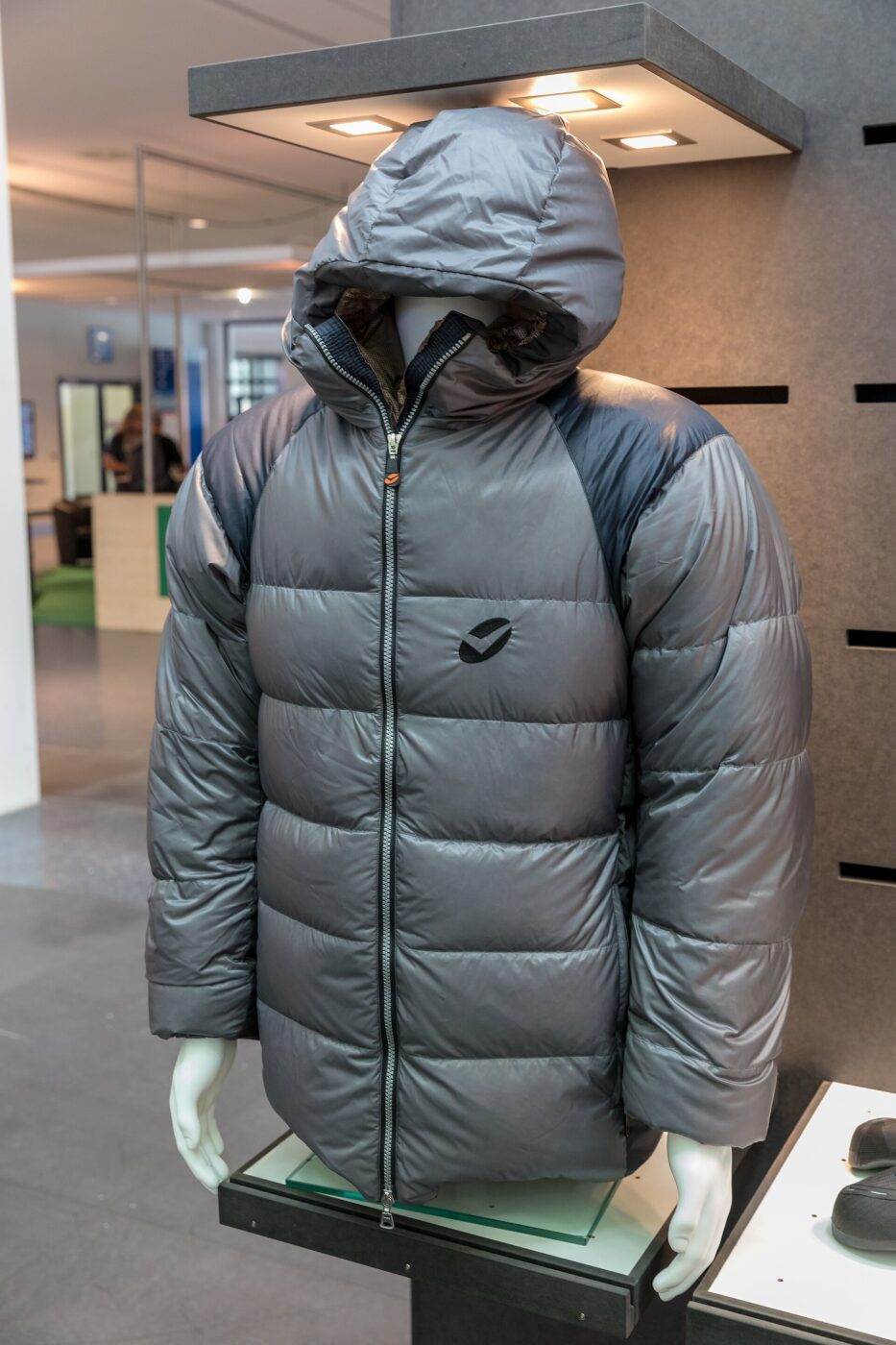
Fill power numbers are not measured the same way everywhere. Allied explains that the US and international method conditions the down with steam, the European standard long allowed several conditioning options that could give inconsistent results, though Allied says steam conditioning is now approved there too and brings EN results much closer to the US method, and the Chinese method uses heat and a narrower cylinder. The same down can still test differently under each.
Composition matters as well. IDFL reports content as percentages of down clusters, down fiber and feathers, and says those percentages are the basis for product labels. Feathers add weight and quills but far less loft than clusters, so a high feather share lowers performance at any given fill weight.
Construction decides whether the loft reaches your body. Sewn-through seams pinch the jacket to nothing along each stitch line, which creates cold lines, while box baffles or offset layers keep insulation continuous at the cost of weight and price.
- Look for fill weight in ounces or grams; brands that publish it make comparison possible.
- Check down to feather ratio, such as 90/10, on the label or product page.
- Note the test standard if given, since fill power from different methods is not directly comparable.
- Inspect stitch lines for cold seams on lightweight sewn-through designs.
- Compare jackets within one brand when fill weight is missing; construction methods are more consistent.
Wet down and when synthetic wins

Down insulates by lofting, and moisture collapses it. Allied notes that down can wet out, reducing fill power and losing the ability to retain warmth. Rain, snow melt, sweat during hard effort and a damp stuff sack all push down in that direction.
Water-resistant treated down is finished so that water beads and rolls off the clusters, but it resists moisture rather than making down waterproof. A good shell fabric and not overheating inside the jacket do more to keep down dry than the treatment alone.
Synthetic insulation is heavier and bulkier for the same warmth, but it keeps more of its loft when damp. For wet climates, active use and anyone who sweats heavily, it is often the more dependable choice.
| Insulation | Strength | Weakness |
|---|---|---|
| High fill power down, low fill weight | Very light and packable | Can feel thin in real cold |
| Moderate fill power, high fill weight | Warm and less expensive | Heavier and bulkier |
| Water-resistant treated down | Better in damp conditions | Still loses loft when soaked |
| Synthetic insulation | Keeps more warmth when wet | Heavier for the same warmth |
What responsible down labels cover
The Responsible Down Standard, run by the nonprofit Textile Exchange, prohibits removing down or feathers from live birds, including live plucking and molt harvesting, and prohibits force-feeding. Certification bodies audit the supply chain from the farm, and chain of custody documents track certified material to the final product.
An RDS logo is an animal welfare claim. It says nothing about fill power, fill weight or warmth, so it belongs in the decision alongside the performance numbers rather than in place of them.
Whatever you buy, loft is also something you maintain. Store a down jacket loosely on a hanger or in a large bag rather than compressed in its stuff sack, wash it only as the care label directs, and dry it completely, because down that is packed away damp clumps and loses the loft you paid for.
Choose warmth with fill weight, fill power and construction; choose sourcing with the welfare certification.
The shortlist
Paid links: we earn a commission if you buy through the buttons below, at no extra cost to you. As an Amazon Associate I earn from qualifying purchases.
Compared on warmth and conditions
| Product type | Best for | Risk estimate | Where to buy |
|---|---|---|---|
| Down Jacket with Listed Fill Weight | Cold, dry days | 24/100 | See listings on Amazon |
| Water-Resistant Treated Down Jacket | Damp weather | 30/100 | See listings on Amazon |
| Synthetic Insulated Puffer Jacket | Wet or active use | 22/100 | See listings on Amazon |
Risk estimate is our editorial Fear Index for the product type (lower is safer), not a customer rating. How it is scored. The buttons open Amazon search results rather than one listing, so check the model on the product page.
Down Jacket with Listed Fill Weight
Pick the jacket that states fill weight and uses baffles that avoid cold stitch lines.
- Warmth you can compare
- Light for its warmth
- Packs small
- Loses loft when wet
- Fill weight often unpublished
Synthetic Insulated Puffer Jacket
The safer choice for rain, sleet and sweaty activity, where down struggles.
- Keeps more warmth when damp
- Easy to wash and dry
- Usually less expensive
- Bulkier for the same warmth
- Loses loft with heavy compression over years
More: Fashion and Footwear analyses and how the Fear Index is scored.
Questions people actually ask
Is higher fill power warmer?
Not by itself. Higher fill power down lofts more per ounce, but a jacket with less of it can be cooler than one with more lower fill down.
What does 800 fill power mean?
It means a fixed sample of the down, about an ounce, fills roughly 800 cubic inches under lab test conditions. It measures loft, not the amount of down in the jacket.
Does a down jacket still work when wet?
Less well. Wet down loses loft and warmth. Water-resistant treatments help it shed moisture but do not make it waterproof.
What does RDS certified down mean?
The Responsible Down Standard prohibits live plucking and force-feeding and audits the supply chain. It is an animal welfare certification, not a warmth rating.