
Your Shoe Size Is a Starting Point, and Width Is the Half You Ignore
Size numbers are not standardized between brands or styles. Measure length and width standing, late in the day, fit the larger foot, and plan for returns.

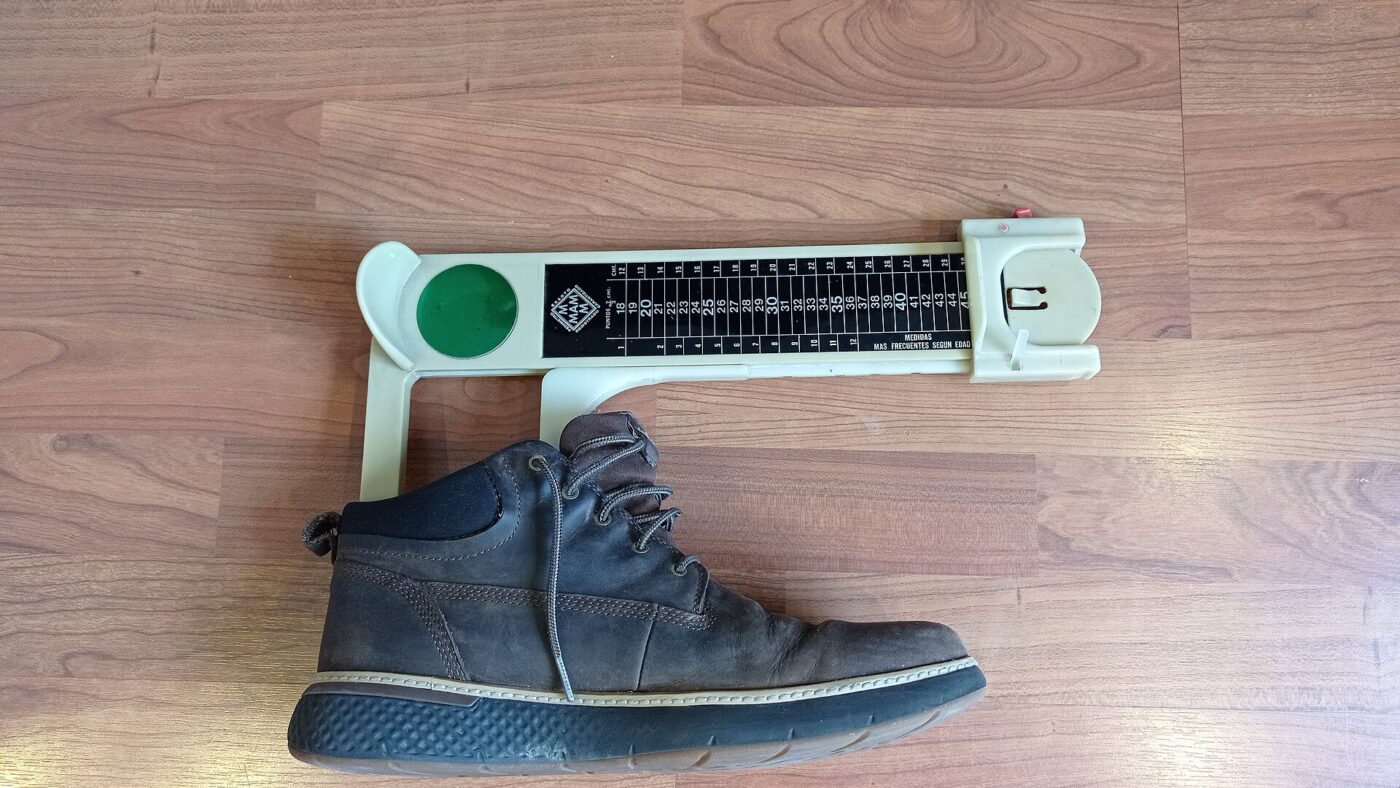
Most people buy shoes by repeating a number. It worked last time, so a 9 or a 10.5 goes into the filter and the search begins there.
That number was never a measurement of your foot. It is a label one manufacturer put on one last, the foot-shaped form a shoe is built around, and the next pair can fit very differently while carrying the same size.
Fear Index · Think twice
Buying by the number on the box
A shoe in your usual size that pinches across the forefoot or slips at the heel is usually discovered after the return window, or after it has been worn outside.
Why the same number fits differently
There is no single enforced sizing system across brands. Each company builds shoes on its own lasts, and a running shoe, a dress shoe and a boot from the same maker often use different ones. The American Academy of Orthopaedic Surgeons says plainly that size may vary from brand to brand and from style to style, and advises buying the shoe that fits best regardless of the number.
Construction changes the fit too. A padded collar, a thick insole, a stiff toe cap or a narrow toe shape all take up room that the size number does not describe. Two shoes with identical internal length can feel a full size apart because one tapers sharply at the toes.
Your own feet also change. Foot size changes with age, weight change and other factors, which is why a size that was right years ago is not reliable evidence today.
Treat your usual size as the first pair to try, not the pair to buy. The shoe that fits is the right size, whatever it says inside.
Measuring length and width properly

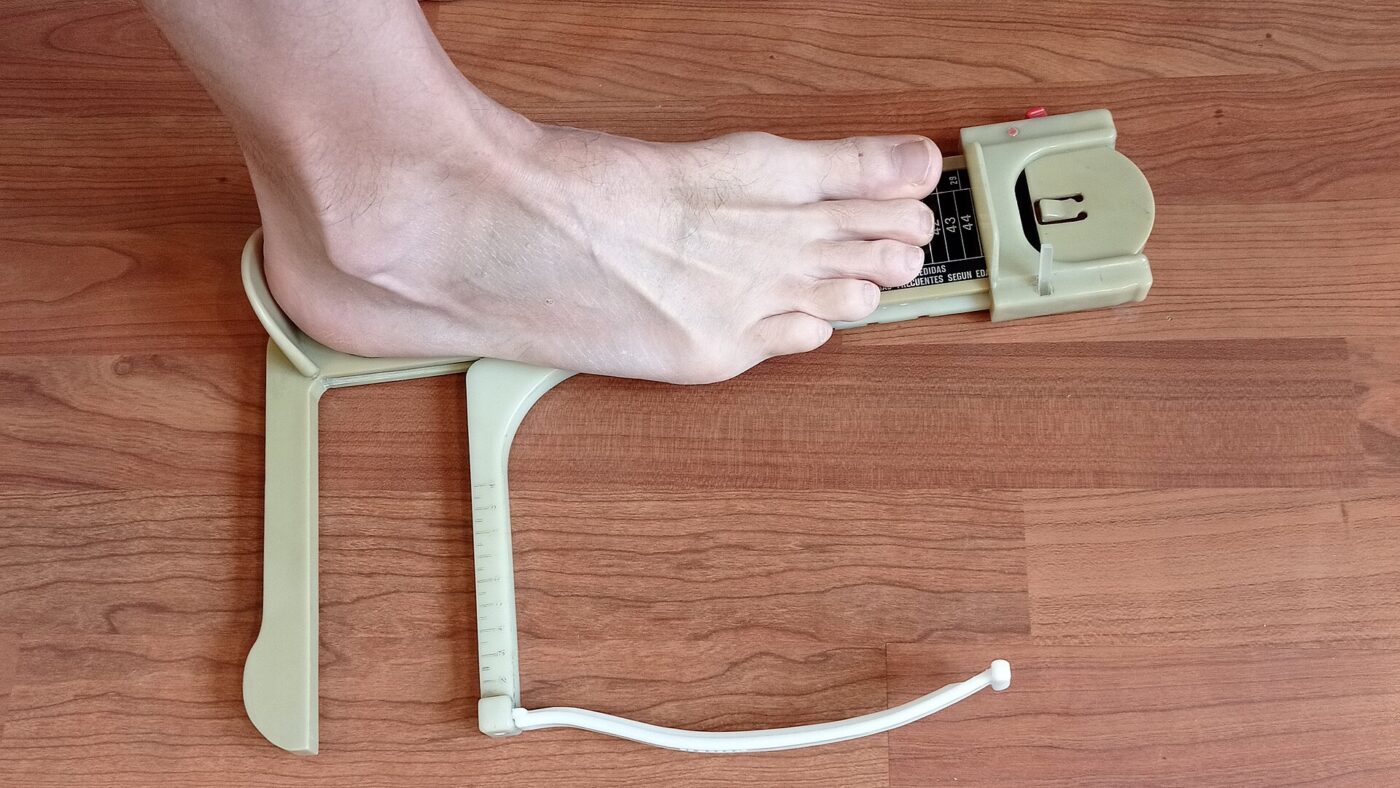
Feet swell over the course of a day. OrthoInfo, the patient site of the American Academy of Orthopaedic Surgeons, puts that swelling at up to 8% and recommends buying shoes toward the end of the day. Measure standing, with weight on both feet, because a loaded foot is longer and wider than one resting on a chair.
The Brannock Device Company, which makes the sliding foot gauge used in many shoe stores, instructs fitters to measure both feet and fit the larger one. It also compares heel-to-toe length with arch length, the distance from the heel to the ball of the foot, and uses whichever gives the larger size. People with a long arch and short toes can otherwise be sold a shoe that flexes in the wrong place.
Width is where most home measuring stops, and where many fit problems start. Width letters run from narrow to wide, roughly A through E and beyond, and the same letter means different things in men’s and women’s sizing: D is the usual medium for men, while B is the usual medium for women.
- Measure late in the day, after walking, in the socks you plan to wear.
- Stand with equal weight on both feet while the length is read.
- Read the longest toe, which is not always the big toe.
- Measure both feet and fit the larger one.
- Leave about half an inch between the longest toe and the end of the shoe, as OrthoInfo suggests.
What width letters actually tell you
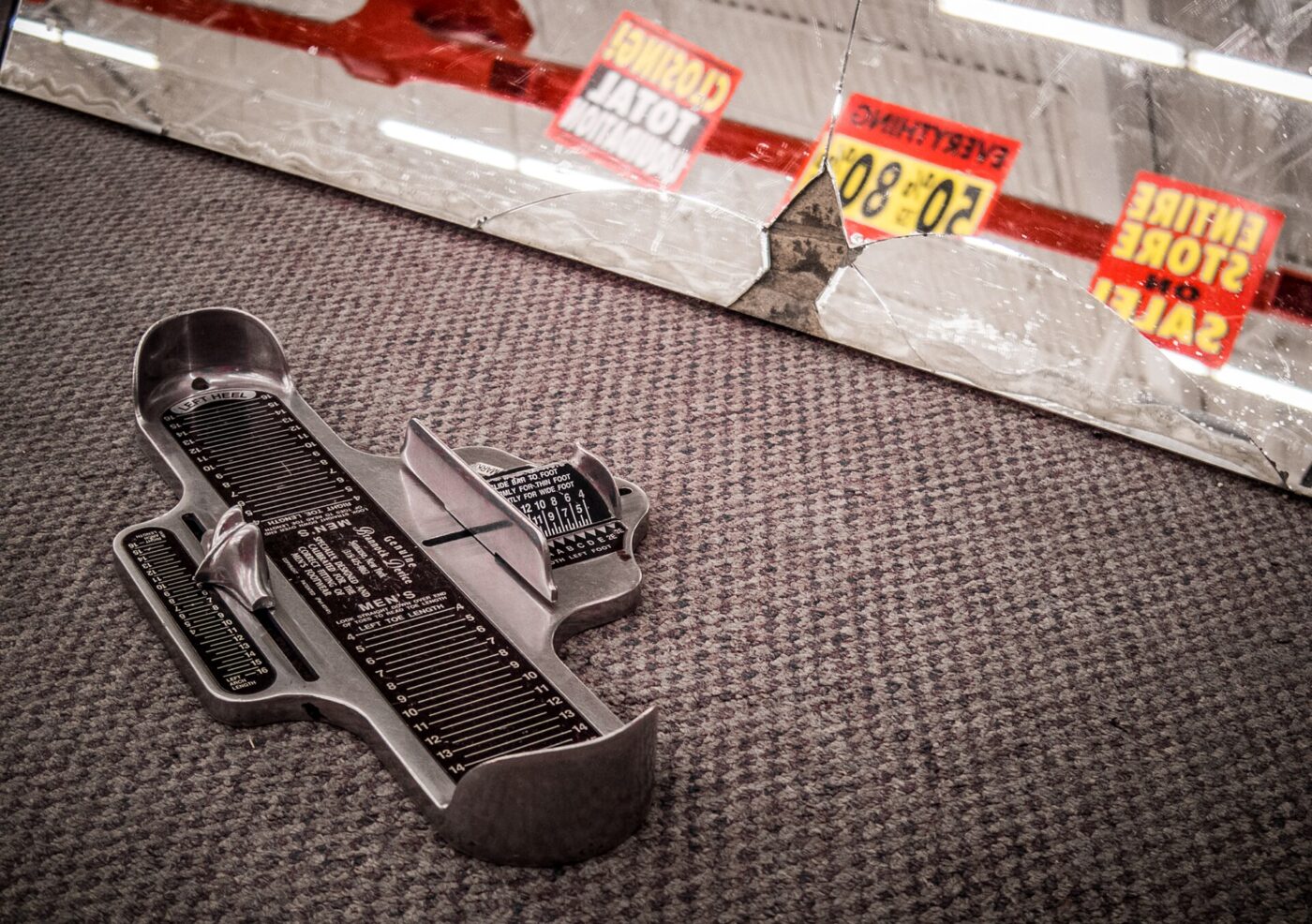
Width letters are more consistent than words like wide or roomy, but they are still not uniform. The Brannock company notes that terms such as narrow, wide and extra wide lack standardization across manufacturers. A 2E from one brand can feel close to a standard width from a brand that cuts generously.
A shoe that is too narrow tends to announce itself as pressure on the little toe or the joint behind the big toe; the American Academy of Orthopaedic Surgeons recommends a wide toe box for exactly that kind of pressure. A shoe that is too wide shows up as heel slip and the foot sliding forward on descents, which crowds the toes even though the shoe is technically long enough.
| Symptom | Likely cause | First fix to try |
|---|---|---|
| Pressure on the sides of the forefoot | Too narrow or tapered toe box | Wider width, not a longer size |
| Toes touching the end | Too short, or foot sliding forward | Half size up, or a snugger lacing pattern |
| Heel lifting with each step | Heel too wide or shoe too long | Try the next width or size down |
| Top of foot pressing on laces | Low volume shoe | Different model, or skip-lace over the pressure point |
Buying online when returns decide the fit
Online shoe buying works best when the return policy is treated as part of the price. Check the window, whether return shipping is free, and whether shoes must be unworn. Many retailers accept returns only when soles are clean, so try new shoes indoors on carpet, and keep the box and tags until you are sure.
Ordering two sizes and returning one is a reasonable tactic when the policy allows it, especially for a brand you have not worn. Do not rely on a break-in period to rescue a tight shoe. The Brannock company is blunt about it: shoes that do not feel right at the time of purchase probably never will.
Walk around for ten minutes, go up and down stairs, and stand on your toes. Pressure you notice in ten minutes indoors becomes pain after a day outside.
A small fit problem on day one is a return, not a break-in project. Decide inside the return window, on a clean floor.
The shortlist
Paid links: we earn a commission if you buy through the buttons below, at no extra cost to you. As an Amazon Associate I earn from qualifying purchases.
Compared on fixing fit problems
| Product type | Best for | Risk estimate | Where to buy |
|---|---|---|---|
| Adult Foot Measuring Device | Measure before you buy | 14/100 | See listings on Amazon |
| Wide Width Walking Shoes | Wide forefoot | 32/100 | See listings on Amazon |
| Heel Grip Liner Pads | Minor heel slip | 40/100 | See listings on Amazon |
Risk estimate is our editorial Fear Index for the product type (lower is safer), not a customer rating. How it is scored. The buttons open Amazon search results rather than one listing, so check the model on the product page.
Adult Foot Measuring Device
A few minutes of measuring replaces guessing. Use it standing, late in the day, and fit the larger foot.
- Measures length and width together
- Some models show arch length too
- Reusable for the whole family
- Still needs a try-on
- Brand sizing differs from the gauge
Wide Width Walking Shoes
If shoes pinch at the sides, width is the fix. Sizing up in length usually adds heel slip instead.
- More room without extra length
- Less pressure on toe joints
- Reduces the urge to size up
- Fewer styles available
- Can slip at the heel if too wide
More: Fashion and Footwear analyses and how the Fear Index is scored.
Questions people actually ask
Why do shoe sizes vary between brands?
Each brand builds shoes on its own lasts, and styles within a brand use different shapes and padding. The size number is not a standardized measurement of your foot.
What time of day should you measure your feet?
Late in the day. Feet swell as you walk and stand, so measuring and trying on shoes in the evening gives a more reliable fit.
What does D width mean in shoes?
In men’s sizing D is the usual medium width. In women’s sizing the usual medium is B, and D is considered wide.
Should I size up if shoes feel tight?
Only if the tightness is at the toes. Pressure across the sides of the foot usually means you need a wider width rather than a longer shoe.