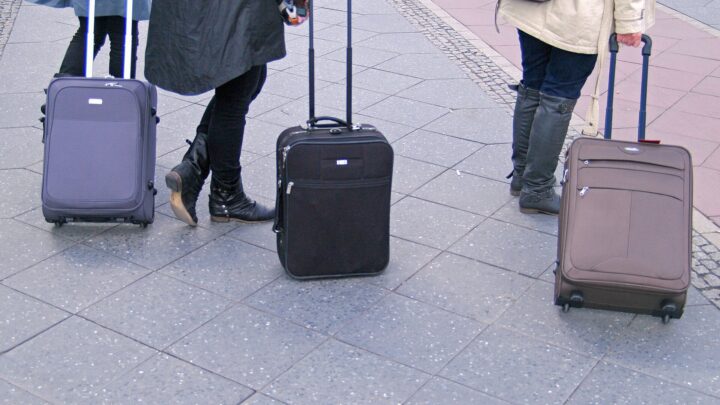

Your Carry-On Fits the Published Dimensions and Not the Gate Sizer
Luggage listings often quote a bag size without wheels and handles. US airline limits and gate sizers include them, so a "compliant" bag can still fail.

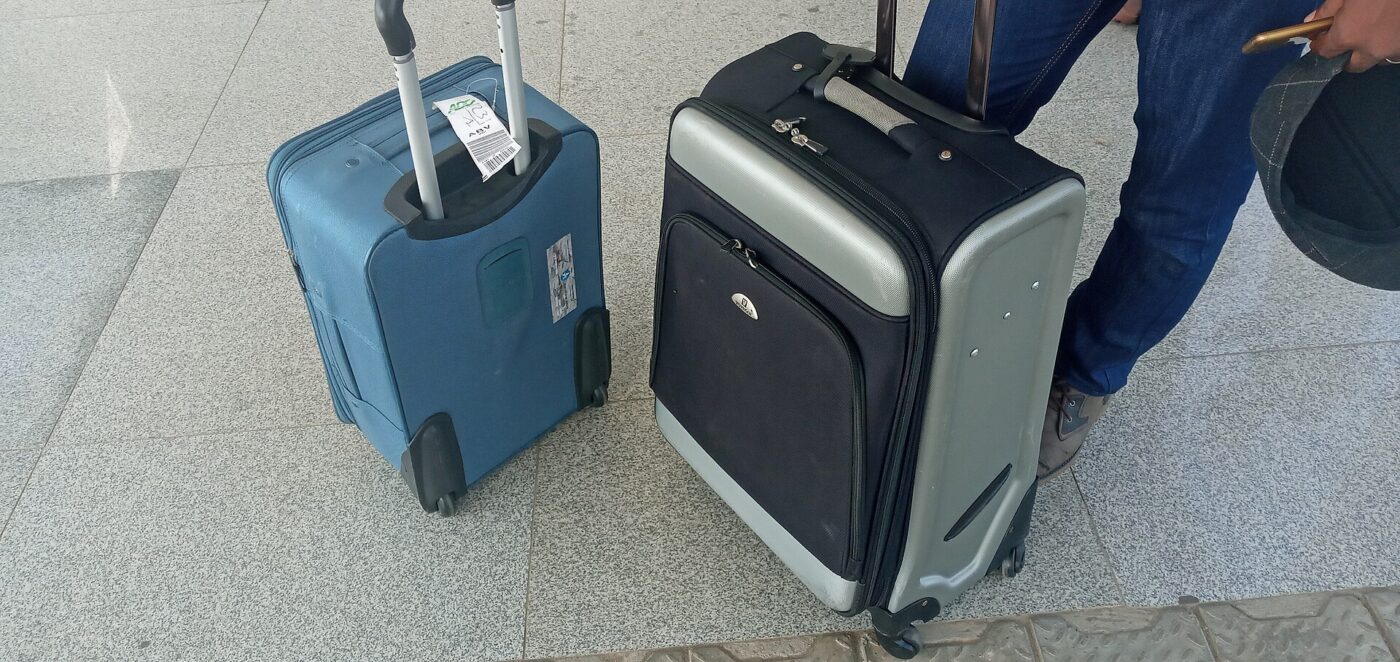
Airlines publish a maximum cabin bag size and it reads like a specification. Buy a bag within it and the matter appears settled.
Two things then happen at the gate. The size on a bag’s own listing often describes the body alone, and the sizer measures the bag as it exists — wheels, handles, feet and the bulge from a full packing session.
Fear Index · Think twice
Compliance measured by a different instrument
Gate fees are charged at the point where you have no alternative, which is exactly why they are priced as they are.
Published size and measured size
United, American and Delta all state that their standard 22 × 14 × 9 inch carry-on limit includes wheels and handles — it is the full outer envelope of the bag, not the shell alone. A bag listed by its maker as “22 × 14 × 9 in, carry-on compliant” can still measure 23 × 14 × 10 inches once the wheels and handle housing are included, which is inside the airline’s limit on paper and outside it at the gate.
Luggage listings are not usually lying — case dimensions get quoted inconsistently across the industry, sometimes body-only, sometimes full envelope, without saying which. That inconsistency is exactly what a rigid metal gate sizer does not forgive.
Airlines also differ sharply from each other. Full-service carriers tend to be generous in both dimension and enforcement; budget carriers use smaller allowances and check them systematically, because the fee is a revenue line.
Buy to the smallest airline you fly, not to an average. A bag that fits the strictest sizer fits everything else. Measure the actual bag yourself, wheels and handle included, rather than trusting the listing.
Weight is the other trap

Most full-service US carriers do not weigh carry-ons, but do not assume none of them do: Frontier, a US ultra-low-cost carrier, caps both its personal item and carry-on at 35 lb in addition to the size limit. Many carriers outside North America impose a similar cabin bag weight limit — commonly somewhere between 15 and 22 lb — and some weigh at the gate.
A hard-shell case weighs 6 to 9 lb empty. On a 35 lb allowance that is a meaningful bite out of the limit before you pack anything; on a 15 lb international allowance it can be nearly half. A soft bag of the same capacity can weigh under 4 lb.
This is the argument for soft luggage that people usually miss: not that it is more durable, but that on a weight-limited carrier it leaves you far more allowance to actually pack.
- Weigh the empty bag before buying, if the listing states it.
- Check whether the personal item shares the carry-on’s weight allowance or has none of its own — carriers differ, and some combine both into one limit rather than exempting the personal item.
- Wear the heaviest items rather than packing them.
- A luggage scale costs very little and settles the question at home.
Soft bags have one more advantage
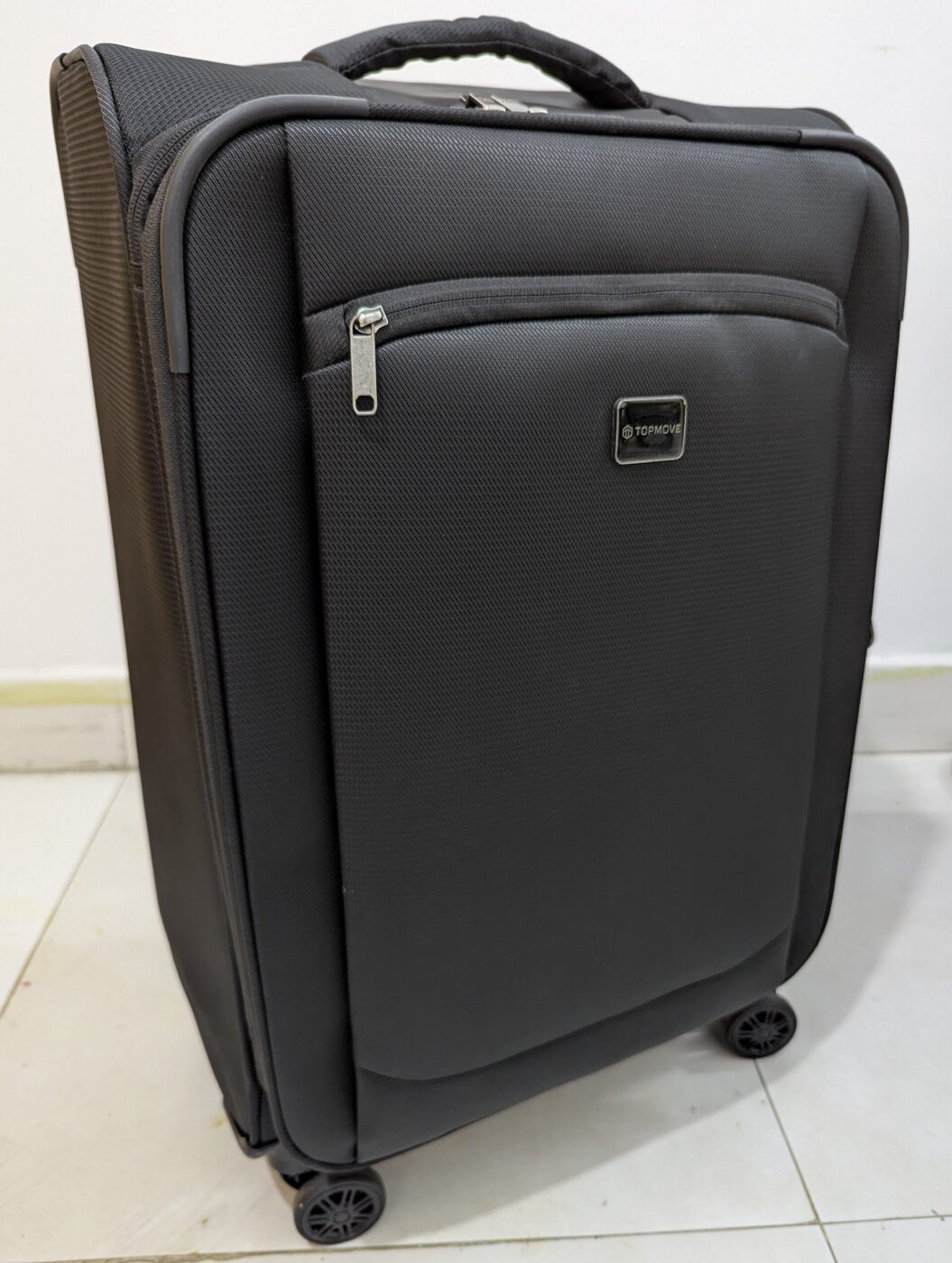
A sizer is a rigid frame. A soft-sided bag that is fractionally too large can be compressed into it; a polycarbonate shell cannot be compressed at all.
That flexibility is the difference between boarding and paying a gate fee, and it is why experienced travelers on budget carriers tend to carry soft bags despite hard shells protecting contents better.
If you carry fragile items, a hard shell is still right — just buy one comfortably under the limit rather than at it.
What the major US carriers actually allow
Delta states its carry-on limit as 22 × 14 × 9 inches, combined length plus width plus height not exceeding 45 linear inches, with handles and wheels included in every measurement. United publishes the same 22 × 14 × 9 inch figure and is explicit that it includes wheels and handles.
Frontier, a budget carrier, allows a smaller 24 × 16 × 10 inch carry-on or an 18 × 14 × 8 inch personal item, each capped at 35 lb — both size and weight enforced, which is stricter on weight than either full-service carrier even though the box itself is a little larger.
None of this is a substitute for checking your specific fare and route before flying, since airlines do revise policies, but it shows the pattern: a bag that fits comfortably inside Frontier’s allowance, wheels, handles and weight included, will clear United and Delta’s sizers without a second thought.
The shortlist
Paid links: we earn a commission if you buy through the buttons below, at no extra cost to you. As an Amazon Associate I earn from qualifying purchases.
Compared on fitting the smallest sizers
| Product type | Best for | Risk estimate | Where to buy |
|---|---|---|---|
| Soft Cabin Bag / Underseat Size | Budget airlines | 26/100 | See listings on AmazonOpens Amazon search results, not one listing: check the model on the product page. |
| Cabin Suitcase, 22 Inch | Full-service carriers | 44/100 | See listings on AmazonOpens Amazon search results, not one listing: check the model on the product page. |
| Digital Luggage Scale | Weight-limited routes | 12/100 | See listings on AmazonOpens Amazon search results, not one listing: check the model on the product page. |
Risk estimate is our editorial Fear Index for the product type (lower is safer), not a customer rating. How it is scored.
Soft Cabin Bag / Underseat Size
On a carrier that both measures and weighs, a light soft bag leaves the most allowance for what you actually want to bring.
- Compresses into a tight sizer
- Weighs far less than a hard shell
- Often qualifies as a personal item
- No protection for fragile contents
- Less structure when packing
Digital Luggage Scale
Gate fees exist because nobody knows their bag’s weight until it is too late to do anything about it.
- Weighs the bag before you leave home
- Costs less than one gate fee
- Useful for checked bags too
- One more thing to pack
- Cheap ones drift a little
More: Travel & Luggage analyses and how the Fear Index is scored.
Questions people actually ask
Why did my carry-on not fit the gate sizer?
A bag’s advertised dimensions often describe the body alone, while the sizer measures wheels, handles and any bulge from packing. A bag listed as compliant can measure an inch or so larger in reality.
What carry-on size fits all airlines?
There is no universal size, but buying to the strictest carrier you fly — generally a budget airline — means the bag fits everywhere else.
Do airlines weigh carry-on bags?
Some do. Frontier caps carry-ons at 35 lb in the US, and many carriers outside North America limit cabin bags to roughly 15–22 lb. A hard-shell case alone can use a meaningful share of either allowance.
Is soft or hard luggage better for carry-on?
Soft, if your airline measures strictly or weighs — it compresses into a sizer and weighs far less. Hard shells protect fragile contents better and should be bought comfortably under the limit.
Does the 22 x 14 x 9 inch carry-on limit include the wheels?
For United, American and Delta, yes — the published limit is the full outer size of the bag, wheels and handles included. It is luggage listings, not the airline limit, that sometimes quote the body alone.