
Suitcases Usually Fail in the Same Order: Wheels, Handle, Zipper
The shell almost never fails. Wheels, then the telescopic handle, then the zipper — and whether any of them is replaceable decides how long the bag lasts.

Suitcase marketing is about the shell: polycarbonate, aluminum, ballistic nylon, impact resistance. Shells are genuinely durable and almost never the reason a bag is replaced.
Bags fail from the bottom up, in a consistent order, and every one of those failures is a component that could have been specified better or made replaceable.
Fear Index · Think twice
Sold on the part that does not break
A failed wheel a quarter-mile from a gate is a different kind of problem from a scratched shell, and it is far more likely.
The failure order
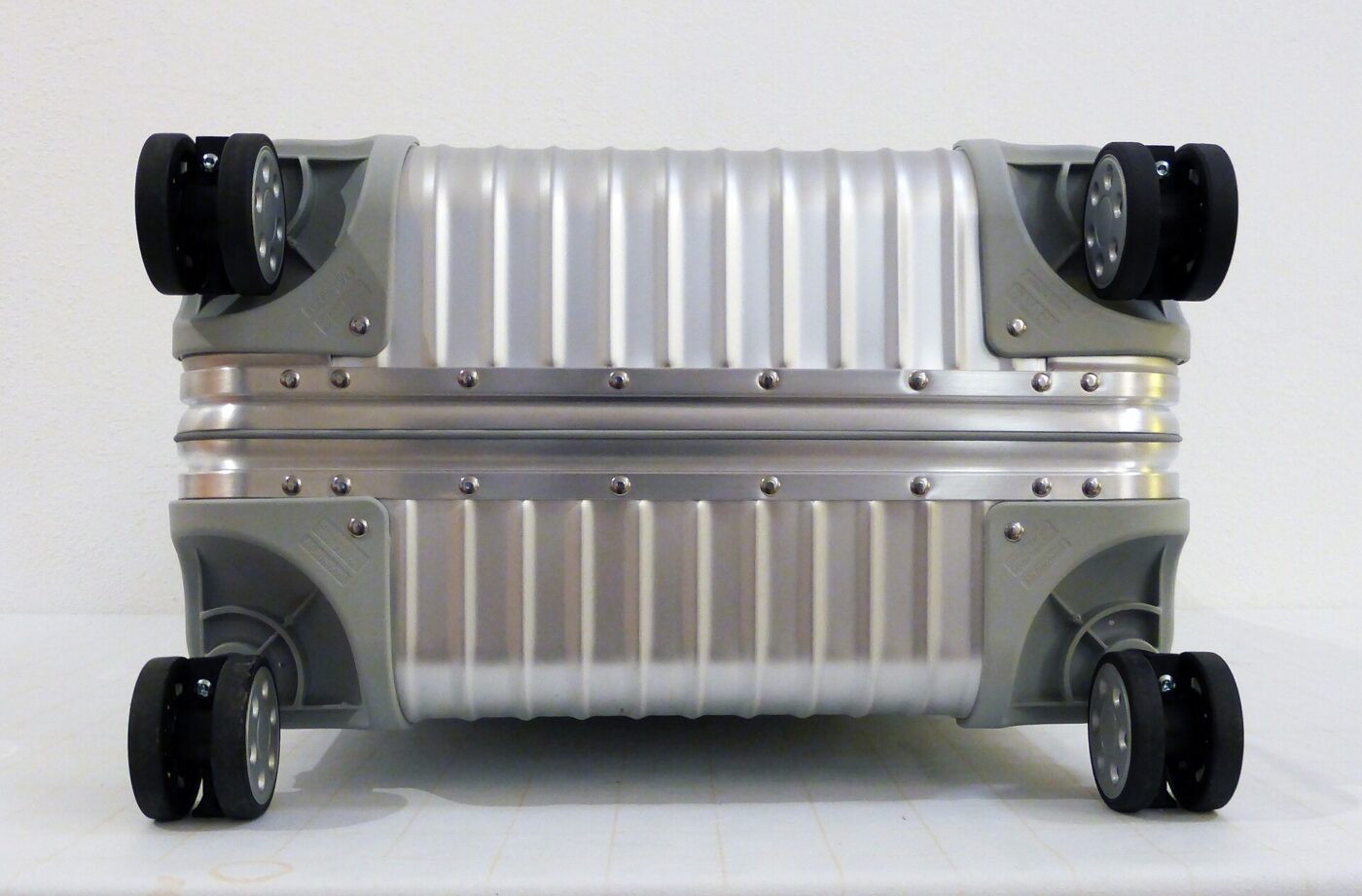
Wheels. They carry the entire load over curbs, tile, cobblestones and gaps in moving walkways. Cheap wheels are a plastic disc on a plastic axle, with no bearing. The axle wears oval, the wheel wobbles, then it seizes or shears.
The telescopic handle. Thin aluminum tubes in plastic guides, side-loaded every time the bag is pulled around a corner. Bent tubes jam, and the release mechanism is the second-most-likely failure.
The zipper. Overpacking splits it, and on a molded-tooth zipper that is usually permanent.
Before buying, search the brand plus “replacement wheels”. A bag with a published parts program is a different proposition from one where a $5 wheel ends a $200 case.
Spinner or inline

Four-wheel spinners glide beside you on smooth floors and take the weight off your arm, which is genuinely pleasant in an airport.
They also mount the wheels externally, below the shell, where they catch on curbs and are exposed to impact. And because all four are casters, the bag rolls away on any slope.
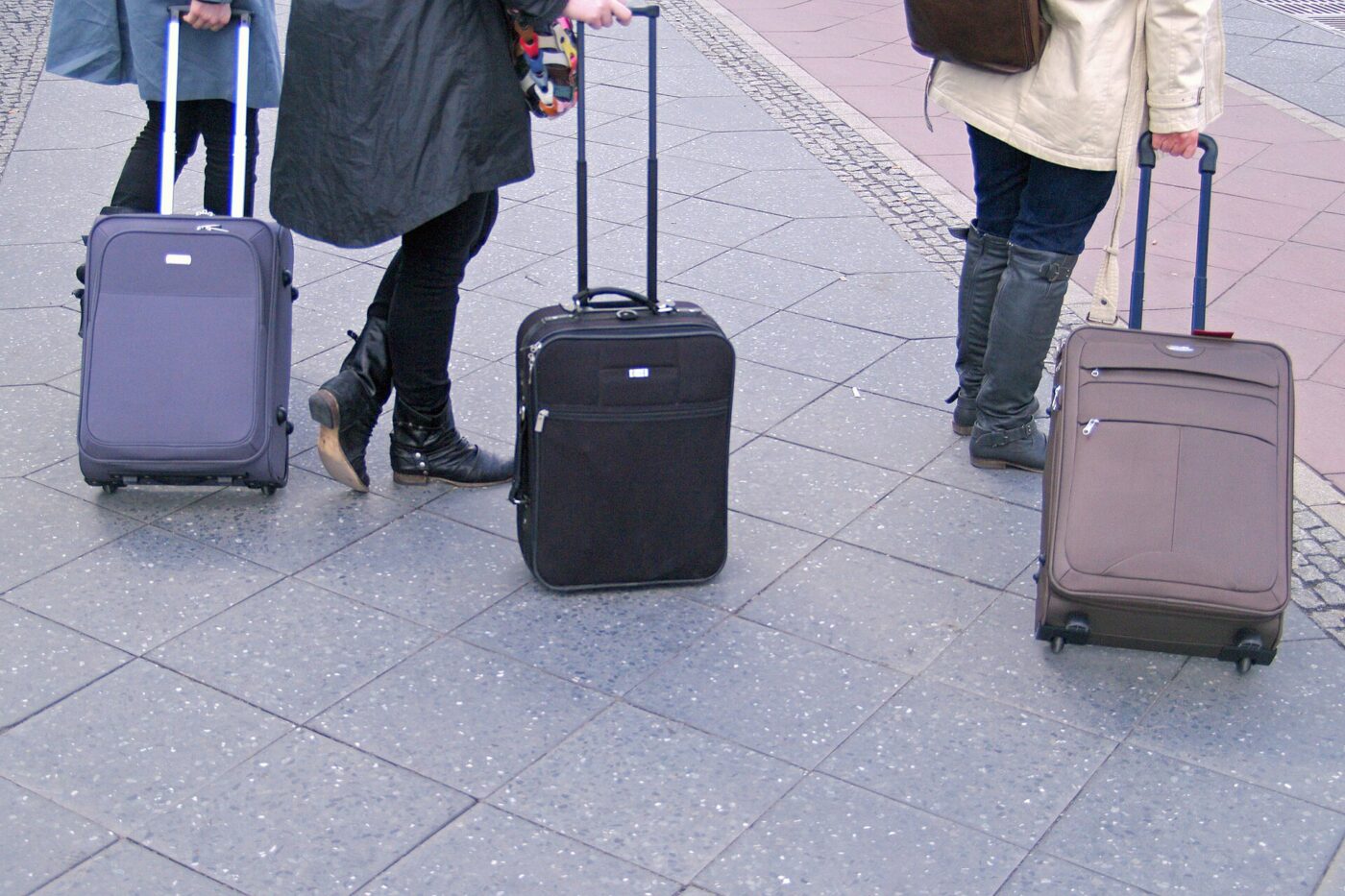
Two-wheel inline designs recess the wheels partly into the body, use larger diameters and are dragged at an angle so the load is shared with your arm. Over cobblestones, gravel and broken pavement they survive far better.
The honest split: spinners for airports and hotels, inline for cities with old streets and for anyone who travels rough.
Zips, and the overpacking problem
Two zip types dominate, and they behave completely differently under stress.
- Coil zippers use a continuous nylon spiral. If forced apart under moderate pressure they often re-mesh when the slider is run back, but the coil itself is thinner and can burst open sooner under heavy overpacking.
- Molded-tooth zippers have individual plastic teeth fused to the tape. They resist bursting under load better than coil, but once a tooth is stripped that section will not re-mesh and the zipper needs replacing.
- Two sliders spread the load and let you open from either end.
- Expansion gussets are the honest fix for overpacking, and they are the feature people forget to look for.
- Zip pullers with a metal loop survive; fabric tabs fray off.
What a warranty actually tells you
A luggage warranty is a useful proxy for what the maker expects to fail. Travelpro’s written warranty, for example, names wheels, zippers and carrying or extension handles as the parts it covers, repaired or replaced at the company’s discretion — the same three points this guide describes, from a manufacturer with every incentive to minimize its own claims list.
That does not mean every brand’s warranty is equally generous, or that a covered part is a replaceable one for you personally: several warranties reserve the right to repair rather than mail you a part, and some require the bag to be sent in rather than fixed at home. Read what the warranty actually promises, not just which parts it lists.
Length of coverage matters too. A brand offering a limited lifetime warranty on wheels and zippers is making a statement about how long it expects those parts to last under normal use, which is worth more than any marketing copy about the shell. A one-year warranty on the whole bag, with no parts named individually, tells you comparatively little.
A warranty that names wheels, zippers and handles by name is telling you, indirectly, exactly where to expect trouble. A warranty that only mentions “manufacturing defects” in the shell is not covering the parts that actually fail, no matter how many years it runs.
The shortlist
Paid links: we earn a commission if you buy through the buttons below, at no extra cost to you. As an Amazon Associate I earn from qualifying purchases.
Compared on the parts that fail
| Product type | Best for | Risk estimate | Where to buy |
|---|---|---|---|
| Hard-Shell Spinner Carry-On | Frequent travel | 40/100 | See listings on AmazonOpens Amazon search results, not one listing: check the model on the product page. |
| Two-Wheel Inline Suitcase | Rough surfaces | 28/100 | See listings on AmazonOpens Amazon search results, not one listing: check the model on the product page. |
| Replacement Luggage Wheel Set | Repairing what you own | 16/100 | See listings on AmazonOpens Amazon search results, not one listing: check the model on the product page. |
Risk estimate is our editorial Fear Index for the product type (lower is safer), not a customer rating. How it is scored.
Two-Wheel Inline Suitcase
If your travel involves anything other than terminals and hotel lobbies, this is the design that lasts.
- Larger wheels recessed into the body
- Survives curbs and cobblestones
- Does not roll away on a slope
- Always carries weight on your arm
- Less pleasant on smooth airport floors
Replacement Luggage Wheel Set
A great many discarded suitcases needed one wheel. Measure the diameter and axle before ordering.
- Often a ten-minute screwdriver job
- Costs a fraction of a new case
- Common sizes fit many brands
- Riveted wheels need drilling out
- Sizing must be measured carefully
More: Travel & Luggage analyses and how the Fear Index is scored.
Questions people actually ask
Why do suitcase wheels break so easily?
Cheap wheels are a plastic disc on a plastic axle with no bearing. They carry the whole load over curbs and tile, the axle wears oval, and the wheel then wobbles and shears.
Are spinner or two-wheel suitcases better?
Spinners are more comfortable on smooth floors; inline two-wheel cases have larger recessed wheels that survive curbs and cobblestones far better and do not roll away on slopes.
Can you replace suitcase wheels?
Frequently yes — many are held by a screw and take ten minutes. Riveted wheels need drilling out. Measure the diameter and axle before ordering.
What kind of zipper is best on luggage?
A coil zipper with two sliders for everyday use; it often re-meshes if forced apart. A molded-tooth zipper resists bursting under heavy overpacking better, but cannot be re-meshed once a tooth strips.