
Flat-Pack Furniture Weakens Each Time It Is Taken Apart and Moved
Particleboard swells where water reaches bare edges, and screw holes lose grip each time a piece is taken apart. How flat-pack fails and how to make it last.

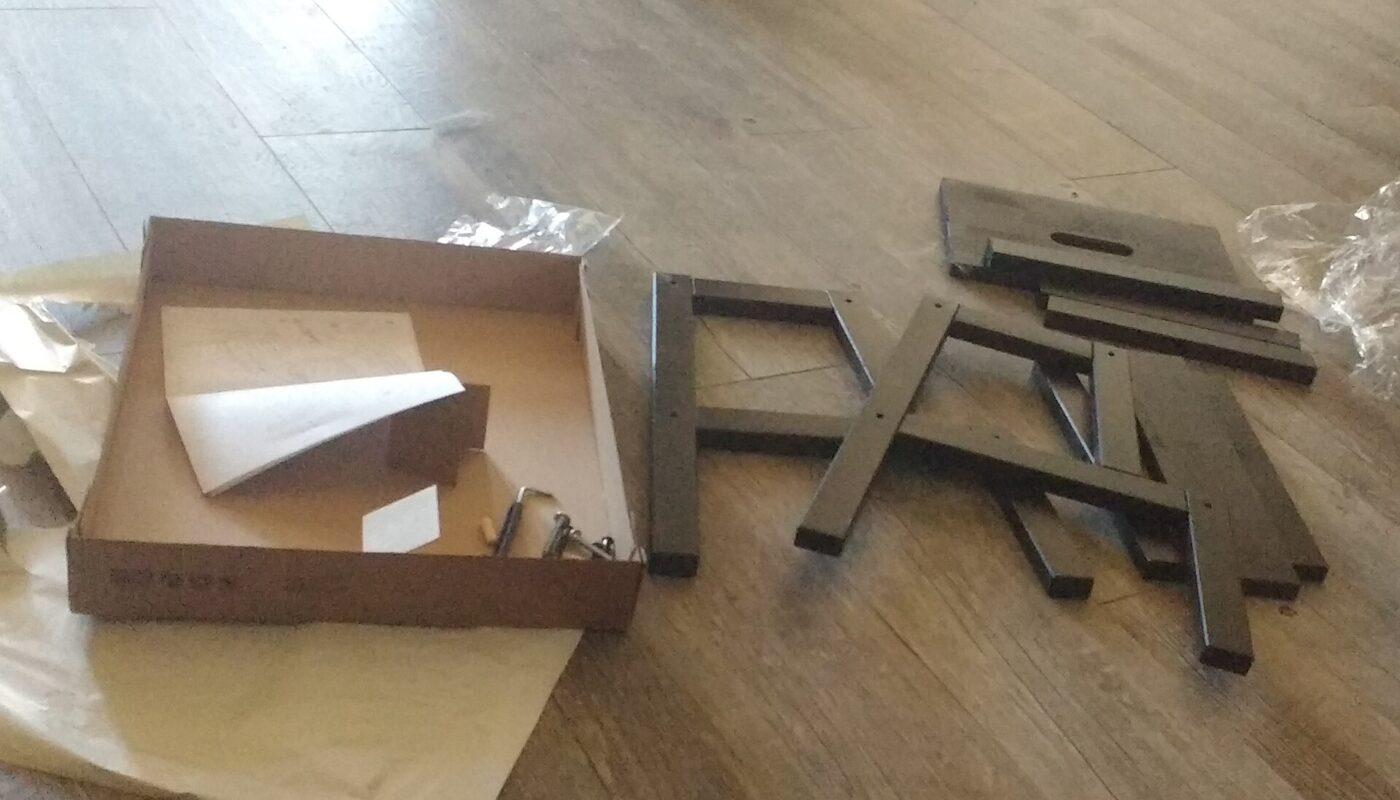
Flat-pack furniture made bookcases, wardrobes and desks affordable for almost everyone. A laminated particleboard panel is flat, stable and inexpensive, and assembled carefully it can last for many years in the same room.
Its weaknesses are specific: water, and being taken apart. A piece that has survived years in one apartment can come out of a move wobbly, with stripped screw holes and swollen corners, because the material holds a fastener well once and less well each time after.
Fear Index · Think twice
Low price, short life after a move
A bookcase or wardrobe that wobbles, sags or swells after one move or one leak can cost nearly as much to replace as it did to buy.
What the panels are made of
The Composite Panel Association describes particleboard as a composite panel of cellulosic particles of various sizes bonded together with a synthetic resin or binder under heat and pressure. It is used in office and residential furniture, kitchen cabinets and shelving. The industry standard, ANSI A208.1, classifies particleboard by physical, mechanical and dimensional properties and formaldehyde levels, and manufacturers can add moisture resistance at the time of manufacture.
In most flat-pack furniture the panel is covered with melamine, laminate, foil or veneer. That surface is durable and wipeable, but the core is exposed wherever the panel was cut or drilled: unbanded edges, the back, shelf-pin holes, hinge cups and every screw hole. Those are the places where water and fasteners do their damage.
Composite panels are also regulated for formaldehyde. EPA’s standards cover hardwood plywood, medium-density fiberboard and particleboard, and finished goods made or imported after March 22, 2019 must be labeled with the fabricator’s name, the production date and a TSCA Title VI compliance statement.
| Material | Strength | Weak point | Typical use |
|---|---|---|---|
| Particleboard | Cheap, flat, stable when dry | Swells at wet edges; limited screw holding | Bookcases, wardrobes, desks |
| MDF | Smooth, machines cleanly, paints well | Heavy; also swells when wet | Painted fronts, cabinet doors |
| Plywood | Strong screw holding and stiffness | Visible layered edges; costs more | Better cabinets, drawer boxes |
| Solid wood | Repairable and re-screwable | Moves with humidity; highest cost | Frames, tabletops, chairs |
Moisture swelling does not reverse
When water reaches bare particleboard, the particles absorb it and swell and the resin bonds between them loosen. After drying, the swollen area generally stays thicker, softer and weaker, and laminate over it can lift or bubble. A single overnight leak under a bathroom vanity or a plant pot on a shelf can do it.
Slow exposure matters too. Mopping around furniture feet wicks water into the bottom edges, and damp basements and exterior walls keep panels humid. The damage usually shows first as a raised line at the bottom of a side panel or a crumbly edge around a hinge.
- Raise the feet with plastic glides so mop water cannot wick into bottom edges.
- Seal cut edges and holes you drill yourself with paint, sealant or edge banding.
- Use trays under plants and coasters under drinks on laminated tops.
- Wipe spills promptly, paying attention to seams and edges.
- Keep flat-pack out of damp spaces such as basements with humidity problems.
Why cam locks loosen and holes strip

Most flat-pack joints use a cam lock: a metal bolt screwed into one panel, and a round cam in the other that grips the bolt head and pulls the joint tight when turned. The metal is strong, but the grip depends on the particleboard around the bolt threads and the cam housing. Pushing a loaded unit sideways, dragging it across a floor or leaning on it crushes those fibers slightly, and the joint loosens.
Screws are more vulnerable than cams. A large flat-pack retailer’s own customer service guidance explains that where there is no metal fitting on the receiving side, a screw holds by cutting into the screw hole, and removing it may reduce strength. The same guidance says furniture is not designed for repeated disassembly, that doing so may affect structural integrity, and that re-nailed back panels should avoid the old nail holes.
The thin back panel is often a structural brace that keeps the frame square. Leaving it off, or refitting it loosely after a move, is a common reason bookcases start to lean and wobble.
Tighten cams snugly, not as hard as possible. Over-turning a cam or screw strips the particleboard and no amount of later tightening brings the grip back.
Making it last, and when to pay more
For short moves within a home, empty the piece, remove drawers and shelves, and lift or slide it on furniture sliders rather than dragging it by one end. For house moves, take apart only what must come apart, bag and label hardware, and photograph each stage. When reassembling, fill stripped screw holes with wood glue and hardwood toothpicks or a dowel, let it cure and redrill a pilot hole. Replacement cams and bolts are often available from the manufacturer’s spare parts service.
If a frame still racks after the back panel is refitted, small steel corner braces screwed inside the top corners, with screws shorter than the panel thickness, can restore stiffness that worn cam joints no longer provide.
Anchor tall bookcases and wardrobes to the wall after every move. CPSC advises anchoring furniture such as bookcases and dressers securely to the wall and storing heavier items on lower shelves.
On price, flat-pack is excellent value for a piece that will stay in one dry room. If you expect to move several times, or the piece will hold heavy loads near water, the higher upfront cost of plywood or solid wood can work out cheaper than replacing particleboard furniture after each move.
The shortlist
Paid links: we earn a commission if you buy through the buttons below, at no extra cost to you. As an Amazon Associate I earn from qualifying purchases.
Compared on what they prevent
| Product type | Best for | Risk estimate | Where to buy |
|---|---|---|---|
| Cam Lock Connector Fittings Set | Replacing worn fittings | 20/100 | See listings on Amazon |
| Steel Corner Brace Brackets | Stiffening wobbly frames | 14/100 | See listings on Amazon |
| Reusable Furniture Sliders | Moving without racking | 16/100 | See listings on Amazon |
Risk estimate is our editorial Fear Index for the product type (lower is safer), not a customer rating. How it is scored. The buttons open Amazon search results rather than one listing, so check the model on the product page.
Steel Corner Brace Brackets
Inside corners of bookcases and wardrobes, small steel braces restore stiffness after a move. Choose screw lengths shorter than the panel thickness.
- Stiffens joints that cams no longer hold
- Inexpensive and hidden inside units
- Adds fresh screw positions
- Screws must not break through panels
- Adds holes to the furniture
Reusable Furniture Sliders
Most loosened cam joints come from sideways force during moves. Sliding an empty unit keeps that force low.
- Avoids dragging and racking joints
- Protects floors
- Reusable for every move
- Furniture must still be emptied
- Less effective on thick carpet
More: Furniture and Decor analyses and how the Fear Index is scored.
Sources
- Particleboard — Composite Panel Association
- After I’ve assembled a piece of furniture, can I disassemble it and then assemble it again? — IKEA Customer Service
- Frequent Questions for Consumers about the Formaldehyde Standards for Composite Wood Products Act — US EPA
- CPSC Anchor It Campaign Marks 10 Years — CPSC
Questions people actually ask
Can you take apart and reassemble flat-pack furniture?
Often yes, but it is not designed for repeated disassembly. Screws that cut into particleboard lose strength each time they are removed, so take apart only what must come apart.
How do you fix a loose cam lock?
Retighten it snugly. If the bolt spins or the hole is stripped, fill the hole with glue and hardwood dowel or toothpicks, let it cure and refit the bolt.
Can swollen particleboard be fixed?
Not back to original strength. Once particleboard swells it generally stays weaker. Small areas can be dried, trimmed and filled, but load-bearing panels may need replacing.
Is particleboard furniture safe?
Composite wood panels in furniture sold in the US must meet EPA formaldehyde emission limits, and finished goods made after March 22, 2019 must be labeled TSCA Title VI compliant, so look for that statement on the item or its packaging. Anchor tall pieces to the wall.