
Hoses Kink Because of How They Are Built, Not How You Coil Them
Kinking is a construction property. Ply layers and a reinforcing mesh determine whether a hose resists it or collapses at every bend.

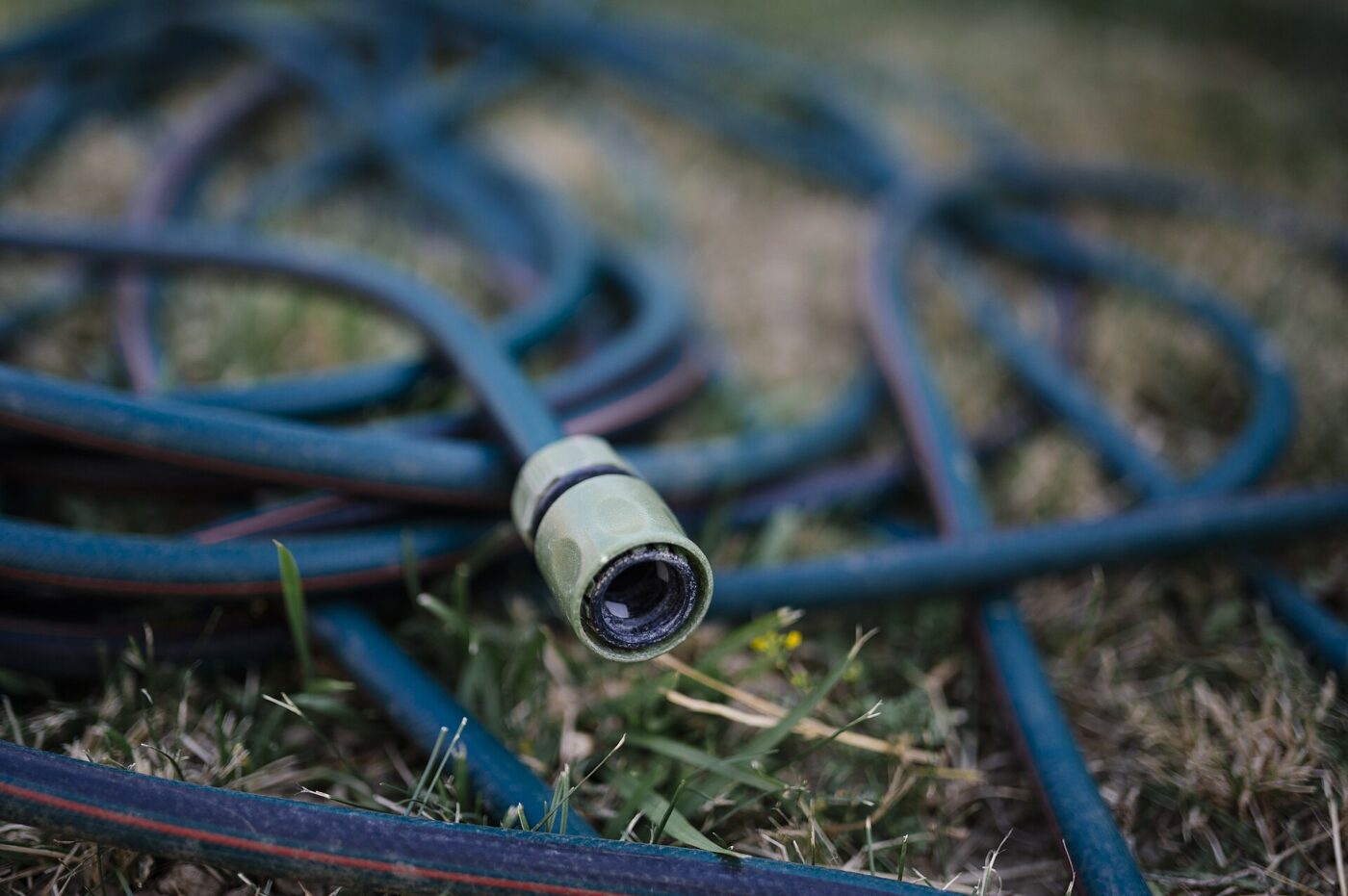
A garden hose that kinks at every bend is usually blamed on coiling. It is a construction problem, and it is visible in the cut end of the hose.
A hose wall is built from layers: an inner tube, one or more reinforcing layers, and an outer jacket. When a hose bends, those layers resist the cross-section collapsing. Too few layers and it folds flat instead.
Fear Index · Think twice
A design property blamed on the user
Cheap hoses fail at the same points every time. It is predictable from the construction, and never mentioned at the point of sale.
Ply is the number that matters
Ply counts the layers in the wall. A 2-ply hose is a tube and a jacket, and it will kink. A 5- or 6-ply hose includes a woven mesh reinforcement that holds the cross-section open.
The mesh also does a second job: it resists the hose ballooning under pressure, which is what eventually bursts cheap hoses at the fitting.
| Construction | Behavior | Typical life |
|---|---|---|
| 2-ply vinyl | Kinks constantly, stiffens in cold | 1–2 seasons |
| 3–4 ply reinforced | Occasional kinks, acceptable | 3–5 seasons |
| 5–6 ply rubber | Resists kinking, stays flexible cold | 10+ seasons |
| Expandable | Rarely kinks; fails at the inner tube | 1–3 seasons |
Cut price in this category buys you a hose you will replace three times. The 5-ply hose that costs three times as much lasts five times as long and is far less annoying in between.
Expandable hoses solve one problem

An expandable hose is a latex inner tube inside a woven fabric sleeve. Water pressure stretches it; releasing pressure contracts it. It rarely kinks while pressurized, and it stores in a bucket.
The latex tube is the weak point. It is thin by design, and it fails by splitting — usually within one to three seasons, and usually without warning. The fabric sleeve then billows and the hose is finished.
They are a reasonable purchase for a small garden where storage is the real constraint, bought with the expectation of replacement rather than longevity.
The fittings fail before the hose
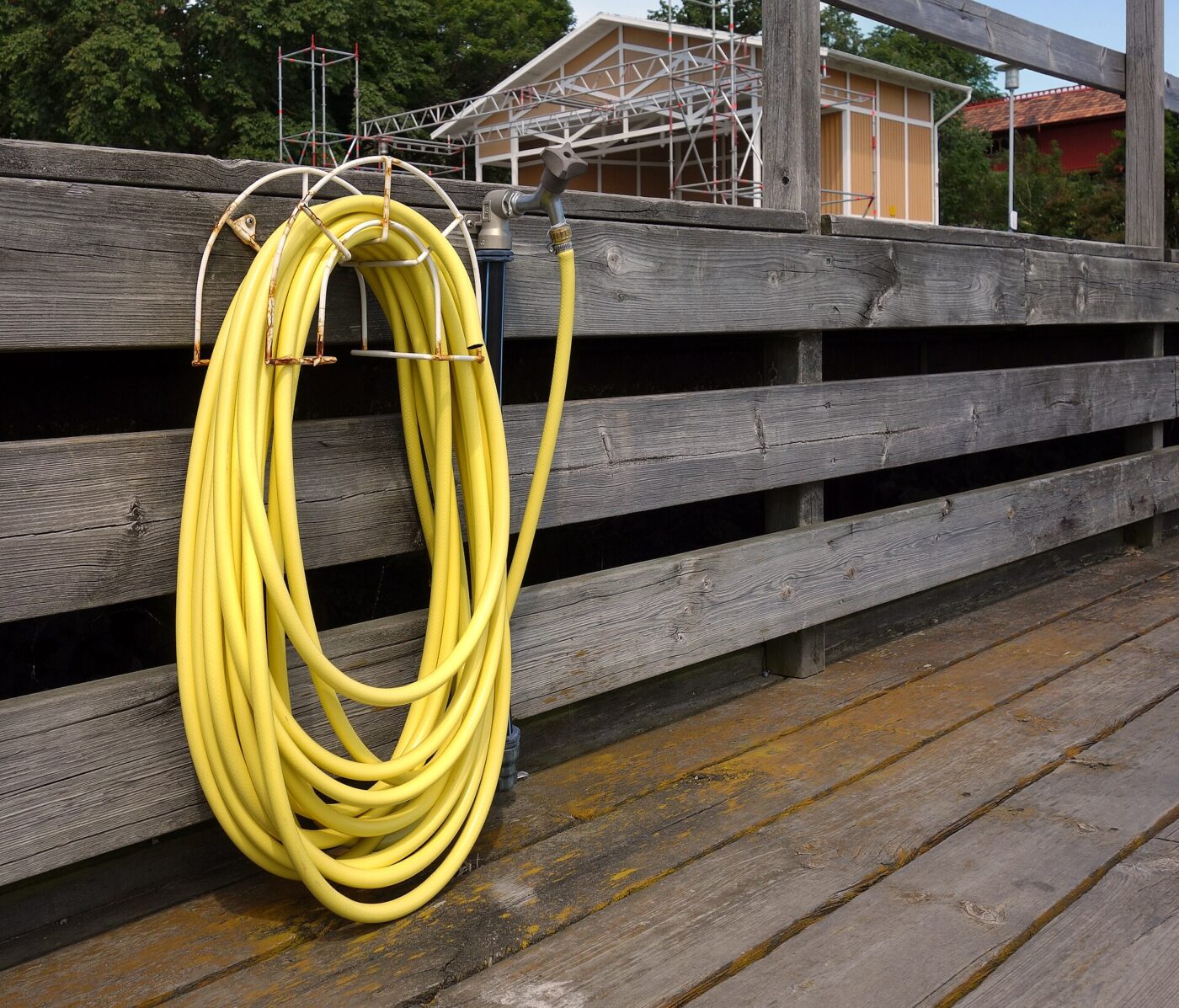
On a good hose, the most likely failure is the connector. Plastic fittings crack from UV and from being trodden on, and the thread strips when over-tightened.
- Brass or aluminum fittings last the life of the hose; if you drink from it or fill pet bowls, choose a hose labeled drinking-water safe with lead-free fittings.
- Crush-resistant collars at each end prevent the classic kink right at the tap.
- Replaceable ends mean a damaged connector does not scrap a good hose.
- Drain it before frost. Water freezing inside splits the inner tube, and that is a failure no ply count prevents.
- Store out of sun. UV is what ages the outer jacket.
The shortlist
Paid links: we earn a commission if you buy through the buttons below, at no extra cost to you. As an Amazon Associate I earn from qualifying purchases.
Compared on construction, not length
| Product type | Best for | Risk estimate | Where to buy |
|---|---|---|---|
| Rubber Garden Hose, 5-Ply | Everyday yard use | 22/100 | See listings on AmazonOpens Amazon search results, not one listing: check the model on the product page. |
| Expandable Garden Hose, 50 ft | Tight spaces and small yards | 54/100 | See listings on AmazonOpens Amazon search results, not one listing: check the model on the product page. |
| Brass Hose Connector Set | Fittings that fail first | 14/100 | See listings on AmazonOpens Amazon search results, not one listing: check the model on the product page. |
Risk estimate is our editorial Fear Index for the product type (lower is safer), not a customer rating. How it is scored.
Rubber Garden Hose, 5-Ply
The purchase that ends the annual hose replacement. Heavy is the price of a wall thick enough not to fold.
- Holds its cross-section at tight bends
- Stays flexible in cold weather
- Often carries a long warranty
- Heavy to drag around
- Costs several times a vinyl hose
Brass Hose Connector Set
On a decent hose the connector is what fails. Replacing plastic ends with brass costs little and removes the usual failure.
- Will not crack in UV or underfoot
- Threads survive over-tightening
- Fits most hose diameters
- Heavier at the tap
- More expensive than plastic
More: Garden & Outdoor Living analyses and how the Fear Index is scored.
Questions people actually ask
Why does my garden hose keep kinking?
Its wall has too few reinforcing layers to hold a round cross-section when bent. Ply count, not coiling technique, determines this.
What does ply mean on a garden hose?
The number of layers in the wall. Higher ply hoses include a woven mesh that resists both kinking and ballooning under pressure.
Are expandable hoses any good?
They rarely kink and store very small, which suits tight spaces. The latex inner tube splits eventually, typically within one to three seasons, so buy them expecting replacement.
How do I stop a hose splitting in winter?
Drain it completely and store it indoors or out of frost. Water freezing inside expands and splits the inner tube regardless of how well built the hose is.