
Cleating an Anchor Line to the Side of a Kayak Is How Current Flips It
Anchoring a kayak from the side lets current load it off-center. What a bow-to-stern anchor trolley changes, and the PFD numbers behind the risk.

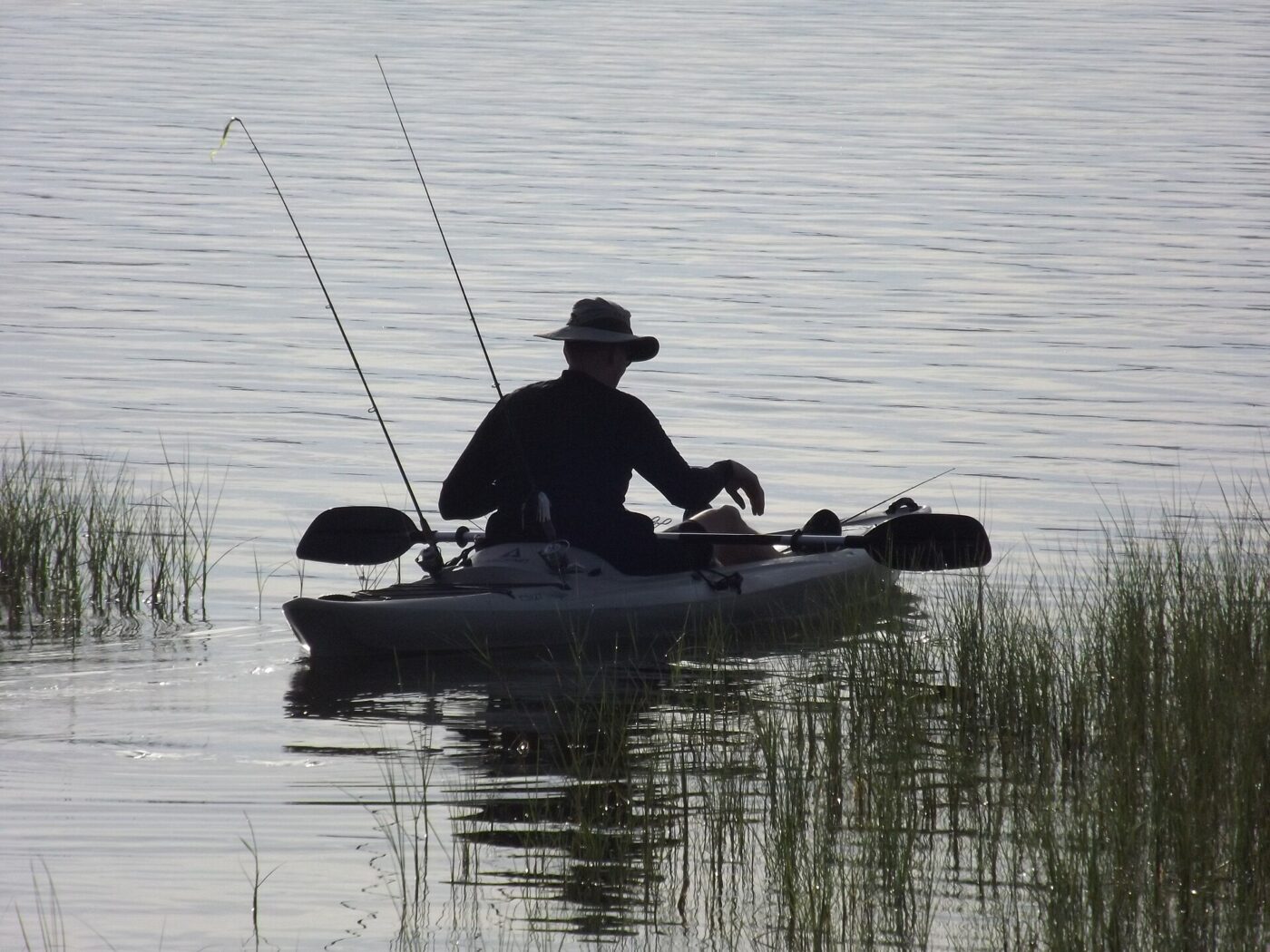
A kayak or canoe has very little freeboard and not much built-in resistance to being rolled. Clip an anchor line to a cleat at the gunwale, and current or wind now has a single side point to pull against instead of a hull built to slice through the water in one direction.
The Coast Guard’s own accident glossary defines “improper anchoring” as a boat incorrectly held in place in the water by its anchor, and tracks it as a contributing factor in capsizing incidents. An anchor trolley exists specifically to move that pull point somewhere the boat can actually handle it.
Fear Index · High risk
A boat held sideways to moving water
The Coast Guard’s 2024 boating-accident report counted 143 paddlecraft deaths — more than cabin motorboats or pontoons — and found that among all boaters who drowned, 87 percent were not wearing a life jacket.
Why anchoring from the side of a kayak is risky

A boat anchored at the bow or stern lies along the current, the same orientation it is designed to paddle and handle waves in. A boat anchored at the side is held broadside to whatever force is pushing on it, and a kayak’s low sides give that force very little hull to work against before the boat starts to heel.
The Coast Guard’s Recreational Boating Statistics glossary defines improper anchoring as a vessel “in the process of being anchored incorrectly or incorrectly held in place in the water by an anchor,” one of the contributing-factor categories the agency tracks across capsizing incidents nationally.
What an anchor trolley actually changes
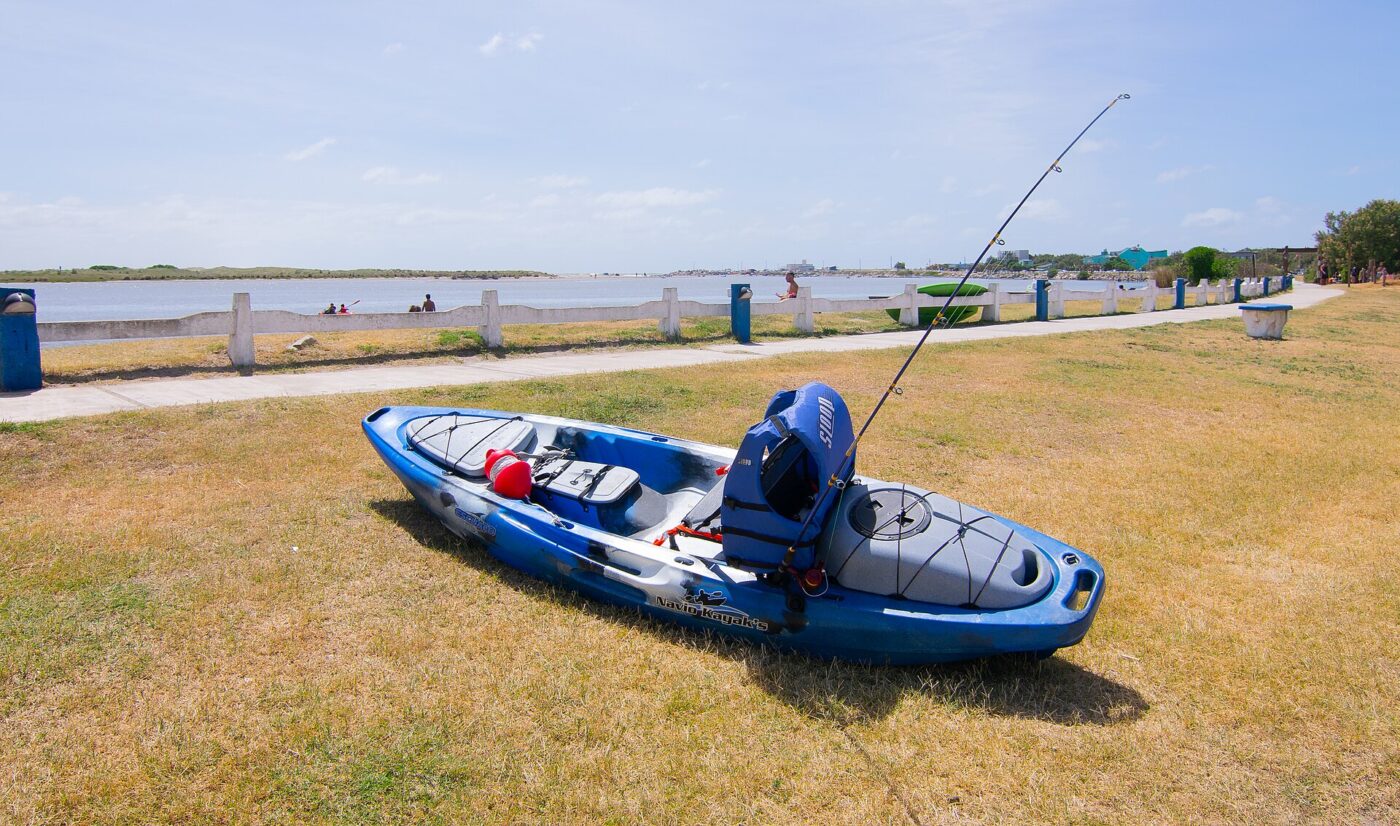
An anchor trolley is a loop of line or cord running through rings or pulleys mounted along one side of the hull, connected to a cleat near the cockpit. Instead of tying the anchor rode directly to a fixed point at the side, the paddler clips it to the trolley and slides the attachment point forward to the bow or back to the stern before setting the anchor.
That single change keeps the pull in line with the boat instead of against its side. A trolley set up with a quick-release cleat adds a second safeguard: if conditions change, the anchor line can be let go in one motion, dropping the line before it has a chance to pull the boat over.
Matching the anchor to the bottom, not the boat
A folding grapnel anchor, often sized around three pounds for a kayak, is built to catch on rock, gravel or vegetation and fold flat for storage between uses. A stake-out pole, driven into a shallow bottom, holds a kayak in place without any rode in the water at all, which removes the anchoring hazard entirely in water shallow enough to use one.
In open water or current too deep or fast for a stake-out pole, a drift chute or sock slows the boat’s drift without fixing it to the bottom the way a grapnel does, which keeps the boat moving with the water instead of fighting directly against it.
The anchor should match what the bottom and the current allow, not just what fits in the kayak’s hatch.
Where not to anchor at all
Moving water changes the calculation entirely. Current strong enough to load an anchor line hard is also strong enough to make a quick-release matter, and a line that snags on a strainer — a fallen tree or other obstruction current pushes through — can hold a boat in place while the water keeps pushing.
The safer choice in current that strong, or near any identifiable strainer, is not anchoring there at all, and using a drift chute or simply repositioning instead of setting a fixed line.
Life jackets and cold water: the numbers that matter
Federal rules require a wearable, Coast Guard-approved PFD on board for every person on a recreational vessel, including a kayak or canoe, and require children under 13 to actually wear one while underway on most vessels, under 33 CFR 175.15. Having one aboard is the legal floor, not the safety plan.
The Coast Guard’s 2024 report found that, where the cause of death was known, 76 percent of fatal boating victims drowned, and 87 percent of those who drowned were not wearing a PFD. Paddlecraft — canoes, kayaks and stand-up paddleboards combined — accounted for a disproportionate 26 percent of deaths by vessel type, with kayaks alone at 16 percent. NOAA’s cold-water safety guidance adds that cold shock can be nearly as dangerous at 50 to 60 degrees Fahrenheit as at 35 degrees, and that wearing a life jacket significantly increases the odds of surviving that first shock.
A PFD stowed under a seat protects no one; the Coast Guard’s own numbers say the gap is almost always whether it was worn.
The shortlist
Paid links: we earn a commission if you buy through the buttons below, at no extra cost to you. As an Amazon Associate I earn from qualifying purchases.
Compared on anchoring without rolling the boat
| Product type | Best for | Risk estimate | Where to buy |
|---|---|---|---|
| Kayak Anchor Trolley Kit | Keeping the pull fore-and-aft | 25/100 | See listings on AmazonOpens Amazon search results, not one listing: check the model on the product page. |
| Folding Grapnel Anchor (3 lb) with Rope and Float | Sized to the bottom and current | 22/100 | See listings on AmazonOpens Amazon search results, not one listing: check the model on the product page. |
| USCG-Approved High-Back Fishing PFD | Worn instead of stowed | 15/100 | See listings on AmazonOpens Amazon search results, not one listing: check the model on the product page. |
Risk estimate is our editorial Fear Index for the product type (lower is safer), not a customer rating. How it is scored.
Kayak Anchor Trolley Kit
A trolley keeps the anchor rode running along the length of the hull instead of pulling from one fixed point at the side.
- Anchor line rides a pulley along the hull
- Quick-release cleat drops the line fast
- Works set to either the bow or stern
- Adds a rigging step before every trip
- Pulleys need occasional rinsing and lube
USCG-Approved High-Back Fishing PFD
Federal rules require a wearable PFD aboard for each person; Coast Guard data show most drowning victims had one, just not on.
- Meets the federal wearable-PFD requirement
- High back clears a kayak seat back
- Pockets keep a whistle or light on the body
- Warmer than a low-profile paddling vest
- Costs more than a basic PFD
More: Sports and Recreation analyses and how the Fear Index is scored.
Questions people actually ask
Why is it dangerous to anchor a kayak from the side?
Cleating an anchor line at the gunwale lets current or wind load the boat off its centerline instead of along its length, which is why the Coast Guard tracks improper anchoring as a contributing factor in capsizing incidents.
What does a kayak anchor trolley do?
It runs the anchor line through rings or a pulley along the hull to a fixed point at the bow or stern, keeping the pull fore-and-aft, and adds a quick-release so the line can be let go before the boat is pulled over.
How much does a kayak anchor need to weigh?
A folding grapnel around three pounds is common for a kayak, sized to the bottom type and current rather than the boat’s weight. A stake-out pole or drift chute can suit shallow or open water better than a fixed anchor.
Do I need to wear a life jacket in a kayak?
Federal rules require a wearable PFD on board for every person, and children under 13 must wear one while underway on most vessels. The Coast Guard’s 2024 data found 87 percent of boaters who drowned were not wearing one.