
A Riding Helmet Needs an ASTM F1163 and SEI Label, and Replacement After Any Hard Fall
Equestrian helmets are tested to ASTM F1163 and carry an SEI tag, unlike a bike helmet. Replace one after any fall or impact, per manufacturer guidance.

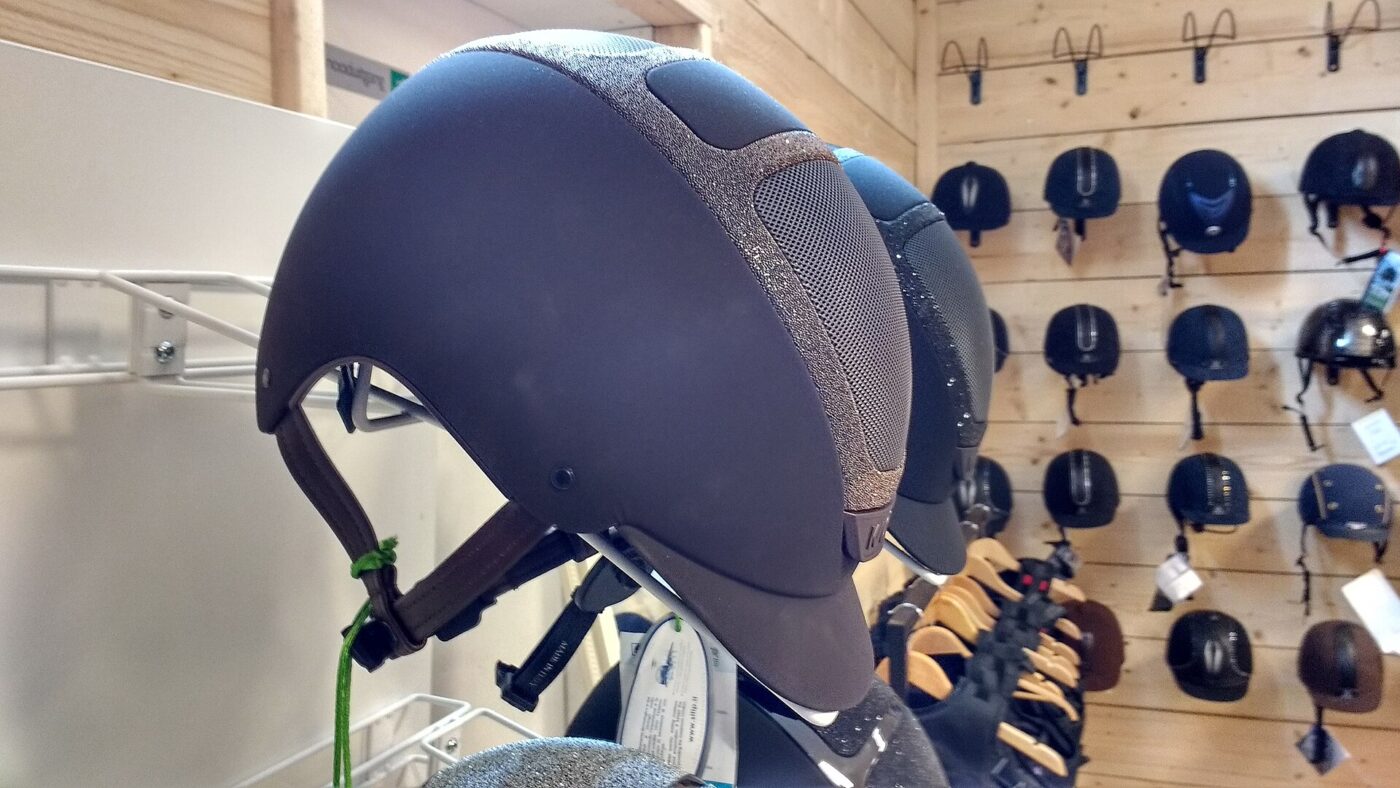
A fall from horseback happens from height, at speed, and often onto hard, uneven ground — a different hazard than a low-speed spill off a bike on pavement. CDC data on emergency department visits among people 19 and younger found that horseback riding produced the highest share of traumatic brain injuries among the recreational activities it compared, over the years the data covered. Equestrian helmets are built and tested for that specific hazard, under a standard that has nothing to do with the one printed inside a bike helmet.
That standard is ASTM F1163, certified by the Safety Equipment Institute (SEI), and it is what US Equestrian’s own competition rules require in many divisions. The label matters at purchase, but the more commonly missed rule comes after: every equestrian helmet manufacturer whose guidance addresses the question says the same thing about a helmet that has already taken a hit.
Fear Index · High risk
A helmet good for one hard hit
CDC data on emergency department visits among riders 19 and younger found horseback riding produced the highest share of traumatic brain injuries among the recreational activities it compared, and manufacturer guidance from Charles Owen and Troxel is unanimous that a helmet’s protection is compromised after one significant impact, whether or not the damage is visible.
Why a bike helmet is not a riding helmet
The hazard a helmet is built for shapes how it is tested, and horseback riding’s hazard profile is specific. CDC’s MMWR data, covering emergency department visits among people 19 and younger from 2001 to 2009, found horseback riding accounted for 15.3 percent of traumatic brain injury visits among the recreational activities it compared — the highest share on that list — and estimated about 3,638 TBI-related emergency department visits a year from horseback riding in that age group.
ASTM F1163’s own title names the hazard it is built for: “Standard Specification for Protective Headgear Used in Horse Sports and Horseback Riding.” Its testing protocol reflects that specificity, including impacts against both a flat anvil and what the standard calls an equestrian hazard anvil, under hot, cold and wet conditioning — a testing profile built around the ground, obstacles and weather a rider actually falls into, not a bicycle helmet’s pavement-focused standard.
A helmet built and tested for a bicycle crash is not interchangeable with one built and tested for a fall from horseback; the hazard each one is designed around is different.
ASTM F1163 and the SEI certification label
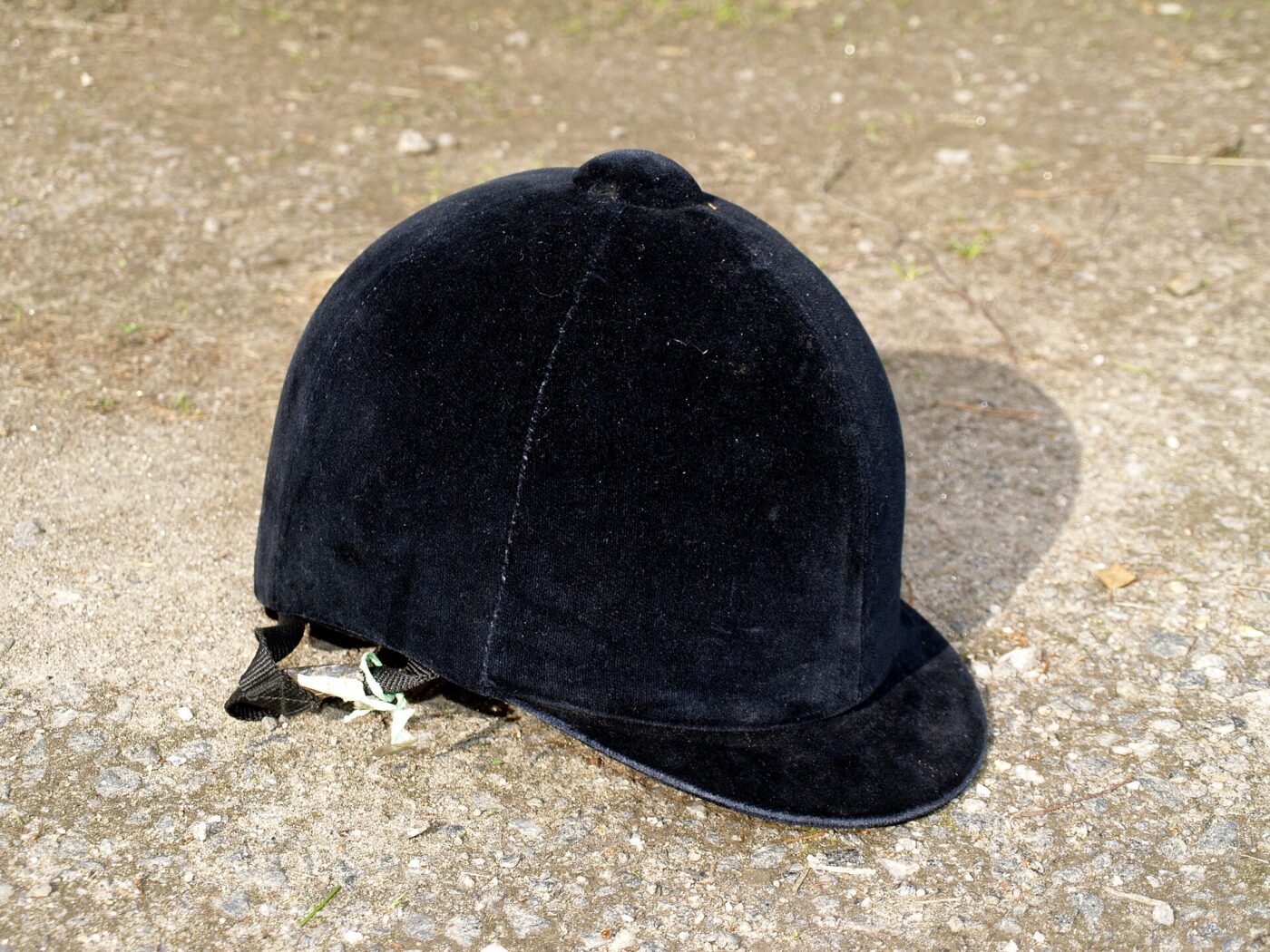
SEI is the organization that certifies helmets to ASTM F1163, and its own program page states that “the United States Pony Clubs and US Equestrian mandate certification of protective equipment to ASTM International standards.” That mandate is not abstract: US Equestrian’s GR801 rule document requires headgear to meet or exceed ASTM/SEI standards and carry the SEI tag, and it lists which specific standards qualify — ASTM F1163 in its 2013 or 2023 versions, certified through SEI, along with PAS 015, VG1, and, as of December 1, 2023, Snell.
Checking for both marks — the ASTM F1163 designation and the SEI tag sewn inside the helmet — is the practical version of that rule for a shopper, whether or not the helmet is headed for a sanctioned competition. A helmet without both is not automatically unsafe, but it is not the certification the sport’s own governing body has built its equipment rule around.
The ASTM F1163 label and the SEI tag are two separate things to look for, not one; US Equestrian’s own rule requires both.
Fit, harness adjustment and helmet shapes
A certified helmet still has to fit to do its job. It should sit level on the head, low enough to cover the forehead without blocking vision, and stay in place under the harness without shifting when a rider nods or leans into a jump position. A harness that is too loose lets the helmet move independently of the head in a fall, working against the protection the shell and liner are built to provide.
Helmet shapes vary by brand, and head shapes are not uniform either — a size that fits well front-to-back on one head can pinch or gap on another shaped rounder or narrower. Trying a helmet on and checking that it does not shift when the head is shaken, rather than buying by size number alone from a chart, is the more reliable way to confirm a specific model fits a specific rider.
Replacement after falls, drops and age

Manufacturer guidance on this point is unanimous and specific. Charles Owen states it plainly: “If your helmet suffers any kind of impact, no matter how small, its protective qualities will be compromised. You should replace your helmet before riding again.” Its explanation is mechanical, not precautionary marketing — the EPS foam inside a helmet compresses on impact and “will not offer the same level of protection if it is struck again, even if there is no visual damage,” including after “any impact, including dropping it on a hard surface.”
Troxel’s own guidance reaches the same conclusion from its own products: “Equestrian helmets are made for one impact event only,” and it recommends replacing a helmet “every five years, or anytime when a helmet has been involved in an accident.” Neither manufacturer ties the replacement rule to visible cracking or dents specifically — a helmet that looks fine after a fall can still have compressed foam doing less than it did before the impact, which is why both name a fall or a drop, not visible damage, as the trigger.
A helmet that looks undamaged after a fall or a hard drop is not the same as a helmet that is undamaged; replace it anyway, following that maker’s guidance.
Rotational-impact liners and competition rules
A newer helmet feature addresses a kind of impact ASTM F1163’s anvil tests do not directly target: rotational force from a glancing, angled hit rather than a straight-on one. MIPS describes its own liner as a low-friction layer built into a helmet to help reduce rotational force in certain angled impacts, added inside a shell that still has to meet ASTM F1163 and SEI certification on its own.
A MIPS liner is an addition to certification, not a substitute for it — US Equestrian’s GR801 rule is written around the ASTM/SEI/PAS 015/VG1/Snell list named above, with no separate rotational-impact requirement, so a MIPS-equipped helmet still has to clear the same bar a standard one does to qualify for competition.
The shortlist
Paid links: we earn a commission if you buy through the buttons below, at no extra cost to you. As an Amazon Associate I earn from qualifying purchases.
Compared on certification and impact protection
| Product type | Best for | Risk estimate | Where to buy |
|---|---|---|---|
| ASTM F1163 / SEI-Certified Riding Helmet | Certified to ASTM F1163 and SEI | 20/100 | See listings on AmazonOpens Amazon search results, not one listing: check the model on the product page. |
| Riding Helmet with MIPS Liner | Adds a rotational-impact liner | 25/100 | See listings on AmazonOpens Amazon search results, not one listing: check the model on the product page. |
| Breakaway Safety Stirrups | Releases the boot during a fall | 15/100 | See listings on AmazonOpens Amazon search results, not one listing: check the model on the product page. |
Risk estimate is our editorial Fear Index for the product type (lower is safer), not a customer rating. How it is scored.
ASTM F1163 / SEI-Certified Riding Helmet
The ASTM F1163 label and the SEI tag inside are what US Equestrian’s own GR801 rule requires in many competition divisions.
- Carries the ASTM F1163 designation and SEI tag
- Tested on a flat and an equestrian hazard anvil
- Accepted under US Equestrian’s GR801 rule
- Needs replacing after any fall or impact
- Sizing varies by brand; try it on first
Riding Helmet with MIPS Liner
MIPS describes its liner as reducing rotational force in certain angled impacts, added inside a shell that still has to meet ASTM F1163 and SEI on its own.
- Low-friction MIPS layer for angled impacts
- Still carries ASTM F1163 / SEI certification
- Accepted under the same GR801 standards list
- Costs more than a standard certified helmet
- Still a one-impact design like any equestrian helmet
More: Sports and Recreation analyses and how the Fear Index is scored.
Sources
- F1163-15 Standard Specification for Protective Headgear Used in Horse Sports and Horseback Riding — ASTM International
- GR801 Protective Headgear Rule — US Equestrian
- Why Should You Replace Your Helmet After a Fall? — Charles Owen
- Helmet Certifications — Troxel
- MMWR Vol. 60, No. 39 — CDC
- Equestrian — MIPS
Questions people actually ask
Can I use a bike helmet for horseback riding?
No. ASTM F1163, the standard for equestrian helmets, is titled specifically for horse sports and horseback riding and tests against a flat anvil and an equestrian hazard anvil under varied conditions, a different profile than a bicycle helmet’s standard.
What do the ASTM F1163 and SEI marks mean?
ASTM F1163 is the equestrian helmet specification, and SEI is the organization that certifies helmets to it. US Equestrian’s GR801 rule requires headgear to carry the SEI tag and meet ASTM F1163 or one of a short list of other accepted standards.
When should I replace a riding helmet?
After any fall or impact, following the maker’s guidance — Charles Owen and Troxel both say a helmet’s foam can be compressed and its protection compromised even when there is no visible damage, and Troxel also recommends replacing one every five years regardless.
Does a MIPS liner replace the need for ASTM/SEI certification?
No. MIPS describes its liner as reducing rotational force in certain angled impacts, added inside a helmet that still has to meet ASTM F1163 and SEI certification on its own to qualify under rules like US Equestrian’s GR801.