
Braid, Mono or Fluorocarbon: Each Line Fails Differently, and Discarded Line Kills Wildlife
Monofilament stretches, fluorocarbon disappears underwater, and braid has almost no give. How each line fails, which reel it suits, and where to recycle it.

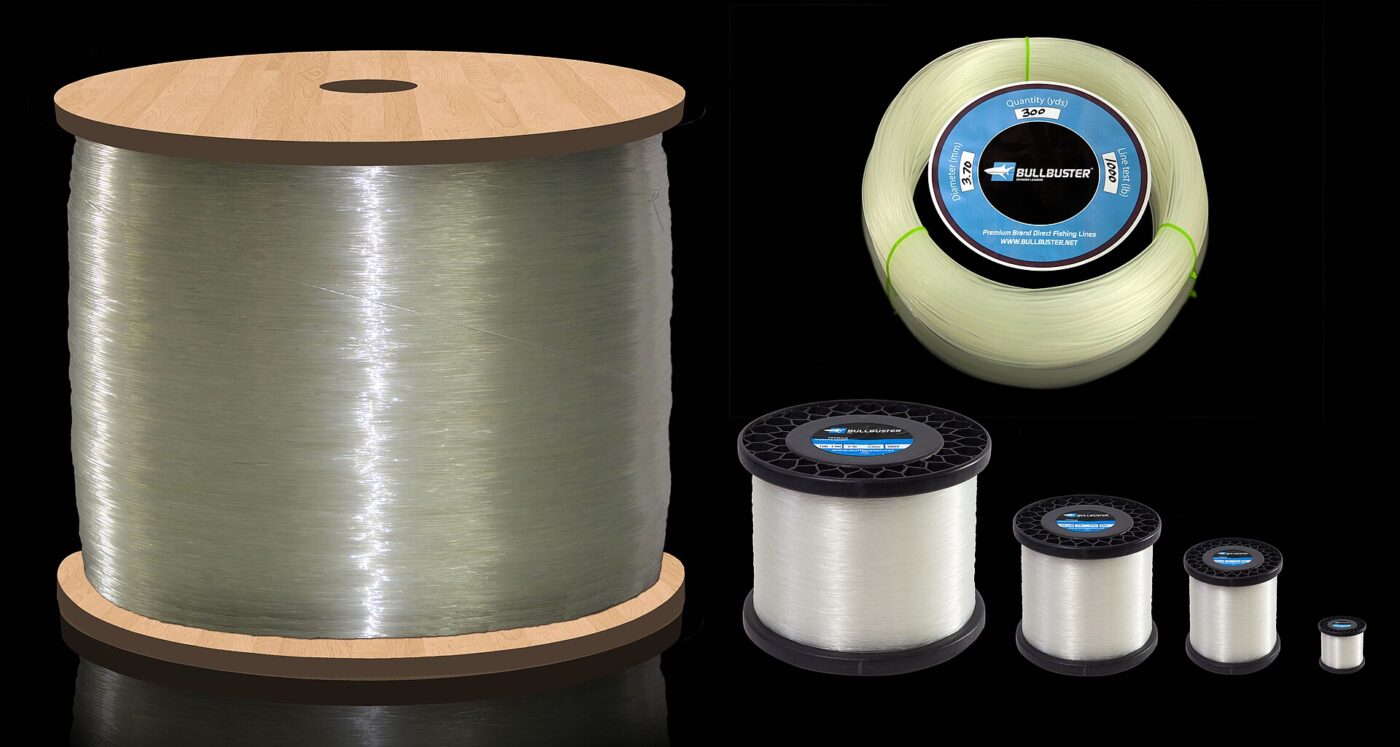
Three spools of line can sit side by side at a tackle shop, priced within a few dollars of each other, and behave nothing alike once they’re on a reel. One stretches enough to forgive a bad hookset. One goes nearly invisible in clear water. One transmits a bite so directly that missing it feels avoidable.
None of the three is simply better. Each is built around a different trade-off, and each fails in its own way when it’s matched to the wrong reel, water or fish. What every spool shares, whatever the material, is that it does not disappear once it’s cut loose — which is the other half of this comparison.
Fear Index · Think twice
A choice that fails quietly until a fish is on
The wrong line doesn’t announce itself at the tackle counter. It shows up later as a snapped hookset, a tangled spool, or line left behind that outlasts the angler who lost it by centuries.
Why monofilament, braid and fluorocarbon behave so differently
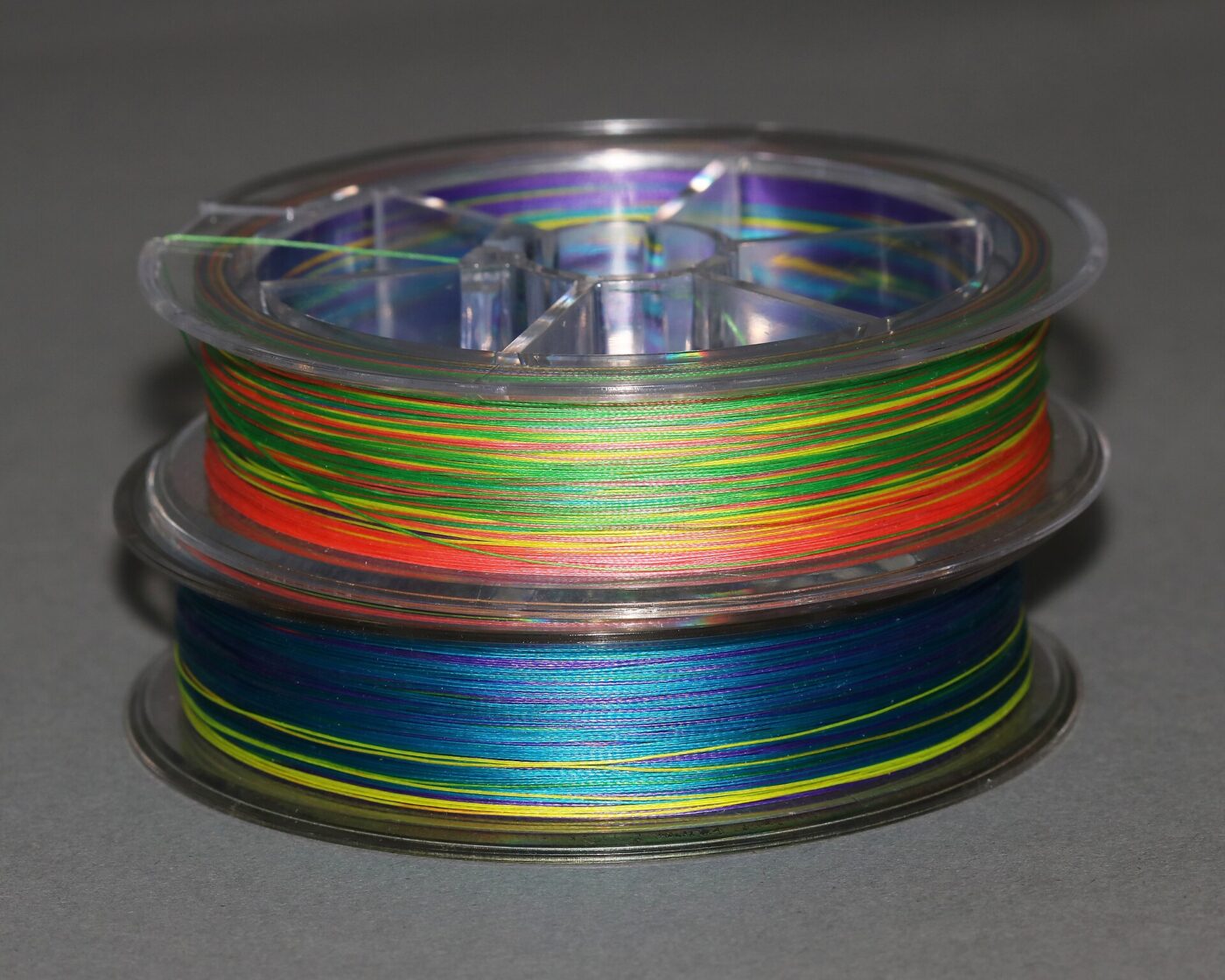
Monofilament is a single extruded nylon strand. It stretches under load, which absorbs a hard hookset or a sudden run rather than transmitting all of it straight to the knot, and it floats, which suits a topwater bait. That same stretch is what makes it forgiving for a beginner still learning to set the hook.
Fluorocarbon is a different polymer, and Seaguar’s own comparison of the two gives a concrete reason it’s harder to see underwater: air-to-fluorocarbon has a refractive index of 1.42, against 1.62 for air-to-nylon, so fluorocarbon bends light closer to how water itself does. The same page describes fluorocarbon as having “a faster sink rate compared [with] mono or braid,” being “extremely abrasion resistant,” and having low stretch, which is why anglers who need to feel a subtle bite through a leader reach for it.
Braided line is woven from multiple thin fibers rather than extruded as one strand, which is why a given pound test comes in a noticeably thinner diameter than the equivalent mono or fluorocarbon. That thinness cuts through weeds and current with less drag, but it also carries very little stretch of its own, so a hookset transmits with almost nothing absorbing it in between.
None of the three materials is the default choice. Each one trades stretch, visibility or diameter for something else.
Matching line to a spinning or baitcasting reel

A spinning reel’s fixed, open spool is forgiving of line that wants to coil, which is most of what monofilament does; it is far less forgiving of braid, which has almost no memory of its own and can slip against a smooth aluminum or plastic spool under load. Anglers running braid on a spinning reel commonly add mono backing or arbor tape first, purely so the braid has something to bite into.
A baitcasting reel’s revolving spool handles braid’s thin, limp construction well and rewards the extra sensitivity, but the same reel can backlash more easily with a stiffer, springier line if the brake and cast are not matched to it. Fluorocarbon’s stiffness relative to mono is the usual reason it goes on as a leader tied to a mainline of braid or mono, rather than filling the whole spool.
Leaders, knots and where each line actually breaks
A fluorocarbon or mono leader tied to a braided mainline gets the best of two properties at once: braid’s thin diameter and sensitivity above the leader, and a leader material that is harder for fish to see and more abrasion-resistant right at the hook, where rocks, shells and a fish’s own mouth do the most damage to a line.
Where a line actually fails tracks back to what it was built to give up. Mono is the first to weaken from repeated UV exposure and age; Seaguar’s comparison notes that fluorocarbon is “usable over a much longer period of time than nylon monofilaments,” which is one reason it costs more per yard. Braid rarely breaks from age at all — it more often fails at a knot that was not suited to a low-friction, no-stretch material, which is why braid-specific knots exist in the first place.
A line rarely fails in the middle of a cast for no reason. It fails at the weak point its material was always going to have — age, abrasion or a mismatched knot.
How to tell when it’s time to replace a spool
Monofilament that has spent a season in UV and heat — a rod left in a truck bed or on a dock — can lose strength well before it looks any different on the spool, which is the case for replacing it on a schedule rather than waiting for a visible sign. Fluorocarbon holds up longer under the same conditions, per Seaguar’s comparison, but a leader that has caught rock or oyster bed all day should still be checked by hand for rough spots before the next trip.
Braid shows its wear differently: fraying, fuzzing or a change in color near the last few feet are the signs to look for, since that section absorbs the most casting and retrieval friction. Stripping and replacing just that top section is common practice long before the rest of the spool needs it.
Recycling and wildlife entanglement
Whatever the material, discarded line does not go away. Florida’s Fish and Wildlife Conservation Commission, which runs the Monofilament Recovery and Recycling Program, says monofilament “is not biodegradable and can last hundreds of years depending on environmental conditions,” and that tangled line causes “injury, drowning, strangulation, or starvation” in birds, turtles, manatees, fish and dolphins. The program has placed more than 1,600 collection bins at boat ramps, piers, marinas and tackle shops statewide.
The BoatUS Foundation runs a parallel national program and puts the persistence even higher: fishing line “can remain in the marine environment for over 600 years,” and the foundation cites more than 100,000 marine mammals and other wildlife dying annually from entanglement or ingesting derelict fishing gear. Its recycling program has placed over 15,000 bins nationwide, well beyond Florida’s own network.
Cut line, old spools and trimmed leader material belong in one of those marked bins, not the trash, where a discarded spool is far more likely to end up back in the water than in a landfill.
The shortlist
Paid links: we earn a commission if you buy through the buttons below, at no extra cost to you. As an Amazon Associate I earn from qualifying purchases.
Compared on matching line to the job
| Product type | Best for | Risk estimate | Where to buy |
|---|---|---|---|
| Braided Fishing Line (20 lb, 150 yd) | A do-it-all braid for most reels | 15/100 | See listings on AmazonOpens Amazon search results, not one listing: check the model on the product page. |
| Fluorocarbon Leader Line | A fluorocarbon leader for line-shy fish | 12/100 | See listings on AmazonOpens Amazon search results, not one listing: check the model on the product page. |
| Monofilament Fishing Line Spool | An easy-knotting starter spool | 18/100 | See listings on AmazonOpens Amazon search results, not one listing: check the model on the product page. |
Risk estimate is our editorial Fear Index for the product type (lower is safer), not a customer rating. How it is scored.
Fluorocarbon Leader Line
Seaguar’s own numbers put fluorocarbon’s refractive index at 1.42 against nylon’s 1.62, closer to water’s own, which is the specific reason it disappears underwater better than mono.
- Refracts light closer to water than nylon
- Sinks faster than mono or braid
- Highly abrasion resistant
- Costs more per yard than mono
- Stiffer, so knots need more care
Braided Fishing Line (20 lb, 150 yd)
Braid’s thin, low-stretch build is why it cuts through cover so well, but the same lack of give means a hookset arrives with nothing absorbing it.
- Higher pound test at a smaller diameter
- Little stretch transmits bites directly
- Rarely weakens from age or UV
- Highly visible without a leader
- Can slip on a smooth spinning-reel spool
More: Sports and Recreation analyses and how the Fear Index is scored.
Questions people actually ask
What’s the real difference between braid, mono and fluorocarbon?
Monofilament stretches and floats; fluorocarbon is less visible underwater, sinks faster and resists abrasion; braid is thin for its strength with very little stretch. Each trades one property for another.
Why does fluorocarbon cost more than monofilament?
It is usable over a longer period than nylon monofilament, per Seaguar, and it is more abrasion resistant, both of which add to manufacturing cost.
Can I put braid straight on a spinning reel?
It can slip against a smooth spool under load. Most anglers add monofilament backing or arbor tape first so the braid has something to grip.
How long does discarded fishing line last in the environment?
Florida’s FWC says monofilament can last hundreds of years; the BoatUS Foundation puts fishing line’s persistence at over 600 years in the marine environment.
Where can I recycle old fishing line?
Look for a marked bin at a boat ramp, marina or tackle shop. Florida’s Monofilament Recovery and Recycling Program alone has placed more than 1,600 of them, and the BoatUS Foundation has placed over 15,000 nationwide.