
Sit-On-Top or Sit-Inside: The Kayak Choice Matters Most After You Capsize
Sit-on-tops are easier to climb back onto; sit-insides keep you warmer but fill with water. How to choose, and why cold water and life jackets decide it.


Most kayak comparisons focus on how the boat feels on a calm day: comfort, speed, storage, whether you get wet. Those things matter, but they are not what separates a good choice from a regrettable one.
The question that matters is what happens when you end up in the water beside the boat. Sit-on-top and sit-inside kayaks answer it very differently, and water temperature decides how much time you have to act.
Fear Index · Think twice
Choosing for calm-day comfort instead of capsize
Kayaks capsize easily. Pair a boat you cannot climb back into with water colder than the air suggests and a life jacket stowed rather than worn, and a routine swim becomes an emergency.
Two hulls, two ways of failing
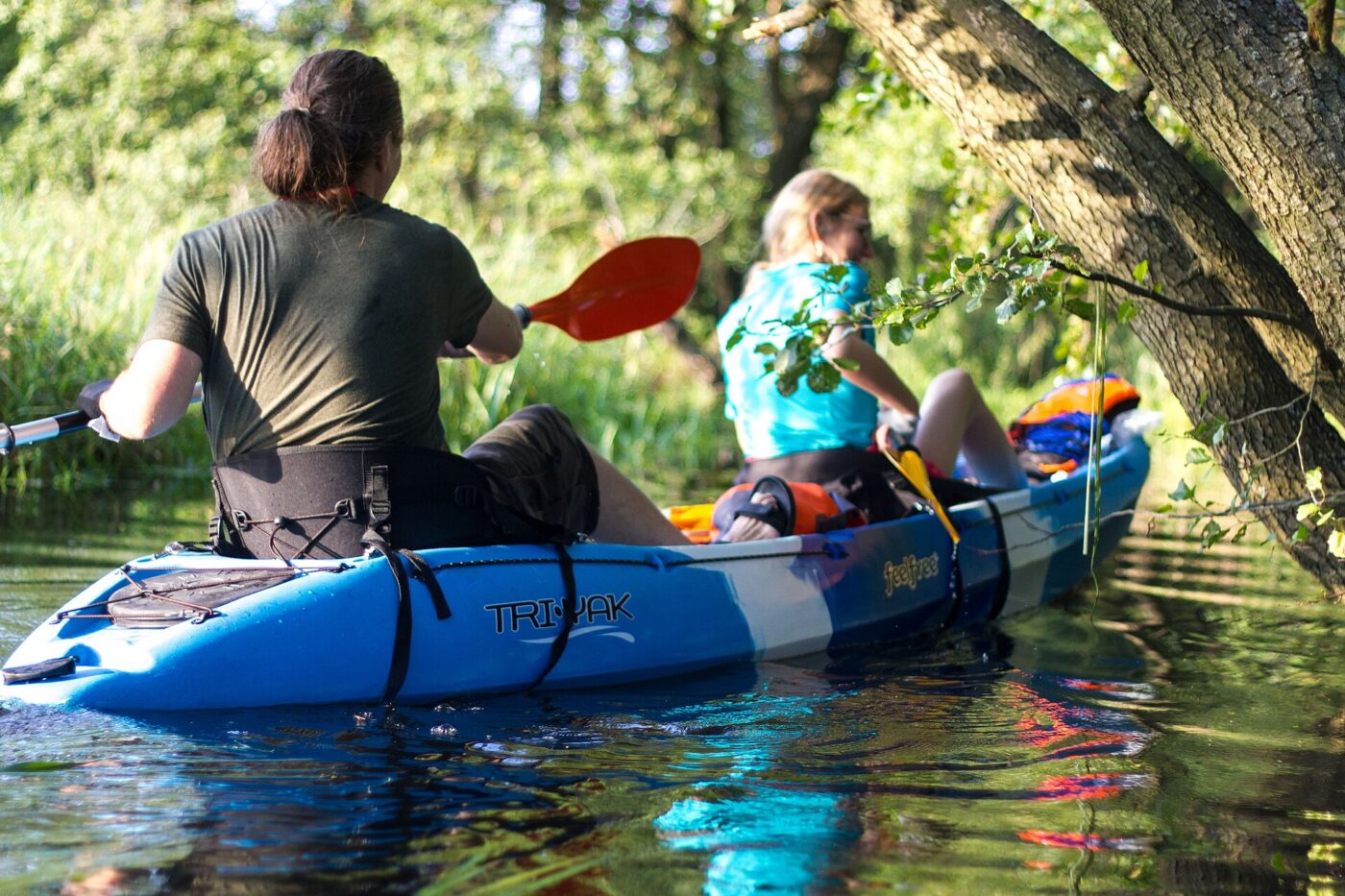
A sit-on-top is a sealed hull with a molded seat on its deck. Scupper holes let water that splashes in drain through, and if the boat flips it stays afloat and can be flipped back upright. Getting back on means pulling yourself across the deck from the side, which is awkward but learnable. The trade-off is exposure: you sit in splash, wind and sun.
A sit-inside puts your legs inside a cockpit. You sit lower, your knees and feet brace against the hull for control, and you stay warmer and drier. If you capsize and wet exit, though, the cockpit takes on water. Recovering in deep water usually needs a paddle float, a pump and practice, and a recreational boat without sealed bulkheads or flotation bags can swamp badly.
| Factor | Sit-on-top | Sit-inside |
|---|---|---|
| After a capsize | Flip back, climb on from the side | Wet exit; re-entry needs gear and practice |
| Water in the boat | Drains through scupper holes | Collects in the cockpit without a spray skirt |
| Exposure | Wet ride, full sun and wind | Legs sheltered, warmer in cool weather |
| Control and efficiency | Wider and often slower | Knee contact gives more edge control |
| Best fit | Warm water, fishing, casual use | Cooler air, longer trips, trained paddlers |
Stability is not the same as safety
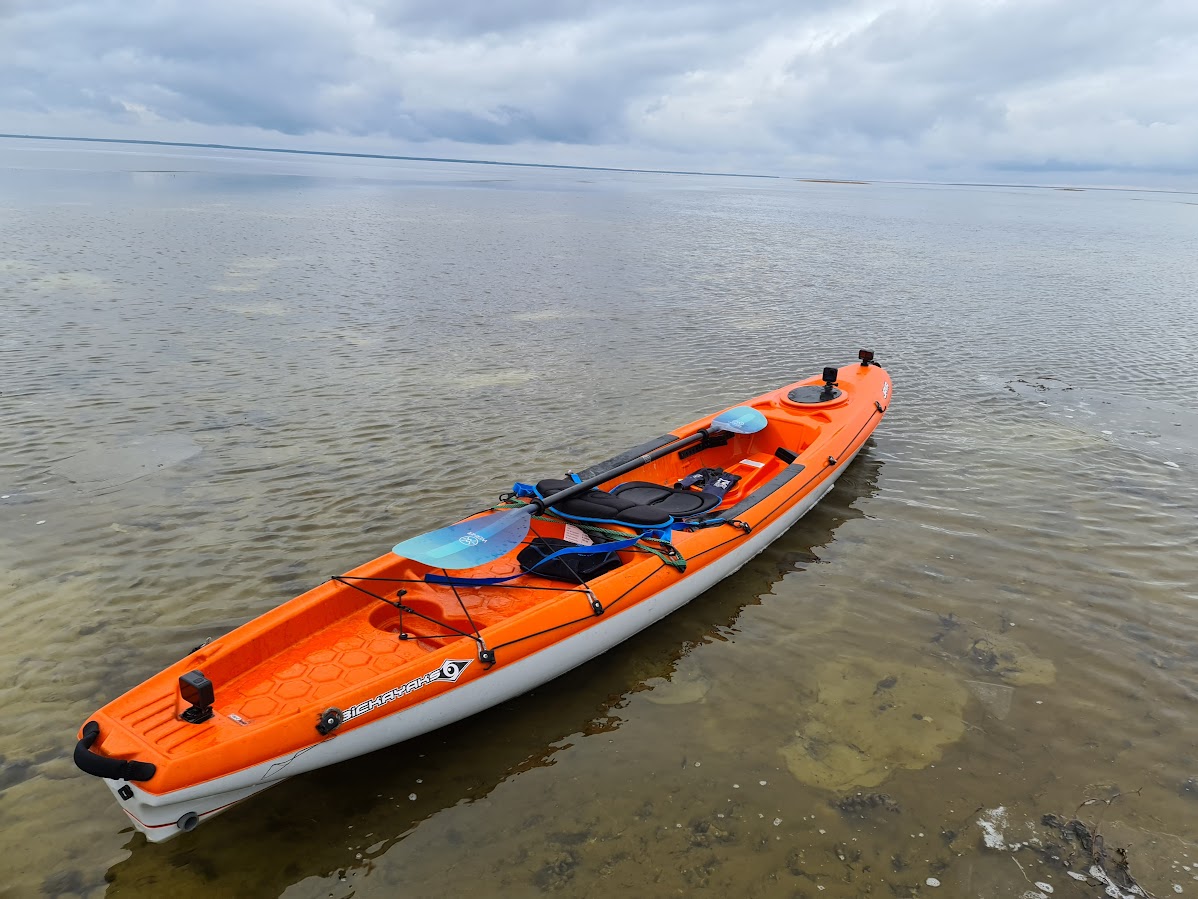
Wide, flat recreational hulls feel reassuringly steady when you sit still. That initial stability is what shoppers notice. A boat can feel rock solid at rest and still roll quickly when a wake hits it broadside or a paddler leans to reach something, and a narrower hull that feels twitchy can be more predictable once you learn to edge it.
The Coast Guard’s guide to federal boating requirements is plain about small craft: canoes, kayaks and stand-up paddleboards tend to be less stable and can easily capsize. It asks paddlers whether they are sure they can climb back in, with all their gear on, and whether they have practiced.
Its life jacket brochure adds the context that makes the question urgent: one-half of all recreational boating fatalities happen in calm water, close to shore, and are caused by drowning, and in most cases life jackets were on board but not worn.
Practice capsizing and getting back in, in warm, shallow water with a partner nearby, before you rely on either design.
Cold water changes the math

The National Weather Service warns that the gasp and rapid breathing of sudden immersion can be triggered by water as warm as 77°F, and that cold shock can be as severe in 50 to 60°F water as in water near freezing. Its advice is to dress for the water temperature, not the air.
The Coast Guard breaks cold water survival into three phases: cold shock, an initial gasp and hyperventilation that passes in about a minute; cold incapacitation, in which over roughly the next 10 minutes you lose effective use of your fingers, arms and legs; and hypothermia, with loss of consciousness possible in as little as an hour depending on temperature.
That timeline explains the kayak choice. Climbing back onto a sit-on-top takes coordination you may not have after ten minutes in cold water, and a sit-inside re-entry takes more. A warm spring afternoon over snowmelt-fed water is the classic trap.
- Check the water temperature, not the forecast high.
- Dress for immersion with a wetsuit or drysuit when the water is cold.
- Stay close to shore in cold months, where a swim to safety is short.
- Paddle with others and tell someone your route and return time.
- Clip a whistle to your life jacket so you can signal without letting go of the boat.
The life jacket you will actually wear
Federal rules require a wearable, Coast Guard approved life jacket for each person on board, in the right size and in serviceable condition. Children under 13 must wear one on a vessel that is underway, unless they are below deck or in an enclosed cabin, and where a state sets a different age for children, the state rule applies on its waters. For everyone else the Coast Guard recommends going further and wearing it, because a life jacket strapped under deck bungees cannot be put on after a capsize.
Fit matters as much as approval. The Coast Guard’s fit check is simple: confirm the label covers your size and weight, fasten it, hold your arms straight up and have a friend grasp the tops of the arm openings and gently pull up. There should be no excess room above the openings, and it should not ride up over your chin or face. Paddling vests are cut with larger arm openings so they stay comfortable through a full stroke, which makes them far more likely to stay on.
Inflatable life jackets are comfortable, but the Coast Guard lists them as not for children under 16 or non-swimmers and not for activities where immersion is expected, such as whitewater paddling. Check your state’s boating authority as well, since some states set their own wear requirements.
The shortlist
Paid links: we earn a commission if you buy through the buttons below, at no extra cost to you. As an Amazon Associate I earn from qualifying purchases.
Compared on use and risk
| Product type | Best for | Risk estimate | Where to buy |
|---|---|---|---|
| Sit-On-Top Recreational Kayak | Warm water, casual paddling | 32/100 | See listings on Amazon |
| Sit-Inside Kayak with Bulkheads | Cooler air, longer trips | 44/100 | See listings on Amazon |
| Coast Guard Approved Paddling Life Jacket | Every trip | 10/100 | See listings on Amazon |
Risk estimate is our editorial Fear Index for the product type (lower is safer), not a customer rating. How it is scored. The buttons open Amazon search results rather than one listing, so check the model on the product page.
Coast Guard Approved Paddling Life Jacket
Worn, it covers both designs’ weak point. Do the arms-up fit check before your first trip.
- Large arm openings for a full stroke
- Comfortable enough to wear all day
- Pockets for a whistle and phone
- Warm in summer heat
- Needs a proper fit check
Sit-On-Top Recreational Kayak
The forgiving choice for warm water and casual trips. Dress for the water temperature, because you will get wet.
- Self-draining deck
- Climb back on after a capsize
- Stable, relaxed seating
- Wet and exposed in cool weather
- Heavier and slower than touring boats
More: Sports & Recreation analyses and how the Fear Index is scored.
Questions people actually ask
Is a sit-on-top or sit-inside kayak better for beginners?
For warm water and casual paddling, a sit-on-top is usually more forgiving because it drains itself and is easier to climb back onto after a capsize. Sit-insides reward training.
Which type of kayak is more stable?
Wide recreational hulls of either type feel stable at rest. That does not mean they resist capsizing in waves or wakes, and the Coast Guard notes kayaks can easily capsize.
Do you have to wear a life jacket in a kayak?
Federal rules require a wearable Coast Guard approved life jacket for each person aboard, and children under 13 must wear one while the boat is underway unless a state sets a different age. The Coast Guard recommends that everyone wear one, and some states have additional wear rules.
What water temperature is too cold for kayaking without a wetsuit?
There is no single cutoff. The National Weather Service says gasping can be triggered by water as warm as 77°F and advises dressing for the water temperature, not the air.